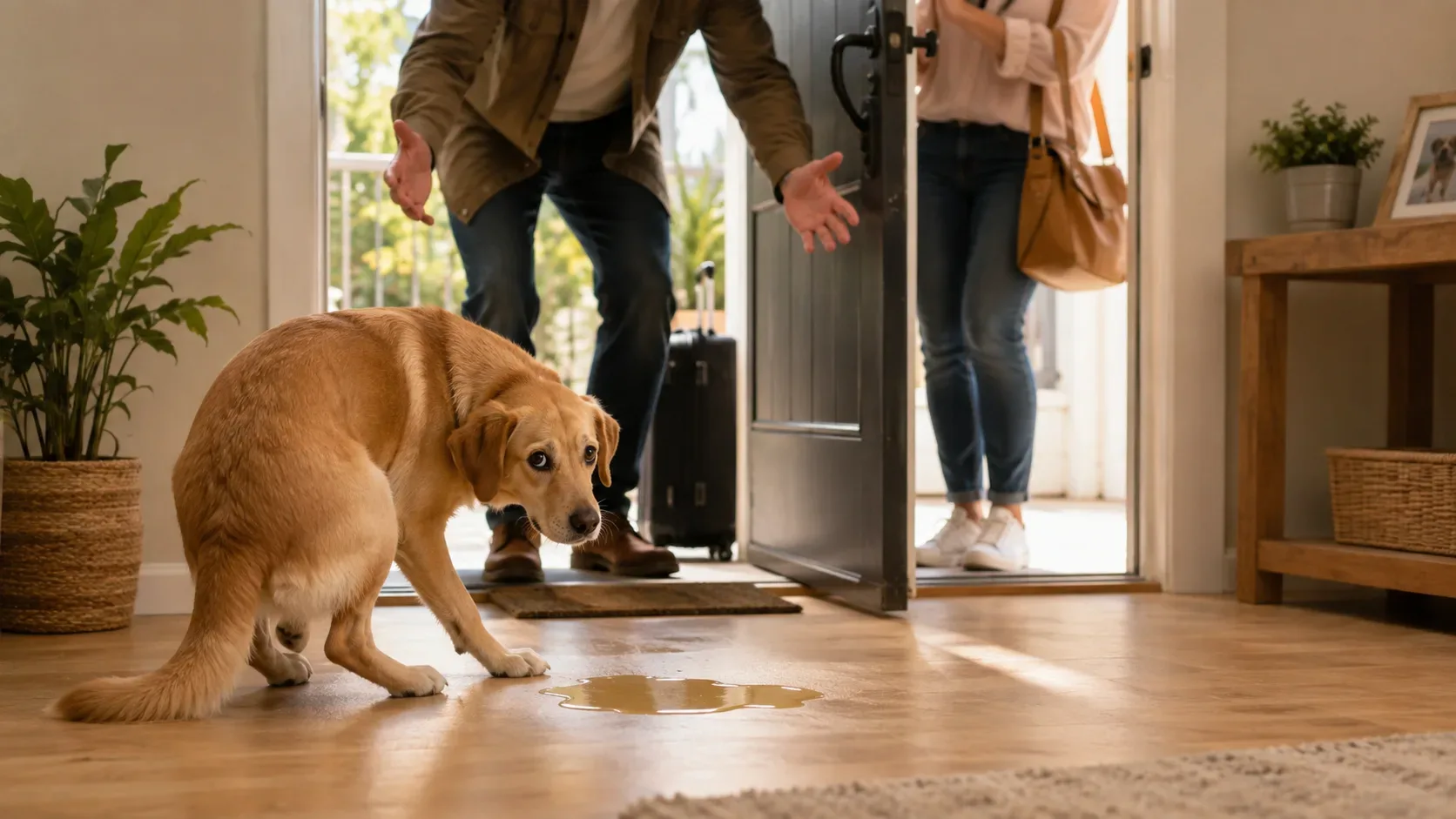
If the urination happens almost exclusively when the owner comes home or a visitor enters, the greeting context is a strong clue — but it does not establish the diagnosis by itself. In many dogs, especially young ones, urination is involuntary and is triggered by intense excitement, fear/appeasement, or a mix of both emotions. In others, the arrival simply coincides with a very full bladder or reveals a urinary problem that also occurs at other times.
Short answer: look at the trigger, body language, and urinary pattern
The most useful way to separate the possibilities is to watch three things at the same time: when the urination occurs, how the dog behaves during the approach, and whether urinary signs also appear outside greetings.
| Pattern | What commonly appears with it | Next step |
|---|---|---|
| Excitement | Jumping, spinning, a highly active body, vocalizing, intense attempts to make contact; urination happens at the peak of the greeting | Lower the intensity of arrivals and reinforce calm greetings |
| Fear/appeasement or conflict | Lowered body, ears back, tucked tail, avoiding eye contact, crouching, turning sideways, or rolling over | Reduce social pressure, let the dog approach, and avoid punishment |
| Full bladder + greeting | The episode is more likely after many hours without urinating and improves when the dog goes outside before interacting | Prioritize access to an elimination area before the greeting |
| Possible urinary problem | Sudden onset, accidents in other contexts, straining, blood, frequent small urinations, increased thirst, leakage at rest | Schedule a veterinary evaluation; inability to urinate is an emergency |
When the pattern looks more like excitement-related urination
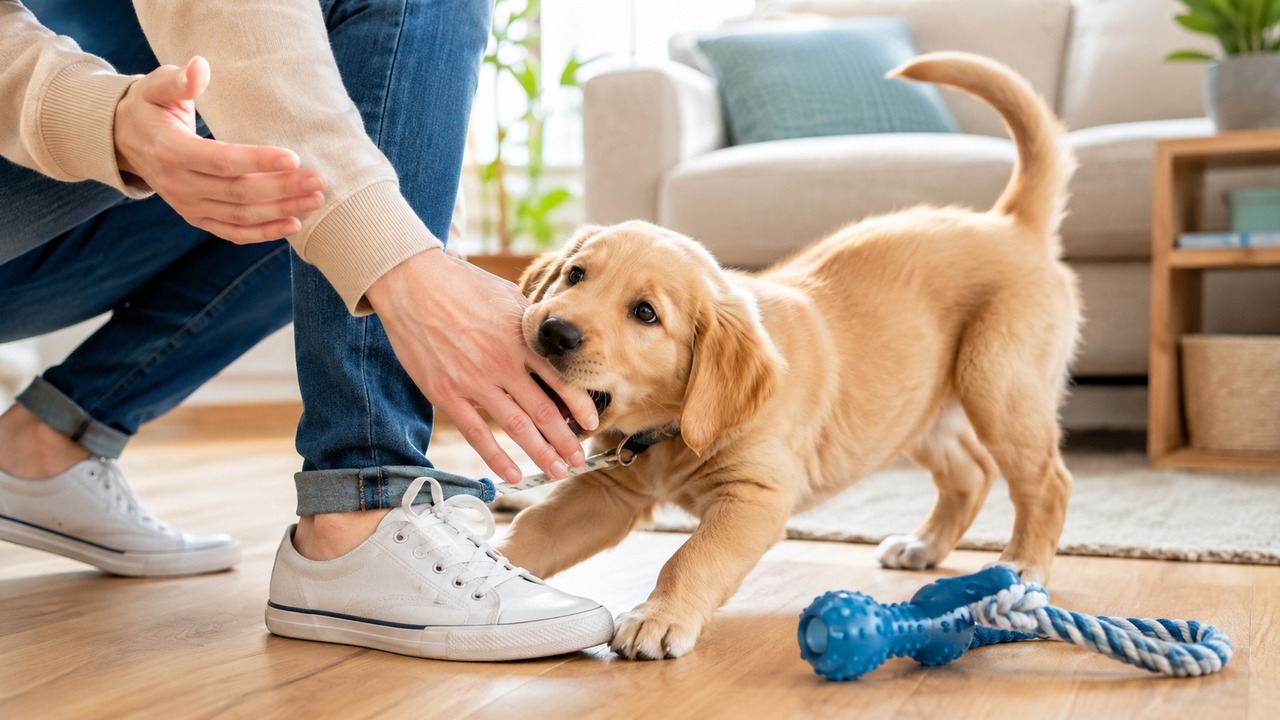
With excitement-related urination, the dog is socially interested and highly aroused. They may jump, run, spin, wag their whole body, and rush toward the person. Urination tends to coincide with the owner's entrance, vigorous petting, animated speech, or play. According to VCA Animal Hospitals, the behavior is involuntary and is seen most often in very young, socially inexperienced dogs.
That does not mean every young dog that urinates at the door is simply “too excited.” The key question is whether fear signals are absent and the rest of the urinary pattern is normal. A dog that urinates only at the peak of a greeting but spends the rest of the day without urgency, pain, or leakage fits this behavioral hypothesis better.
When fear, appeasement, or conflict fits better
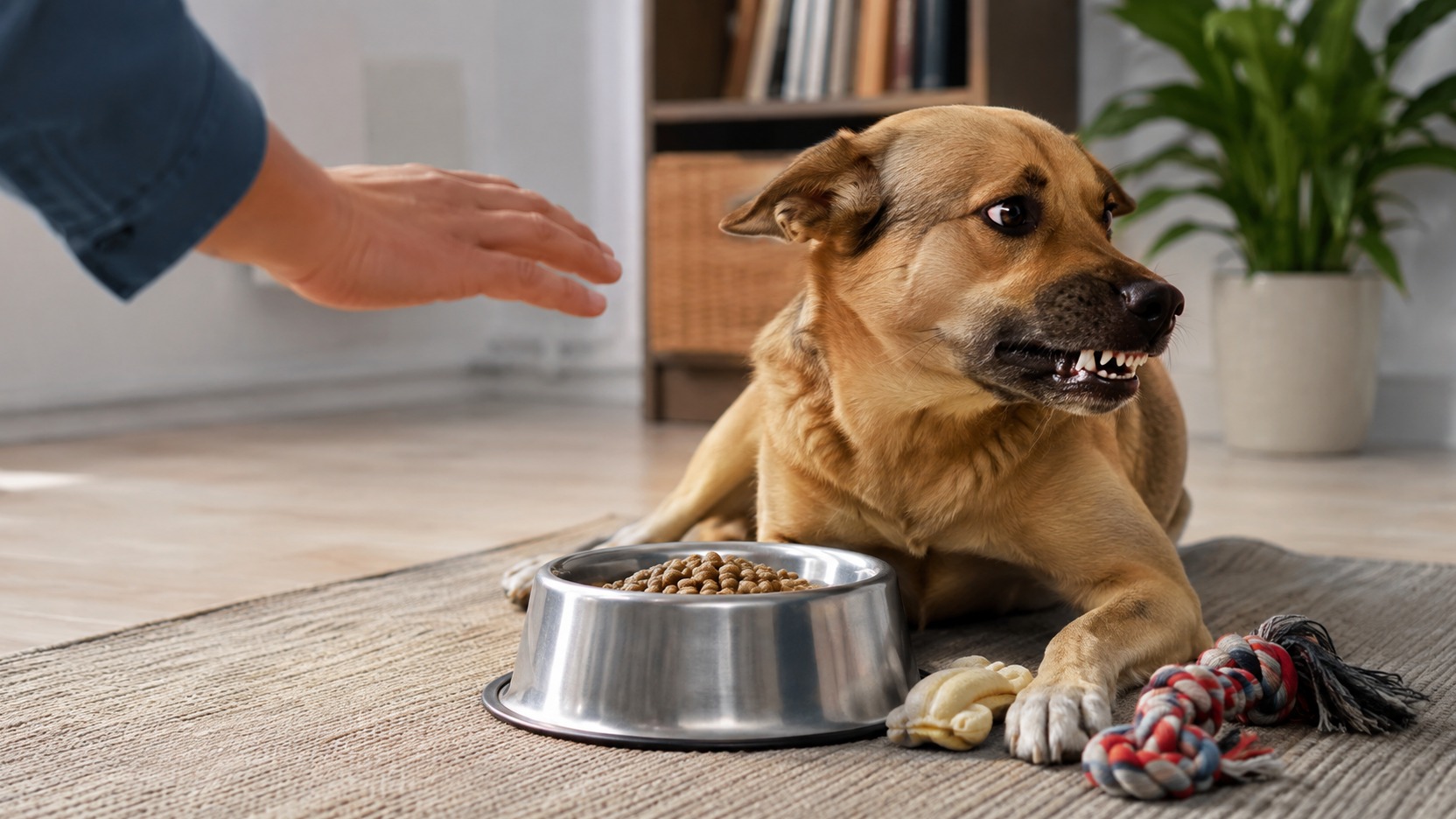
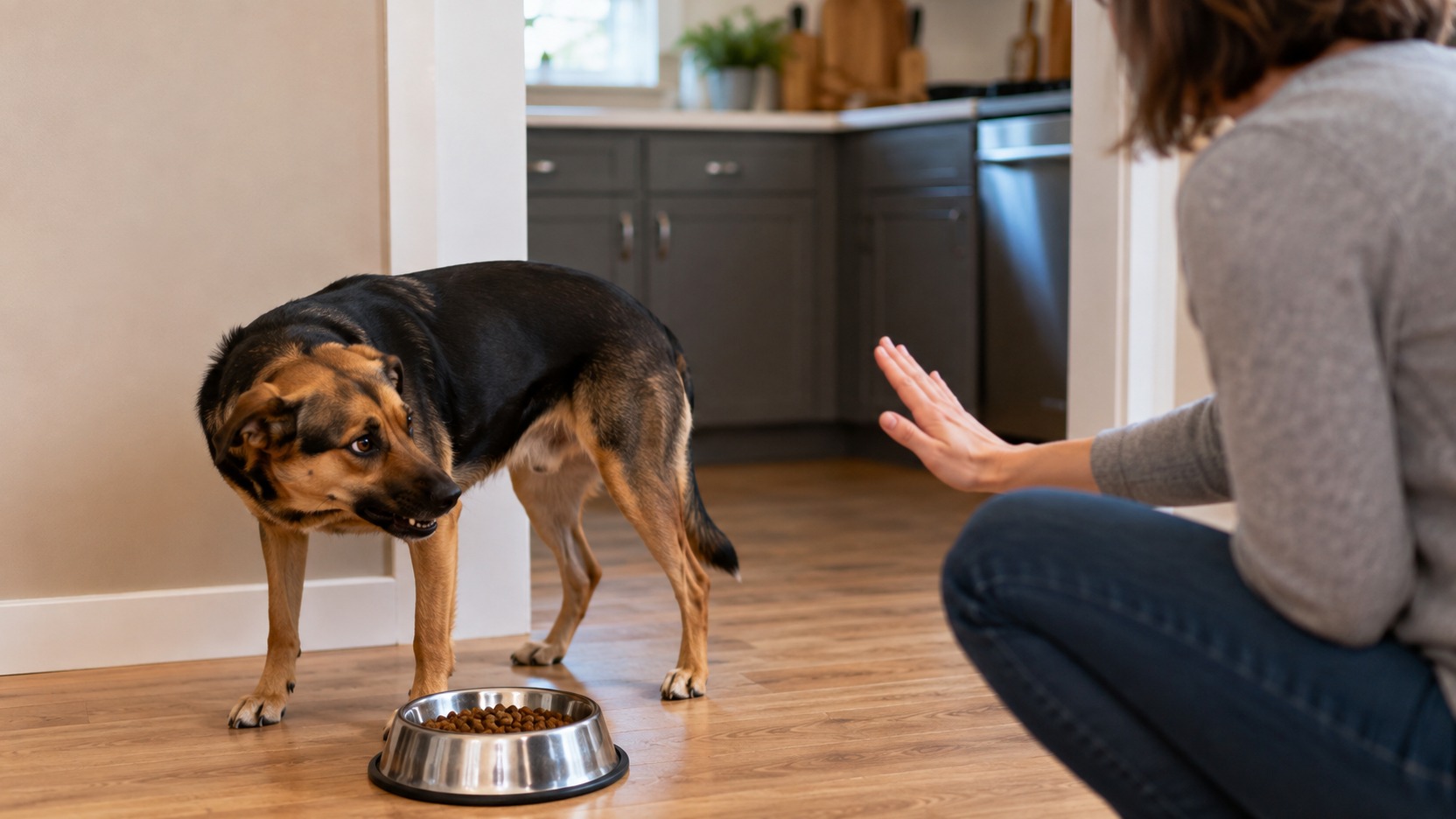
The traditional label “submissive urination” can hide a more useful point: the dog may be afraid, insecure, or torn between wanting contact and feeling pressured by the approach. VCA describes signals such as a lowered body, ears pulled back, avoidance of eye contact, crouching, and sometimes rolling onto the back.
This pattern may worsen when someone approaches head-on, leans over the dog, reaches quickly, stares, speaks loudly, or tries to restrain them. The deciding issue is not “who is in charge,” but the emotion visible in the interaction. Some dogs wag their tail and seek the person while also backing away or lowering their body; that is compatible with social conflict, not a purely exuberant greeting.
Why scolding for the urine tends to make things worse
In both emotional patterns, urination is not a deliberate choice. Reprimanding the dog after the puddle does not teach which behavior to use next time. If fear or conflict is involved, scolding adds pressure to the same trigger that already causes the response. VCA's behavioral guidance is to avoid punishment and manage the greeting to reduce excitement, fear, and anxiety.
In practical terms, clean the accident without turning it into a social event. Also avoid bringing the dog to the puddle, using a threatening tone, or trying to “correct” the behavior after the fact. Those responses do not help identify the cause and may make the next arrival more tense.
A simple protocol for arrivals and visitors
- If the timing is predictable, offer a chance to urinate before the greeting. This is especially useful after long periods alone or when visitors are expected.
- Enter neutrally. During the first moments, avoid a big celebration, high-pitched speech, bending over the dog, or repeated touching.
- Let the dog approach. For insecure dogs, turning your body slightly sideways and reducing eye contact can lower social pressure.
- Reinforce a behavior that is incompatible with an explosive greeting. Going to a bed or mat, or sitting calmly, can work if the dog already knows the behavior outside difficult situations.
- Ask visitors to follow the same rule. They come in and settle first; interaction happens once the dog is more regulated.
- If arousal rises, reduce the interaction. There is no need to scold. End the celebration, give the dog space, and resume when they are calmer.
The goal is not to force the dog to “hold it” while remaining overwhelmed. The goal is to make the greeting less intense and more predictable. With fearful dogs, forcing approach, petting, or eye contact can slow progress.
When the arrival may be masking a urinary problem
The situation changes when signs also appear outside greetings. The Cornell University College of Veterinary Medicine lists straining to urinate, frequent small urinations, accidents in the house, foul-smelling urine, excessive genital licking, and blood in the urine among common signs of urinary tract infection in dogs. These findings do not identify the disease by themselves, but they justify a clinical workup.
Another pattern is involuntary leakage while the dog is lying down or sleeping. VCA describes wet spots or small puddles under a resting dog as a typical sign of urinary incontinence. That is different from urinating at the exact moment someone opens the door.
A previously housetrained dog that suddenly starts having accidents also deserves a veterinary check, especially if the dog is an adult or senior. Conditions that increase urine volume or thirst, urinary pain, stones, neurologic changes, and loss of sphincter control are among the possibilities a veterinarian may need to rule out.
Signs that warrant veterinary evaluation instead of assuming it is behavioral
- the problem started suddenly in an adult dog that did not previously do this;
- accidents also happen during sleep, rest, or away from any greeting;
- the dog urinates very often in small amounts;
- there is straining, discomfort, blood in the urine, unusual odor, or excessive genital licking;
- thirst or urine volume has increased;
- there is loss of appetite, vomiting, lethargy, apparent fever, or abdominal pain;
- the dog repeatedly tries to urinate but cannot produce urine, or produces only drops while straining.
Inability to urinate is an emergency. Urinary obstructions can become serious quickly. In that situation, do not wait to see whether the dog “calms down.”
What to record before the appointment or before seeking behavioral help
A short diary is usually more useful than trying to decide on your own whether the dog is “happy” or “afraid.” For several episodes, record:
- age and how long the behavior has been present;
- whether it began in puppyhood or appeared later in adulthood;
- who arrives: a particular owner, any household member, children, men, women, or any visitor;
- how long it had been since the dog last urinated;
- whether the dog was jumping and spinning or, instead, lowering the body and avoiding contact;
- ear, tail, and body position;
- approximate amount of urine and whether there was straining;
- any accidents outside greetings;
- changes in thirst, urinary frequency, medications, or routine.
If it is safe and does not increase the dog's stress, a short video of the arrival can also help a veterinarian or behavior professional notice body-language signals that are easy to miss in the moment.
How to interpret the trend over time
If the dog is young, healthy, urinates only during intense greetings, and improves as arrivals become calmer, excitement becomes the stronger explanation. If urination decreases when people stop staring, leaning over, or touching the dog immediately, fear or conflict was probably contributing. If none of those changes alter the pattern, or urinary signs appear outside greetings, medical investigation becomes more important.
The most common mistake is choosing an explanation too early. “He's just too happy” can overlook insecurity; “he's scared” can overlook a full bladder; and calling everything behavioral can delay the diagnosis of urinary disease. The best decision comes from the combination of trigger + body language + urinary pattern + age and onset.
This content is informational and does not replace veterinary evaluation. Sudden changes in urination, signs of pain, or difficulty urinating deserve professional guidance.