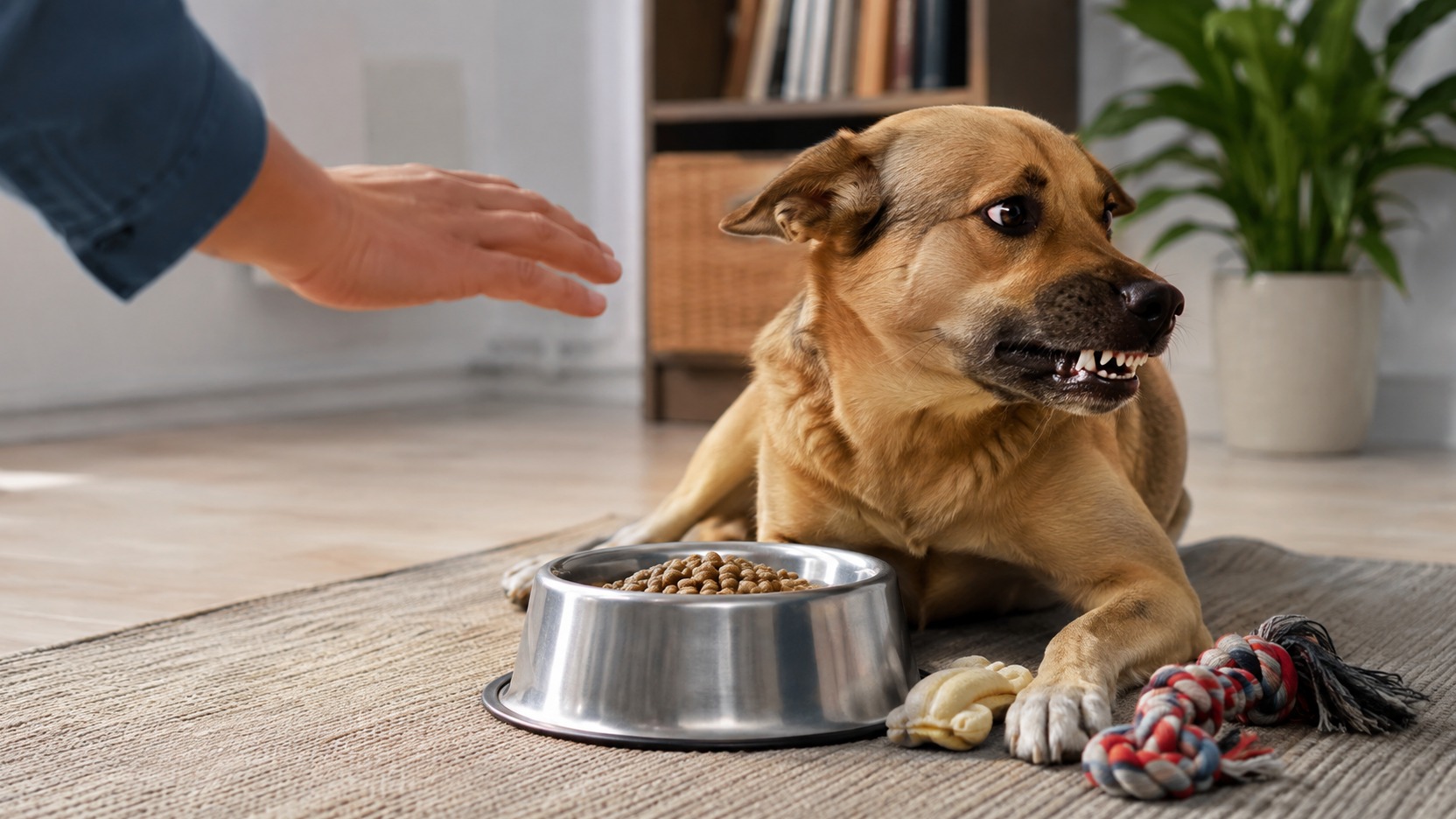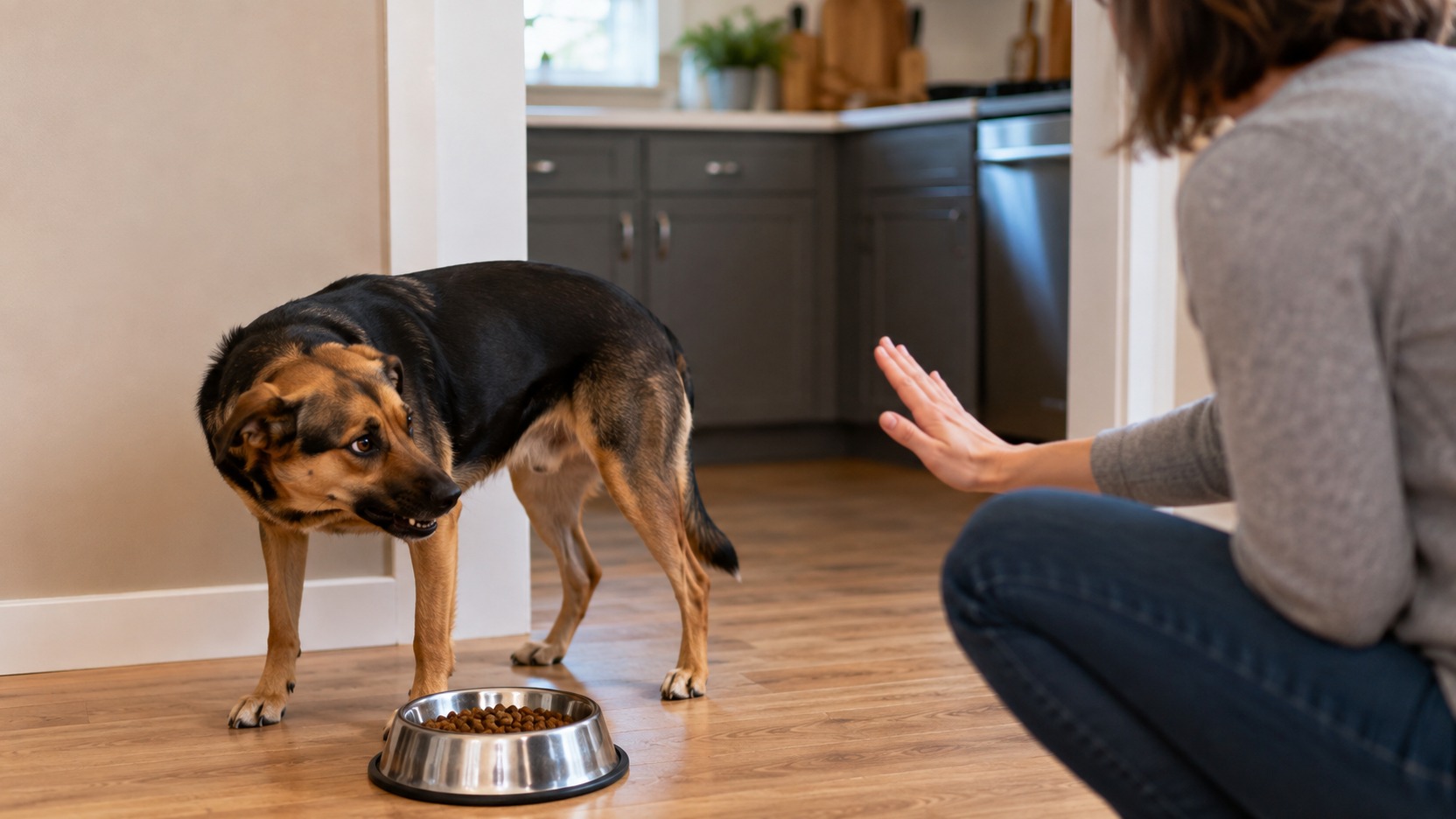
If the dog stiffens, stares, starts eating faster, growls, shows its teeth or threatens when someone approaches the bowl, the problem cannot be solved by proving who is in charge. This set of signals is compatible with resource protection: the dog tries to keep its distance from a person or other animal while it has something it considers valuable. The immediate objective should be to reduce the risk of confrontation and prevent the situation from escalating into a snap, a lunge or a bite.
The growl is a warning. It does not mean that the person needs to accept any of the dog's behavior, but it does indicate that, at that moment, continuing to get close, touching the animal or reaching for the resource can increase the pressure. The Merck Veterinary Manual describes that aggression can escalate when the owner insists on approaching or tries to remove a valued resource despite the dog's signals. The VCA also advises that, when faced with an aggressive threat, do not confront the animal or try to reach the pot.
First: don't take the pot away by force and don't test the dog
Removing the food to “show authority”, putting your hand inside the bowl or insisting on getting closer until the dog stops growling are risky strategies. In addition to the immediate risk of bite, repetition can teach that the presence of a person near food predicts loss. Instead of making the approach safer, this may make the dog protect the resource more intensely.
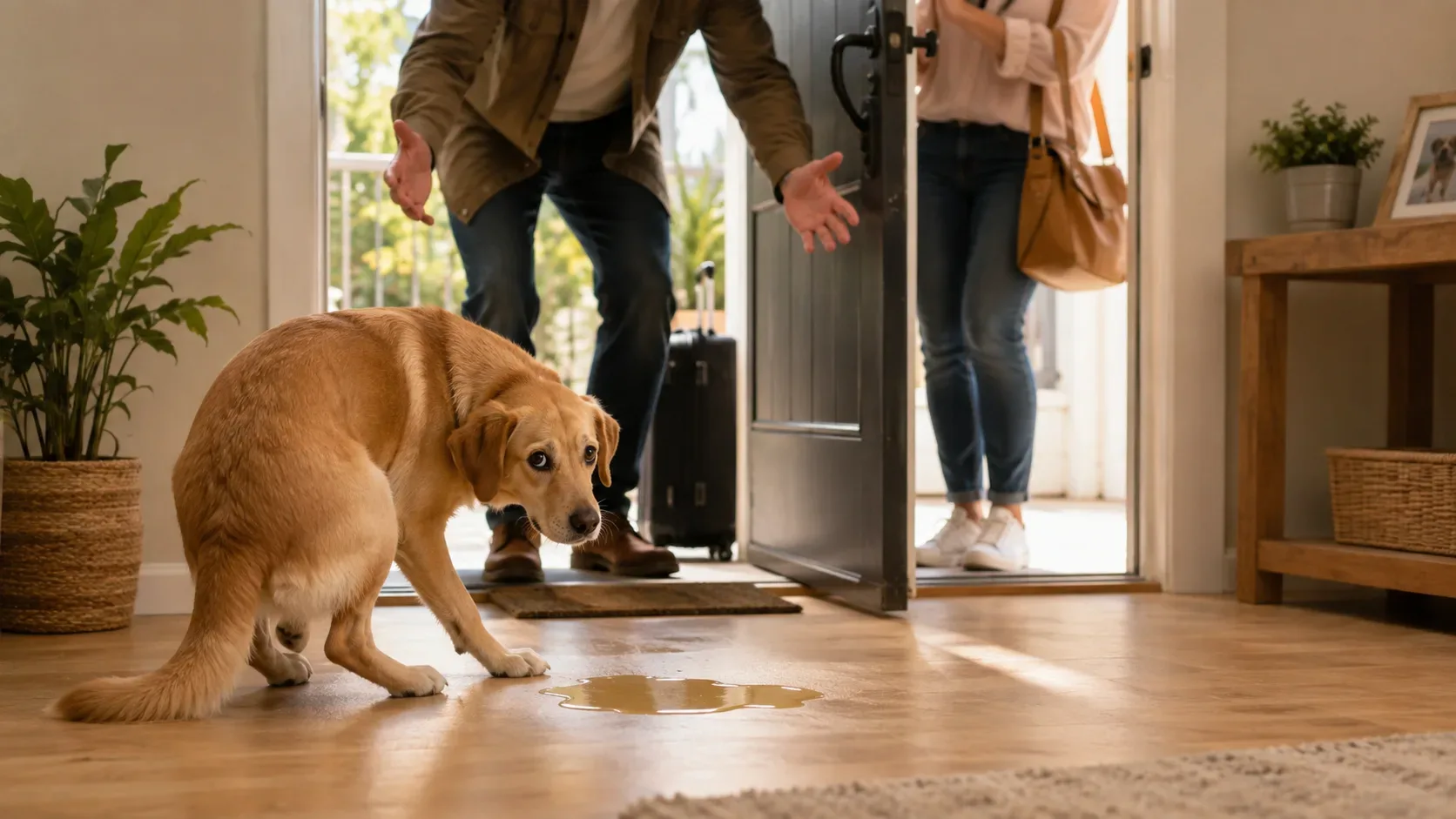
The same goes for punishing growling. Yelling, hitting, jerking, intimidating, or using physical corrections can increase fear, anxiety, and aggression. The American Veterinary Society of Animal Behavior, the AVSAB, recommends reward-based methods for training and behavior modification and advises against aversive methods. In cases of aggression, the priority is environmental management, safety and a behavior modification plan appropriate to the case.
It is also not useful to “test” whether the dog would actually bite. If he has already frozen his body, accelerated his food, glared, growled or showed his teeth, the important information has already appeared: a
approach is too uncomfortable. The safest response is to increase the distance and reorganize the situation.
A practical map of the signs: from discomfort to biting
Stiffen, stop eating or stare
The first signs may be discreet. The dog may remain still for a few seconds, lower its head over the bowl, follow the person with its eyes or stop chewing. These behaviors already indicate that the approach was perceived as relevant. You don't have to wait for a growl to respect the limit.
At this stage, walk away calmly, without trying to touch the dog or the food. The goal is to prevent him from needing to increase the intensity of the warning to gain space.
Eat faster or swallow at once
Speeding up ingestion when someone gets close can also be part of resource protection. The dog appears to try to finish before the food is taken away or fought over. This sign often goes unnoticed because it doesn't seem aggressive, but it deserves the same reading: the presence of someone near the pot is increasing tension.
If this happens, the meal should be more predictable and protected from interruptions. Don't use acceleration as an opportunity to get closer “so he can get used to it”.
Growl, show teeth or lunge
Growling with a rigid body, showing teeth, lunging without contact or advancing are signs of greater risk. The VCA recommends that, when the dog growls, threatens, snaps or lunges near food, approach exercises should not be improvised without professional guidance.
At this point, step back, end the interaction and start using barriers and distance at meals. Do not attempt to “fix” the warning at that time.
Snap or bite
When there has already been a very close snap, contact strike or bite, the case should not be treated as a simple education problem. The risk of recurrence needs to be managed immediately, especially if there are children, elderly people, guests or other animals in the house.
From then on, the domestic plan should be limited to avoiding new dispute situations while seeking veterinary evaluation and qualified behavioral guidance. The less the dog rehearses confrontations over resources, the less chance of new episodes occurring due to management failure.
What to do for your next meal
The next meal is not the time to train closeness. If the dog has already shown tension or threat, choose a place with little movement and make him eat without people or other animals around. A closed door, pet gate, or other type of barrier can create the necessary distance without confrontation.
Put the meal in and let the dog eat in peace. Children must not enter the space. Other dogs and cats must be separated. Do not caress the animal while eating, do not move the bowl and do not pass by it repeatedly to observe the reaction. After he finishes and spontaneously leaves the area, the empty pot can be collected.
In a home with more than one dog, the simplest measure is usually to feed each animal in a separate space and maintain separation until everyone has finished and the containers have been removed. Bones, chews and high-value toys may also require separate handling if there is a dispute.
This type of organization does not “reward growling”. It reduces opportunities for conflict while the cause and intensity of the behavior are assessed.
Can approaching and throwing snacks help? Depends on the stage
In prevention or in very mild cases, there is a logic of counterconditioning in which approaching a person starts to predict something better, instead of loss. The VCA describes exercises in which the owner passes at a comfortable distance, throws a higher value food and continues walking, without invading the dog's space.
But this is not a technique to be applied automatically when the dog already growls, shows its teeth, snaps or advances. In these cases, the VCA itself recommends professional guidance before starting exercises. Starting distance, resource value, who approaches, and history of aggression all change the risk.
The useful principle is simple: training should not provoke the behavior it is intended to reduce. If the exercise causes the dog to freeze, rush for food, stare or growl, the session has become too difficult.
Food, toys and stolen objects: the pattern may be the same
Resource protection is not limited to the pot. Merck includes common resources such as food, snacks, chew toys, stolen objects, resting places and even proximity to favorite people. Therefore, a dog that growls for food may also protect a bone, a new toy, a sofa or something it picked up from the floor.
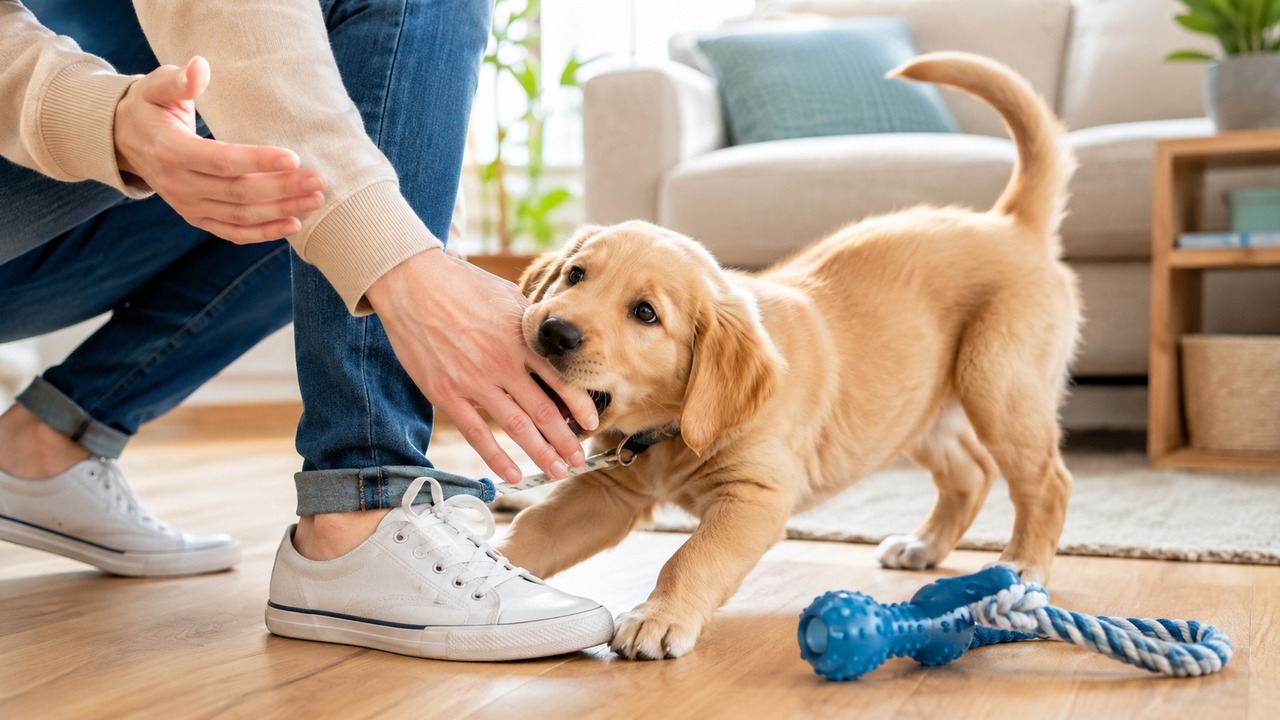
With toys and chews, the safety rule remains to avoid ripping the item out of the dog's mouth or cornering it. Teaching switches and the release command can be useful, but training should begin outside of a crisis, with low-value items and higher-interest rewards. If the dog already threatens when someone tries to retrieve objects, the plan must be individualized.
In the case of a stolen object, running after the dog or trying to force its mouth open can turn the situation into a chase or confrontation. Prevention becomes important: reducing access to dangerous objects, keeping the environment organized and working on planned changes reduces the frequency of these episodes.
The person approaching changes the risk
When you are an adult
An adult may notice the signs and back off, but this does not make the situation safe for testing. If the dog already has resource protection, the ideal is for the adults in the house to follow the same management rules so as not to create unpredictable responses. One person should not remove the bowl while another allows the animal to eat in peace.
When it's a child
With children, the risk tolerance level needs to be much lower. Children move unpredictably, may not recognize subtle cues, and are closer to the dog's height. The VCA highlights that aggressive or fearful dogs pose a significant risk to children and that children should not approach dogs while they are eating or holding valuable resources.
The solution is not to teach the child to “show authority”. It's about creating reliable physical separation during eating, chewing, and high-value situations. The child should not participate in behavior modification exercises around the resource.
When it's another dog or other animal in the house
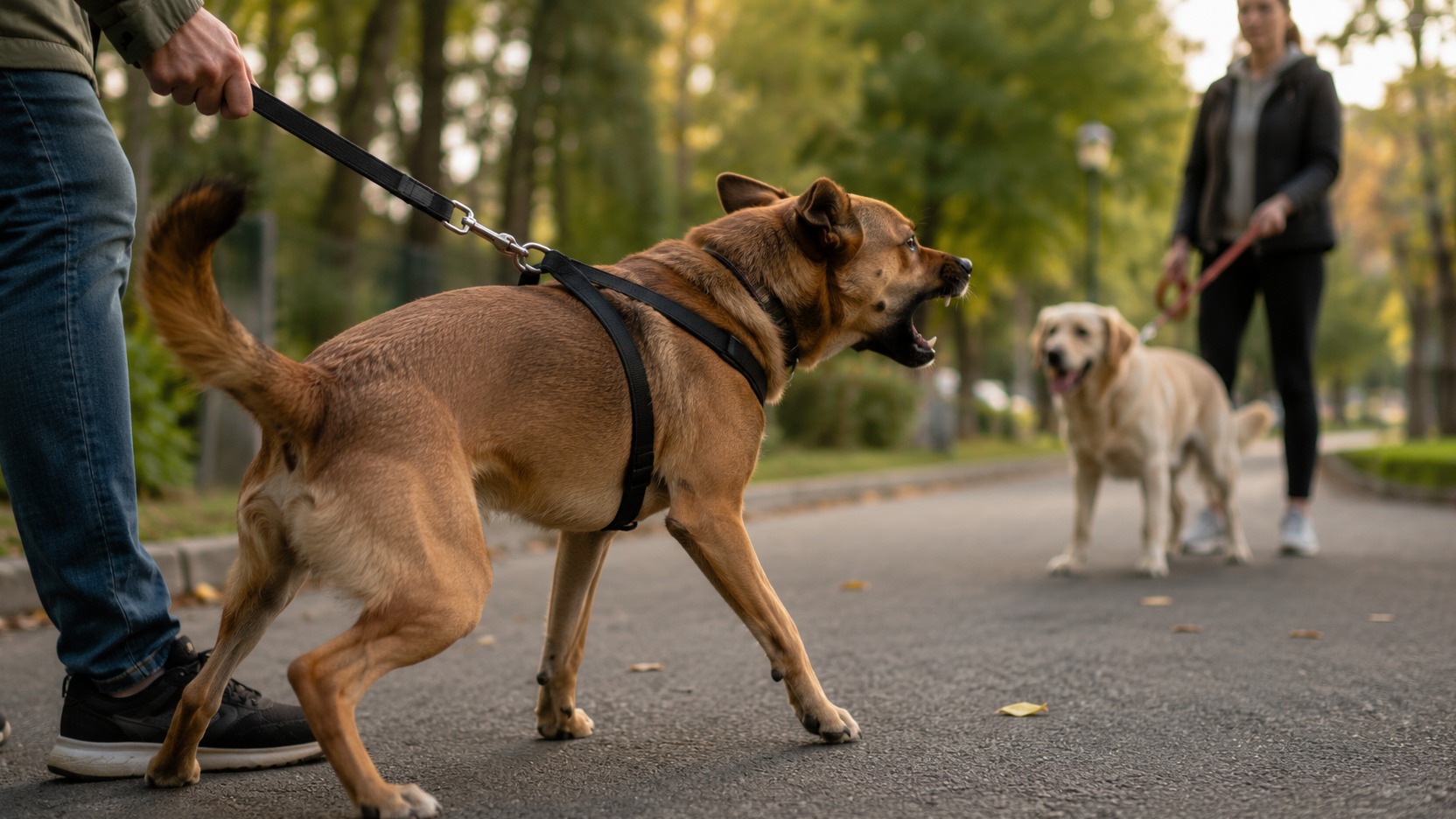
Between animals, disputes can occur even when there is no conflict at other times. Merck describes that resource guarding can contribute to aggression between dogs in the same household. Feeding separately, preventing simultaneous access to high-value chews and preventing one animal from invading another's feeding space are management measures.
Do not force animals to share a pot or toy to “learn to share”. If there have been fights, chases or injuries, professional evaluation is especially important.
What the growl is saying - and why punishing it might make it worse
Growling works as distance communication. When the person moves back, the dog learns that that signal produces space; when the person ignores it and continues to advance, the animal may need to intensify the response. Merck warns that insisting despite signs can lead to escalation and, in some cases, loss of advance warning.
Punishing growling can reduce the visible manifestation without resolving the emotion that provoked it. The desirable outcome is not a dog that is silent while still in fear of losing the resource, but rather a dog that feels safer with human presence and is able to respond in a different way.
Therefore, approaches based on intimidation, pain or confrontation do not fit the objective. AVSAB's current guidance is to use reward-based methods and organize the environment to prevent situations that trigger the behavior.
When a sudden change calls for a veterinarian
If your dog has always eaten calmly and suddenly starts growling or guarding resources, don't assume it's just “stubbornness”. Pain and discomfort can increase irritability and aggression. Merck notes that painful conditions, organic problems, neurological changes and some hormonal diseases can contribute to changes in behavior.
A veterinary consultation is especially important when the change was sudden, when the dog also started avoiding touch, showing difficulty in getting up, chewing or moving, when there are changes in appetite or sleep, or when the behavior appeared in an older animal without a similar history.
Even when there is a learned component of resource guarding, a medical problem can reduce the dog's tolerance and make episodes more frequent or intense. Treating just the behavior without investigating a physical change can leave an important part of the problem unanswered.
When to seek behavioral help
It is prudent to seek professional advice when your dog growls consistently around food or objects, and the need becomes more urgent when there is snapping, lunging, biting, fighting with other animals, children in the house or real difficulty in maintaining a safe distance.
Evaluation usually begins with a veterinarian, who can investigate pain, illness and other medical causes. For the behavioral part, look for a professional who works with methods
reward-based and who knows how to draw up a management and behavior modification plan without provoking the dog. More complex cases may benefit from a veterinarian with a behavioral background.
Be wary of proposals that rely on dominating the dog, punishing growling, forcibly removing food, provoking the reaction to correct it or using pain and intimidation as the main tool. These methods increase the risk of confrontation and do not address the negative association the dog has with approaching.
How to decide what to do from now on
If the sign is just tensing up, stopping eating, staring, or speeding up eating, treat this as an early warning: stop rushing forward, make meals more guarded, and notice in what contexts the behavior appears. If there is already growling, bared teeth or advancing, do not improvise training next to the pot; use management and seek guidance. If there has been a snap or bite, or if a child is allowed to approach the resource, the priority becomes reliable physical separation and professional assessment.
If protection has suddenly appeared in a dog that hasn't done this before, add a veterinary evaluation to the plan. If it only happens with one type of resource or with a specific person, this information is also useful for the professional, because it helps to identify the context and plan changes without exposing anyone.
The central idea is to avoid disputes. Taking the pot to prove authority can turn an approach into a predictable threat. Providing space, organizing the environment, and working with positive reinforcement under appropriate guidance creates a safer route to reducing resource guarding without teaching the dog that people near food mean loss or confrontation.