Occasional paw licking can be part of a dog's normal grooming, especially after a walk or contact with sand and dirt. The warning sign is a change in pattern: when licking becomes frequent, intense, hard to interrupt, or is accompanied by redness, swelling, hair loss, odor, discharge, pain, or limping, it is no longer just a cleaning habit and deserves investigation.
The most important point is not to try to make a diagnosis at home. The Merck Veterinary Manual notes that pruritus is a sign, not a specific disease. Parasites, infections, and allergies are among the common causes, but a painful paw, an injured nail, a foreign body, or contact irritation can also make a dog lick the area repeatedly.
When paw licking may simply be normal behavior
Brief, occasional licking with no other signs may simply be self-grooming. It is more consistent with normal behavior when the dog:
- licks for a short time and then returns to normal activities;
- does not keep focusing on the same paw;
- has no redness, sores, crusts, swelling, or discharge;
- shows no pain when walking or bearing weight;
- does not wake up to lick or interrupt play, rest, or eating because of it.
By contrast, repetition throughout the day, chewing or gnawing at the toes, nighttime licking, or difficulty redirecting the dog's attention is more consistent with itch, irritation, or discomfort. The AAHA points out that scratching, licking, biting, chewing, rubbing, and rolling can be different expressions of the same problem: pruritus.
Observable signs that may point to itching or inflammation
Owners do not always see a dog scratching with a hind leg. In many dogs, itch shows up mainly as licking and chewing at the feet. Look, including between the toes and around the nails, for:
- frequent paw licking or biting;
- redder or warmer skin;
- swelling of one toe, part of the paw, or several spaces between the toes;
- hair loss or hairs broken by friction;
- light-colored hair turning brown from saliva staining;
- crusts, scaling, cracks, or sores;
- unusual odor, persistent moisture, or discharge;
- tenderness to touch, pulling the paw away, or irritability during examination;
- limping, reluctance to bear weight, or less willingness to walk;
- itching involving the ears, face, belly, armpits, or rear end as well.
The Cornell University College of Veterinary Medicine describes dogs with atopic dermatitis licking and chewing their feet, rubbing their faces, and developing redness, hair loss, and darker or thickened skin over time. Continuous licking itself also keeps the area moist and may contribute to secondary infections.
The licking pattern provides clues, but it does not establish a diagnosis
| Pattern observed | What may be considered during veterinary investigation |
|---|---|
| It started suddenly and is focused on one paw | Cut, broken nail, splinter, foreign body, sting, burn, irritation, or another local source of pain. |
| It affects several paws as well as the face, ears, or belly | Environmental allergies, food allergy, contact dermatitis, and other causes of generalized pruritus. |
| There is odor, discharge, moist redness, or crusting | Bacterial or yeast infection, often secondary to another skin problem. |
| Itching comes back during certain seasons | A possible seasonal environmental component, such as exposure to pollens or other allergens. |
| The behavior persists, but initial examinations do not identify medical causes | Behavioral factors may be considered, generally after medical causes have been investigated. |
This table is only a way to organize observations. VCA Animal Hospitals notes that paw licking may be related to itch from allergies or parasites, but it can also be associated with injury or behavior. In addition, damaged skin can become colonized by bacteria and yeast, creating a cycle of more inflammation and more licking.
When to contact a veterinarian
Schedule a veterinary evaluation when the licking is persistent or recurrent, when it is getting worse, or when visible skin changes are already present. There is no need to wait until the paw looks severely damaged. The longer a dog licks and traumatizes the area, the greater the chance of lesions and secondary infection.
Seek care more promptly if there is:
- marked or suddenly developing swelling;
- obvious pain or difficulty bearing weight;
- an open wound, bleeding, pus, or other discharge;
- a broken nail with pain or bleeding;
- an object deeply embedded in the paw;
- a burn caused by heat, cold, or a chemical;
- rapid worsening of the dog's overall condition, marked lethargy, or refusal to eat along with the paw problem.
For paw injuries, VCA recommends veterinary attention for bleeding that will not stop, deep punctures or lacerations, burns, deeply embedded foreign objects, and signs of infection such as redness, swelling, and pus. If the dog cannot use the limb, has severe pain, or has sustained major trauma, the situation should be treated as urgent.
What is worth recording before the appointment
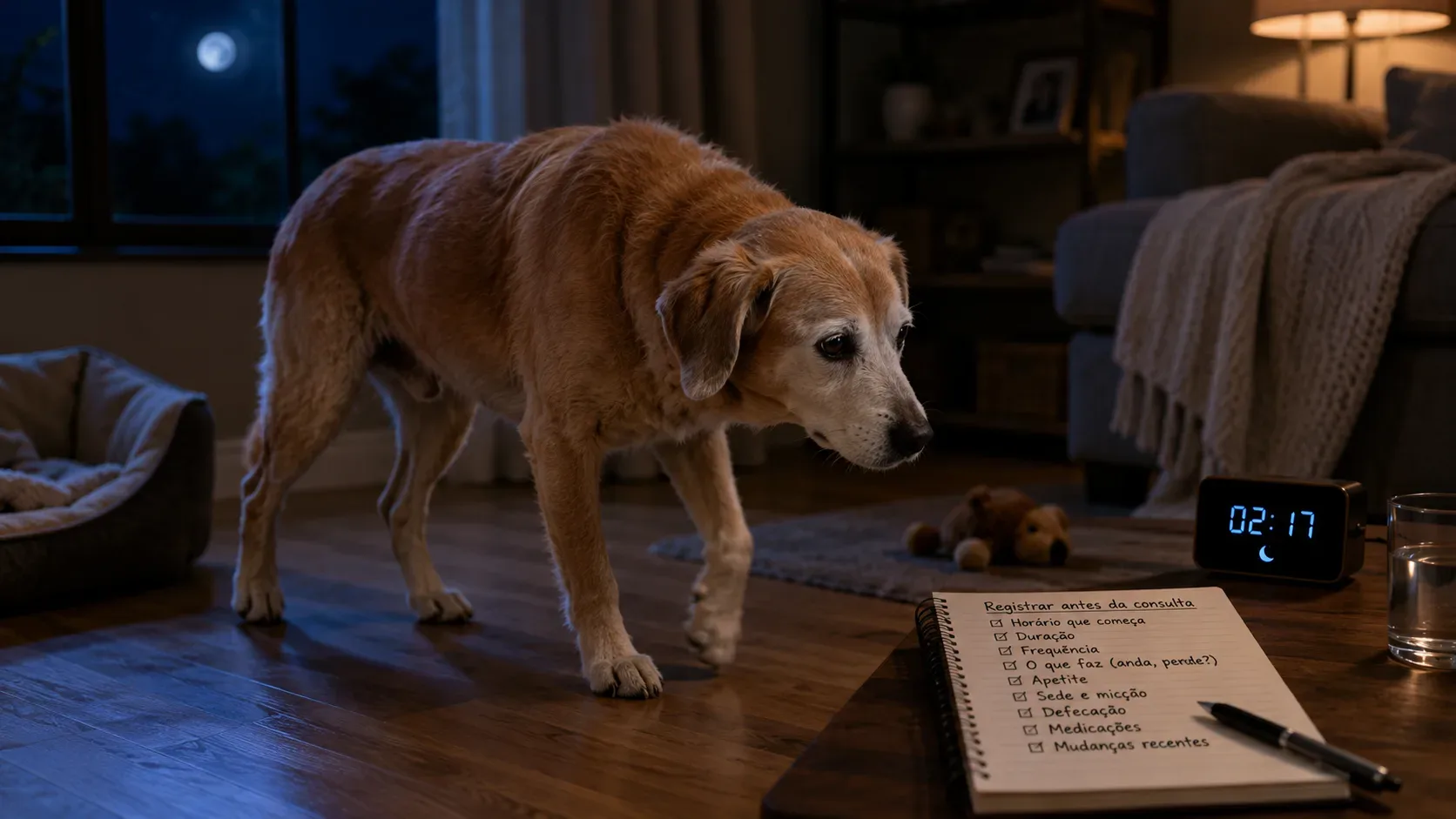
A detailed history helps the veterinarian narrow the possibilities. AAHA recommends observing the onset, intensity, and pattern of itching, as well as the dog's environment and everyday exposures. Write down or bring on your phone:
- when the licking started and whether the onset was sudden or gradual;
- which paws are involved and whether the same spot is always targeted;
- the times or situations in which it gets worse;
- whether there is a relationship with walks, grass, household cleaning, bathing, or new products;
- whether itching appears during specific seasons;
- the current diet, including treats and chews;
- which flea and tick preventives are being used and when they were given;
- whether there are recurrent ear problems, ear odor, itching elsewhere, or digestive signs;
- photos of the paw on different days and short videos showing how often the dog licks.
This information is more useful than trying to assign a cause based on appearance alone. In cases of pruritus, the veterinarian may need to rule out parasites, look for infection, examine the skin, and, depending on the case, discuss allergy investigation or a controlled diet trial.
Why random treatments are a poor strategy
There is no single treatment for itch. An antibiotic does not treat an allergy; an antifungal does not remove a foreign body; anti-inflammatory medication may reduce symptoms without correcting the cause; and elimination diets only have diagnostic value when they follow a strict plan. The Merck Veterinary Manual also notes that antihistamine success for canine itch is highly variable and that glucocorticoids can cause adverse effects and should not be used inappropriately, especially when infection is present.
For that reason, avoid starting antibiotics, antifungals, corticosteroids, ointments, or restrictive diet changes on your own. Also, do not try to dig between the toes to remove something that is deeply embedded. Random interventions can further irritate the skin, mask important signs, or delay the correct diagnosis.
What to do while waiting for an evaluation
If the dog is otherwise well and there are no urgent signs, a few simple steps can help protect the area without trying to treat the underlying cause:
- gently inspect the paw, including between the toes and around the nails;
- if there is only superficial dirt, rinse gently with water and dry thoroughly;
- avoid fragranced products, alcohol, hydrogen peroxide, or other irritating substances on the skin;
- limit access to licking if it is damaging the skin; a protective collar may be useful when recommended by the veterinarian;
- keep walks and activity at a comfortable level if there is tenderness, and do not force a painful paw.
If there is a deeply embedded foreign body, persistent bleeding, a significant wound, or severe pain, do not try to solve it at home: seek veterinary care.
Practical summary: observe, book an appointment, or seek prompt care?
| Situation | Next step |
|---|---|
| Brief licking after a walk, with no lesion, pain, or repetition | Observe the pattern and keep the paw clean and dry. |
| Frequent, recurrent, or nighttime licking; redness; odor; hair loss; itching in other areas | Book a veterinary evaluation to investigate the cause. |
| Marked swelling, pus, deep wound, burn, deeply embedded foreign object, bleeding that will not stop, or inability to bear weight | Seek veterinary care promptly; some situations may require emergency attention. |
The most useful rule is simple: do not only count how many times the dog licks the paw; look for a persistent change in behavior and signs of inflamed skin, infection, pain, or altered gait. Those details help distinguish occasional grooming from a problem that deserves professional assessment.
Note: this content is informational and does not replace a veterinary examination. When in doubt, especially if there is pain, a wound, swelling, or rapid worsening, seek professional guidance.