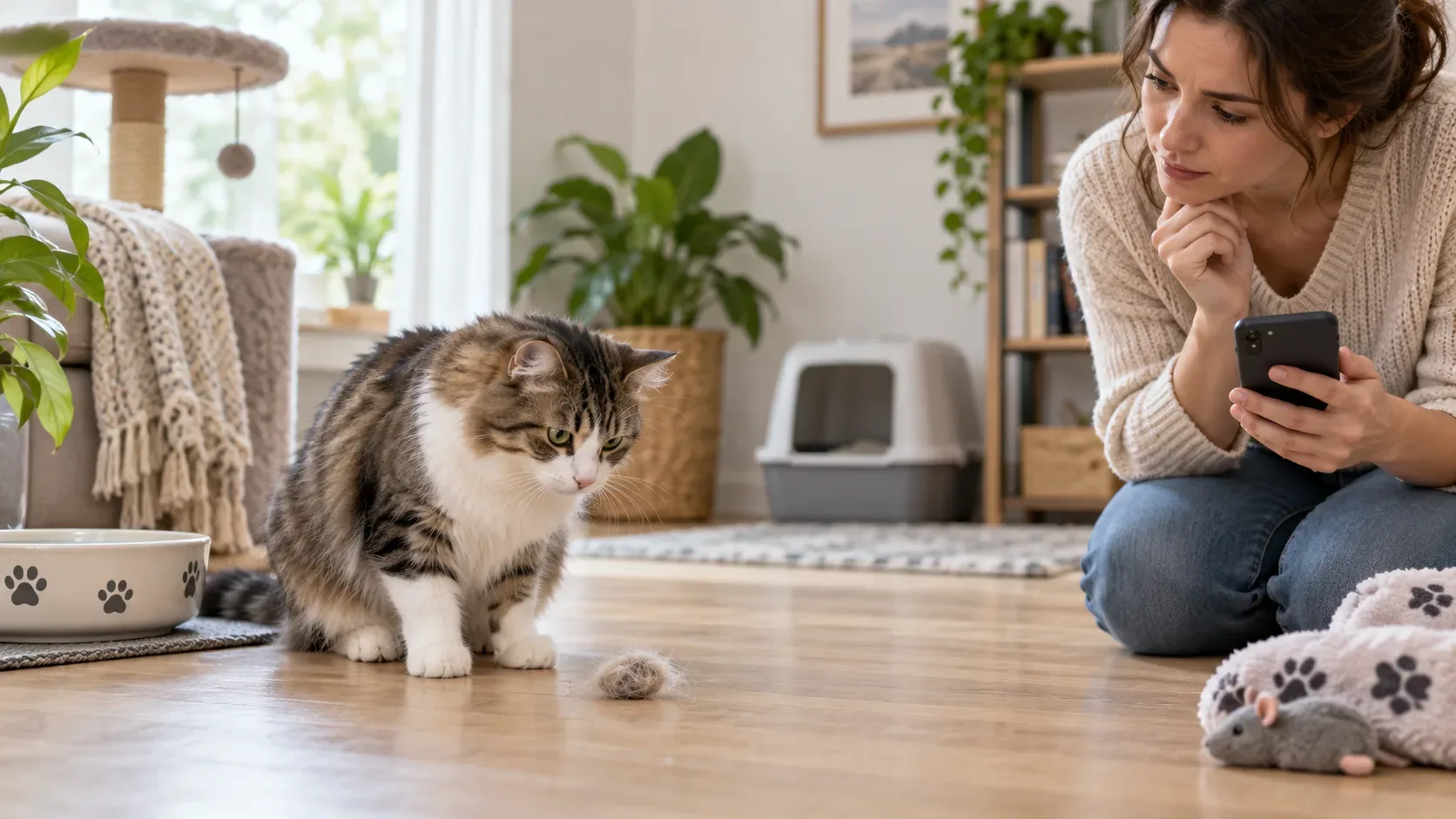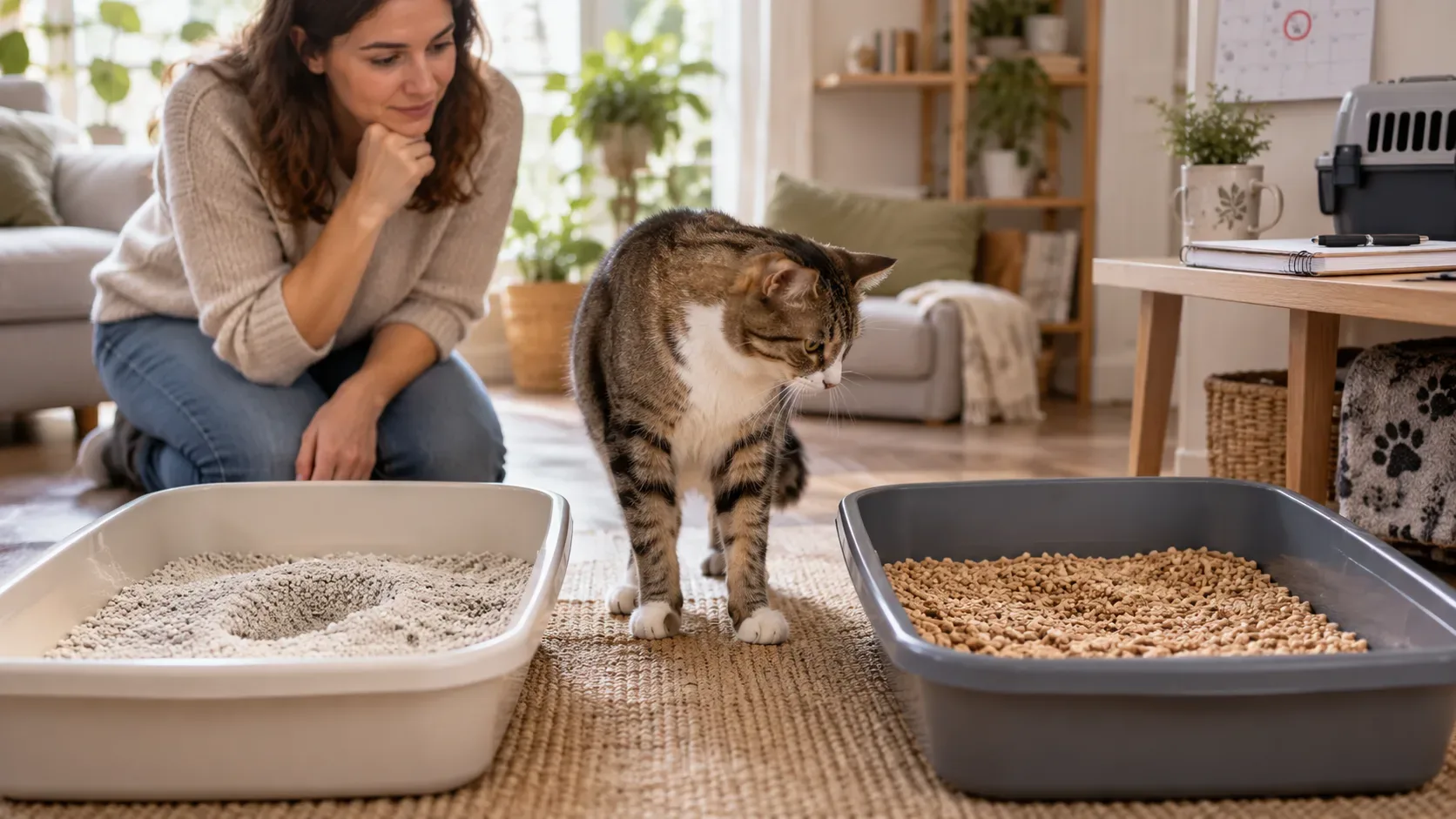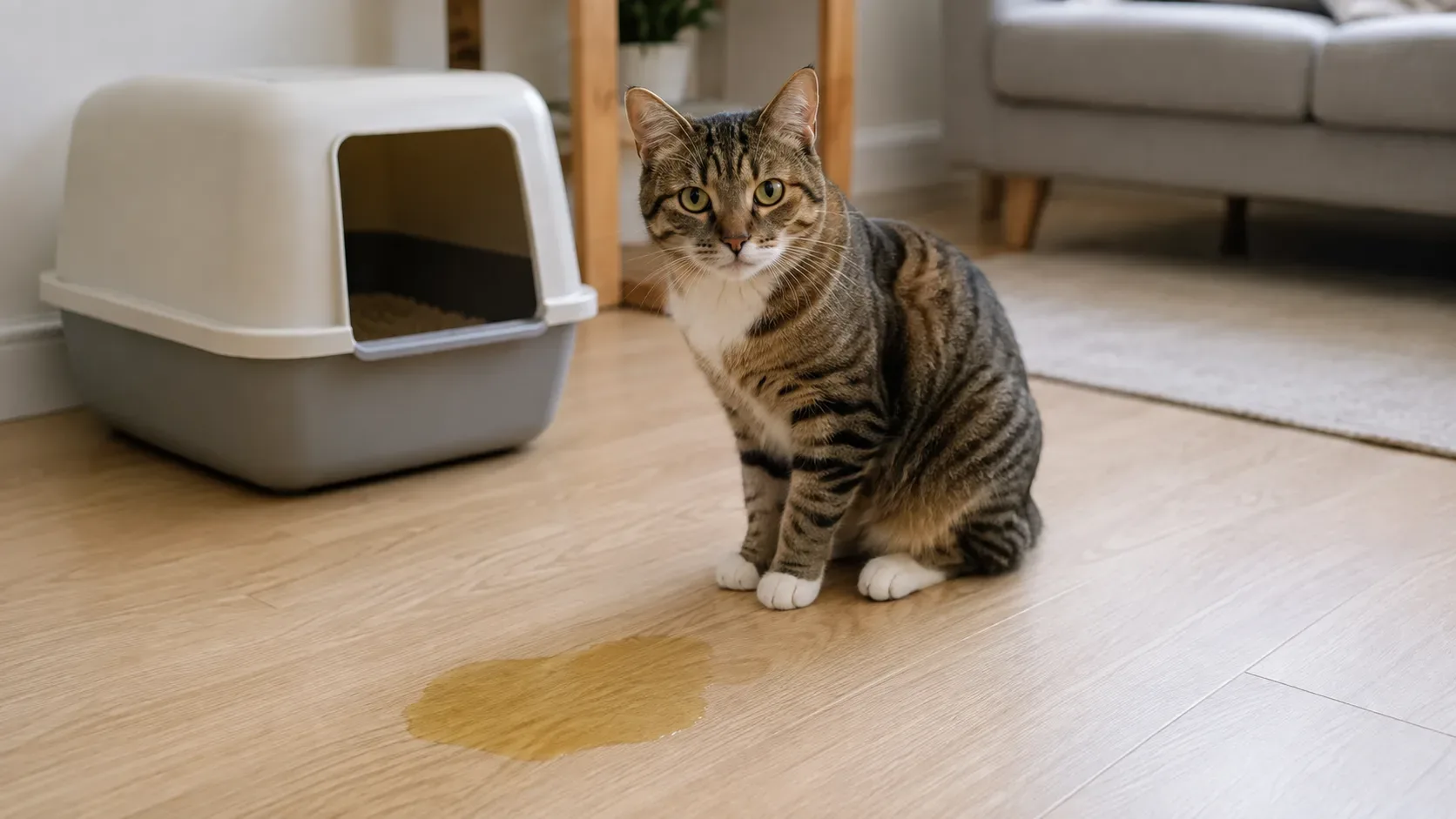
Finding pee outside the box does not automatically mean that the cat is marking its territory nor that the problem is just behavioral. Pain, inflammation and other urinary changes can also make your cat look for another place to urinate. Therefore, posture, location and amount of urine are useful clues, but do not replace veterinary evaluation.
There is also an important distinction: marking, elimination outside the box and disease are not three mutually exclusive possibilities. “Marking” and “elimination” mainly describe how the cat deposits urine. A medical condition may be behind a change in elimination behavior and needs to be ruled out before concluding that the cause is solely environmental or behavioral. The Feline Veterinary Medical Association recommends medical evaluation when a cat starts urinating outside the box, including in cases that appear to be marking.
The pattern gives clues, but does not complete the diagnosis
Some details help organize what happened before the consultation:
| Observed pattern | What usually appears | What the standard does not allow to conclude |
|---|---|---|
| Urine marking | Cat standing, tail raised and sometimes fluttering, releasing a small jet mainly against a vertical surface, such as a wall, door or curtain. | Does not prove that it is an exclusively behavioral problem. |
| Out of box disposal | Urine deposited mainly on horizontal surfaces, such as carpet, bed, clothing or floor. The cat may develop a preference for a location or material or avoid the box. | It doesn't prove that it's just an aversion to the box or a preference for the location. Pain and illness can also participate. |
| Signs compatible with urinary problems | Many attempts to urinate, straining or pain, vocalization, blood in the urine, genital licking or production of little urine. | It does not identify the cause alone. Cystitis, stones, obstruction and other diseases can cause similar signs. |
The classic description of marking is precisely the deposition of a small jet on a vertical surface while the cat remains standing, often with its tail raised and fluttering. Elimination outside the box usually occurs on horizontal surfaces and may be related to preference for a certain substrate or location, difficulty accessing the box or aversion to characteristics such as cleaning, size, location and type of litter.
These patterns, however, overlap. A painful urination experience may cause the cat to associate the box with discomfort and look elsewhere. Conflicts with other cats, difficulty accessing the box and environmental factors can also play a role. Therefore, investigating behavior alone without considering urinary health may leave the root cause undiagnosed.
When peeing outside the box can be a clinical sign
Urinating outside the box is one of the recognized signs of lower urinary tract diseases in cats. Other signs include increased frequency of attempts to urinate, difficulty or pain during urination, blood in the urine, vocalization, and frequent licking of the genital area.
There are several possible causes. These include feline idiopathic cystitis, urinary stones, urethral plugs, infections and, less frequently in some contexts, other changes in the urinary tract. Idiopathic cystitis is a common cause of urinary signs in cats and is diagnosed after other compatible causes are excluded.
This also explains why “he’s stressed” shouldn’t end the investigation. Stress can participate in idiopathic cystitis and marking behaviors, but similar signs can have other origins. The environmental context is important information for the veterinarian, not a diagnosis made at home.
The signal that turns the case into an emergency
The most important point is to check whether the cat is able to eliminate urine.
Repeated attempts to urinate with very little or no urine output may indicate urethral obstruction. Obstructed cats may also vocalize, show pain and become progressively downcast. Obstruction prevents the normal flow of urine, can cause serious metabolic changes and is a veterinary emergency. Males are more predisposed because the anatomy of the urethra favors obstruction.
This effort can even be confused with constipation. If the cat repeatedly goes to the box, strains and you can't confirm that a normal amount of urine is coming out, don't wait to find out if the problem goes away on its own. Seek emergency veterinary care, especially in male cats.
Vomiting, intense apathy, dehydration or obvious worsening of the general condition together with unproductive attempts to urinate further increase the concern.
What to note before the consultation
The observations below may help the veterinarian reconstruct the pattern without delaying care:
- Where the urine was: wall, door and other vertical surfaces or bed, carpet, sofa and floor.
- How the cat positioned itself: standing with its tail raised or in its usual posture to urinate.
- How many times did you try: an isolated episode or repeated trips to the box and other places.
- If urine actually came out: especially watch for attempts that produce only drops or nothing at all.
- If there were other signs: vocalization, straining, blood, genital licking, restlessness, lack of appetite, vomiting or apathy.
- What happens in the box itself: if clods or volumes of urine continue to appear that are compatible with the cat's normal habits.
- What changed in the environment: new litter, another box, change of location, different cleaning, moving house, new animals or conflicts between cats.
- If the problem has occurred before: frequency and recurrence help guide the investigation.
Detailed history, episode pattern, and information about number, location, cleanliness, and type of boxes are part of the investigation of cases of out-of-box elimination.
These notes are for the consultation, not as a reason to postpone urgent care. If there is repeated straining with little or no urine, the priority is to take the cat for evaluation.
Even when it seems behavioral, health comes first
In cases without signs of obstruction, the veterinarian may begin with the clinical history and physical examination and, as appropriate, request a urinalysis. Blood tests, urine culture, and imaging methods such as radiography or ultrasound may be necessary depending on initial signs and results.
If medical problems are ruled out, then investigating the condition of the box and the environment becomes more important. Type of litter, size and location of the box, cleanliness, ease of access, previous painful experiences, and tension with other animals can change where your cat chooses to urinate.
Punishing the cat, yelling or using aversive methods does not resolve the cause and can increase fear and stress. FelineVMA's current guidance is to work on environmental needs and the identified medical or behavioral cause, rather than disciplining the animal for the episode.
The most useful question, therefore, is not just “was it marking or peeing outside the box?”. First check for signs of urinary difficulty. Then record how and where the episode happened and take this information to the veterinarian. When there is repeated straining with little or no urine, especially in a male cat, evaluation should be immediate.