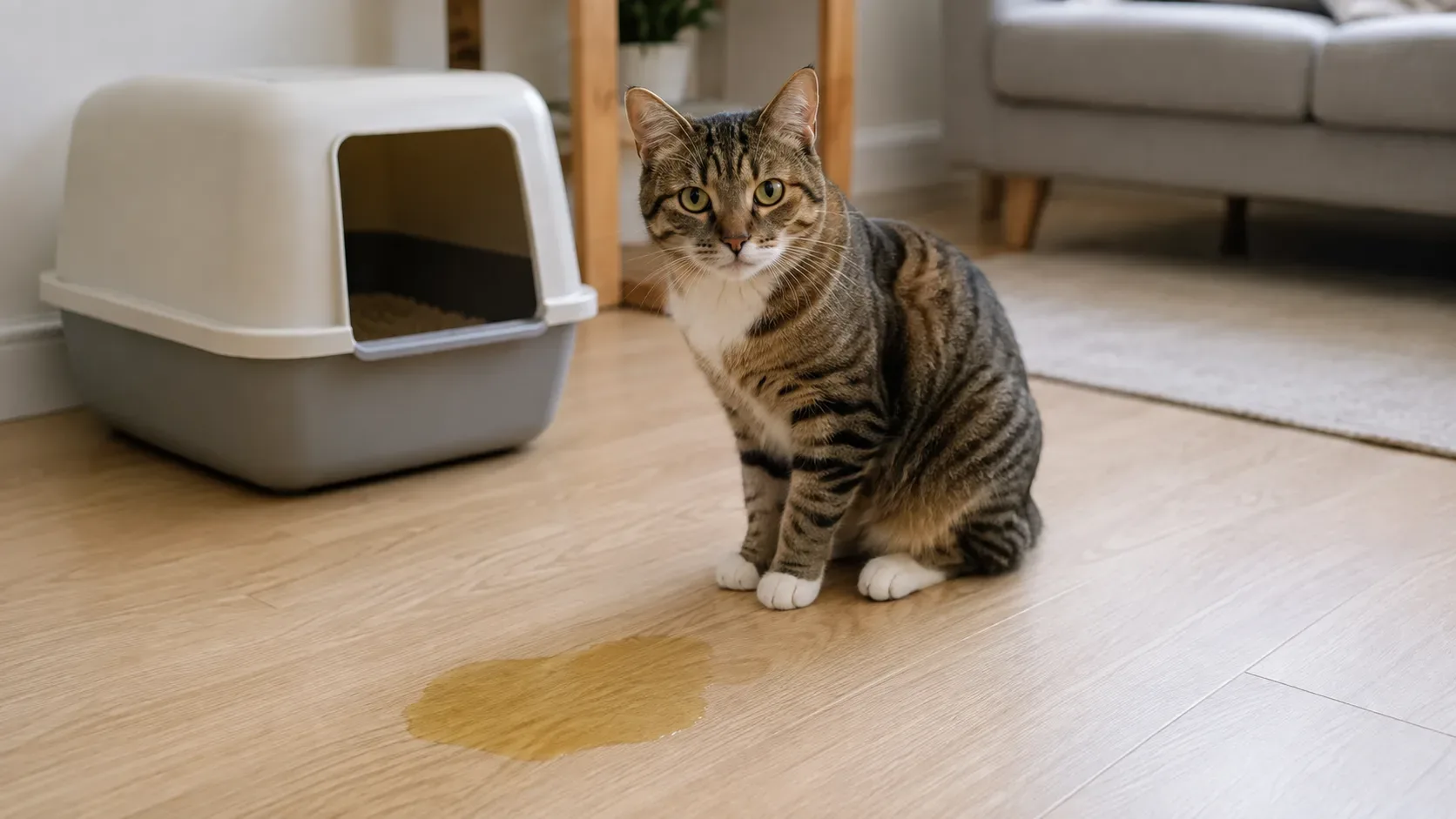
An isolated hairball can happen in a cat that grooms normally and then quickly goes back to eating, drinking, using the litter box, and behaving as usual. The important point is neither to treat every episode as an emergency nor to assume every bout of retching is “just a hairball”: recurrent vomiting, repeated unproductive retching, changes in appetite or stool, and respiratory signs call for a different level of attention.
Hairballs, or trichobezoars, form because cats swallow hair while grooming. Most of that material usually travels through the digestive tract and leaves in the stool; some may collect in the stomach and be expelled. Veterinary sources also show that there is no single cutoff for an “acceptable” frequency: the Cornell Feline Health Center notes that episodes every one or two weeks can occur without persistent problems in some cats, while VCA Animal Hospitals advises contacting a veterinarian if hairballs occur more than once a month. In practice, pay attention to your cat’s usual pattern, whether the frequency has recently increased, and whether other signs are present.
First: was it vomiting, regurgitation, or coughing?
This is one of the most confusing points for cat owners. The sound and posture can look similar, but what happens before and after the event can help separate them. A short video, recorded only if it does not delay care when breathing is difficult, can be very useful to the veterinarian.
| Event | What may come up | Observable clues |
|---|---|---|
| Vomiting | Hair, food, liquid, foam, or bile | Nausea, repeated swallowing, and abdominal contractions commonly occur before material is expelled. |
| Regurgitation | Undigested or barely digested food or liquid | It is more passive, usually without strong abdominal contractions, and may happen soon after eating or drinking. |
| Coughing | Often no hairball is produced | The cat may crouch, extend the neck, and have a dry cough; some bouts end with gagging or retching. |
VCA notes that a video of the episode can help distinguish coughing from vomiting. That matters because recurrent coughing can have a respiratory, rather than gastrointestinal, cause.
Checklist after a hairball
If your cat expelled hair and seems well, look at the whole picture over the next several hours. Instead of focusing only on what is on the floor, record six points:
- Frequency: was it a single episode, or did it happen again the same day? Has the pattern become more frequent over recent weeks?
- Appetite: did your cat return to eating normally or refuse food?
- Water: is your cat still drinking and able to keep water down without vomiting again?
- Stool: does the litter box show normal bowel movements, or are there diarrhea, straining, or no stool?
- Behavior: is your cat alert and active as usual, or lethargic, hiding, weak, or painful?
- Breathing: is breathing comfortable, or is there effort, wheezing, open-mouth breathing, or a blue/gray color to the tongue or gums?
Also look at what came up. A typical hairball is a moist mass of hair, often elongated or cylindrical rather than truly round. Blood, foreign material, or repeated vomiting without hair changes the assessment.
When home monitoring may be reasonable
A situation that is more compatible with observation is a single or infrequent episode, obvious hair in the expelled material, rapid recovery, and a cat that continues to eat, drink, defecate, urinate, and behave normally. Even then, write down the date. A string of spaced-out episodes may feel “occasional” from memory but become obvious on a calendar.
If the pattern is increasing, hairballs have become frequent, or other symptoms now accompany them, talk with your veterinarian even if your cat seems well between episodes. Vomiting is a clinical sign, not a diagnosis, and gastrointestinal disease, metabolic disorders, parasites, foreign-body ingestion, and other problems can look similar.
Signs that call for prompt veterinary assessment
Seek veterinary advice promptly if one or more of these signs occur:
- repeated vomiting, episodes that continue for more than one to two days, or a clear increase in frequency;
- repeated unproductive retching without bringing up a hairball or other material;
- lethargy, weakness, loss of appetite, weight loss, or abdominal pain;
- diarrhea, blood in the vomit, or signs of dehydration;
- inability to keep food or water down;
- vomiting together with no bowel movements, especially if there is pain or abdominal distention;
- suspected ingestion of string, a toy, a toxic plant, human medication, or another potentially dangerous substance.
The Merck Veterinary Manual considers persistent or severe vomiting concerning, especially when accompanied by blood, abdominal pain, weakness, weight loss, dehydration, or other adverse signs. Cornell also notes that repeated unproductive retching may occur with a hairball obstruction and requires veterinary evaluation.
Breathing difficulty is a different level of urgency
Not every “gagging” episode is a hairball. Cats that cough may crouch low and extend the neck, which leads many owners to think the cat is trying to vomit. If there is open-mouth breathing, obvious respiratory effort, blue or gray tongue/gums, collapse, or severe breathing distress, treat it as an emergency and seek care immediately. VCA describes asthma attacks with open-mouth breathing and color changes in the mucous membranes as a medical emergency.
Why stool and appetite matter
A hairball that is not expelled can, rarely, become lodged in the gastrointestinal tract and cause an obstruction. VCA lists vomiting, abdominal pain, and lack of bowel movements among possible signs of a trichobezoar obstruction; if a cat cannot keep food or water down, veterinary treatment is needed. That is why “did a hairball come up?” is only part of the picture: intestinal function and overall condition matter just as much.
What not to improvise at home
- Do not give laxatives, oils, or hairball products on your own to try to “push through” a possible obstruction. Cornell recommends using laxatives only with veterinary approval and supervision.
- Do not use human medications to control vomiting or pain without a veterinary prescription.
- Do not normalize recurrent episodes just because hair is present in the vomit. Hair does not rule out another cause.
- Do not withhold water on your own. Vomiting can cause dehydration; diet changes or fasting should be guided by a veterinarian for the individual case.
How to reduce recurrence
Regular brushing, especially for long-haired cats and during heavy shedding periods, can reduce the amount of hair swallowed. If a cat is grooming excessively, investigate why: itching, skin disease, pain, stress, or gastrointestinal problems can increase licking and hair ingestion. Hairball diets and products are best chosen with professional guidance, particularly when episodes are already frequent.
What to record for the veterinary visit
A simple log can save time and make the visit more productive. Write down the date and time, number of episodes, what was in the vomit, whether your cat ate and drank afterward, stool changes, and activity level. If it is safe, photograph the expelled material and record a future episode to show the veterinarian. Also mention recent food changes and access to plants, string, toys, medications, or other objects that could have been swallowed.
In short: the decision depends on the whole picture
Isolated hairball + normal cat afterward: monitor and record. Recurrence, a changing pattern, or other symptoms: arrange a veterinary assessment. Repeated unproductive retching, inability to keep food/water down, or suspected obstruction/toxin exposure: seek care without delay. Breathing difficulty, open-mouth breathing, or blue/gray mucous membranes: emergency.
This framework can help you judge urgency, but it does not replace a diagnosis. When you are unsure whether the event was coughing, vomiting, or an attempt to expel hair, a video and a description of what happened before and after the episode are especially useful to the veterinarian.