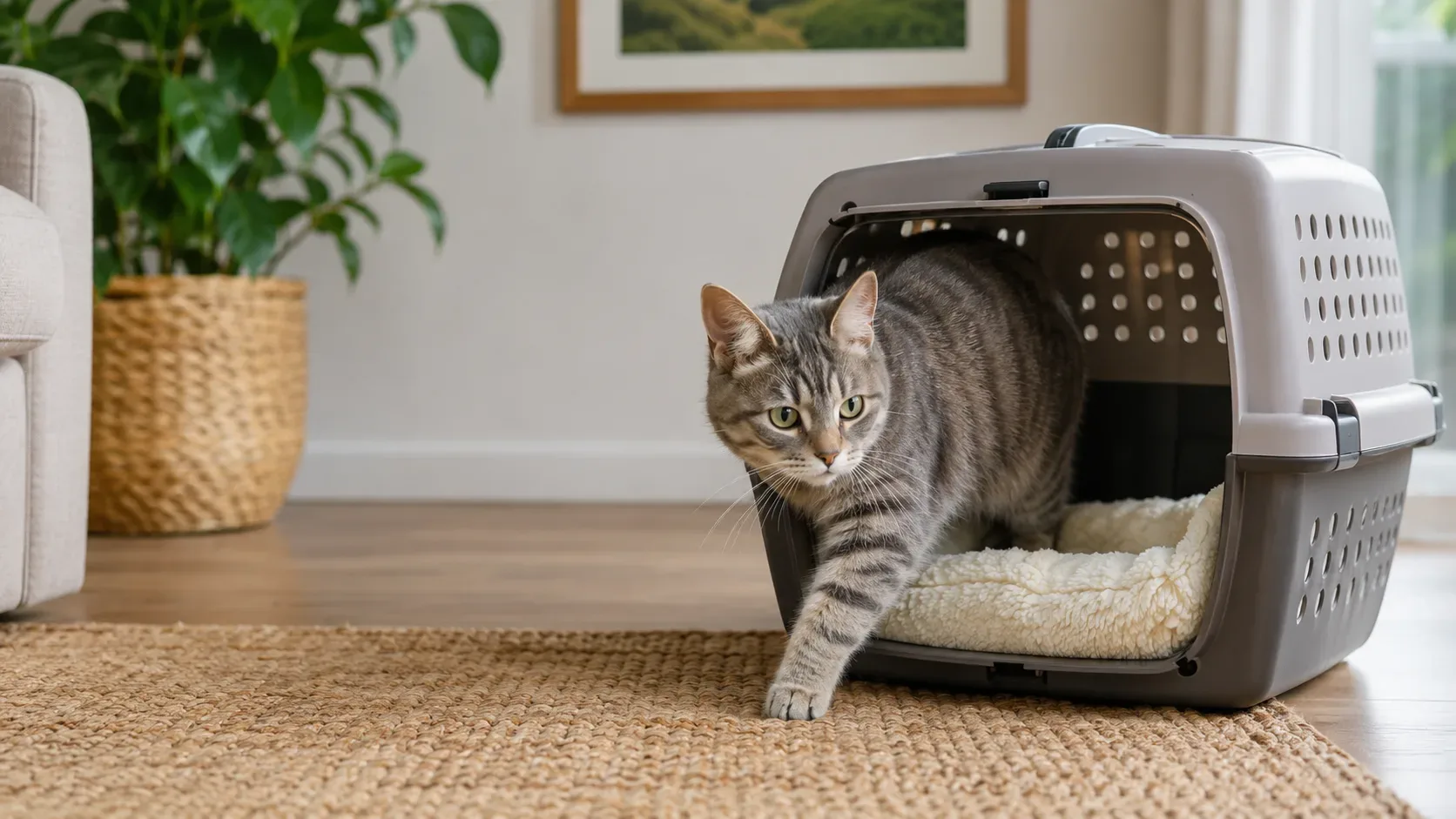
If your cat disappears under the bed as soon as the carrier appears, the problem does not need to be resolved in the minutes before the appointment. The most useful work starts first: letting the box be part of the environment and creating neutral or pleasant experiences around it.
The Feline Veterinary Medical Association (FelineVMA), through Cat Friendly Homes, recommends keeping the box in an area frequented by the cat, with familiar objects and rewards. Adaptation does not have a single deadline: it can take days, weeks or even longer, especially when there is already a strong association between cash, car and unpleasant situations.
So, think less about “putting the cat in the box” and more about teaching him, little by little, that entering the box does not always mean leaving the house.
Why does the cat run away when it sees the box?
When the box spends most of its time stored and only appears before a trip to the vet, the cat can learn that that object anticipates an unfamiliar sequence: containment, travel by car and arrival in another environment. Veterinary behavior experts precisely describe this association as a common reason for the animal to run away or hide when it notices the box.
The solution is not to win a chase on the day of the appointment. Cat Friendly Homes recommends avoiding chasing your cat around the house and putting it in the box, as this can increase fear and also increase the risk of scratches or bites.
The objective of preparation is to change this sequence: first the box becomes familiar in the home; then the cat learns to enter; only then come closed doors, small trips and, if possible, short journeys.
How to get your cat used to the carrier in stages
It is not necessary to complete one step per day. A cat may progress quickly through one stage and need several days in another. The most consistent guideline with friendly management recommendations is to observe the animal's response and progress gradually, rather than imposing a fixed schedule. The AAFP/ISFM Veterinary Interaction Guidelines emphasize that management should consider the emotional state of each cat and reduce fear and other negative emotions during the veterinary experience.
- Start by letting the box simply exist in the room. Choose a room where the cat already likes to rest or roam and leave the box accessible, rather than putting it away after each use. Place a blanket or other familiar material inside. If the cat already runs away just by looking at the box, a strategy used by the Indoor Pet Initiative, at Ohio State University, is to start with the door and even the top removed, when the model allows. At this stage, there is no need to bring the cat in.
- Create good experiences near the box before demanding entry. Snacks, toys or part of the food can be offered near the entrance and gradually further inside as the cat approaches by choice. Cat Friendly Homes and veterinary behavior experts recommend using rewards and familiar objects to build a more positive association. Forcing the animal inside before it is comfortable tends to get in the way of this goal.
- Let the complete entry become a common action. When the cat approaches without running away, start placing the rewards in a point that makes it enter completely. Continue allowing him to leave whenever he wants. If you removed the top or door, Ohio State University suggests replacing the top structure first and letting the cat get used to it again; the door enters after he accepts the rest of the box.
- Only then practice closing the door and moving the box. A prudent progression is to start with very brief closings and reopen before the situation becomes a fight. Increase the time gradually. When this is calm, start lifting the box for a few moments and placing it back on the floor. During transport, FelineVMA recommends supporting it from below, instead of just carrying it by the handle, which provides greater stability.
- Separate box training from car training. Entering without resistance does not necessarily mean being comfortable in movement. Once the cat tolerates the box well, short journeys can be made that end back at home, so that not every trip leads to the vet. FelineVMA, Ohio State University and veterinary behaviorists include short, positive commutes among strategies to increase familiarity with transportation. The cat must remain inside a secure box during travel, never loose in the vehicle.
- Keep the box available after the appointment passes. Putting it away immediately and repeating it only at the next visit recreates the pattern you tried to break. If it remains open in the home, and can function as a resting place, hiding place or place where rewards arise, familiarity does not need to start over from scratch at each appointment.
The signal to move forward is not the number of days
A habituation plan works best when the difficulty is increased in small doses. If the cat that yesterday came in spontaneously starts to run away as soon as you try to close the door, for example, there is no need to insist until it “gets used to it”. This type of reaction indicates that the change may have been too big for that moment.
In this case, return to the point where the cat was still able to participate without an intense escape attempt and repeat this step. This individual progression is in line with the approach of the Cat Friendly guidelines, which recommends tailoring interactions to the cat's emotional state, rather than applying the same degree of restraint to everyone.
This also explains why promises like “get your cat used to the crate in three days” are not very useful. Cat Friendly Homes itself advises that trusting the box can take days or weeks and, in material updated in July 2026, recommends starting adaptation weeks before the appointment when possible, noting that some cats may need even longer.
What if the old box already causes a very strong reaction?
Before changing boxes immediately, it is worth checking whether the model allows for simpler adaptation. Boxes with front and top opening or with a removable lid can facilitate both training and access to the cat during an appointment. In some veterinary evaluations, the animal may even remain in the lower part of a collapsible model instead of being removed by force.
When the aversion to the current model is very intense, veterinary behavior experts consider that starting training with another type of crate may be an option. The change, however, does not eliminate the need for habituation: if the new box also appears only before traveling, it may acquire the same negative association.
Regardless of the model, it must be suitable for the cat's size, allow safe transportation and be practical to open and clean.
The appointment is close and the training hasn't worked yet?
There is not always enough time to complete the fitting before a necessary appointment. If your cat continues to display intense fear despite training, notify the veterinary team before your visit. FelineVMA recommends speaking to your veterinarian in advance about additional measures for cats that become very stressed, including the possibility of prescribed medication to be used before the appointment when individually indicated.
Do not give sedatives or medications yourself. The choice of drug, dose and suitability depends on veterinary assessment and the animal's individual conditions. Veterinary behavior specialists also highlight that medications can complement training in certain cases, but they do not replace the gradual construction of a calmer relationship with the crate and transport.
When the destination is a vaccination or preventive consultation, take the opportunity to also check out Anti-rabies vaccination 2026: how to confirm the date and prepare dogs and cats. Getting used to the crate solves the step of leaving the house; Vaccination planning also involves confirming the need, date and guidelines for care.
The best time to prepare the next appointment is after this one
If the box only enters the routine on the day the cat needs to go out, each appointment begins with a race against the clock. Leaving it accessible after your return changes this logic.
It doesn't need to become your favorite place in the house. A very useful result is that the cat is able to approach, enter and stay in it without the immediate escape reaction that occurred before. From then on, small closing drills, transportation and short journeys help maintain familiarity between one appointment and the next.