Father's Day 2026 will be celebrated on Sunday, August 9th. For dogs and cats who are stressed by visitors, the most helpful preparation begins before the doorbell: maintaining some of the routine, blocking escape routes, setting up a protected space, and letting people know that the animal does not need to participate in the meeting.
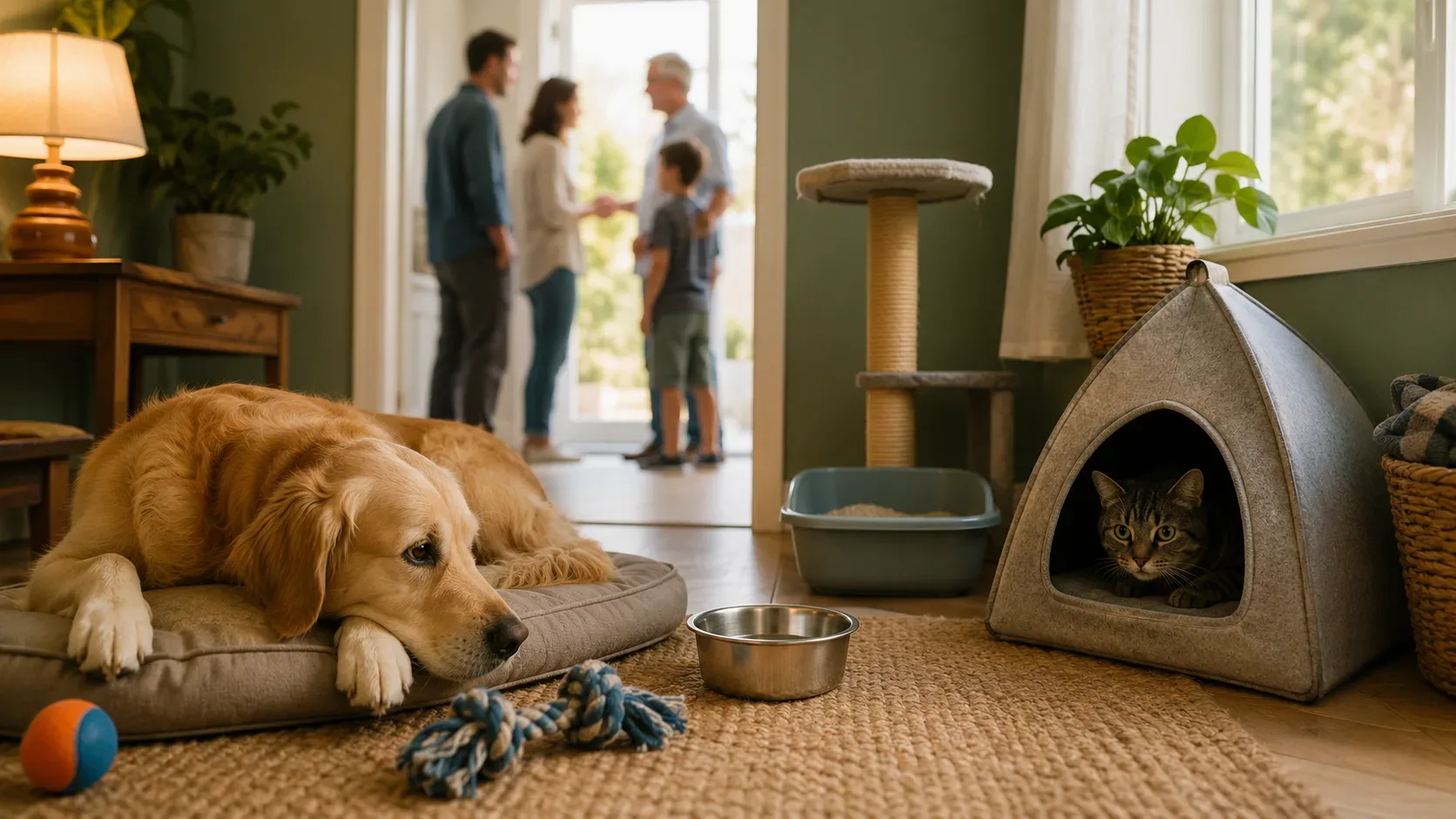
The best presentation may be none. Hiding, watching from afar, or staying in another room doesn't mean the encounter went wrong. The goal is to allow the animal to choose the distance and be able to exit an interaction before needing to growl, hiss, scratch or try to escape. Dogs that avoid contact should not be forced to stay close to people; cats that stay out of reach are also not yet ready to interact.
The rule that organizes the entire plan
Think about three needs: control, distance and predictability.
Control means that the dog or cat can enter the refuge, change position and end contact. Distance means that visitors do not advance, surround or attempt to remove the animal from hiding. Predictability means preserving eating, walking, playing and resting times whenever possible.
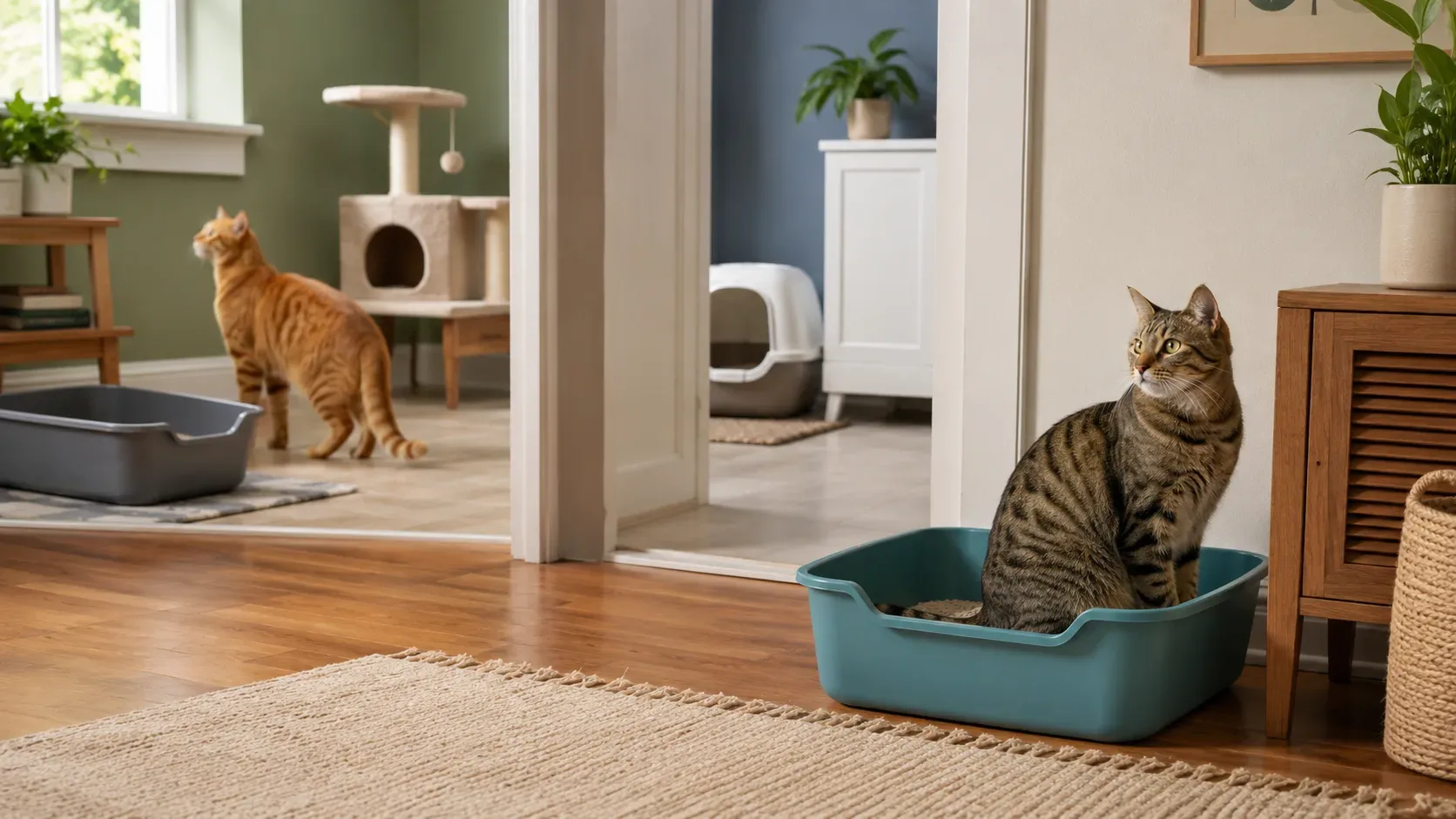
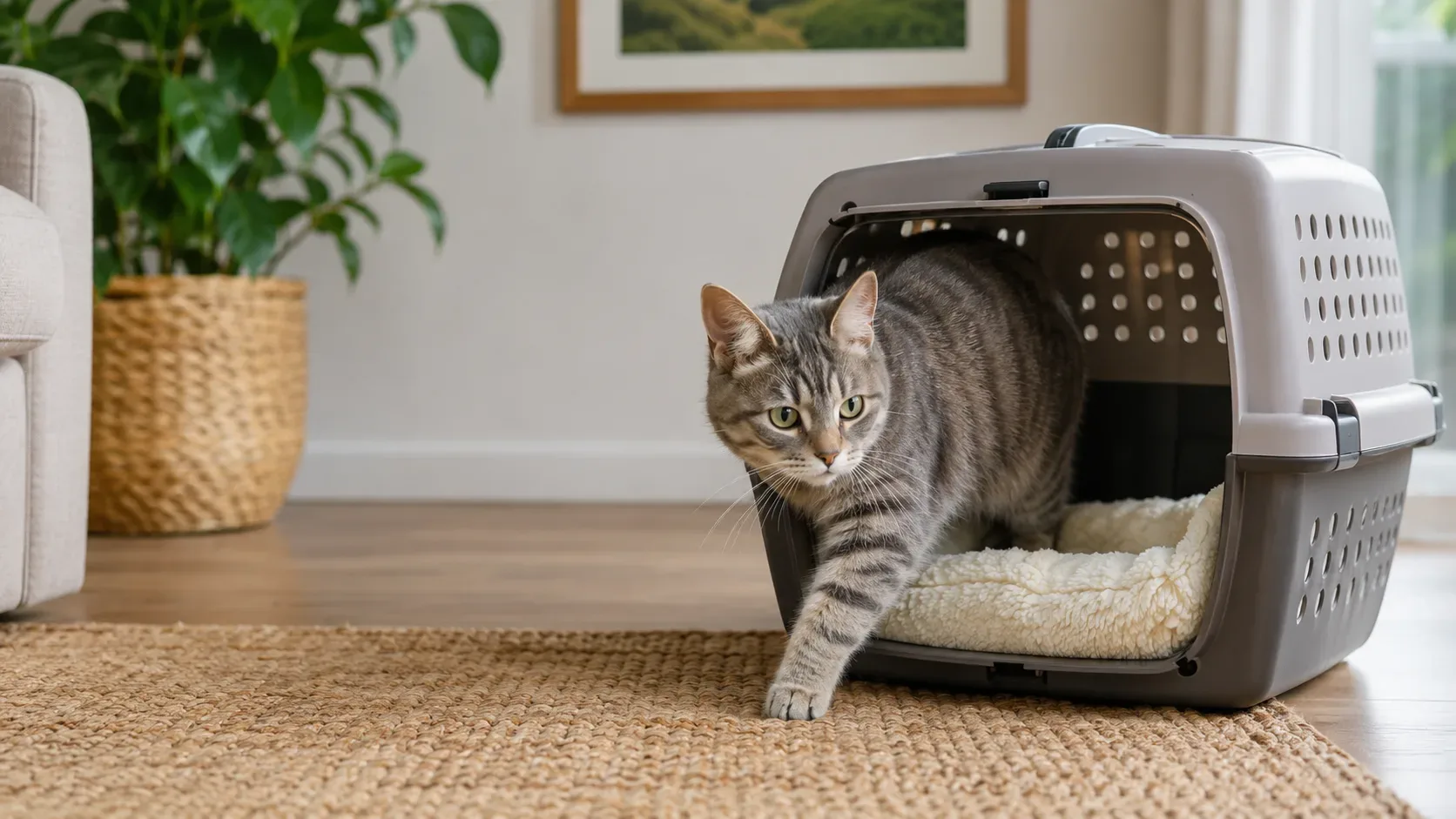
A refuge should not be a punishment. For dogs, transport boxes or enclosures should only be used as a resting area when the animal has already become accustomed to remaining there calmly. This is not the time to lock a frightened dog in an unfamiliar crate. For cats, the space needs to offer a hiding place, a high point and distributed resources, preventing food, water and litter box from being piled up in the same corner.
24-hour plan before, during and after visits
24 to 6 hours before: prepare the environment
- Choose refuge. Choose a room or area with little movement, far from the entrance door, the kitchen and the place where children play. The room must have safe ventilation, a comfortable temperature and a door that closes properly.
- Place familiar objects. Use the bed, blanket, den, toy or scratching post that is already part of the routine. Avoid introducing several new objects, smells or equipment the day before.
- Distribute resources. Keep water available. For cats, keep the litter box away from water, food and bed. Include a den and, when possible, a stable elevated surface. For dogs, only offer toys or chew items that are already used safely.
- Review escape routes. Check doors, gates, windows, screens and garage access. Update the microchip data, if available, check the identification attached to the collar and keep a recent photo of the animal. In meetings, an open door for a few seconds can be enough to escape.
- Define someone responsible for the entrance. An adult must control the door and know where the animal is before each arrival or departure.
- Send the rules to guests. Let them know that no one should call, chase, stare, hug, carry or remove the animal from the refuge. Guidance needs to come before the visit, not after the first sign of discomfort.
If the dog or cat has ever bitten, scratched, lunged at visitors, or tried to walk through doors in similar situations, plan for physical separation throughout the encounter. This is not a good time to “test” whether he has improved.
2 hours until bell: reduce agitation
Keep your day as similar to your normal routine as possible. A healthy dog can go for its usual walk and have the opportunity to urinate and defecate before people arrive. For cats, a short, familiar game can help preserve the habitual cycle, as long as the animal is willing.
Do not try to tire the animal excessively. Intense exercise, unusual handling, or a sequence of people “making friends” before the meeting can add excitement or discomfort.
About 15 to 30 minutes before the first visit:
- take the animal to the protected space without chasing it;
- add fresh water and check the resources;
- close windows and external access;
- test the door or barrier;
- keep the ambient sound low, if it is already part of the routine;
- inform children that the shelter is outside their play areas.
The animal must be secured before the bell rings. Trying to hold it while several people enter combines noise, approaches and an open escape route at the same time.
On arrival: welcome people first
The entrance usually contains voices, footsteps, bags, hugs and open doors. Keep the dog or cat in the shelter while everyone arrives and settles in.
Ask visitors to ignore the animal initially. For a cat that has decided to watch from a high vantage point, staring or reaching out can increase fear. For a dog that turns away, retreats or hides behind its owner, insisting on contact disrespects a request to distance.
It is not necessary to open the refuge to “see what happens”. The door may remain closed throughout the meeting when this is the safest and most comfortable option.
During the meeting: the animal decides whether it wants to appear
When the animal has no history of aggression and usually gets along well with some people, access to a common area can only be considered after the house is calmer. Even so, the approach must come from him.
An adult should monitor the contact and observe the entire body, not just the tail or vocalization. The interaction ends when the animal moves away, stiffens, turns its face away, retreats or seeks a hiding place.
Snacks can be offered remotely when they are already part of the diet and the animal shows interest. Don't use food to lure him into a situation he tries to get away from. Refusing a normally desired food can also be a sign that the intensity of the encounter is too high.
Practical plan of the refuge
No need to renovate the house. A simple room can be organized into zones:
- Entry: firm door, external warning not to enter and, when necessary, a second barrier. Avoid leaving a guide, toys or objects that make the person need to open the door repeatedly.
- Wall furthest from the door: bed, blanket or family den. For the cat, include a covered option and a stable elevated spot. When possible, the den should allow him to not feel trapped.
- Quiet side: fresh water, away from the hallway and door.
- Another part of the room: familiar food or food toy, without blocking access to water or exit.
- Separate corner for the cat: clean litter box, away from food, water and rest area.
- Windows and external access: closed or protected by screens in good condition.
- Circulation area: free of suitcases, wires, breakable objects and items that could fall if the animal tries to hide.
Feline needs include a safe place, hiding places, elevated surfaces, and separate important resources. Human interactions should also be positive, predictable, and tailored to each cat's preferences.
Rules for children and adults
Small children should not be left alone with dogs or cats, even when the animal already gets along well with them. An adult needs to supervise the interaction and be able to stop it before the child or animal becomes overwhelmed.
Combine short rules:
- the refuge is not a visiting area;
- do not chase the animal;
- do not hug, squeeze or lift on your lap;
- do not bring your face closer;
- do not move while he eats, sleeps, uses the litter box or has a toy;
- do not block the passage;
- when the animal moves away, the interaction is over.
Also, don't let multiple people try to contact you at the same time. A sociable animal may tolerate one person sitting and be uncomfortable when surrounded by a group.
Signs of discomfort in dogs
Note changes from usual behavior and context. An isolated signal does not allow us to conclude what the dog is feeling, but an increasing combination indicates that it is time to increase the distance.
Early or moderate signs may include:
- turn the head or body;
- avoid eye contact;
- lick your lips without food nearby;
- yawn without being sleepy;
- raise a paw;
- keep ears back;
- lower the head or body;
- leave the tail low or between the legs;
- walking repeatedly, shaking or looking for hiding place;
- panting without heat or exercise;
- barking or whining outside the norm.
Freezing, rigid body, staring, growling, exposed teeth, or lunging require immediate interruption. Don't scold the growl. Move people away, clear a safe route and use the planned barrier. Subtle cues may precede more intense responses, although some dogs progress quickly between these stages.
Signs of discomfort in cats
Cats can show stress discreetly. Hiding or going up to watch is not an invitation for someone to come and get you.
During your visit, please note:
- body lowered or crouched;
- ears turned to the sides or backwards;
- very dilated pupils;
- tail beating or moving quickly;
- stare;
- escape or attempt to remain out of reach;
- unusual growling, hissing or meowing;
- bristling fur;
- kick, lunge or bite.
After the meeting, changes such as eating less, avoiding the litter box, urinating outside of it, hiding much more than usual or changing the hygiene of the coat also deserve attention. These behaviors may be related to stress, but they may also accompany pain or illness and should not be automatically interpreted as “trickery.”
When you notice increasing signs, ask people to move away. Do not try to catch an agitated cat with your hands or forcibly remove it from a hiding place. Close access to the environment, reduce noise and allow it to reorganize.
After people leave
Before opening the refuge, confirm that doors, gates and windows are closed. Let the house be quiet and allow the animal to go out at its own pace.
In the following hours:
- resume normal schedules;
- offer water and food normally;
- go for a walk or take regular hygiene routines;
- check the use of the litter box;
- observe if the animal can rest;
- record which situations preceded the signs of discomfort.
Don't try to make up for the period with insistent physical contact. Some animals look for their owner; others need to sleep or remain alone.
The notes help you prepare for the next visit: number of people, presence of children, busy times, sounds, approaches and time needed to return to normal behavior.
When the home plan is not enough
Seek veterinary advice when behavior changes suddenly, the animal is unable to recover after the visit, shows frequent signs when faced with different stimuli or shows aggression that is difficult to predict. Pain and other health problems can alter tolerance, appetite and behavior.
History of bites, serious scratches, lunges at people, redirected aggression, attempts to walk through doors, or injuries while trying to escape justifies an individualized plan before new encounters. Until triggers are assessed, physical separation must be maintained.
For cats, not eating properly for 24 hours requires immediate veterinary attention. Difficulty breathing, collapse, major injury, persistent bleeding, or inability to urinate should also not be treated as simple stress.
Do not offer human medications, sedatives, calming supplements, or leftover old prescriptions on your own. Products sold as natural may also be unsuitable for a particular species or clinical condition. Medications for fear or anxiety, when necessary, depend on individual veterinary assessment and prescription.
The best presentation may be none
A peaceful meeting does not depend on the dog or cat greeting everyone. When the animal can choose distance, find its resources and remain protected from doors and approaches, the risk tends to be more controllable.
Prepare the space before the bell and share the rules with all visitors. Respecting an animal that prefers not to appear is also a way of including it in the household routine.