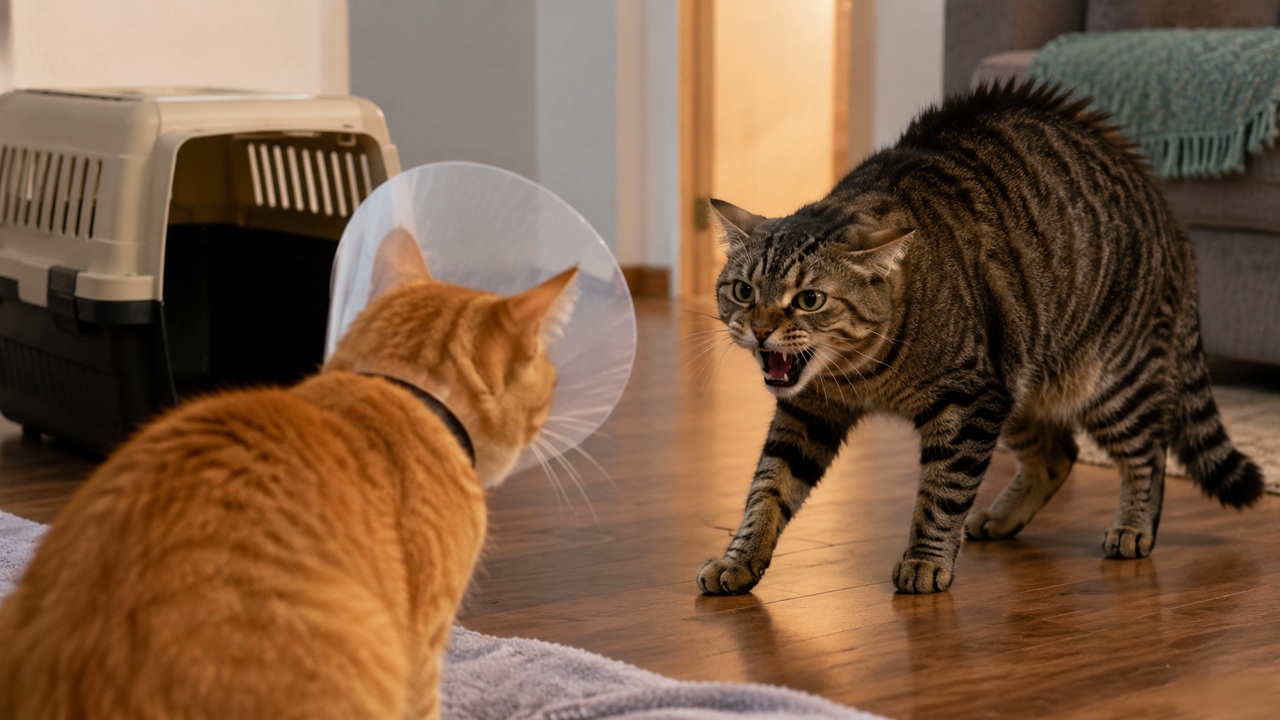
When two cats that normally lived together start growling, hissing, or trying to attack each other right after one of them returns from the veterinarian, the first step is not to force them to “recognize each other.” It is to reduce tension and prevent a confrontation. The returning cat may smell like the clinic, medications, and other animals, and may also be more frightened, sore, sleepy, or wearing a collar, surgical recovery suit, bandage, or another item that changes appearance and movement. To the other cat, that combination of signals can make a familiar companion seem temporarily different.
The Feline Veterinary Medical Association, formerly AAFP, advises that unfamiliar smells after a veterinary visit can make a cat react as though its companion were a stranger. International Cat Care also draws attention to this problem after stays at a clinic. That does not, by itself, mean their relationship is over. In many cases, living together improves once the returning cat regains the smell and routine of home and the reunion is handled without rushing.
If there was growling, hissing, or an attempted attack, separate them first
If you notice intense staring, chasing, persistent growling, an arched body, raised fur, or an attempted attack, stop the interaction and keep the cats in separate areas. The cat that came back from the veterinarian should stay in a quiet room with water, food, a litter box, a comfortable place to rest, and the care recommended by the veterinarian. This protection is especially important after surgery, sedation, anesthesia, or hospitalization, when the cat may be less coordinated, in pain, or in need of rest.
Do not place the two cats face to face so they can “work it out.” Do not hold one cat in your arms in front of the other, and do not try to bring their noses together. If tension is already high, picking the animals up with your hands is also not a good idea. FelineVMA guidance on tension between cats recommends blocking visual contact with a solid barrier, such as a
cushion or a piece of cardboard, and then guiding each cat to a different space. In a real fight, putting your hands close to them increases the risk of bites and scratches.
Punishing the cat that growls, shouting, spraying water, or using physical reprimands tends to add fear and arousal to a situation that is already tense. The immediate goal is to lower arousal, not to correct the warning. Growling and hissing are signals of discomfort and a request for distance; ignoring them and forcing proximity can turn defensive communication into an attack.
Why a familiar cat may seem like a stranger after the clinic
Smell plays a major role in cats' social recognition. At the clinic, the animal comes into contact with the odors of disinfectants, people, surfaces, medications, and other animals. After a hospital stay, that change may be even more noticeable. Back at home, the cat may also move differently because of pain, fatigue, anesthesia, or physical limitation.
Appearance can change at the same time. An Elizabethan collar makes the head look larger, a surgical recovery suit changes the silhouette, and a bandage changes the smell and shape of part of the body. The resident cat does not have to “forget” its companion to react badly; it is enough for previously familiar signals to be different enough to trigger caution or fear.
This situation is commonly called non-recognition aggression. The term is useful for describing what the caregiver sees, but it should not become an automatic explanation for every fight after a veterinary visit. Pain and illness can contribute to irritability and aggression, and tension can also be redirected after a frightening experience. If the behavior is intense, persistent, or inconsistent with the cats' usual pattern, veterinary assessment remains important.
How long do the cats need to stay separated?
There is no number of hours that works for every case. In some situations, tension drops on the same day; in others, especially after surgery or hospitalization, separation may need to continue longer. Cat Friendly Homes itself refers to a few hours or more after an operation, always taking the veterinarian's recommendation and the animals' reactions into account.
Behavior is the most useful criterion. Before moving forward, both cats need to be able to remain calm with a closed door between them. The returning cat should be recovering appropriately, and the resident cat should not spend long periods watching the door, growling, trying to attack underneath it, or becoming increasingly aroused. If either cat is still very reactive, separation is not a delay; it is part of addressing the problem.
Reintroduction: start again with scent, not direct contact
Reintroduction can use the same principles applied in gradual introductions between cats, but without treating the animals as if they had never lived together. The idea is to make the encounter predictable again and allow familiar signals to reappear without another confrontation reinforcing fear.
First, let the returning cat rest and regain its routine
During the first hours, prioritize rest, feeding according to the clinic's instructions, hydration, an accessible litter box, and pain control prescribed by the veterinarian. The cat should be able to groom and reconnect with the home environment at the pace allowed by recovery. This process helps re-establish familiar smells.
If there was a surgical procedure, do not remove a collar, recovery suit, or protection simply to make it easier for the other cat to accept the patient. Medical safety comes first. Also avoid encounters that could lead to chasing, jumping, fighting, or pressure on the operated area.
Next, exchange scents without a face-to-face meeting
When both cats are calmer, swap blankets, beds, or other soft items that carry each cat's scent. FelineVMA includes exchanging bedding as a step in olfactory familiarization. The goal is to allow investigation without physical contact and without making either animal feel cornered.
Watch the reaction. Sniffing and walking away is different from repeatedly growling, attacking the object, urinating outside the litter box, or maintaining intense vigilance. If the other cat's scent still triggers marked tension, stay at this stage longer. There is no need to rub items over a painful area or near an incision; objects the cats have already used are usually enough for scent exchange.
Create positive experiences on opposite sides of the door
Once the cats tolerate each other's scent, use pleasant moments on opposite sides of a closed door. This can be a small meal, a treat each cat enjoys, or calm play. Start at a distance where both can eat, play, or relax without fixating on the other.
If either cat stops eating, becomes rigid, growls, hits the door, or tries to rush forward, increase the distance and lower the difficulty. Behavioral recommendations from FelineVMA and VCA follow this principle: the other cat's presence should be paired with something positive, but at an intensity low enough that neither animal enters a state of fear or defense.
Move on to protected visual contact
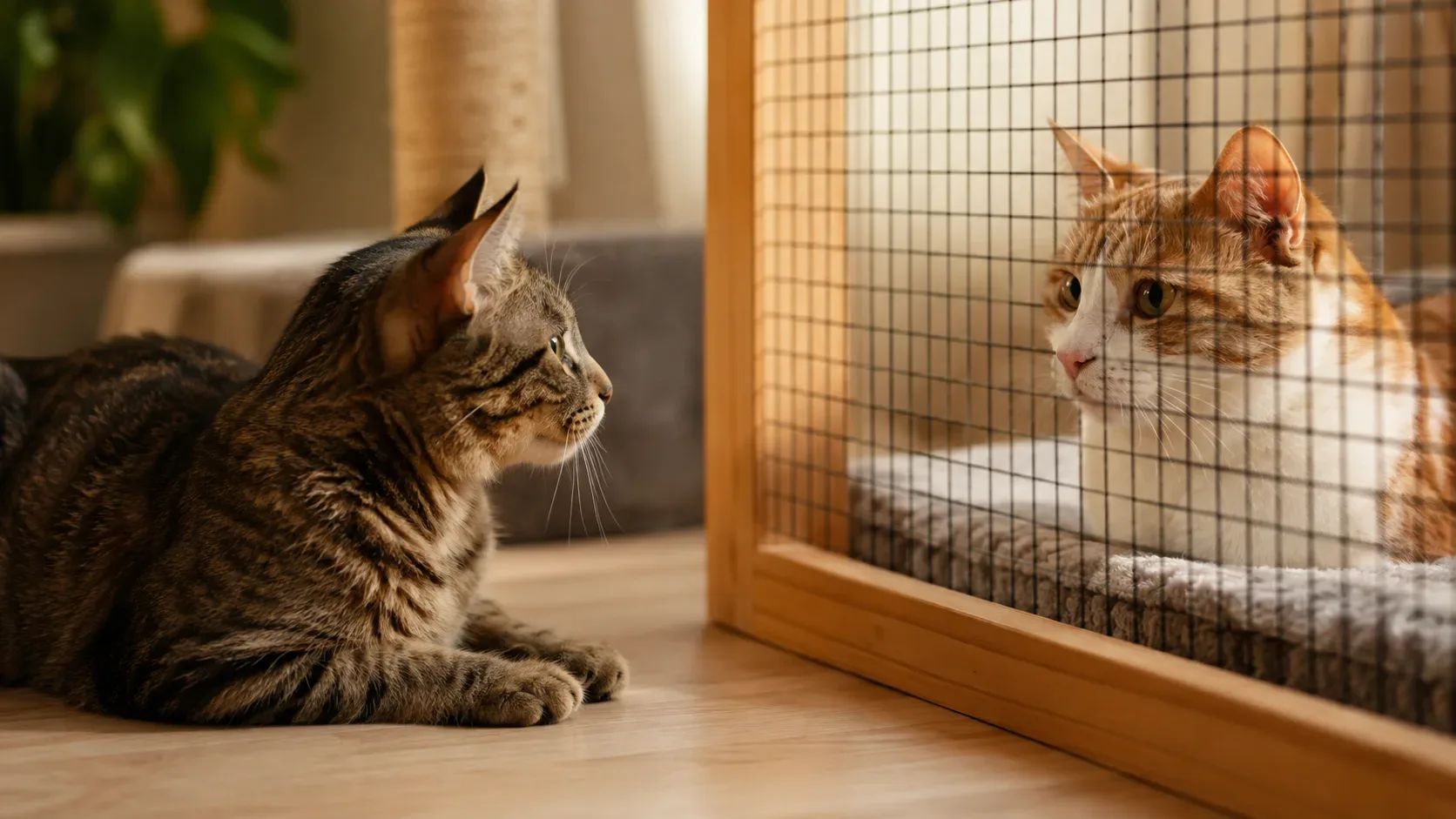
Only advance when the previous stage is calm. Visual contact can begin through a secure barrier, such as a screen door, a suitable gate, or a controlled opening that prevents physical contact. Sessions should be short and supervised. The cats need the option to retreat, and the environment should not create a narrow corridor where one cat becomes trapped in front of the other.
The caregiver does not need to wait for them to approach or groom each other. The first goal is much simpler: one cat notices the other and remains functional. If they can accept treats, play, look away, explore the environment, or simply remain without threatening behavior, that is a better sign than forced closeness.
Only then allow supervised meetings in the same space
After several calm visual exposures, allow the possibility of supervised physical contact. Start with a short period in an environment with escape routes, elevated spots, and enough room to keep distance. End the session while things are still going well instead of waiting for
a conflict to appear.
If chasing, blocking passage, prolonged staring, escalating growling, or an attempted attack reappears, return to the previous stage. Moving back one step does not mean the process has failed. In feline reintroduction, rushing often costs more time than moving slowly.
How to tell if you are moving too fast
The problem is not limited to open fights. FelineVMA emphasizes that tension between cats often appears in subtle ways. One cat may block doors, hallways, food, or the litter box; stare fixedly at the other; stalk silently; avoid certain rooms; spend more time hiding; or change resting and feeding routines.
During reintroduction, the best measure is each cat's ability to choose to move away and return to normal activities. A single hiss can be a request for distance and does not require panic, but sessions that repeatedly end in staring, chasing, or fleeing show that the level of contact is still too high.
The goal also does not have to be an openly affectionate friendship. Some cats go back to sleeping together and grooming each other; others regain a peaceful coexistence with more personal space. The absence of chasing, fear, and resource blocking already represents an important functional outcome.
Arrange the home so neither cat has to compete for resources
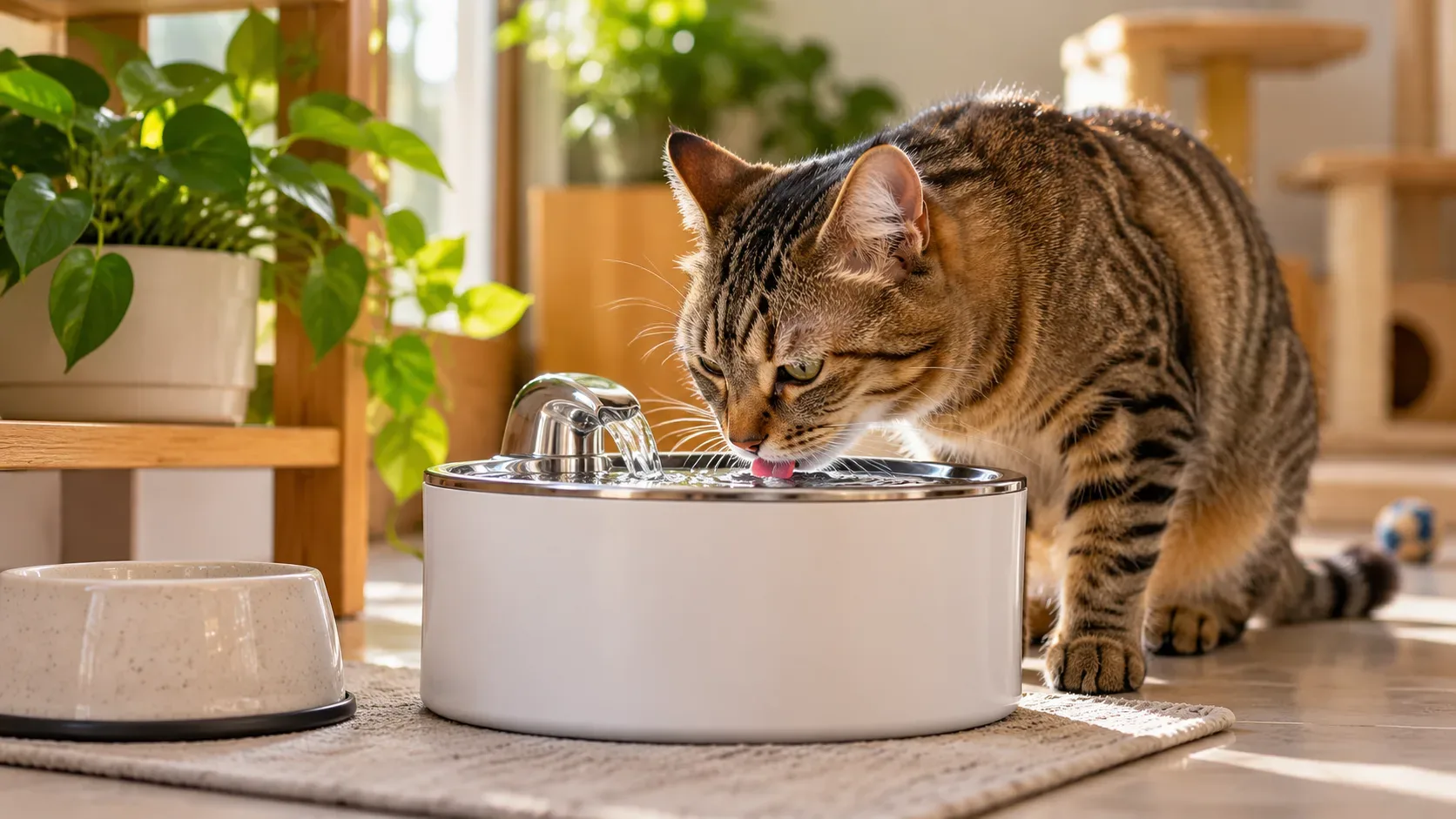
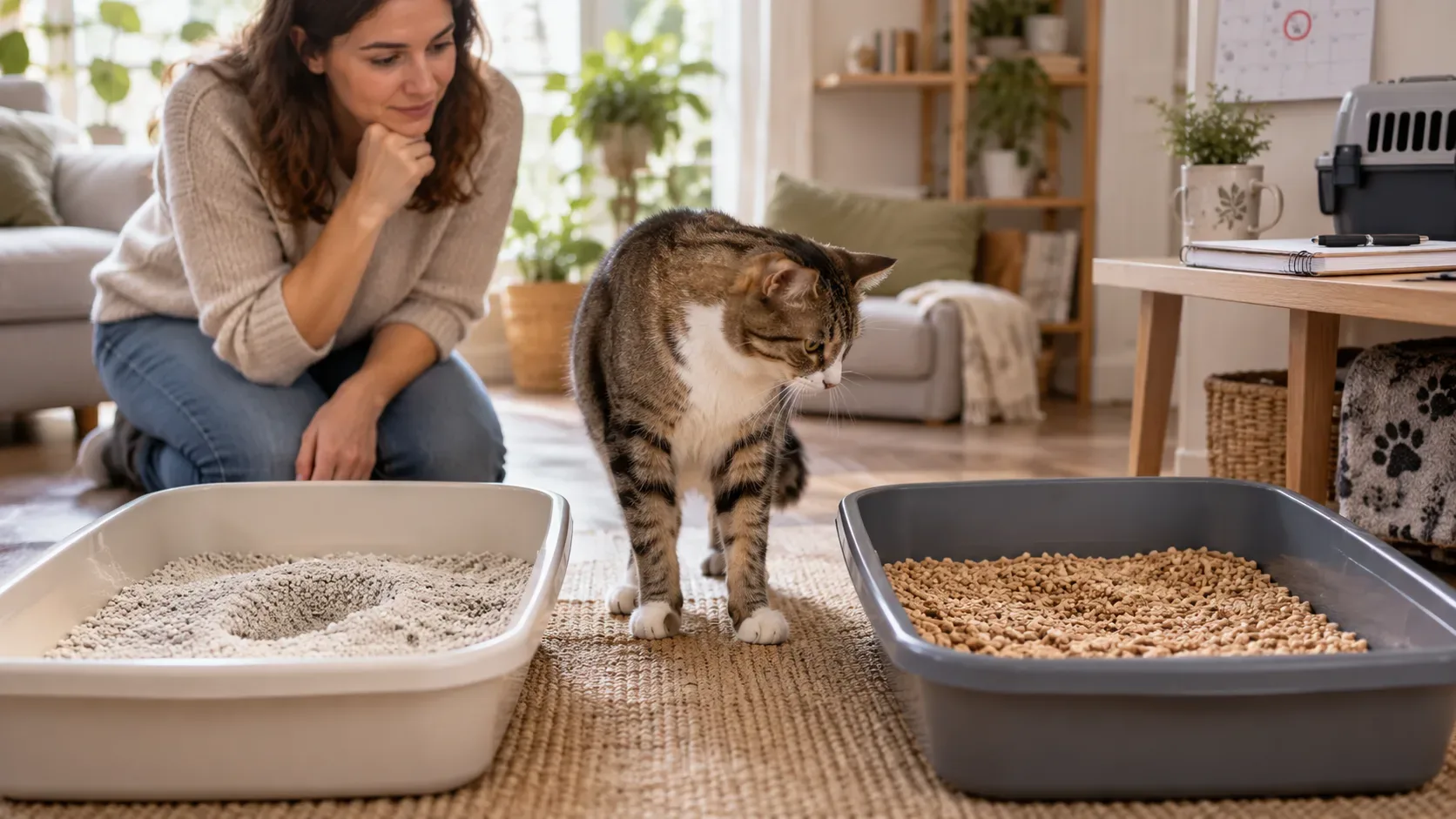
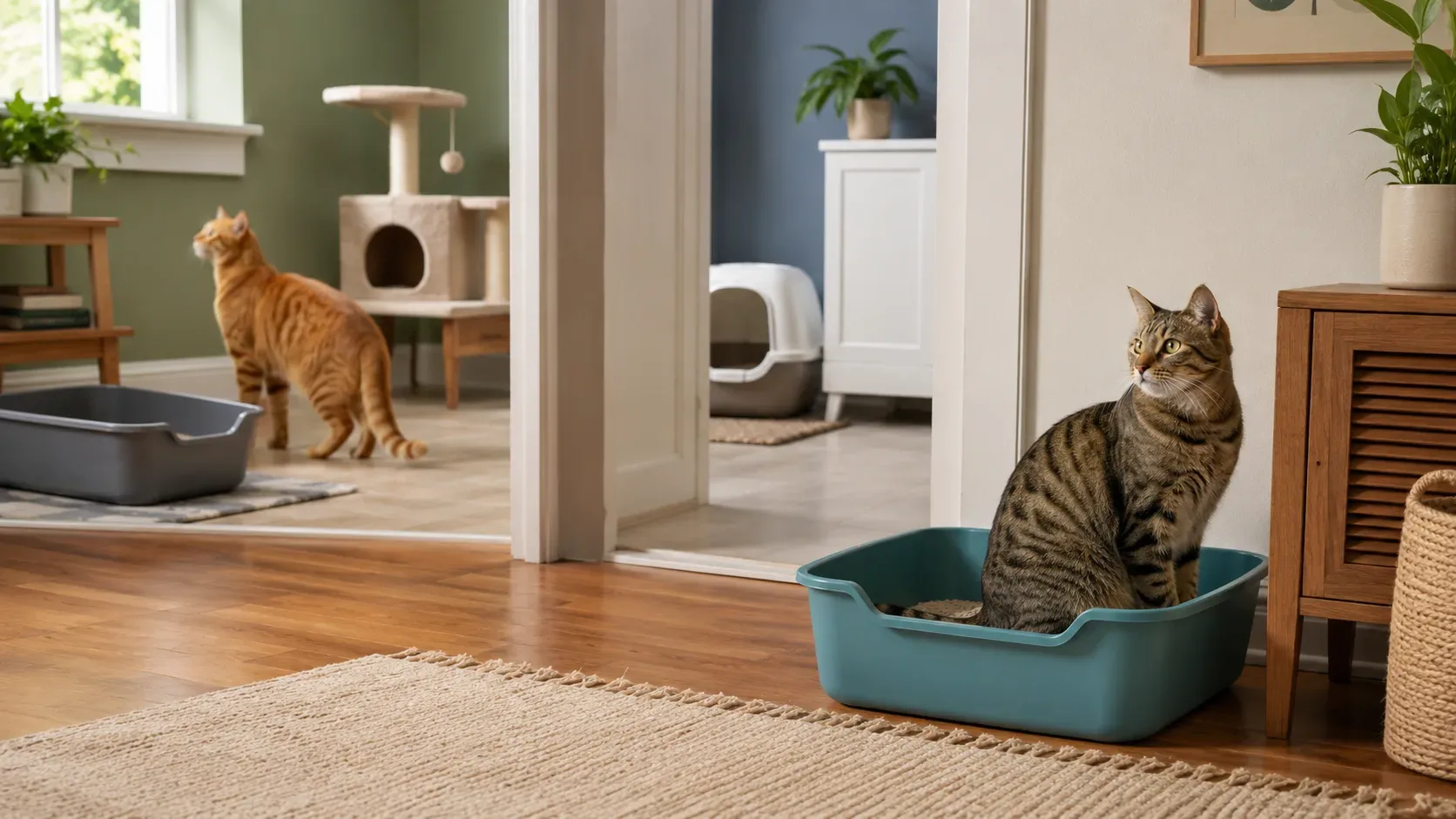
During recovery and reintroduction, separate resources reduce forced encounters. Each cat should have easy access to water, food, a litter box, resting places, hiding spots, and elevated areas without having to cross a zone controlled by the other cat. In homes with tension, concentrating everything in a single room can create bottlenecks and allow silent blocking.
Current FelineVMA guidance for multi-cat homes emphasizes individual safe spaces and distributed resources. This is useful even when the problem began only after the veterinary visit because it reduces social pressure while the relationship stabilizes.
Synthetic pheromones may help, but they do not replace separation
Diffusers or sprays containing synthetic feline pheromones appear as a complementary resource in FelineVMA guidance for reducing tension and helping introductions. They can be part of the environment, especially in areas where the cats usually spend time, but they are not a solution for placing still-reactive animals together.
If there is growling, chasing, or an attack, management still means separating the cats, reducing stimulation, and reintroducing them gradually. Pheromones should be treated as support, not as permission to skip steps.
Take extra care when the cat has returned from surgery or hospitalization
After a procedure, the cat may be less coordinated or more sensitive to touch. Follow the clinic's instructions on feeding, medication, physical activity, incision protection, and use of a collar or recovery suit. Reuniting with another cat should not interfere with these measures.
If the recovering cat shows significant pain, difficulty breathing, bleeding, a concerning change in the incision, marked lethargy, repeated vomiting, refusal to eat, or any sign that conflicts with the discharge instructions, contact the veterinary team. Medical problems should not be explained away as “stress from coming home.”
When aggression needs professional assessment
Seek veterinary guidance if there are injuries, attacks that are difficult to interrupt, progressive worsening, a sudden behavior change without a clear explanation, or signs of pain or illness in either cat. VCA recommends evaluating both animals when there is aggression between cats in the same household because medical conditions can contribute to fear and aggression.
It is also time to seek help when separation and careful reintroduction do not produce progress, when one cat stops eating or using resources comfortably because of the other, or when the household cannot carry out the steps without risk. Persistent cases may require a veterinarian experienced in behavior or a veterinary behavior specialist. Medication, when indicated, should be part of a clinical and behavioral assessment, never a do-it-yourself trial.
At the next veterinary visit, plan for the return home in advance
If your cats have had this problem before, it is worth planning the return before the next appointment. Prepare a quiet room, keep familiar-smelling objects available, and avoid releasing the returning cat directly in front of the others. Cat Friendly Homes recommends observing the cats' reactions before allowing contact and separating the returning cat if there is hissing or hostility.
Keeping the carrier as a normal part of the environment and placing a familiar blanket inside it can also reduce some of the stress associated with travel. If the cat usually arrives at the clinic very frightened or comes home excessively agitated, talk with the veterinarian before the appointment about handling strategies and, when appropriate, pre-visit medication prescribed for that individual animal.
The main point: do not turn the reunion into a test
When a cat comes home from the clinic and the other reacts as though it were a stranger, trying to prove that “they have always gotten along” by putting them together can make the problem worse. Separate them at the first sign of conflict, let the returning cat rest and regain familiar signals, reintroduce scent, then visual contact, and only then physical contact.
The pace should be determined by the cats' responses, not by the clock. If both can remain relaxed, eat, play, explore, and move away without being chased, the process can move forward. If fear, fixation, or aggression appears, reduce contact. This more cautious pace
protects the cat that has just been through a veterinary visit and helps prevent a temporary episode from turning into a sequence of fights that actually changes the relationship between them.