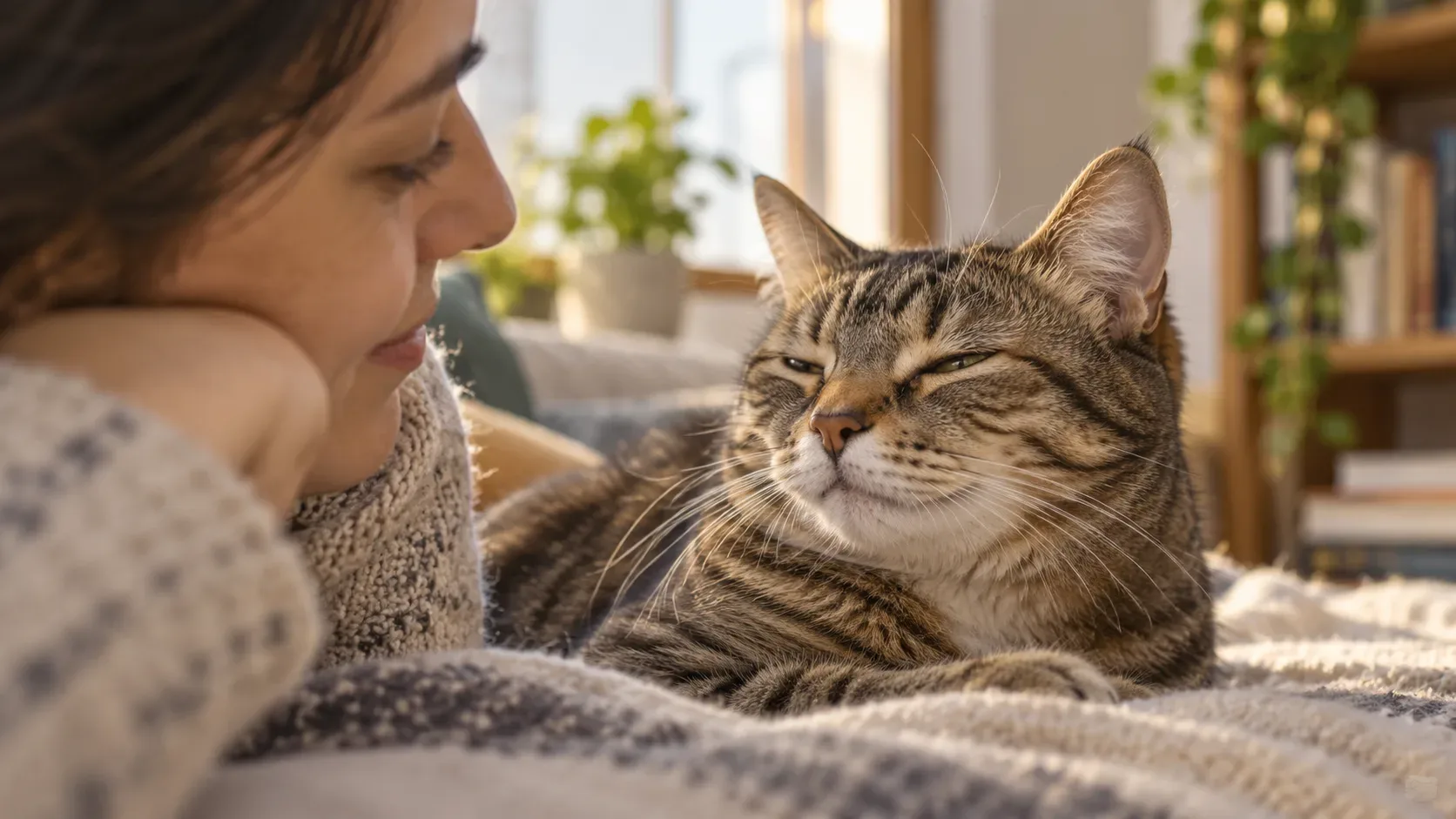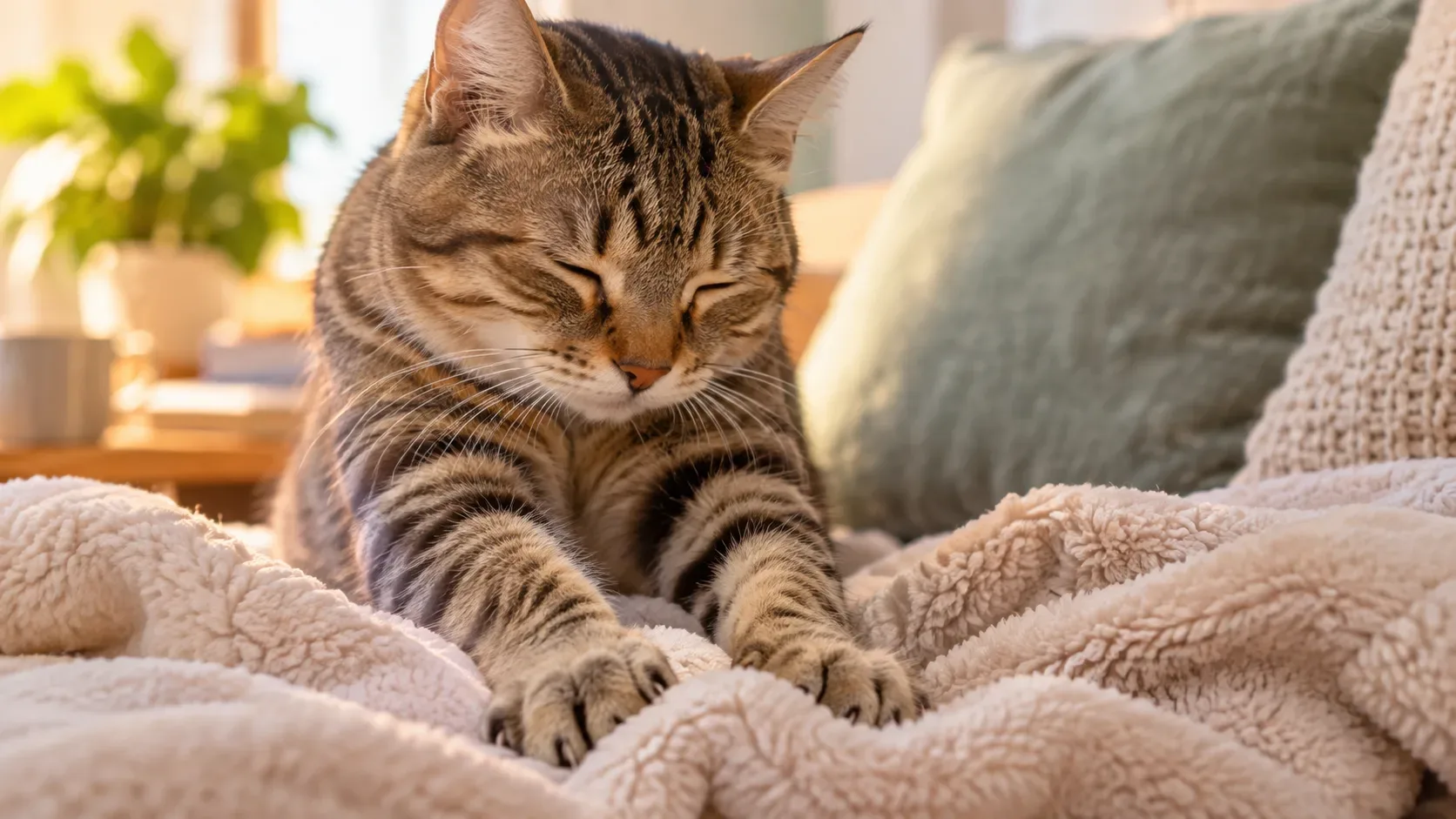
“Kneading” is the rhythmic motion in which a cat alternates its front paws against a surface — often a blanket, bed, cushion, or a person’s lap. In most cases, it is normal behavior and appears when the cat is comfortable, getting ready to rest, or repeating a pattern that began during nursing. Its meaning, however, should not be inferred from a single sign: context, the cat’s usual frequency, and the rest of its body language tell you more than the movement alone.
The main point is simple: a cat that has always kneaded blankets before sleeping, with a relaxed body and a normal routine, is probably just expressing a typical feline behavior. A sudden change — starting to knead compulsively, doing it in unusual places, or changing frequency markedly while also hiding, eating less, avoiding contact, or seeming uncomfortable — deserves attention and may justify a veterinary assessment.
What does kneading mean?
Kneading consists of alternately pressing the front paws into a surface. Some cats keep their claws retracted; others extend them. Purring, half-closed eyes, and even drooling may also occur in cats that strongly associate the behavior with relaxation.
According to VCA Animal Hospitals and the Blue Cross, the pattern starts early: kittens press against their mother’s mammary area while nursing, helping stimulate milk flow. In many cats, the movement remains into adulthood even though it no longer serves a feeding function.
Why does the habit continue in adult cats?
There is no single proven explanation that applies to every cat. The most consistent interpretation is that the movement may persist because it became associated with comfort and security early in life. That is why it often appears when a cat is lying on soft fabric, on the lap of a trusted person, or shortly before sleep.
There are other hypotheses. Some veterinary sources suggest that cats may also be adjusting a surface before resting, a domestic version of “making the bed.” VCA also includes scent marking among the possibilities because cats have scent glands around their paws. These explanations are best treated as possible mechanisms, not as a rule that tells us exactly what every cat is “trying to say.”
Cats Protection emphasizes this uncertainty: we know with reasonable confidence where the movement comes from in kittens, but the reasons it persists into adulthood may differ from one cat to another.
Context tells you more than the gesture alone
| Context | Most likely interpretation | What to observe alongside it |
|---|---|---|
| Blanket, bed, or lap; loose body; half-closed eyes | Comfort and relaxation | Calm posture, normal routine, no signs of tension |
| Before lying down or sleeping | Preparing a resting spot and habitual behavior | Whether the cat settles afterward and otherwise behaves normally |
| During petting with a familiar person | Positive association and a sense of security | Whether the cat seeks the contact and remains relaxed |
| Sudden increase, unusual location, or behavior that is hard to interrupt | May be simple variation, but can also function as self-soothing | Hiding, appetite, mobility, grooming, vocalization, reaction to touch, and other changes |
Purring and kneading do not, by themselves, prove that everything is fine
It is tempting to read “kneading + purring” as a certificate of happiness. It often does accompany relaxation, but cats may also purr or repeat comforting behaviors during stress or discomfort. VCA notes that some cats that are not feeling well may knead and purr as a way of soothing themselves.
That is why comparison with the individual cat’s baseline is more useful. A long-standing, predictable behavior linked to rest carries a different meaning from a behavior that suddenly appears together with changes in sleep, appetite, litter-box use, movement, or social interaction.
When does a change deserve veterinary attention?
Kneading by itself is rarely a medical problem. The warning sign is a change in context or the presence of other signs of discomfort. The MSD Veterinary Manual explains that pain in cats may show up through subtle behavioral changes, including reduced appetite, trouble getting comfortable, hiding, irritability, posture changes, and sensitivity in certain areas of the body.
Consider seeking veterinary guidance when kneading is accompanied by one or more of the following:
- a sudden and persistent change in frequency or intensity;
- withdrawal, more hiding than usual, or reduced interaction;
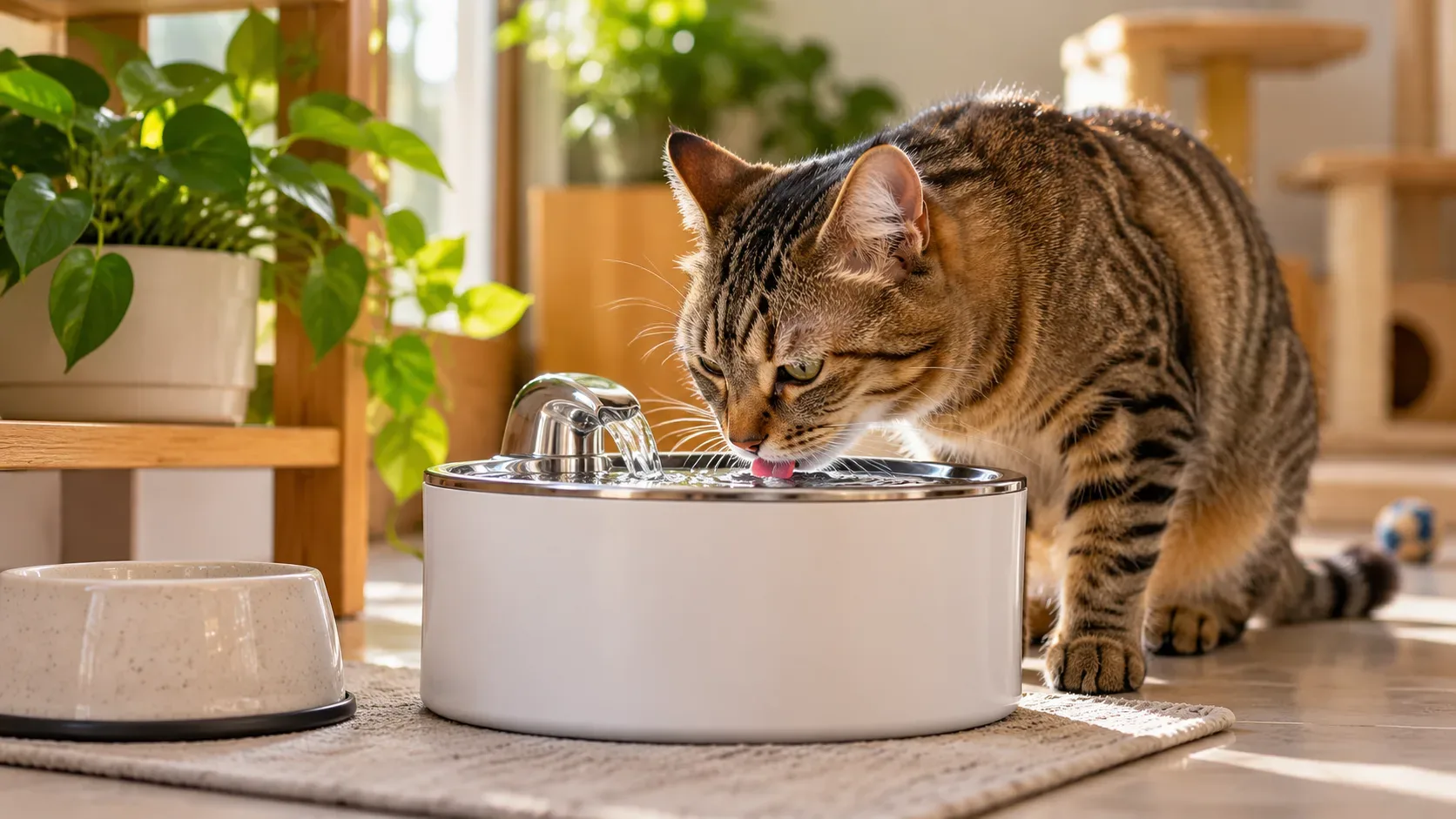
- reduced appetite, loss of interest in play, or a major change in sleep;
- difficulty jumping, walking, climbing onto furniture, or settling comfortably;
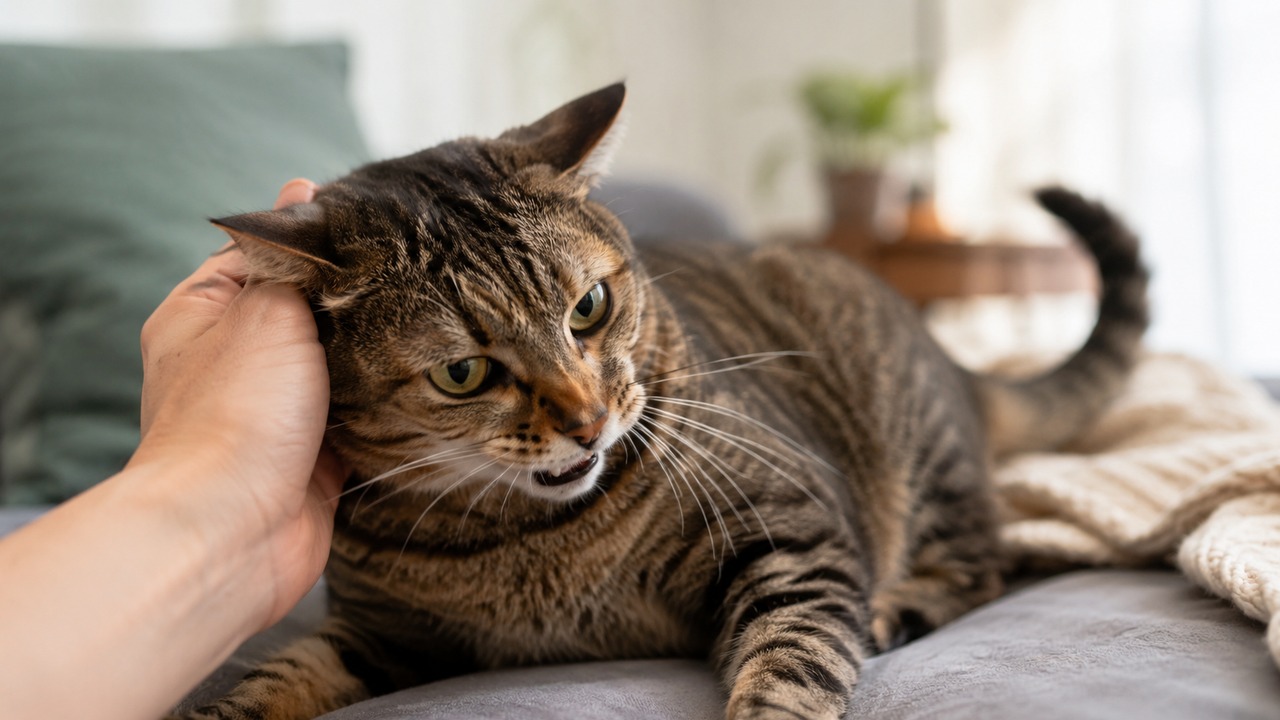
- signs of pain, irritability, or an attempt to bite when a body area is touched;
- reduced grooming, excessive licking of one spot, or an unusual body posture;
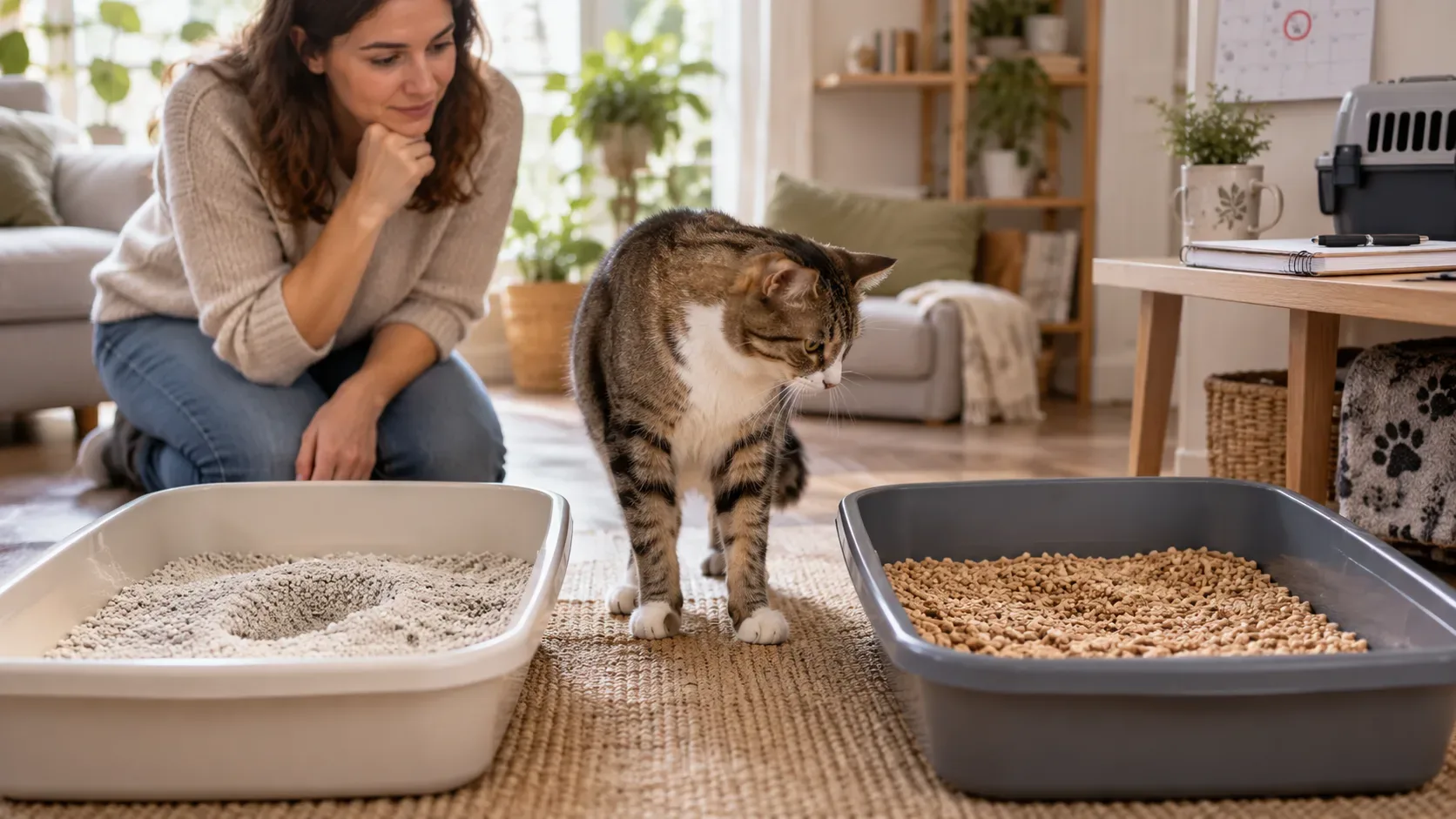
- other meaningful changes, such as altered litter-box habits or unusual vocalization.
These signs do not identify the cause and do not automatically mean the cat is in pain. They indicate that something has changed and deserves investigation. The MSD Veterinary Manual recommends ruling out medical causes before classifying a change as purely behavioral.
How to observe the behavior before an appointment
If the change is not an emergency, a few simple notes can help the veterinarian understand the pattern:
- When it started: note the approximate date and whether the change was sudden or gradual.
- Where it happens: blanket, lap, bed, floor, hiding place, or another location.
- How often: compare with your own cat’s previous pattern, not with other cats.
- How long it lasts: note whether these are brief episodes before resting or long, repetitive periods.
- What happens before and after: petting, feeding, conflict, noise, trying to sleep, hiding, or another trigger.
- Which signs occur at the same time: posture, ears, tail, appetite, mobility, grooming, litter-box use, and tolerance of touch.
A short video recorded without provoking the behavior can also be useful. The goal is not to “diagnose at home,” but to give the veterinarian a sample of what has changed.
If the claws hurt, punishment is not necessary
When a cat kneads a lap with its claws extended, the safest solution is usually to change the setup rather than punish a normal behavior. Placing a thick blanket between the cat and your skin, offering a soft surface of its own, and keeping the claws appropriately trimmed can reduce discomfort. If you need to redirect the cat, do it calmly and reward the desired alternative.
Punishment, startling, or abruptly pushing the cat away can turn a moment of comfort into a negative experience. If the behavior is genuinely excessive or difficult to manage, the best sequence is to rule out medical causes first and then discuss environmental or behavioral adjustments with a veterinarian.
In short: look at your cat’s usual pattern
Kneading is, most of the time, a continuation of kitten behavior associated with comfort, security, and preparation for rest. The movement gains meaning when read together with the environment and the rest of the cat’s body language. More important than counting how often a cat kneads is noticing whether it belongs to the cat’s normal pattern or represents a meaningful change.
If the cat looks relaxed and maintains normal appetite, mobility, grooming, and routine, kneading is likely just a normal feline trait. If there is a sudden change combined with signs of discomfort or a broader behavioral shift, veterinary guidance is appropriate.