August sees the beginning or intensification of several rabies vaccination 2026 campaigns for dogs and cats, but this does not mean that there is a single valid date for all of Brazil. The calendar, positions, schedules, required documents and service criteria need to be confirmed through the official channels of each municipality.
In Patos de Minas, for example, the 2026 service began at the Zoonosis Control Center on August 3, with urban joint efforts scheduled for August 8, 22 and 29 and September 12. In Borda da Mata, the campaign starts on August 24th and continues until September 12th. The city of São Paulo maintains free vaccinations at permanent stations throughout the year.
The practical consequence is simple: a real poster may be out of date or belong to another city, another neighborhood or another year. Before organizing the transport of the animal, confirm the information directly with the city hall, the Municipal Health Department or the zoonoses sector.
Why does the calendar change from city to city
The Ministry of Health coordinates animal rabies surveillance and informs that 23 units of the Federation carry out vaccination campaigns against rabies in dogs and cats. National coverage recorded in 2025 was 78%, according to data updated on June 11, 2026. Execution, however, depends on state and municipal programming.
In practice, municipalities organize points, teams, dates and territorial distribution according to local reality. Guidance from the Espírito Santo Health Department summarizes this division: the Ministry provides the vaccines, the state manages their distribution and the municipalities operate the campaign in their territories.
Formats also vary. A city can offer:
- permanent position during the week;
- collective efforts on specific Saturdays;
- roaming vaccination by neighborhoods;
- teams that visit rural properties;
- D-Day in health units;
- service by appointment only;
- limited distribution of passwords.
In Paraíso do Tocantins, the 2026 campaign runs from August 3rd to September 30th in a fixed unit and will have D-Day on August 15th. In São Sebastião do Paraíso, Minas Gerais, the urban area will have positions on Saturdays of August 8, 15, 22 and 29, while rural teams work between August 3 and September 16.
How to confirm your city's anti-rabies campaign
It is not enough to find a publication with the words “rabies vaccination”. Use the method below to check if the information really works for your animal.
1. Start with the official domain or channel
Search first:
- city hall website;
- website of the Municipal Health Department;
- Environmental or Zoonoses Surveillance page;
- official portal of the state government;
- profile verified or indicated by the city hall website;
- official telephone number of the municipality, zoonosis unit or service center.
Forwarded messages in groups, unlinked images, and posts from neighborhood pages can help discover that a campaign exists, but should not be final confirmation.
A useful search combines the name of the municipality with terms such as:
“rabies vaccination 2026 city hall”
“rabies campaign 2026 zoonoses”
“vaccine for dogs and cats Department of Health”
2. Check the publication and update date
Check four different pieces of information:
- the year of the campaign;
- the date the notice was published;
- possible update date;
- the dates on which the vaccination will actually take place.
News published in July may announce service in August and September. There may also be old news still indexed in the search results.
In Patos de Minas, the 2026 campaign notice was published on July 20th. Fixed service began on August 3, but joint efforts will take place on four different dates. Just reading the month in the title wouldn't be enough to plan your trip.
3. Confirm the municipality, neighborhood and area served
Check if the schedule matches:
- to your city;
- to your neighborhood or district;
- to urban or rural areas;
- to the chosen vaccination point;
- to the day reserved for that region.
In traveling campaigns, the team may only stay a few hours in each location. There are also municipalities that organize different dates for urban neighborhoods, rural communities and permanent service.
4. Check your audience and campaign criteria
Read the full post and look for answers to these questions:
- Does the campaign serve dogs and cats?
- Is there a minimum age defined by the municipality?
- Does the animal need to be healthy on the day?
- Is there specific guidance for pregnancy or lactation?
- Do animals undergoing treatment need prior evaluation?
- Does the municipality recommend annual revaccination?
- Are there restrictions for residents of other cities?
- Is it necessary to schedule or remove a password?
Do not transform a rule found in a city hall into universal guidance. Official communications themselves may adopt different criteria.
The Rio Bonito campaign, in Rio de Janeiro, advises that sick, debilitated animals or those undergoing treatment are previously evaluated and informs that, according to the published municipal protocol, pregnant or breastfeeding females should not receive the vaccine in that campaign. A state guideline from Espírito Santo published in 2025, on the other hand, stated that pregnant or lactating females could be vaccinated.
This difference reinforces safer conduct: confirm the local campaign protocol and seek a veterinarian when there is illness, ongoing treatment, pregnancy, lactation, history of vaccine reaction or doubt about the timing of revaccination.
5. Check documents, scheduling and service limits
Do not assume that all cities require the same documents.
In Extrema, the 2026 guidance requests that the guardian present the vaccination card to register the dose. In Rio Bonito, the city hall reported that it does not require documents, although it recommends taking your wallet when available.
Before leaving home, confirm:
- need for vaccination card;
- guardian identification document;
- proof of residence;
- municipal registration of the animal;
- pre-booking;
- password removal;
- limit of doses or services per day.
Even when a card is not mandatory, carrying it makes registration easier and reduces doubts about previous doses.
6. Use the phone to solve gaps
Call the number published on the official website when the notice does not clarify:
- minimum age;
- need for documents;
- care for animals from another municipality;
- vaccination of an animal undergoing treatment;
- operation in case of rain;
- change of address or time;
- availability of doses;
- possibility of permanent service after the joint effort.
When you call, inform them that you are consulting the animal rabies campaign of 2026. This decreases the risk of receiving instructions regarding human vaccination after bites or another year's schedule.
Verification card before leaving
| Item | What to confirm |
|---|---|
| Source | Did the information come from the city hall, Department of Health or zoonoses sector? |
| Date | Is the publication and schedule for 2026? Was there an update? |
| Post | Does the address, neighborhood, day and time correspond to your region? |
| Public | Does the campaign meet the species, age and condition of your animal? |
| Documents | Do I need a license, document, proof of residence, registration or password? |
| Contact | Is there an official telephone number to confirm questions or changes? |
Save a screenshot of the official page or timeline link. If it changes later, return to the source before leaving.
How to prepare the animal for vaccination
Preparation must begin before arriving at the station. The objective is to reduce escapes, conflicts, accidents and stress during displacement and application.
Evaluate the general condition of the animal
Observe whether the dog or cat presents significant changes in behavior or health. When there is a known illness, ongoing treatment, recent recovery, pregnancy, lactation or history of reaction to vaccines, do not decide alone based on a generic poster.
Contact the campaign and the veterinarian responsible for the animal. International vaccination guidelines for dogs and cats are intended to support individualized clinical decisions, not to replace patient assessment.
Do not administer tranquilizers, sedatives, antiallergics or any other medication on your own to make it easier to go to the clinic.
Prepare for transport and containment
The guidelines published by different municipalities converge on some basic precautions:
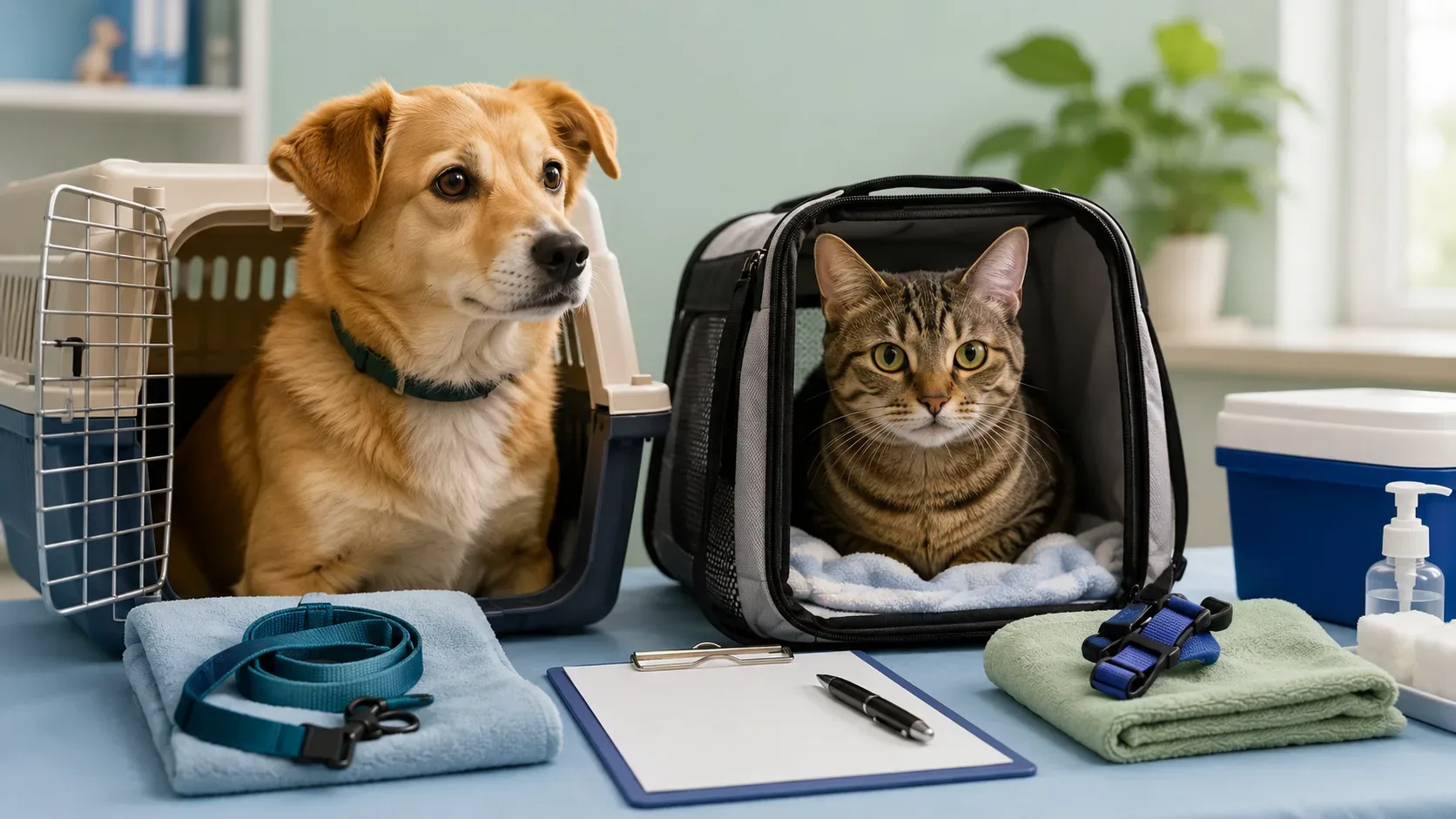
- dogs must be led with a collar and leash in good condition;
- animals with aggressive behavior may need a suitable muzzle;
- cats must be transported in closed boxes or transport bags;
- the person responsible must be able to contain the animal;
- the animal must not arrive loose at the vaccination point.
These recommendations appear, for example, in the campaigns of Extrema, Paraíso do Tocantins, São Sebastião do Paraíso, Goiatuba and Rio Bonito.
For cats, make the transport box available before the day of the campaign, whenever there is time for adaptation. The Feline Veterinary Medical Association recommends getting the cat used to the carrier, choosing appropriate equipment and offering the possibility of hiding, such as partially covering the box with a towel or blanket, without blocking ventilation.
In the car, keep the box stable and closed. Do not open the carrier in a parking lot, line or public area, even if the cat appears calm.
Choose an adult capable of driving the animal
The person responsible must be able to maintain safe physical control without pulling, choking or confrontation. In Goiatuba, the 2026 campaign determines that the animal must be driven by an adult capable of containing it. Rio Bonito also advises that the owner can maintain restraint during application.
When a single adult is unable to safely drive the animal, talk to the zoonoses department or veterinarian in advance. Don't wait to get to a busy queue only to discover that there is insufficient containment.
Take what you need
Separate:
- vaccination card, when available;
- documents required by the municipality;
- revised leash and collar;
- appropriate muzzle, when indicated;
- closed transport box for cats;
- material requested by the campaign;
- official telephone number of the post or zoonoses.
Avoid loose collars, broken crates, unventilated containers and improvised solutions that could open during travel.
How to reduce stress at work
Keep your distance from other animals and follow the team organization. Do not allow greetings between unfamiliar dogs and do not remove cats from the crate while waiting.
When possible:
- choose a less busy time within the published period;
- keep the animal close to the person responsible;
- avoid shouting, punishment and pulling;
- do not put hands between animals in conflict;
- inform the team if there is intense fear, pain or risk of bite;
- follow the guidance of the professionals responsible for the application.
The focus is not on forcing the animal to endure any situation. If restraint becomes unsafe, ask the team for guidance and evaluate a veterinarian-assisted alternative.
What to watch out for after vaccination
Ask at the clinic what care and contact channels are recommended after application. Keep proof of the date, location and identification of the vaccine when this information is provided.
Severe reactions are uncommon, but signs such as difficulty breathing, facial swelling, hives, repeated vomiting or collapse require immediate veterinary attention. Guidelines from the American Animal Hospital Association highlight these signs as possible manifestations of an allergic reaction following vaccination.
Persistent changes or any condition that worries the owner should also be reported to a veterinarian. Do not offer human or veterinary medicines without a prescription.
Vaccination does not replace care after a bite or contact with a bat
The campaign serves to prevent rabies in dogs and cats. It does not replace the evaluation of a person bitten, scratched or exposed to the saliva of a potentially infected animal.
The Ministry of Health recommends washing the wound thoroughly with soap and water and seeking medical assistance as soon as possible. The human prophylaxis scheme must be defined by a doctor or nurse depending on the exposure. You should also not touch bats or wild animals found on the ground or with unusual behavior.
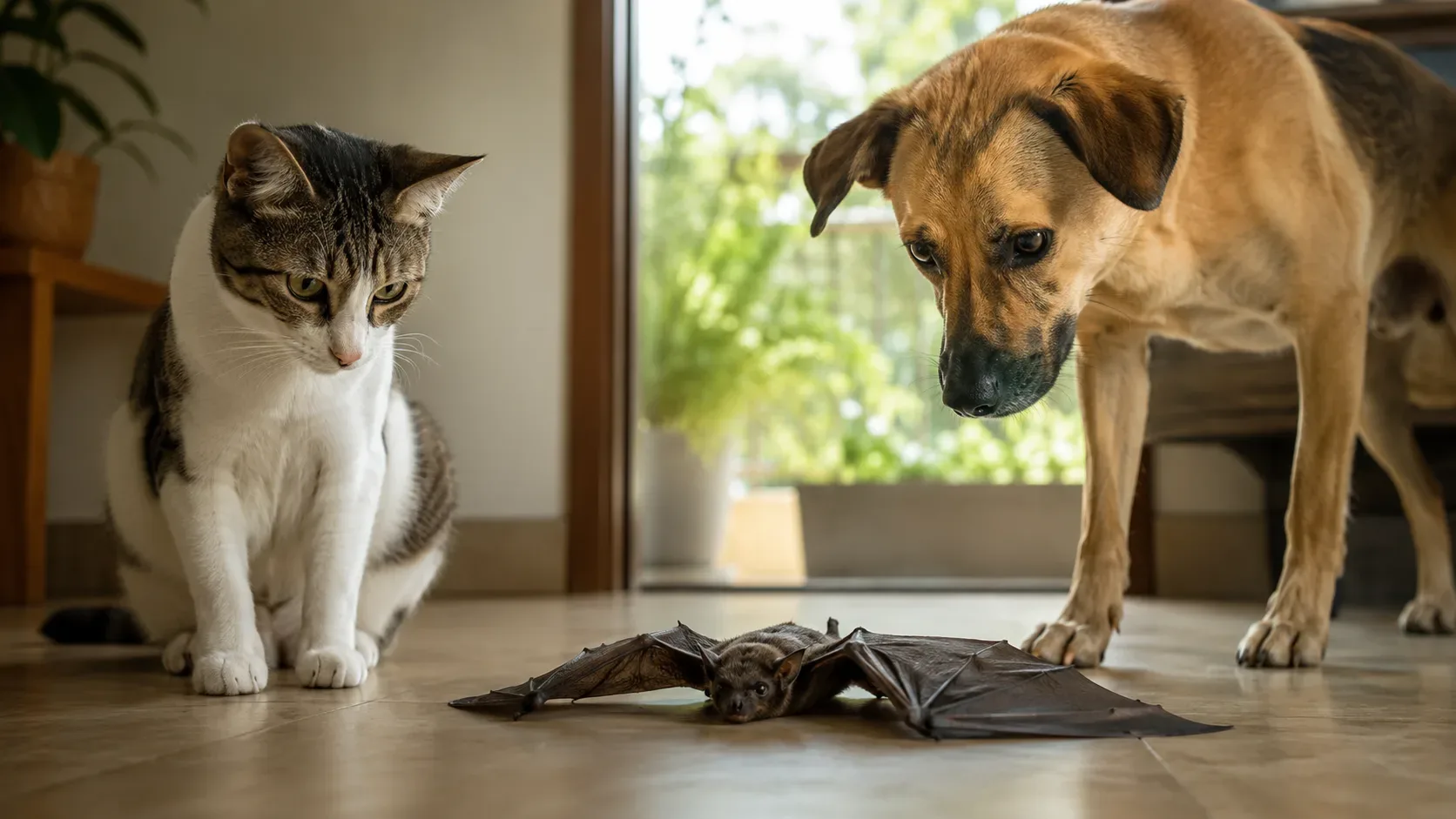
If your dog or cat has had contact with a bat or other suspected animal, keep people and other animals away without handling the possible transmitter and immediately seek advice from the municipal zoonosis service and a veterinarian.
Why maintain vaccination even with urban rabies under control
Mass vaccination campaigns have contributed to reducing the circulation of classic variants of the virus associated with dogs in Brazil. This has not eliminated the risk: dogs and cats can still be infected by variants originating from wild animals, especially bats. The Ministry of Health emphasizes that cats deserve attention due to their predatory behavior and the possibility of contact with bats in urban and peri-urban areas.
Therefore, do not use as a justification the fact that the animal lives indoors or that there are no recent known cases in the neighborhood. Consult the calendar and official criteria and maintain preventive veterinary monitoring.
Frequently asked questions
Can I trust a poster shared on WhatsApp?
Use the poster as a starting point only. Confirm the content on the official website of the city hall or the Department of Health and check the year, date of publication, address and possible update.
Does every city hold the campaign in August?
No. Some start in July, others in August or September, and certain cities maintain posts throughout the year. Even within the same municipality, urban and rural areas may have different calendars.
Is a vaccination card mandatory?
Depends on the campaign. There are municipalities that request it to register the dose and others that do not require documents. Bring your wallet when available and confirm local rules in advance.
Can a sick, pregnant or treated animal be vaccinated?
There is no safe answer based solely on a generic rule found on the internet. Consult the municipality's protocol and a veterinarian, as criteria published by official campaigns may vary depending on the animal's condition and the local organization.
Save before taking the animal
Before leaving, confirm five points: official source, current date, correct post, safe transportation and adequate containment.
Open your municipality's official calendar now, save the link and register the zoonoses phone number. Then, leave the vaccination card, the guide or transport box and the required documents separate.