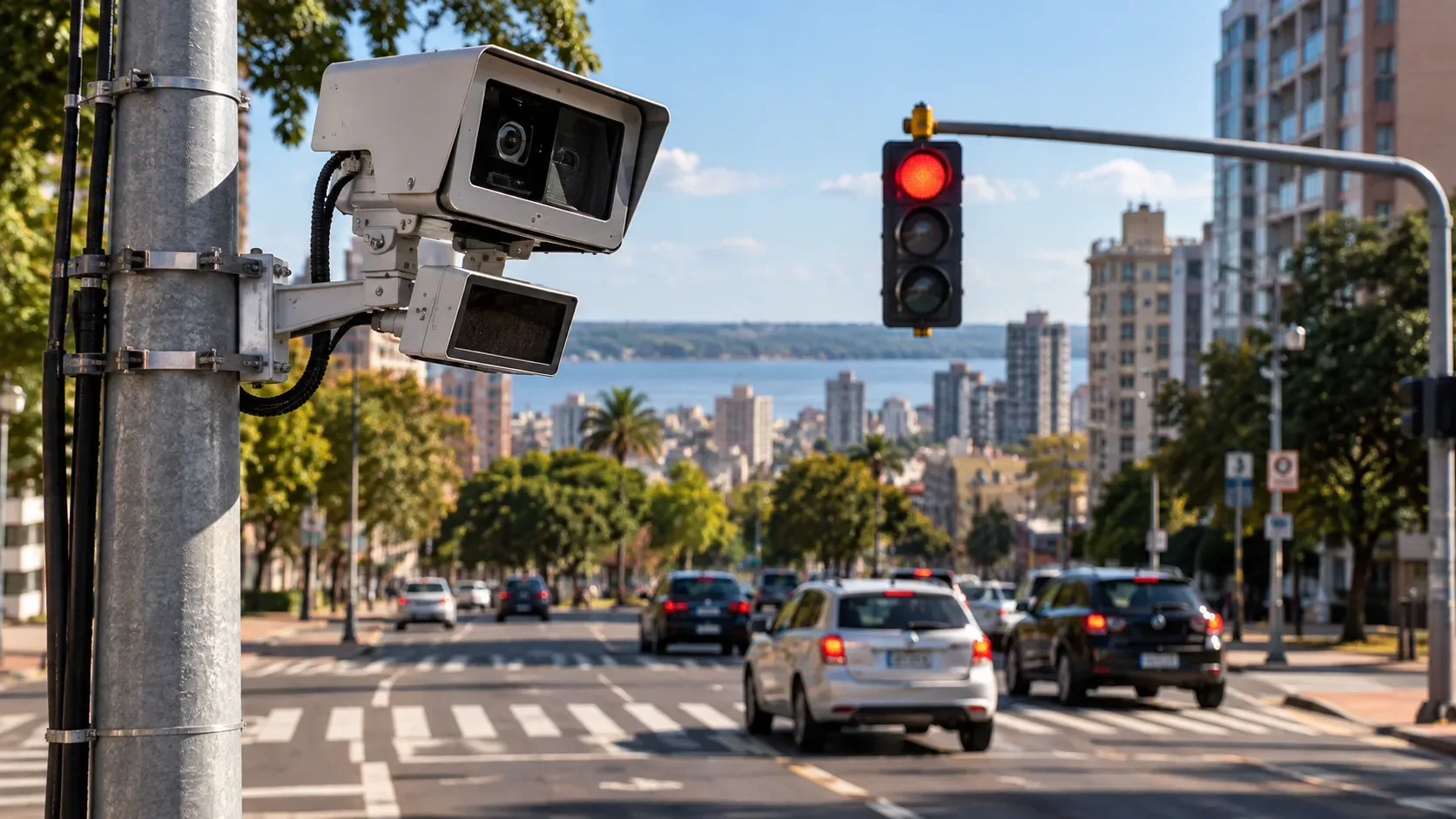
Starting Monday, September 21, 2026, three additional intersections in Porto Alegre will be monitored by red-light enforcement detectors, known locally as Detectores de Avanço de Sinal (DAS). Enforcement covers red-light violations and speeding, without changing the speed limits that were already posted on the roads.
The new locations are in the North and East zones and join the eight intersections already listed by the Empresa Pública de Transporte e Circulação (EPTC) as monitored sites. The municipal strategy calls for 15 intersections to receive this type of equipment.
Which three intersections are being added
| Intersection | Area | Speed limit reported by EPTC | What to watch for |
|---|---|---|---|
| Avenida Sertório x Rua Edu Chaves/Avenida Souza Reis | North Zone | 40 km/h in the neighborhood-to-downtown direction at Rua Edu Chaves; 60 km/h in the downtown-to-neighborhood direction at Avenida Souza Reis | The limits vary by direction and by the specific side of the intersection. |
| Avenida Ipiranga x Avenida Dr. Salvador França | East Zone | 60 km/h in both directions | The equipment starts operating on September 21. |
| Avenida Bento Gonçalves x Avenida Antônio de Carvalho | East Zone | 60 km/h, except for the bus corridor in the neighborhood-to-downtown direction, where public transport is limited to 40 km/h | Drivers should follow the signs that apply to their lane and direction of travel. |
EPTC said it reinforced road signs and pavement markings at the monitored sections. Installing the detectors therefore does not create a new speed limit: the limits already established and posted for each section remain in force.
How the overnight rule works, from 11 p.m. to 4:59 a.m.
Porto Alegre has a specific tolerance for crossing a red light between 11 p.m. and 4:59 a.m. According to EPTC, a driver may cross a red signal during this period only if all required safety conditions are met:
- slow down before entering the intersection;
- respect the right of way of road users who have priority;
- give absolute priority to pedestrians;
- do not exceed 30 km/h while crossing.
This does not mean a red light can simply be ignored overnight. The tolerance depends on safe driving behavior and the maximum speed of 30 km/h. If these conditions are not met, EPTC says the conduct constitutes a traffic violation. Outside the 11 p.m. to 4:59 a.m. window, this overnight tolerance does not apply.
What changes for drivers at these locations
In practice, drivers need to check two rules as they approach the new sites. The first is the posted speed limit for the road and direction of travel. The second is the requirement to obey the traffic light, with the overnight exception subject to EPTC's safety conditions.
Because the detectors also record speeding, the overnight ceiling of 30 km/h does not replace a lower posted limit if one applies. Drivers must always comply with the more restrictive condition that applies to the road section and situation.
What if you need to move forward to let an ambulance pass?
EPTC also says the system takes into account situations in which a vehicle crosses the red-light stop line to make way for ambulances and other emergency vehicles responding to a call. When the situation is verified, the red-light citation is rejected. If a violation is issued, the driver may file a defense and the case can be reassessed when the circumstances are properly documented.
Why enforcement is being expanded
Between March and July 2026, the detectors already in place monitored more than 23 million vehicles at eight intersections, and 0.026% of passages resulted in violations, according to EPTC. The agency also says data from the Vida no Trânsito program identified red-light running as the leading risk factor found in traffic deaths in Porto Alegre in 2025.
The new locations, speed limits and overnight tolerance rules are detailed in EPTC's official notice about the expanded monitoring. The city also maintains a reference page on electronic speed enforcement and red-light detectors.