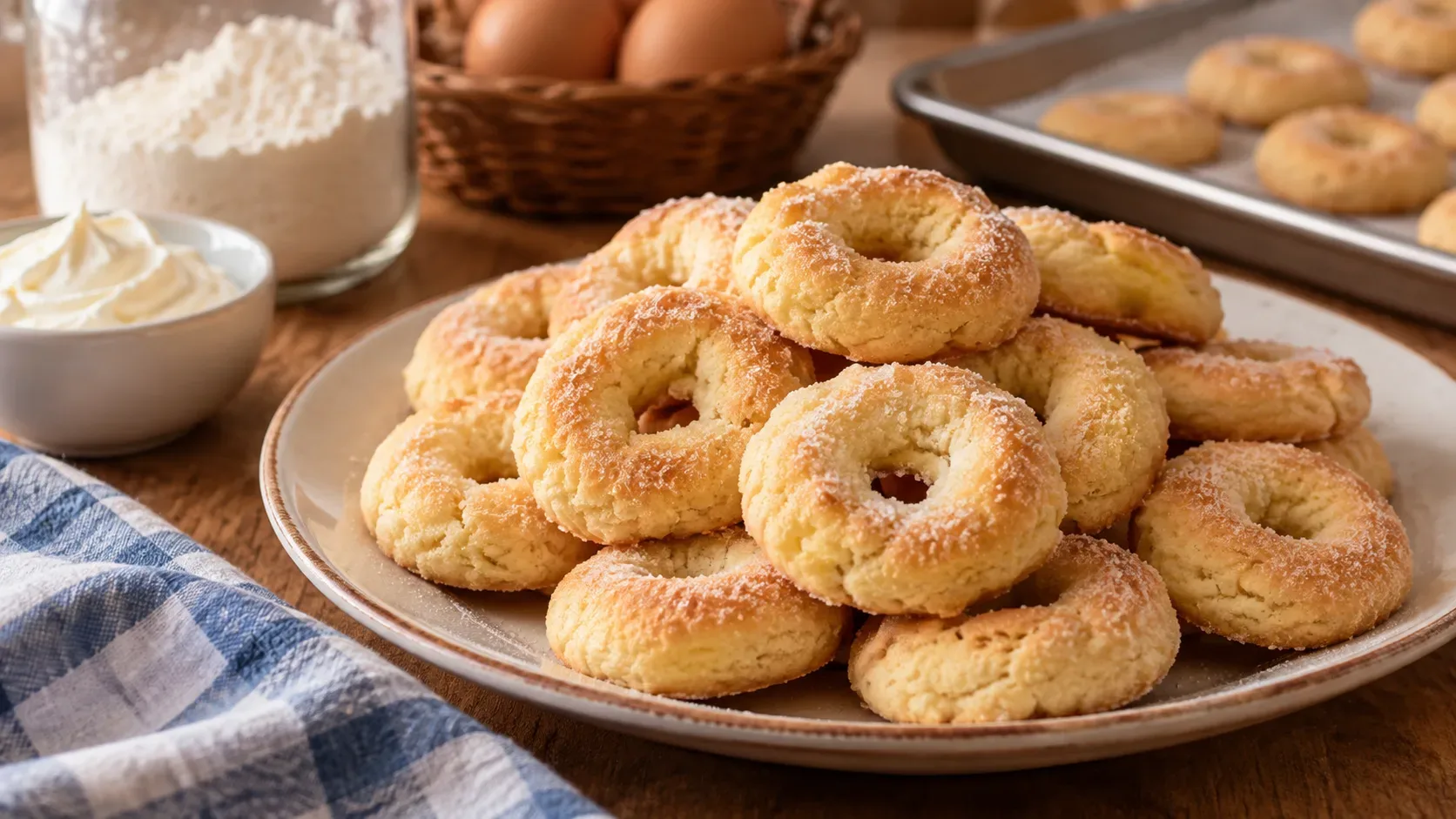
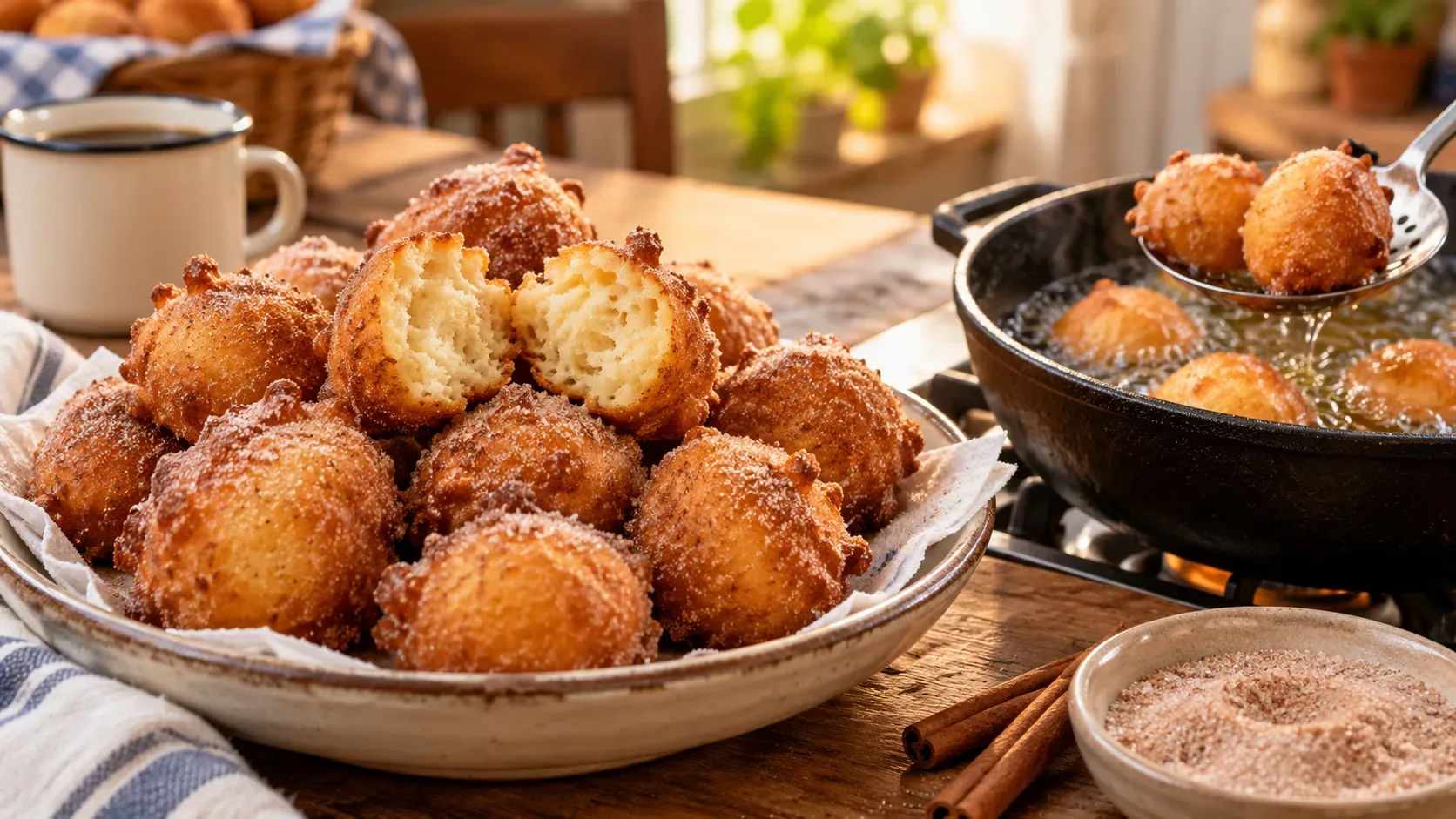
For Brazilian bolinho de chuva to stay light and non-greasy while cooking fully in the center, three controls matter more than any single “trick”: a thick batter, small portions, and oil held steadily between 170 and 180 °C (338–356 °F). That range matches guidance from Receitas Nestlé; the reference recipe from Receitas Globo/Ana Maria Braga also calls for plenty of oil that is not excessively hot and only a few fritters at a time so the oil does not cool down too much.
Base recipe for about 30 fritters
- 2 tablespoons softened margarine or butter
- 1 cup sugar, about 160 g
- 2 eggs
- 2 cups all-purpose flour, about 220 g
- 1/2 cup cornstarch, about 50 g
- up to 1 1/2 cups milk, about 300 ml, added gradually
- 1 dessert spoon baking powder
- neutral-flavored oil for frying
- sugar and cinnamon for finishing
These proportions follow the “bolinho de chuva sequinho” recipe published by Receitas Globo. The batter consistency, however, should matter more than the maximum amount of milk because different flours absorb liquid differently.
The right batter consistency
Beat the fat with the sugar and eggs until creamy. Add the sifted flour and cornstarch, alternating with the milk. Stop adding milk when the batter is smooth, thick, and slightly firmer than cake batter. When lifted with a spoon, it should drop in a heavy mound rather than run in a thin ribbon. Fold in the baking powder last without overmixing.
If the batter is too fluid, it spreads in the oil, creates larger flatter fritters, and makes even cooking harder. If it is too stiff, the center may turn dense. Adjust gradually: one tablespoon of milk to loosen it or a small amount of flour to firm it up.
Portion size and fritters per batch
Use one heaping dessert spoon of batter as the reference for each fritter. That is small enough for heat to reach the center before the surface gets too dark. Push the batter into the oil with a second spoon and keep the portions as uniform as possible.
Fry four to six fritters per batch, depending on the pan diameter. The Receitas Globo recipe suggests four portions at a time; the point is to leave room for the fritters to move and prevent a sharp temperature drop. The USDA also warns that overcrowding a fryer can cause uneven cooking and oil overflow.
Oil temperature: stay between 170 and 180 °C
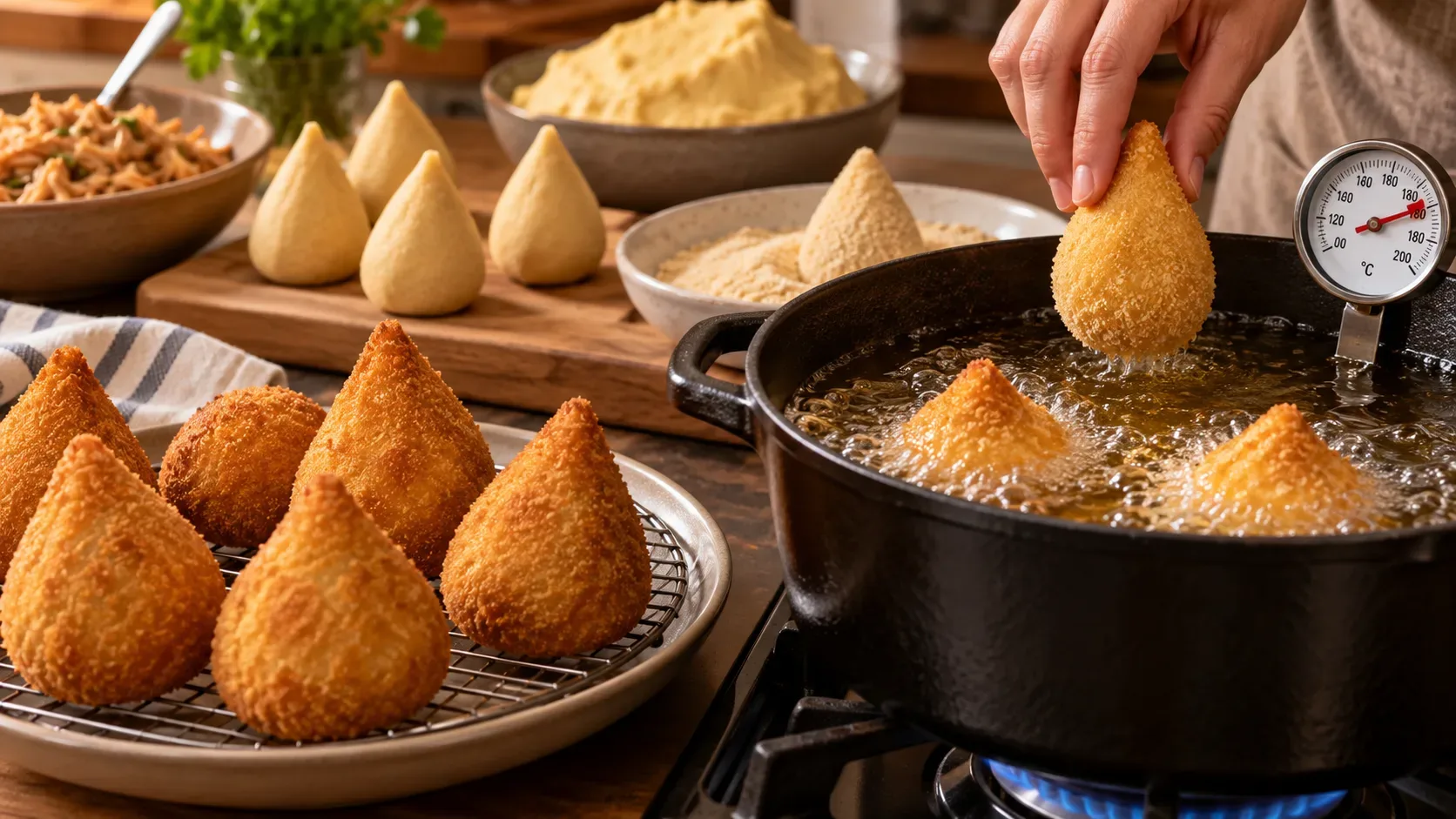
With a kitchen thermometer, heat the oil to about 175 °C (347 °F) and keep it within 170–180 °C (338–356 °F) while frying. If the temperature drops after adding batter, let it recover before starting the next batch. For slightly larger portions, staying closer to 170–175 °C gives the center more time to cook before the outside over-browns.
| Sign | What is happening | How to fix it |
|---|---|---|
| The fritter rises slowly, bubbles weakly, and turns greasy | Oil is too cool | Remove excess batter from the pan, let the oil return to at least 170 °C, and reduce the batch size. |
| It darkens in seconds while the center stays pasty | Oil is too hot or the fritter is too large | Lower the heat, let the oil return to the target range, and make smaller portions. |
| It browns gradually and puffs as it turns | Temperature is in the right range | Keep the heat steady and fry until evenly golden. |
Step by step for non-greasy fritters
- Add enough oil to a deep, stable pan so the fritters can float instead of constantly touching the bottom.
- Heat the oil to about 175 °C.
- Shape small portions with two spoons and add only four to six fritters.
- Fry over medium heat, turning as needed, until evenly golden.
- Remove with a slotted spoon, let excess oil drip back into the pan, then transfer to paper towels or a rack.
- Let the oil temperature recover before the next batch.
- Coat with sugar and cinnamon while the fritters are still warm.
How to tell whether the center is cooked
The most useful test is to split open one fritter from the first batch. The crumb should be fluffy and soft, with no glossy or paste-like streak of raw batter in the center. If it is undercooked, do not solve the problem by making every fritter darker: first reduce the portion size or slightly lower the temperature while staying inside the recommended range.
Exterior color alone is not a reliable indicator. Oil that is too hot can brown the surface before heat has enough time to reach the center.
Why does bolinho de chuva become greasy?
The most common causes are oil below the target temperature, too many fritters added at once, overly thin batter, and unnecessarily long frying. Cool oil lengthens contact time and delays crust formation. Standardizing portions and letting the oil recover between batches therefore makes a noticeable difference.
Frying safety
Use a deep pan, keep handles turned inward, and prevent any water from contacting hot oil. Do not overfill the pan and never leave frying unattended. The USDA recommends avoiding overcrowding and notes that oils with relatively high smoke points, including canola, corn, sunflower, and other suitable vegetable oils, can be used for deep frying. If the oil starts smoking, take it off the heat and let it cool; do not keep frying in that condition.
Quick reference
- Batter: smooth, thick, and firmer than cake batter.
- Portion: about one heaping dessert spoon.
- Oil: 170–180 °C (338–356 °F); aim for 175 °C.
- Batch: four to six fritters without crowding.
- Diagnosis: greasy = oil too cool; dark outside and raw inside = oil too hot or portions too large.