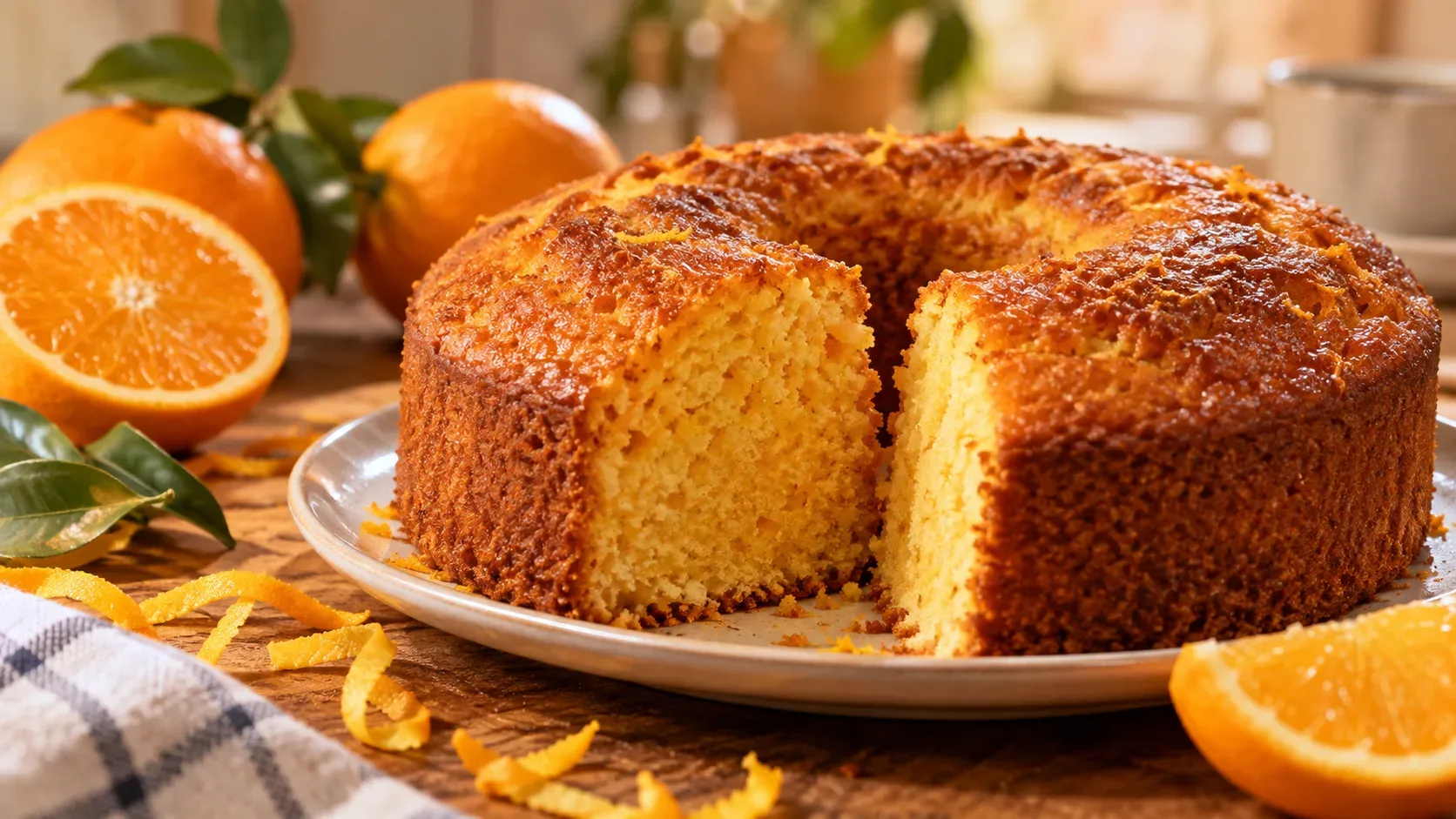
To make orange cake with peel without excessive bitterness, the safest approach is to use the colored outer peel and the fruit flesh while removing the seeds, the thick white central pith, and excess white layer under the peel. This keeps the aromatic citrus oils in the cake without adding an unnecessary load of bitter-tasting tissues. The orange variety also matters: Pera orange usually gives a balanced result; Bahia (navel) orange delivers a stronger aroma and is generally seedless; Lima orange is sweeter and low in acidity, but its citrus flavor can be more delicate.
What to keep and what to remove from the orange
“Using the peel” does not have to mean blending the entire fruit without preparation. Orange-peel cake recipes published by Receitas Globo instruct cooks to remove seeds, the central core, and white pith to reduce bitterness. Receitas Nestlé also identifies the white part and seeds as sources of bitterness in orange cake.
| Fruit part | Use it? | How to handle it |
|---|---|---|
| Colored outer peel | Yes | Wash and dry well. Keep the orange-colored outer layer, which carries much of the aroma. |
| White layer under the peel | In moderation | If it is thick, trim off the excess. There is no need to obsessively scrape away a very thin film. |
| Thick white central core | No | Cut the orange into sections and remove the thicker white column in the center. |
| Seeds | No | Remove all of them before blending. |
| Flesh and juice | Yes | Use them with the colored peel for flavor and moisture. |
| Top and bottom ends | Better removed | Slice off a thin cap if those areas contain substantial white tissue or dry material. |
Which orange works best for a peel-on cake?
There is no single “correct” variety. What changes is the balance of aroma, acidity, juice, seeds, and peel thickness. CEAGESP lists Pera, Baia, and Lima among commonly traded Brazilian oranges and describes differences in fruit shape, peel texture, and the presence of a navel. For baking, the practical choice looks like this:
| Variety | Profile in the cake | When to choose it | Watch for |
|---|---|---|---|
| Pera orange | Balanced, juicy, with moderate citrus flavor. | The most versatile choice for a classic, aromatic cake without an overly intense edge. | Check for seeds and remove the white central core; seed count varies by fruit. |
| Bahia (navel) orange | Aromatic and more pronounced in flavor; it has a navel and is usually seedless. | Good when you want a more noticeable orange perfume. | Trim the navel and thick white pith. A thicker rind does not mean all of the albedo should go into the batter. |
| Lima orange | Sweet, low in acidity, and milder in flavor. | Can work when you want a less acidic cake. | It is not the first choice for strong citrus flavor; low acidity can make the overall profile more delicate. |
Receitas Nestlé recommends Pera orange for a mild, juicy profile and Bahia orange for a more intense, aromatic result. Public sources on Lima orange, such as Ceasa-ES, emphasize its low acidity and milder culinary flavor.
Orange cake with peel: a bitterness-controlled recipe
This formula stays close to the proportions used in orange-peel cake recipes from major Brazilian recipe publishers, while preparing the fruit more carefully to control bitterness.
Ingredients
- 1 medium or large fresh, firm orange
- 3 eggs
- 1 cup neutral-flavored oil
- 1 1/2 cups sugar
- 2 cups all-purpose flour
- 1 tablespoon baking powder
- 1 pinch of salt, optional
Prepare the orange
- Wash the orange under running water, rubbing the surface, and dry it.
- Cut a thin slice from the top and bottom.
- Remove the colored peel in thin strips with a peeler or knife, avoiding a thick layer of white pith.
- Peel the rest of the orange, trim excess white pith, open the sections, and discard the thick central core and all seeds.
- Reserve the flesh and colored peel. These are the orange parts that go into the blender.
Batter and baking
- Preheat the oven to 180 °C / 350 °F. Grease and flour a medium tube pan.
- Blend the orange flesh, colored peel, eggs, oil, and sugar only until evenly combined.
- Transfer to a bowl. Add the flour and mix until no dry patches remain, without overmixing.
- Fold in the baking powder gently.
- Bake for about 35 to 45 minutes. Timing varies with the pan and oven; remove it when the center is set and a skewer comes out without raw batter.
- Let the cake cool slightly before unmolding.
How to predict bitterness before baking
The best control happens before the batter is finished. Check the fruit itself in three simple ways:
- Look at the white pith: if the orange has a very thick layer, remove more of it before using the colored peel.
- Taste the fruit: a segment should taste ripe and pleasant. A very green, dry, or unpleasantly bitter orange will not improve in the cake.
- Taste a tiny sliver of colored peel: it should be aromatic and intense, not aggressively bitter. Do this before combining it with eggs; do not taste raw cake batter containing raw egg.
Fruit condition is another clue: choose an orange that is firm and free of mold, fermented areas, severe drying, or off odors. “More peel” does not automatically mean “more flavor”; beyond a point, it also raises the risk of astringency and bitterness.
Why do seeds and white tissues increase the bitterness risk?
Citrus bitterness is associated with several compounds, including limonoids. Research on citrus tissues shows that bitter compounds can be more concentrated in seeds, membranes, and peel tissues than in juice sacs. An experimental review covering oranges and other citrus fruit identifies limonin as one compound linked to bitterness and notes higher concentrations in tissues such as seeds, flavedo, and albedo than in the juice pulp. This helps explain why indiscriminately blending the entire fruit can produce a more bitter result. See the scientific reference.
This does not mean the colored outer peel should be removed entirely: it is precisely the part used to provide citrus aroma. The goal is to control the amount and avoid carrying too much albedo, central pith, and seeds into the batter.
If the cake turned bitter, what should you change next time?
- Strong, lingering bitterness: use less colored peel and remove more white pith.
- Bitterness in occasional bites: check whether a seed was blended or thick pieces of central pith remained.
- Weak orange flavor: switch from Lima to Pera or Bahia orange, or add finely grated zest rather than adding more white pith.
- Heavy cake: do not try to intensify orange flavor by adding more fruit without adjusting the formula; extra juice and solids also change the cake structure.
- Aggressively bitter peel: choose a different ripe, sound orange. Natural variation exists between fruit lots and varieties.
Practical summary
For a balanced orange cake with peel, use the fruit flesh and colored outer peel, and discard the seeds, thick white central core, and excess albedo. Pera orange is the safest all-purpose choice for a classic profile; Bahia is excellent for a stronger aroma; Lima suits those who prefer low acidity but usually delivers less citrus impact. If the fruit, peel, or pith already tastes unpleasantly bitter before blending, replace the orange instead of trying to hide the problem with more sugar.
Sources consulted
- Receitas Globo — Orange cake with peel
- Receitas Nestlé — Orange cake with peel
- Receitas Nestlé — Orange cake questions and varieties
- CEAGESP — Orange variety guide
- Ceasa-ES — Characteristics of Pera, Bahia, and Lima oranges
- Journal of Food Composition and Analysis — compounds associated with citrus bitterness