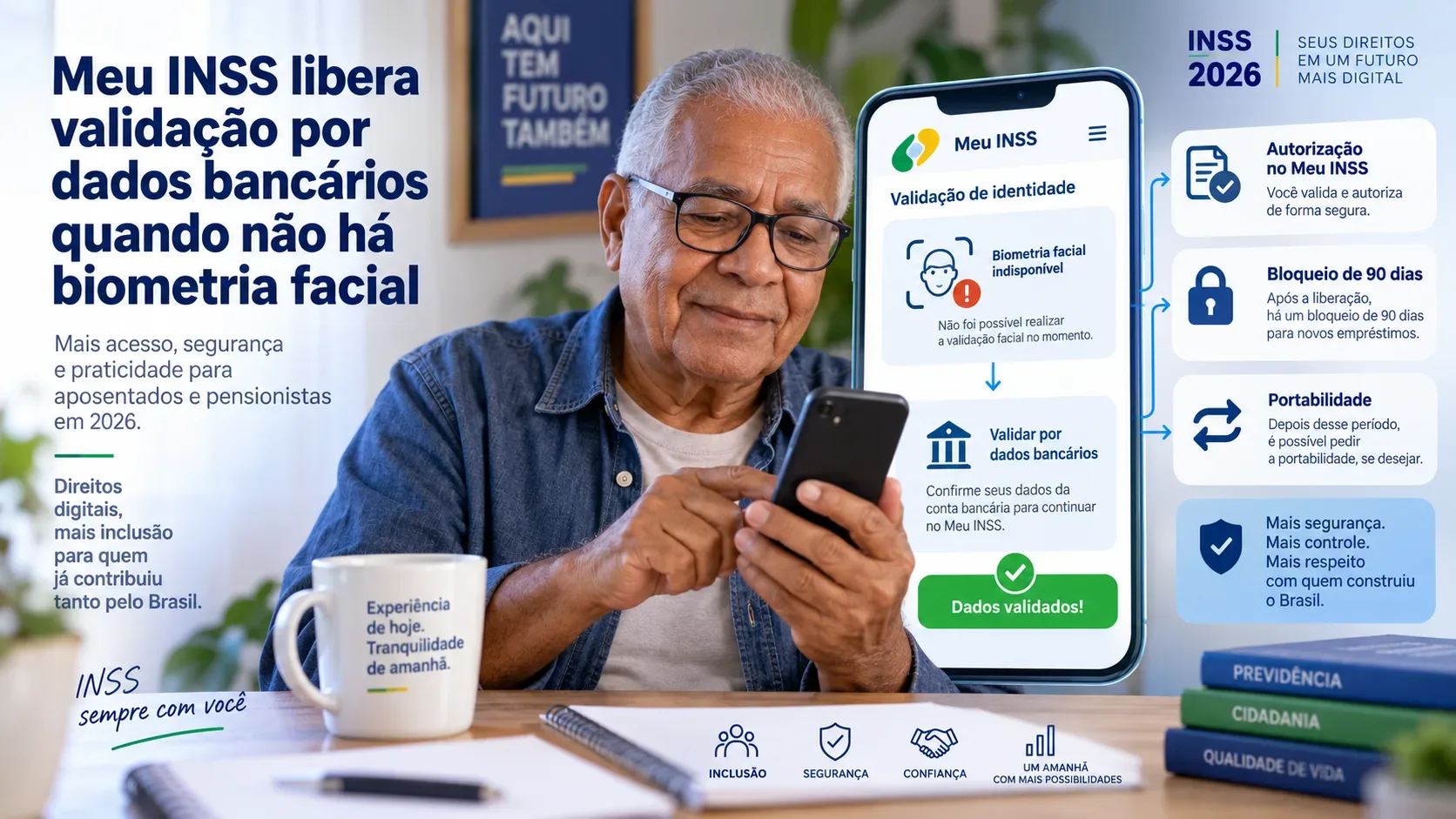
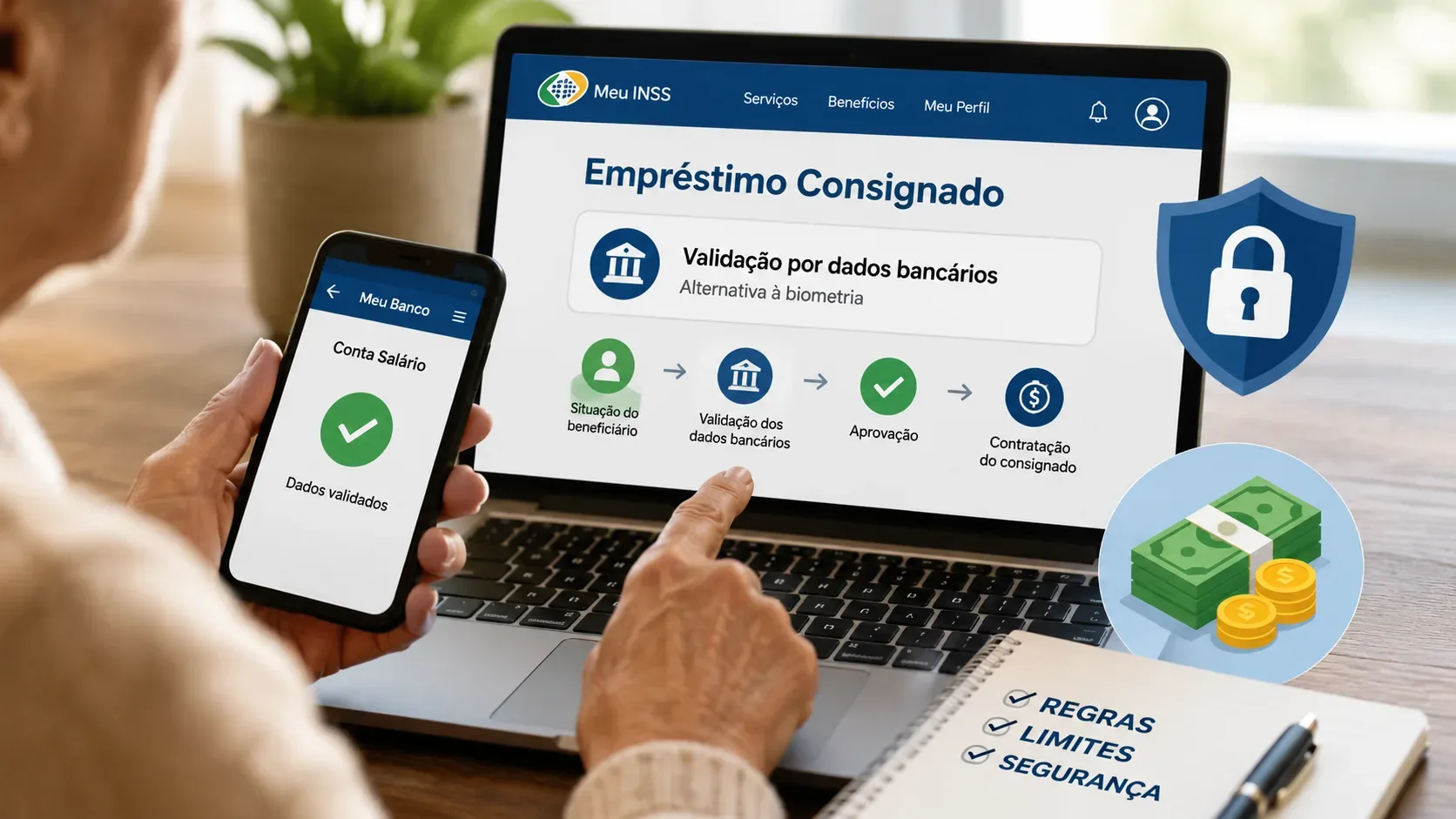
Short answer: bank-data validation has not become a general replacement for biometrics in INSS payroll-deducted loans. Under the rule announced in August 2026, Dataprev first checks whether biometric data is available in government databases. If it is found, biometrics remains the authorization route. Only when no biometric record is located may the system enable Gov.br access with bank-data validation so the benefit holder can authorize the transaction.
The change stems from INSS Normative Instruction PRES/INSS No. 213, dated August 17, 2026. It addresses a specific obstacle: the absence of a biometric record should not, by itself, prevent a beneficiary from authorizing a transaction. It does not mean automatic credit approval and does not remove the other payroll-loan requirements.
When bank-data validation may be used
- Dataprev searches for available biometrics. This remains the first authentication mechanism.
- If biometrics is found, authorization continues through biometric recognition.
- If biometrics is not found, Gov.br may offer bank-data validation as an alternative authentication method.
- The benefit must be eligible for payroll lending. The alternative authentication method does not, by itself, unlock a blocked benefit.
- The transaction requires the holder's express authorization. Identity validation is not the same as accepting any credit offer.
Practical flow by beneficiary situation
| Situation | Practical result |
|---|---|
| Biometrics is available in government databases | Biometrics remains the first option for authorizing the transaction. |
| No biometric record is located | The system may enable Gov.br login with bank-data validation for authorization. |
| The benefit is blocked for payroll loans | Bank validation does not solve the block; the unlocking rules still have to be met. |
| The benefit is unlocked, but there is no available margin | Authentication may work, but the transaction should not be completed without available margin. |
| The benefit is unlocked, margin is available and authentication is completed | Contracting still depends on the holder's express consent and on the procedures required by the financial institution and INSS. |
What the new rule does not change
- It does not make bank validation a free-choice alternative for people whose biometrics is already available.
- It does not allow a bank or correspondent to contract on the beneficiary's behalf without express consent.
- It does not remove the initial benefit block or create consignable margin.
- It does not guarantee approval, a specific loan amount or an interest rate.
- It does not eliminate the contract and documentation required to register the transaction.
In other words, the change is an alternative authentication route for people whose biometrics cannot be found. It is not a shortcut around the other safeguards in the process.
Blocked benefit: the 90-day rule still matters
According to INSS, as a general rule a newly granted benefit remains blocked for payroll-deducted loans during the first 90 days. After that period, the holder may request unlocking through Meu INSS. INSS also says that the same 90-day reference must be observed when the benefit's payment location is transferred.
That means a person without biometrics may gain access to the new validation method and still be unable to contract at that moment if the benefit remains blocked. These are different steps: authenticating identity and having the benefit enabled for payroll lending.
Contract term, documents, deposit and portability
Normative Instruction No. 213 also came with operational changes that help define the limits of the process:
- the contract may have no more than 108 successive monthly installments;
- the financial institution must send INSS the required documents and information, such as the contract, an official photo ID, CPF and authorization for the deduction;
- the bank must send proof of deposit within seven business days after contracting; if required information is not submitted on time, INSS said it may interrupt deductions and hold payments to the bank until the issue is corrected;
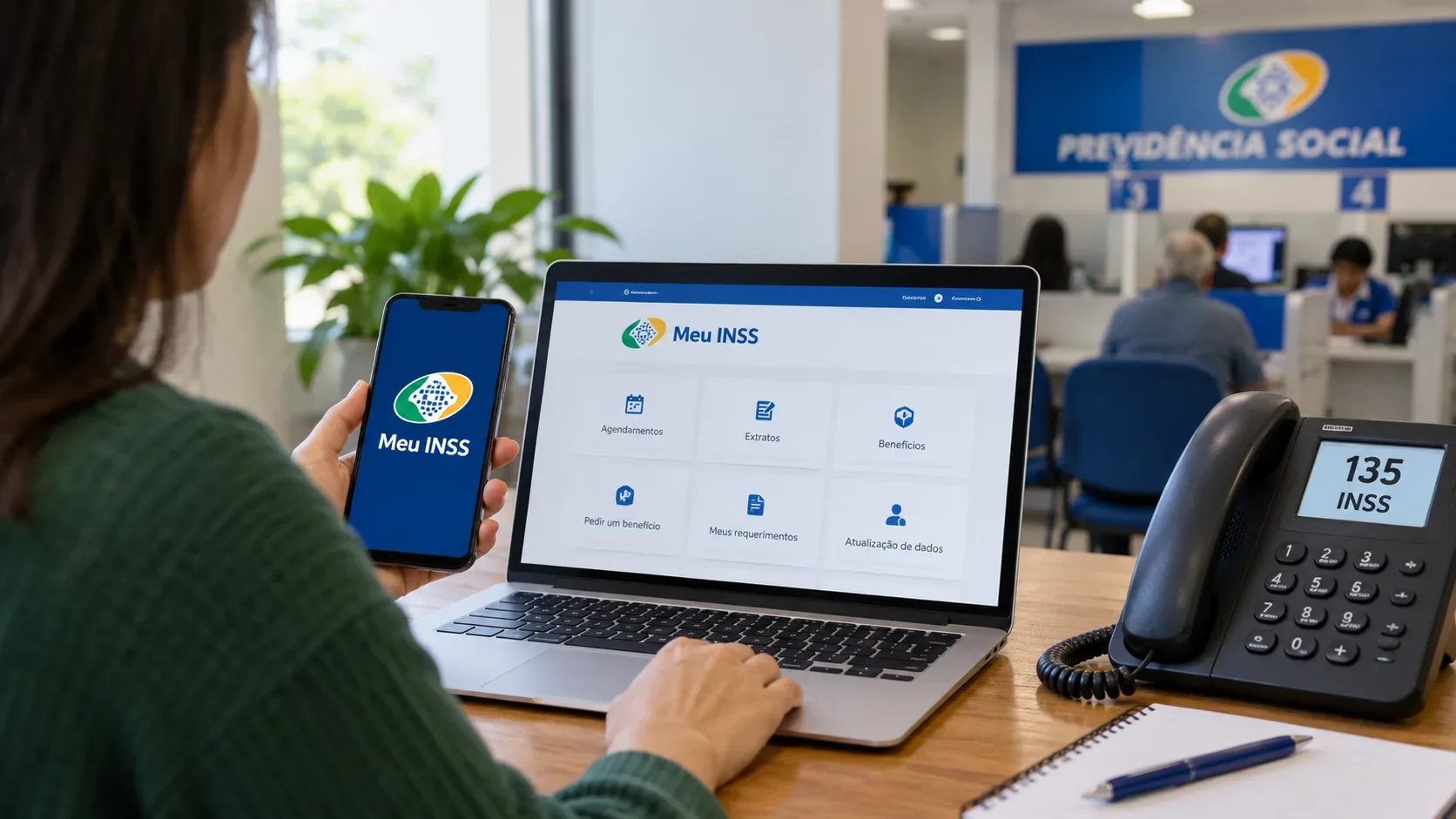
- for portability, the beneficiary also authorizes the procedure through Meu INSS — by biometrics or, when no biometric record is found, through bank-data validation — and must sign the portability authorization form;
- the institution involved in confirming portability has up to 20 days; without confirmation within the deadline, INSS says the portability is canceled.
Important: the 40% reference in the August notice is now outdated
The INSS notice published on August 24, 2026 stated that the consignable margin was up to 40%, based on Provisional Measure No. 1,355/2026. However, the Brazilian National Congress records that this provisional measure lost effectiveness on August 31, 2026. Therefore, as of September 3, 2026, that 40% figure should not be repeated as a current legal reference without a new check.
Before the provisional measure, INSS regulations used a different structure for eligible retirement and pension benefits, while benefits such as BPC are subject to their own limits. Because the measure lost effectiveness only a few days after the INSS notice, the safer approach for a new transaction is to check the margin actually shown by Meu INSS/Dataprev and the rules in force at the time, rather than automatically relying on the percentage quoted on August 24.
What to check before authorizing an offer
- whether the benefit is unlocked for payroll lending;
- whether the authentication offered is biometric or, because no biometrics was found, based on bank data;
- the margin shown by the system for that benefit;
- the amount released, installment amount and count, total effective cost and total amount payable disclosed by the institution;
- whether the institution and contract details match the offer the holder actually requested;
- whether authorization is being performed directly by the benefit holder, without sharing passwords, access codes or confirmations with third parties.
This explanation is informational and does not recommend taking out credit. The decision should consider the effect of the monthly deduction on benefit income and the specific contract terms.