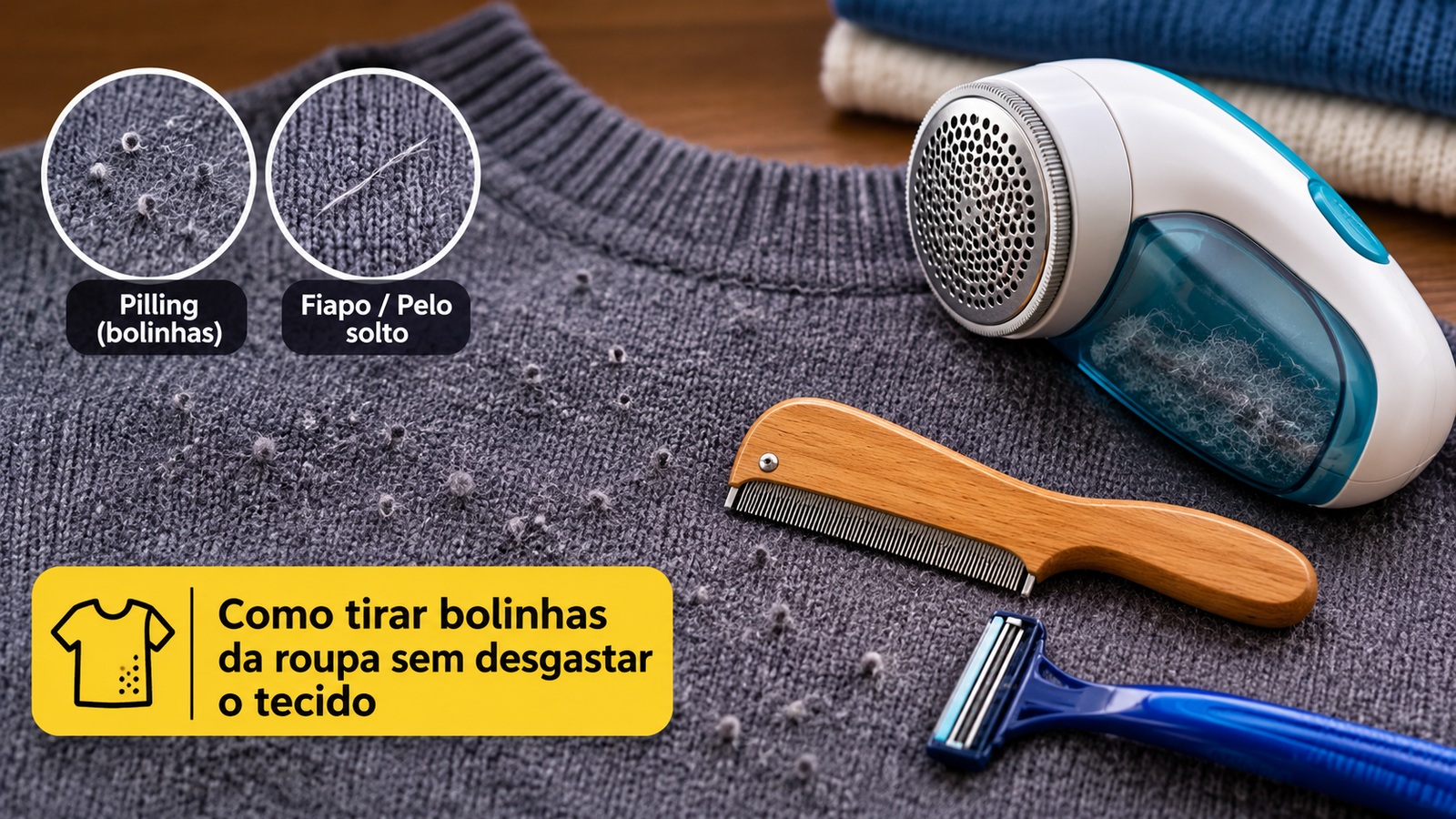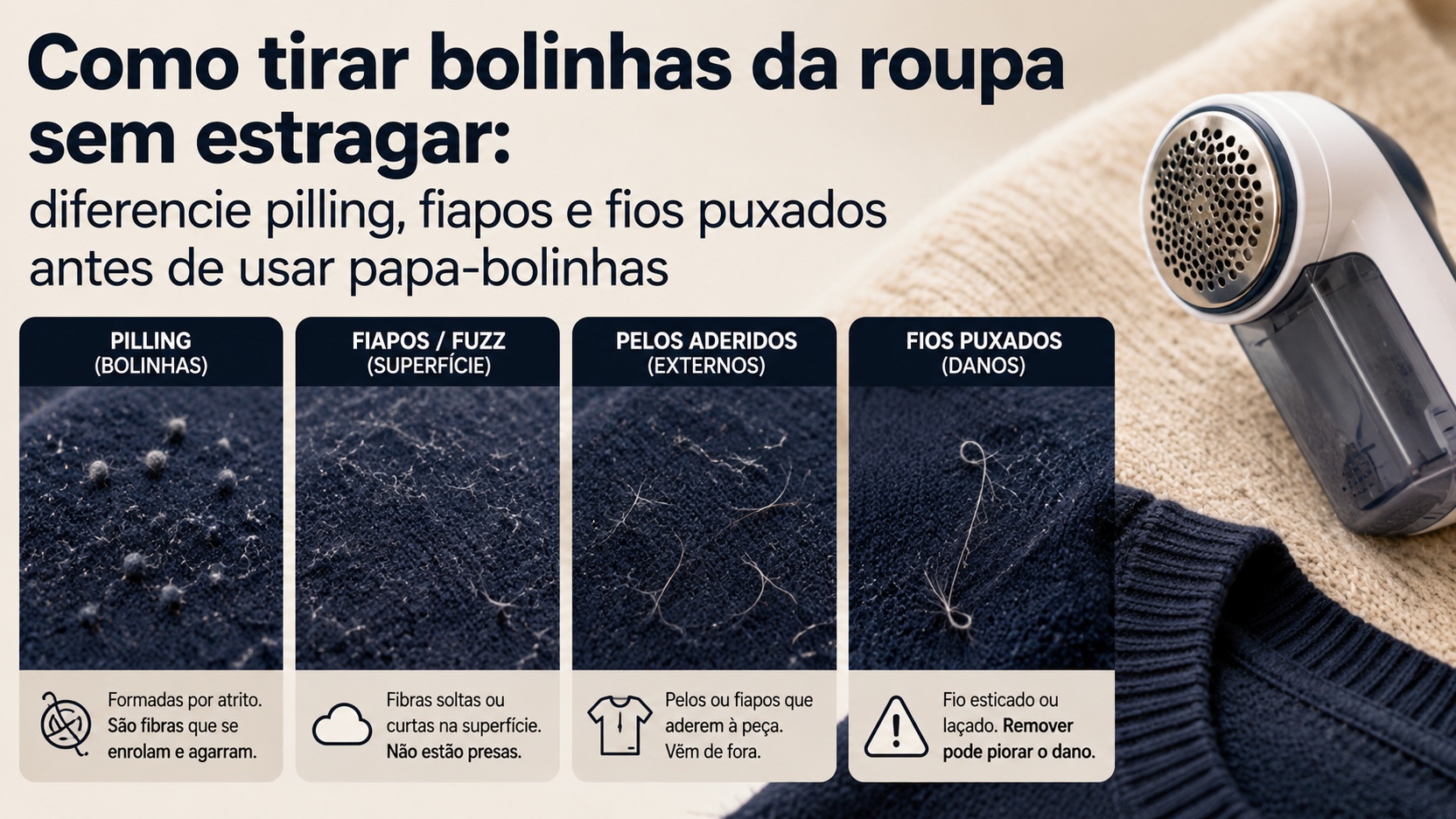
If your clothes appear to be covered in "polka dots", the first decision is not which tool to use. It's finding out what has really changed on the surface. True pilling, fuzz, stuck lint, and pulled threads may look similar from afar, but they represent different situations. The polka dot is useful when there are small clumps of fibers attached to the fabric; In a pulled thread, an open mesh or an embroidered detail, the same blade can transform a small change into a cut or hole.
The difference matters because pilling is not just "dirt" stuck to the piece. In the textile field, pills are described as small balls of tangled fibers that remain attached to the surface. Fuzz is a fluff formed by fibers that protrude from the fabric without necessarily having turned into balls. Lint, hair and fibers from other pieces may simply be deposited on top. A pulled thread, in turn, is part of the structure itself and should not be treated as something to scrape.
Before you remove anything, find out what's on the surface
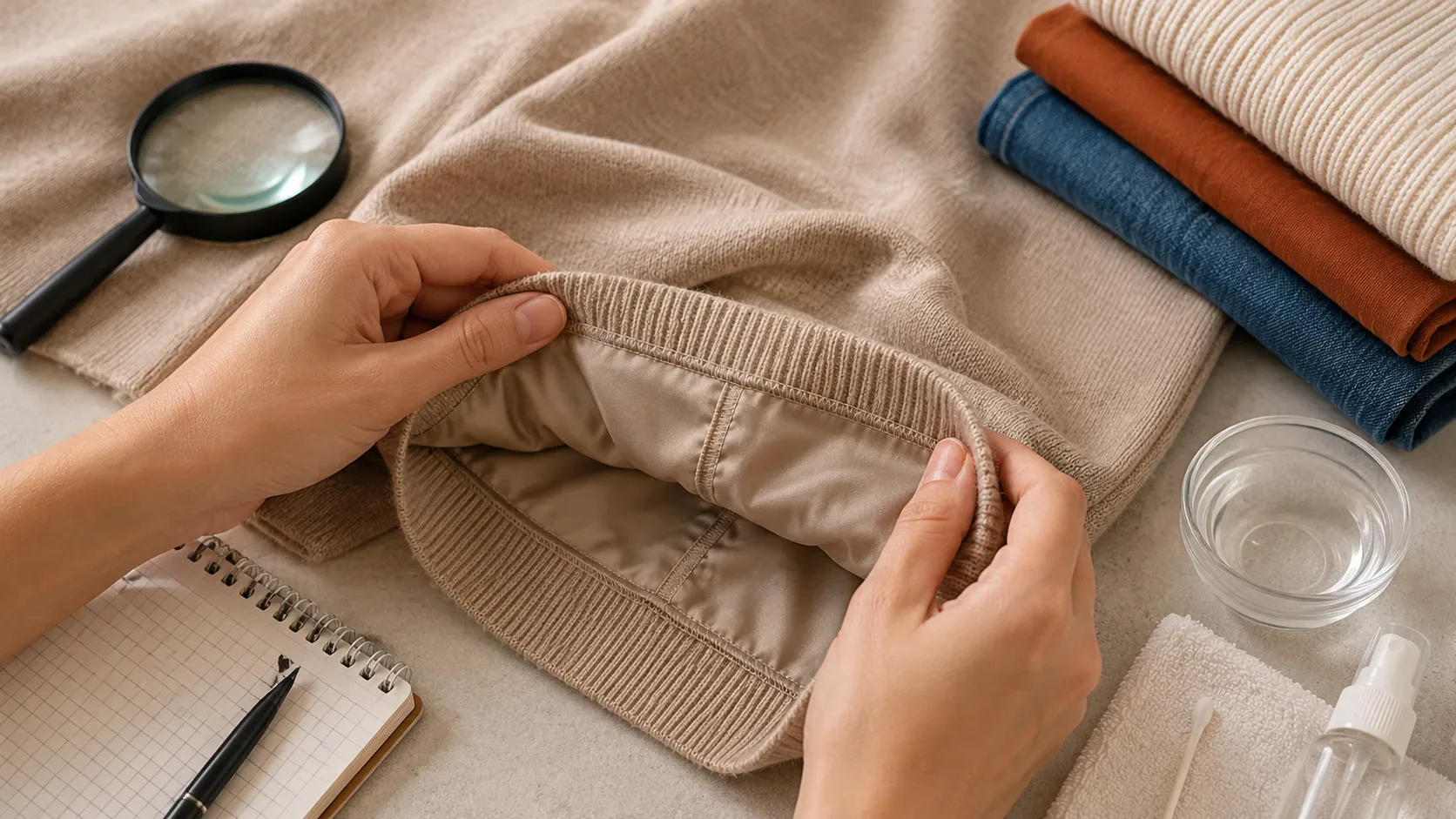
Place the piece on a flat surface and observe the area in good light. Instead of starting by scraping, use your fingertips or a suitable brush very lightly. If the material comes off easily, it is probably lint or hair that has stuck to it. If there are small balls trapped by fibers, the frame approaches pilling. If you see a loop, a stretched thread, or a section that appears to have been pulled out of the weave or mesh, stop: this is a sign of structural damage or a snag, not an ordinary pill.
This simple diagnosis follows a distinction used in the technical evaluation of tissues. Pilling and fuzzing are related but not identical surface changes. Furthermore, pilling assessment methods remove easily brushable material before classification, precisely because loose fiber on the surface should not be confused with a pill stuck to the fabric.
Pilling: small balls of trapped fibers
Pilling usually appears in areas of repeated friction: armpits, sides of the garment, wrists, elbows, areas of contact with a bag, belt, table, bench or other layer of clothing. The fibers migrate to the surface, become tangled with use and can form small clumps anchored to the fabric.
The presence of pilling does not depend on a single fiber. Fiber type, blend, fiber length, yarn twist, knit or fabric construction, finishing, washing and conditions of use influence the result. That's why two seemingly similar blouses can age differently.
When the polka dots are clearly attached to the surface and the fabric base is regular, polka dot may be appropriate. The tool cuts the protruding portion that goes through the device's protective screen, without requiring you to pull the chipboard with your fingers.
Fuzz or fuzz: ruffled surface, without defined dots
Fuzz is the appearance of short, loose fibers that make the surface hairier or opaque. It can precede pilling, because engineered fibers have more opportunity to curl and snag on each other. But not all fuzz needs to be removed. In terry fabrics, brushed fabrics, fleece, wool with a soft finish or pieces that were born with a high surface, part of this appearance is intentional.
If the area is just raised and there are no defined bumps, shaving the entire surface can alter the feel and finish. Care should be more conservative than on a compact surface sweatshirt that features isolated pills.
Lint and hair attached: material that came from outside
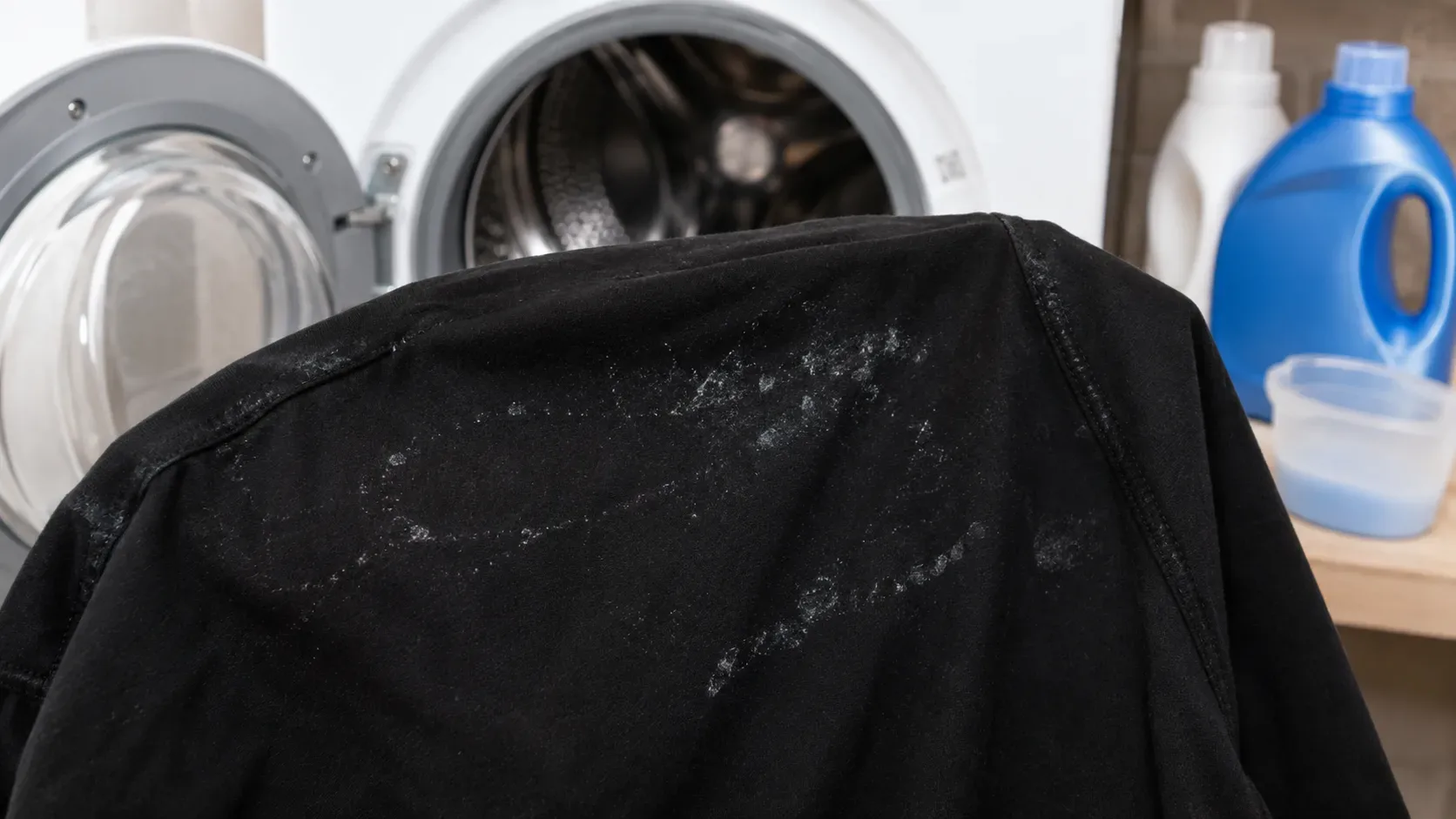
Lint is not synonymous with pilling. Towels, blankets, paper forgotten in pockets and items that release fibers can transfer material to other clothes during washing and drying. Synthetic fabrics, velvets, corduroys and other surfaces that attract lint can come out of the machine with fibers from another item attached.
When the material is just deposited, the most logical solution is to remove it without cutting the fabric: special adhesive roller, tape used gently, lint brush or other method compatible with the piece. Using a ball picker in this situation adds a blade where perhaps only a superficial removal would be necessary.
Thread pulled: stop before the blade
A pulled thread often appears as a loop, a longer thread, or a tensioned section. In knits, pulling or cutting this thread can displace neighboring stitches and increase the defect. In fabrics with effect threads, embroidery or open structures, the blade can reach precisely the element that keeps the construction intact.
Do not try to "level" the pulled thread with a fine cutter or razor. If the thread is still intact, the repair may involve carefully redistributing the tension to nearby stitches or taking the item to a knit repair person. If there is already a hole, breakage or fraying, the priority becomes to contain the damage, not to scrape the surface.
When the polka dot helps
The ball checker was made to remove pills and protruding material that could pass through the device's protective screen. In usage guidelines, manufacturers recommend supporting clothing on a table.
flat surface, smooth it and move the device gently. They also warn not to go over zippers, buttons, embroidery and loose threads.
This provides a practical criterion: the tool works best on a relatively stable, flat base with no elements that could enter the blade. The device should not be used as if it were a sander to "polish" any fabric.
How to use with less risk
Start with the clean, dry piece, if the care label allows it, and place it on a table. Smooth the area without stretching the mesh to the point of opening the stitches. If the appliance has a height protector for delicate fabrics, use it when the surface is higher or more sensitive. First do a short test in an inconspicuous area.
Move the ball picker with light strokes, without pressing down. Excessive pressure brings the base of the fabric closer to the blades and is not necessary to cut a pill that is already protruding. Work in small areas, remove accumulated material from the reservoir and stop if the appliance starts to pull the fabric, catch threads or produce a change in texture other than the balls themselves.
The goal is to remove clumps, not reduce surface thickness. If you have to insist on the same point many times to get an effect, this is a sign to stop and reevaluate the fabric.
Why razors are a riskier choice
The manual razor does not have the same screen that separates the blade from the body of the fabric. It may look effective on a flat area, but a fold, topstitch, seam, or slightly raised mesh can go straight into the cut.
On low-value pieces with a very stable surface, some people use a manual blade out of habit, but this does not make the technique universal. Quando o objetivo é conservar a roupa, uma ferramenta com proteção e controle de altura oferece uma margem de segurança melhor. On delicate fabric, openwork mesh, lace, embroidery, plush surface or valuable piece, the risk of a cut is not worth the rush.
Fabric construction matters more than one rule per fiber
It's tempting to boil the decision down to "cotton can" and "synthetic can't," but pilling behavior is more complex. The textile industry considers fiber, blend, fiber dimensions, yarn, construction, finishing and use. The strength of some synthetic fibers can also cause pilling to remain anchored for longer, but natural fabrics can also experience pilling.
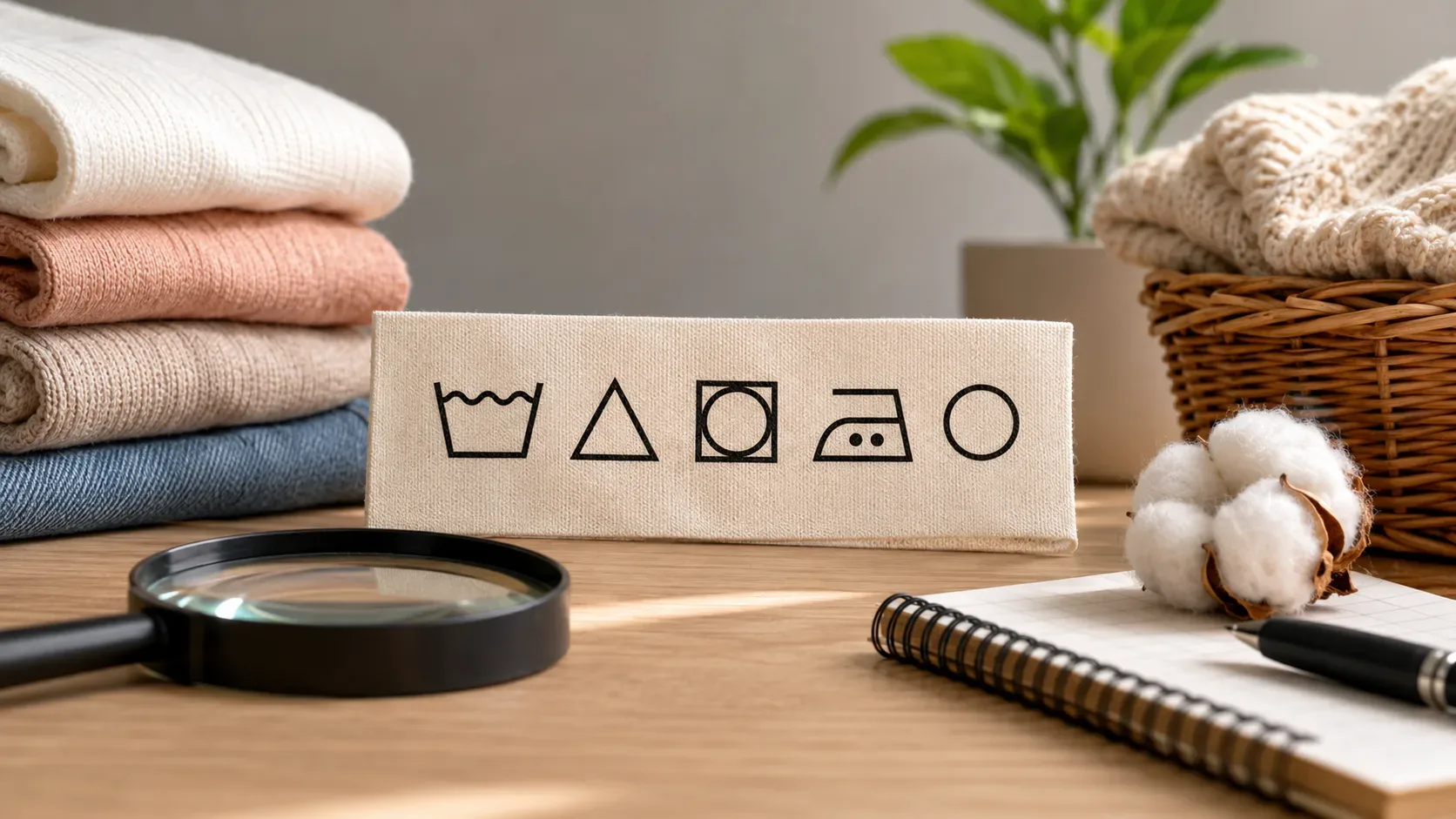
For this reason, the best domestic matrix starts with the visible construction of the piece and then considers the fiber indicated on the label.
Compact knit, jersey and regular surface sweatshirt
Quando a malha é firme, a superfície é relativamente lisa e as pills estão isoladas, um papa-bolinhas tende a ser uma opção prática. Even so, seams, embossed prints, cords and finishes must remain outside the passage area.
In a sweatshirt with a furry inner side, care is especially valid for the furry side. Do not treat the intentional volume of the finish as a defect. The focus should be on the balls
really formed.
Open knitting, wide stitches and embossed pieces
The more open the mesh, the greater the chance of the polka dot screen touching a loop on the stitch itself. Tranças, pontos rendados, fios grossos pouco torcidos e superfícies irregulares exigem cautela.
If there are few pills, careful manual removal or a specific comb recommended for that type of item may be preferable. If there are many loose stitches or signs of snag, stop grinding and treat the integrity of the mesh first.
Soft wool and knits
Wool can form pilling due to friction, especially in areas of contact. Woolmark guidelines recognize both the manual removal of a few pills and the careful use of combs or waxing devices. The decisive recommendation is gentleness: an aggressive comb or a pressed blade can damage the knitting.
Lãs com superfície muito peluda, mohair e fios de efeito pedem ainda mais cautela. What looks like "fuzz" can be part of the aesthetic and feel of the piece. Antes de remover volume, compare a região afetada com uma parte pouco usada, como o interior de uma barra.
Fleece, plush and brushed fabrics
Essas superfícies têm pelo ou penugem intencional. If a polka dot is used indiscriminately, it can leave an area lower, smooth or stained compared to the rest. When pills are evident, work in a localized manner and with height protection, if the device offers this feature.
Se o problema for apenas pelo de animal ou fiapo preso na superfície, prefira primeiro uma ferramenta de remoção sem lâmina.
Smooth flat fabrics
In flat fabrics, pilling can occur, but any pulled thread deserves attention because the weave may display a displaced thread instead of a ball. Uma superfície lisa com pills pequenas pode aceitar o papa-bolinhas; a long thread, raised thread or snag stitch should not be shaved.
Pockets, belt loops, pleats, seams and regions with several layers form unevenness. Avoid passing the device over them as if the entire piece were the same height.
Synthetics and mixtures
Some synthetics and permanent press fabrics have a tendency to retain pills on the surface because tough fibers can remain anchored rather than breaking. This helps explain why certain dots reappear and appear more persistent.
But don't use the composition alone to decide. A closed-knit polyester, a polyester fleece and a synthetic lace have completely different constructions and do not accept the same handling. The composition label provides guidance, but the construction and finish determine the immediate risk of the tool.
Why do pills come back after washing
Removing pilling does not change the cause that produced it. If the piece continues to be subjected to the same friction and washing conditions, new fibers can migrate to the surface and
form other clusters. It is common for the user to conclude that the polka dot "didn't work" when, in fact, it removed the visible effect without changing the tissue's propensity.
Washing also involves friction. Separate delicate or loosely woven pieces from more aggressive loads, avoid excess pieces in the drum and follow the cycle indicated on the label to reduce unnecessary contact. Turning certain clothes inside out can protect the outer surface during washing. For wool, Woolmark recommends washing inside out and minimizing abrasion.
Lint also has its own prevention. Materials that release a lot of lint, such as some towels, blankets and plush fabrics, can be washed separately from items that attract these fibers. Verificar bolsos evita o clássico papel desmanchado que cobre a carga inteira.
Soft fabric softener should not be treated as a universal antidote against pilling. Recomendações variam conforme fibra, acabamento e sistema de lavagem. In wool, for example, Woolmark warns that excess conditioner can facilitate the migration of fibers to the surface. The safest rule remains to respect the item's label, product dosage and type of fabric.
Attack the source of friction, not just the balls
If the pilling always appears in the same place, observe what touches there. The side may rub against the bag; the waist, on the belt or on the bench; the fist, on the table; the abdomen region, on the seat belt; as axilas e laterais, no movimento normal dos braços.
This reading is useful because localized friction leaves a pattern. Reducing harsh contact, alternating the position of your bag and backpack, or avoiding storing a delicate item pressed against abrasive surfaces can reduce recurrence.
When washing, a very delicate item may benefit from a gentle cycle or a protective bag when this is compatible with the label. The goal is not to eliminate any movement, but rather to avoid unnecessary abrasion.
When is it better to stop
Stop using the dot picker if the tool begins to seize the fabric, if the surface loses uniformity, if thinning appears, or if you notice long threads, loops, or open stitches. The same goes for areas with embroidery, lace, applications, sequins, zippers, buttons or raised seams.
Em uma peça cara, antiga, artesanal ou de malha muito aberta, o limiar para parar deve ser ainda mais baixo. The loss caused by a blade can be irreversible, while light pilling is mainly a change in appearance.
When there is a pulled wire, hole or break, seek repair instead of continuing to remove material. In knitting, a small compromised stitch can grow if the yarn is cut or pulled. A seamstress, tailor or knit repair professional can assess whether it is possible to redistribute the thread, stabilize the stitch or make a discreet patch.
Diagnosis prevents the damage that the "universal trick" creates
The safest way to get pills out of clothes doesn't start with a pill pick, razor or tape. It starts with a simple question: is this attached to the tissue, just deposited on it or is it part of the structure itself?
If they are real pills on a stable surface, the ball picker can work well when used lightly and away from details. If it is lint or external hair, remove it without a blade. If it's just fuzz, preserve the finish whenever it's part of the texture. If there is a pulled thread, open stitch or structural damage, do not cut: treat as a repair.
This difference also explains why there is no single technique for every garment. Pilling is the result of fiber, thread, construction, finishing, friction and use. The right tool removes the symptom without sacrificing the part; Prevention begins by reducing the friction that continues to produce the problem.