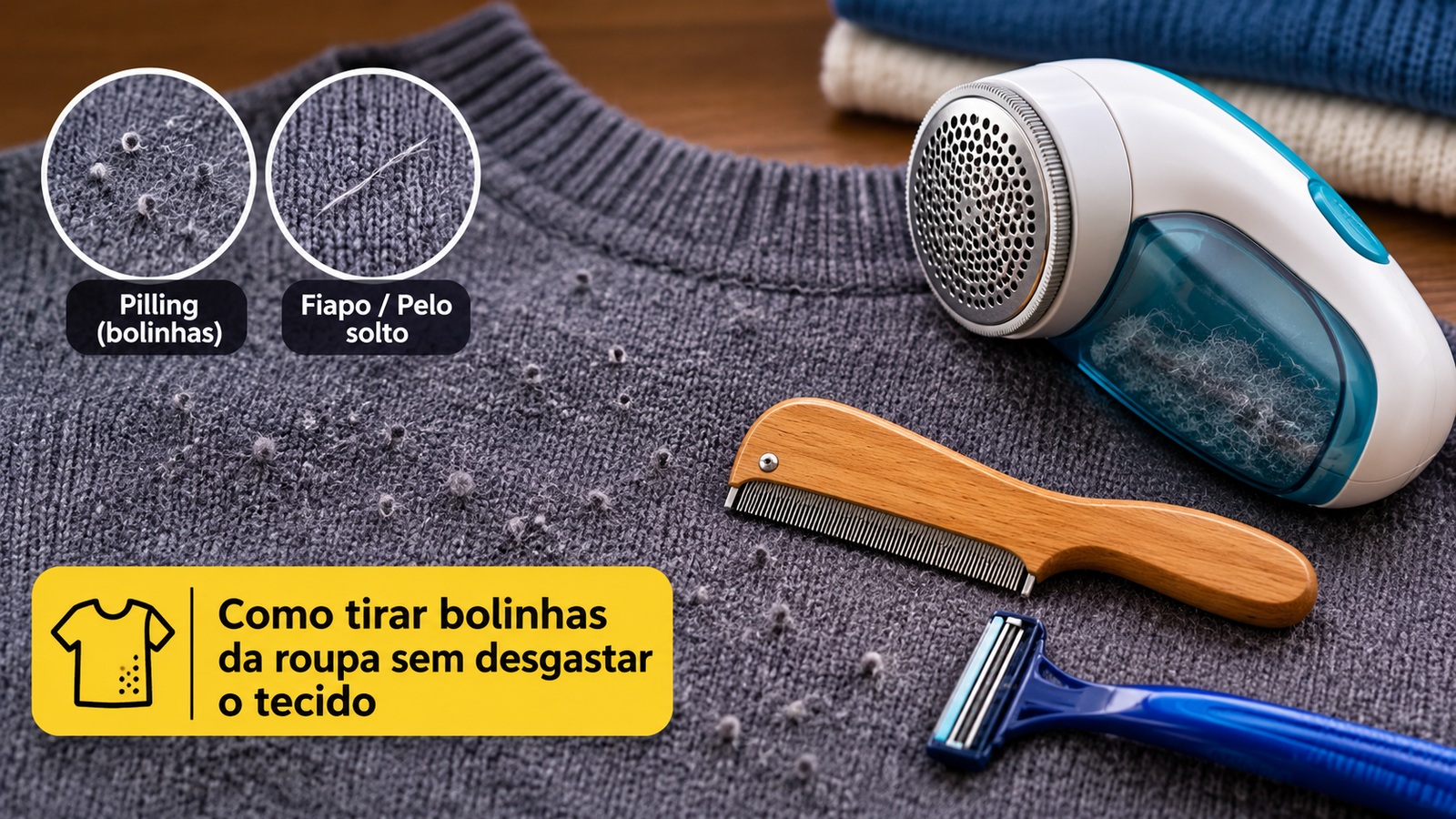
The best tool for removing pills from clothes is not always the same. The starting point is to find out if it is real pilling and observe how the piece was constructed. A dense mesh supports one type of intervention; an open knit, a fuzzy sweater or a thin garment may react differently. The more aggressive the method, the greater the chance of removing not only the ball, but also fibers that are still part of the fabric.
Pilling is the name given to the small balls of tangled fibers that remain attached to the surface. CottonWorks, Cotton Incorporated's technical platform, describes the phenomenon as a complex property influenced by the type and mix of fibers, fiber dimensions, yarn, fabric construction, finishes and use. Woolmark also relates the appearance of pills to friction during use and highlights factors such as fiber length, yarn twist and construction. This helps correct a common idea: washing may be involved in the process, but it is not the only explanation.
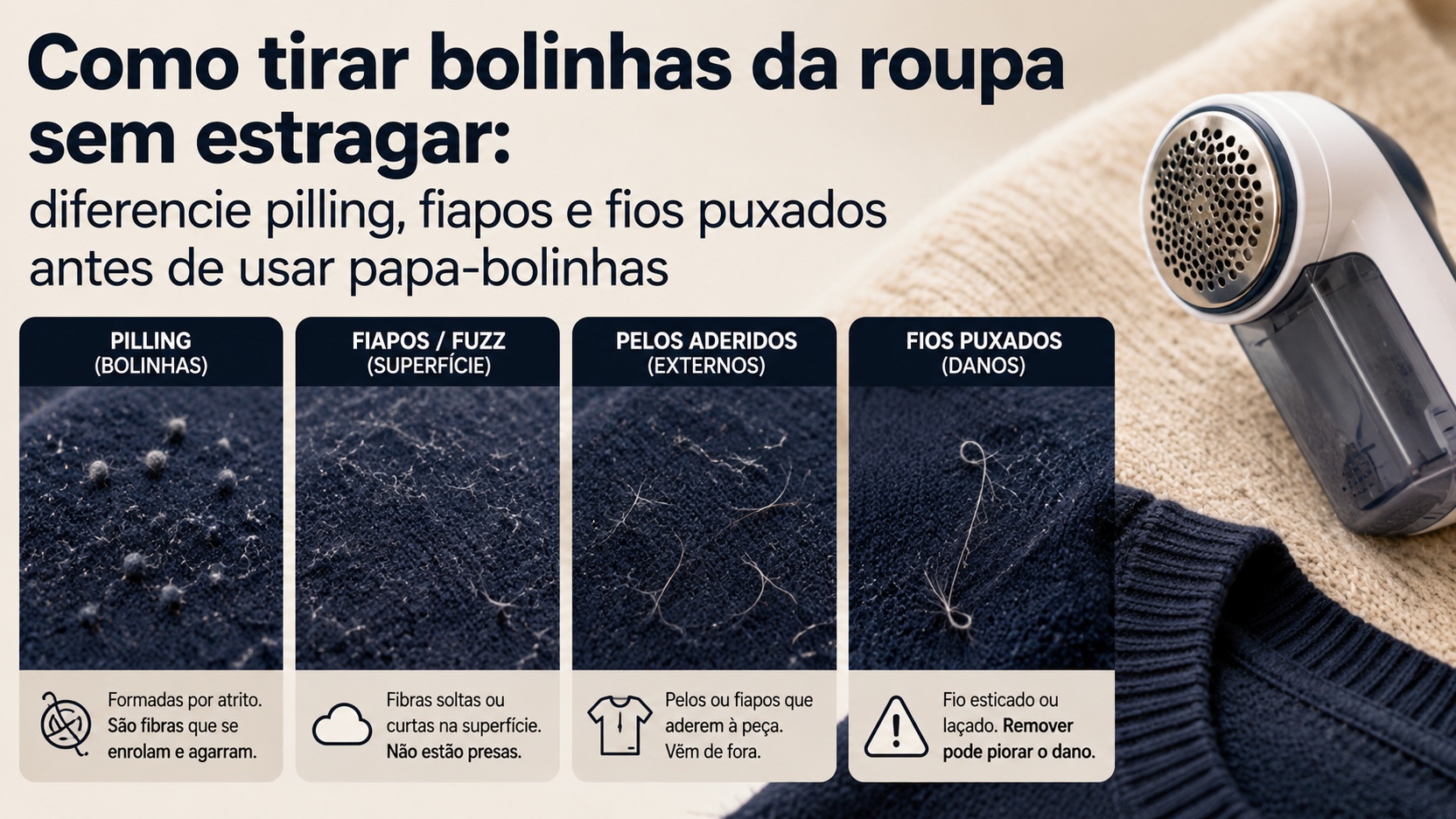
First: differentiate between balls of lint and loose fur
A lint, hair or animal hair is deposited on the surface. In general, it comes off with your hand, suitable adhesive tape or lint roller without offering resistance. The pilling ball, on the contrary, is anchored by fibers of the fabric itself. When you try to lift it, you realize that it is still stuck.
This difference changes the tool. Passing a razor or spotter over superficial dirt unnecessarily only adds mechanical contact. Before cutting anything, remove anything that is loose and take a close look at what remains stuck.
It is also worth distinguishing pilling from other signs of wear. An area that is already thin, shiny, faded, too fuzzy or with open spots may be more than a simple aesthetic issue. CottonWorks notes that pilling can appear along with loss of coverage, color change and fuzzing, that appearance of loose fibers on the surface. In these cases, insisting on "cleaning" the area can accelerate damage that has already begun.
Before choosing the tool, look at the construction of the part
Place the dry clothes on a flat, well-lit surface. Read the composition and care label, but do not use composition as the only criterion. Two pieces of wool can have very different weaves, twists and finishes. The same goes for cotton, acrylic, polyester and blends.
Pass your fingers without pulling. If the surface is firm and stable, the balls are raised, and there are no long threads or loops exposed, there is more scope for a controlled cutting tool. If the mesh is open, very fine, fuzzy, embroidered or has relief, the risk of the tool reaching the structure itself increases.
Testing in an inconspicuous area remains one of the best protections. Make few passes, without pressure, and compare texture, thickness and appearance with the area next to it. If the tested spot appears smoother, lighter, or thinner, the method is removing more than it should.
Polka dot: best when the fabric is stable and the surface is flat
The electric ball cutter, also called a fabric shaver, uses a protective grid and internal blades to cut fibers that protrude through the grid. Woolmark cites it as an effective way to remove pilling from wool garments, and Patagonia also includes it among its clothing maintenance tools.
It tends to offer more control than a regular blade because there is a barrier between the cut and the fabric. Still, it is not impossible to cause harm. If the part wrinkles under the appliance, if a loop gets into the grid, or if you repeatedly press the same place, useful fibers can also be cut.
In dense knits, sweatshirts, some compact knits and relatively uniform surfaces, polka dots are usually the first practical option. Work with the piece extended, without forming folds. Touch the device lightly and make short movements. Don't use force to try to "scrape it back to new." The objective is to remove the excess raised, not to level the piece until its original texture has been erased.
In fleece and synthetic fabrics that form persistent pills, the device can be especially useful, but requires the same care. Synthetic fibers can keep the balls attached for longer, so repeating many passes in the same spot can create a false feeling that you just have to keep cutting. If the surface starts to look visually different from the rest of the garment, stop.
Fabric comb: useful in knitting, but must be used with little force
Woolmark recommends that the comb is used gently and carefully. Patagonia also lists it as an option for soft knits, including merino and cashmere, which is less likely to cause an accidental cut than exposed-blade tools.
The comb works best when it can capture superficial balls without entering the structure. In relatively close knit sweaters, it can be an interesting choice for those who prefer a slower, more controllable process. Make light strides towards the surface, without aggressive back-and-forth movements.
The limit appears when the teeth begin to grip the mesh itself. If the comb pulls stitches, lifts loops or moves the thread, it no longer acts on pilling. Open knitting,
lace, fancy threads, embroidery or pronounced reliefs are not good candidates for automatic combing just because the item is "woolen".
Manual cutting: for few balls and cases that require precision
When there are few isolated balls, Woolmark itself considers manual removal as an alternative. The main care is not to turn this into pulling out fibers. Pulling hard on a ball can stretch the thread that anchors it and increase local damage.
If the ball is elevated and clearly separated from the surface, it is possible to remove it individually with great precision. When there is a small bonding thread visible and away from the fabric, a pinpoint cut with small scissors may be more controllable than running a tool over an entire area. The scissors, however, must not touch the mesh or enter between stitches.
This method makes more sense for low volume. If the entire garment is pilled, cutting stitch by stitch increases handling time and the chance of error. In this scenario, an appropriate ball picker or construction-compatible comb may be more predictable.
Common blade: works, but is the option with the lowest margin for error
The razor blade often appears as a household trick because it can cut projected fibers. The problem is precisely this: it doesn't have the protection grille of a polka dot. The same blade that finds the ball can find a high point in the fabric, a barely visible fold or a loop.
For this reason, the common blade should not be the first choice for cashmere, plush knits, open knits, fine fabrics, embossed surfaces, embroidery, high seams or pieces that already show thinning. In these situations, a small unevenness can turn into a cut, pull or hole.
If someone chooses to use a blade anyway, the least unfavorable situation is a dense, smooth, stable surface extended over rigid support. Even so, the pressure must be minimal, the stride short and the test in a hidden area essential. Don't make quick movements, don't scrape over folds and don't repeat the same section too many times.
The practical difference between blade and spotter is important: both cut projected fibers, but the spotter creates a physical distance between the blade and the piece. This protection does not eliminate the risk, but it reduces the chance of the structural wire coming directly into contact with the cutting edge.
A decision matrix by fabric and tool
For a dense cotton knit, sweatshirt or compact knit, the polka dot usually offers a good balance between speed and control. The comb may work if it does not grip the surface. The common blade should be a secondary resource, not a standard one.
For merino, cashmere and soft knits, start with the least aggressive intervention. Few marbles can be removed manually. A fabric-specific comb can work with a light touch. An adjustable ball picker or good grid can be used on some pieces, but always after a discreet test. Exposed blade deserves maximum caution.
For open knits, pieces with loops, lace, fancy threads, embroidery or relief, the priority changes: avoid going over the surface with a cutting tool or comb that could trap the structure. Only work on clearly isolated points. If the ball is mistaken for a loop on the piece itself, it is better not to remove it than to turn an aesthetic defect into a pulled thread.
For surface-stable fleece, acrylic, polyester, and synthetic blends, the ball picker can better handle tough balls. Patagonia notes that some synthetic fibers form persistent pills precisely because they are strong. This doesn't mean that every synthetic will necessarily create more pilling; construction and use continue to be decisive.
For very thin and elastic fabrics, such as certain light knits, the difficulty is keeping the surface completely flat. If the tissue rises towards the tool, the risk increases. In these cases, little pilling may justify spot treatment; Too much pilling can be a sign that trying to remove everything will produce more wear than visual benefit.
Clear signs that you should stop
Stop immediately if the fabric starts to enter the grid of the polka dot, if the comb catches stitches, if long threads appear, if the surface becomes thinner, if the color appears different or if the texture loses its original relief. Also stop if the piece is warping while you hold or stretch it.
A common mistake is to only assess whether "the ball came out". The correct criterion is twofold: the ball came out and the surface remained equivalent to the surroundings. When the treated area becomes visibly smoother, brighter, or thinner, you have already begun to remove some of the appearance and possibly the surface mass of the tissue.
Do not try to compensate for a heavily worn area by running the tool several times. Recurrent pilling at a point of intense friction, such as armpits, sides, wrists and areas that touch a bag, table or belt, may reappear because the mechanical cause is still present.
Why do polka dots come back
Pilling is not simply a mess that you remove once. New fiber ends can reach the surface through use, rubbing and washing. CottonWorks treats the phenomenon as a result of multiple material and construction characteristics, while Woolmark emphasizes abrasion during use.
This explains why two items washed in the same way can behave differently. It also explains why a sweater may pill faster on one side, under the arm or where a bag strap touches it. Repeated contact changes the amount of friction in each region.
The maintenance goal, therefore, is not to promise that the part will never pill again. It's about reducing factors that speed up the process and removing the balls in a light enough way so as not to exchange a visual problem for tissue loss.
How to reduce recidivism without treating all clothes the same
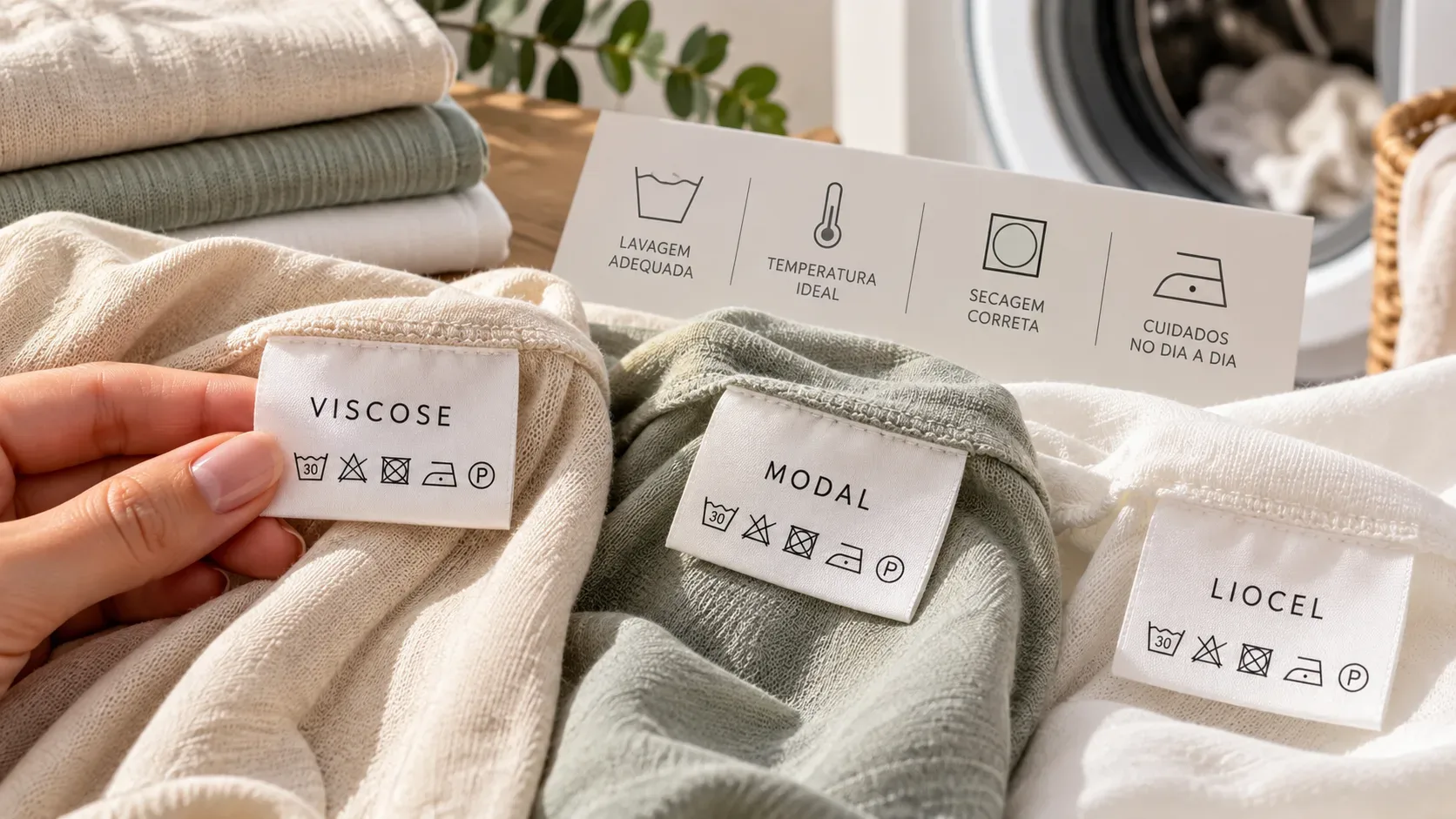
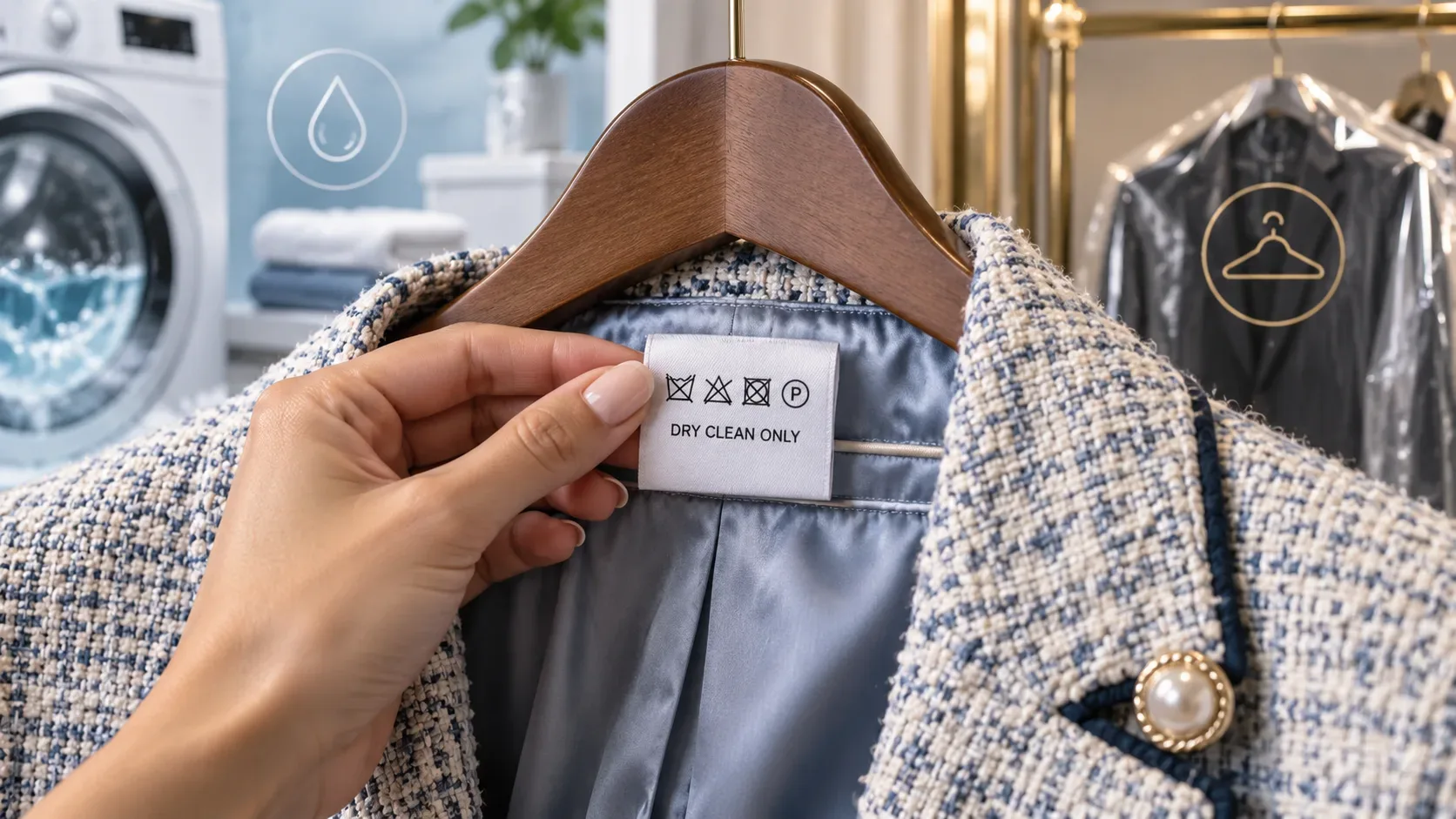
The first rule is to follow the item's care label. When the building allows domestic washing, turning clothes inside out reduces direct contact between the outside and other surfaces.
Smoother cycles and less friction also help preserve appearance.
Patagonia recommends separating soft synthetics from more abrasive materials, such as denim, when the goal is to reduce friction and lint transfer. The brand also recommends avoiding high temperatures and aggressive products when they are not appropriate for the fabric. For wool, Woolmark recommends minimizing abrasion, washing inside out and avoiding excess fabric softener; In its specific orientation, the softener can facilitate the migration of fibers to the surface.
Drying must also comply with the label. Some wool knits are best preserved when dried flat, while other pieces have different instructions. There is no single temperature, cycle or drying rule that works for all fabrics.
Finally, observe the usage routine. Crossbody bag, belt, backpack, arm resting on a table, rough coat on top and repeated friction between sleeve and body can cause pilling. Reducing this friction where possible is often more efficient than increasing the frequency of scraping.
The safest method is the one that removes the least tissue
Pulling, combing and hand cutting can be useful, but no method should be chosen solely for speed. On a dense, stable surface, the polka dot generally offers good control. In soft knits, the comb can be more delicate if used without pulling the knit. For a few pellets, spot removal avoids treating an entire area. The common blade can cut pilling, but its lack of protection makes it the alternative with the greatest risk of hitting the piece itself.
The decision improves when you ask three questions before starting: is the ball really attached to the fabric, can the construction stay flat and stable, and does the tool remove the excess without changing the surrounding texture? If any answer is uncertain, use the less aggressive option or stop. Preserving the structure is worth more than leaving the surface perfectly smooth for a few days.