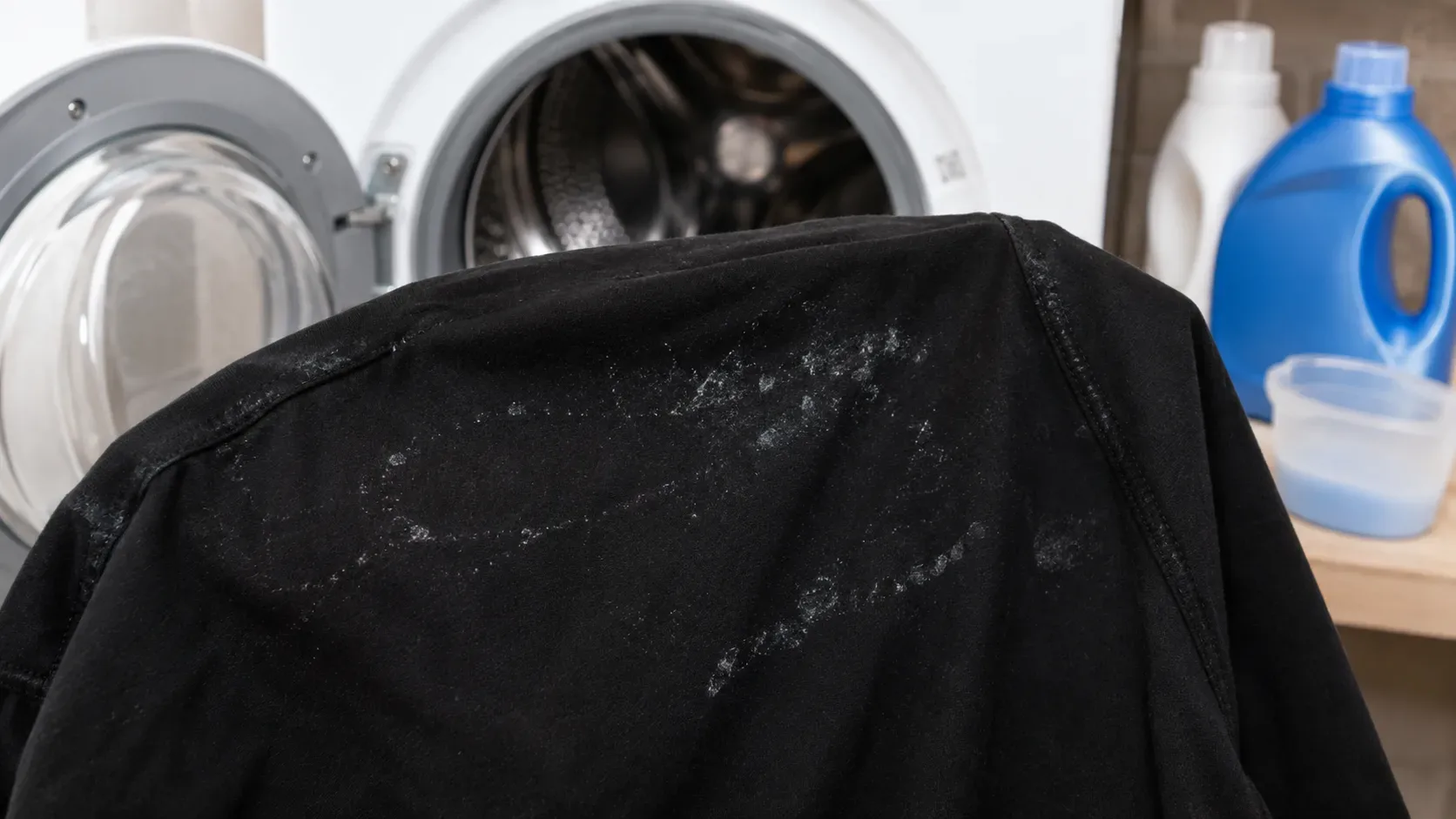
If black clothing comes out of the washer with white marks, do not assume it is detergent. The appearance may come from detergent that did not dissolve or rinse away, lint stuck to the fabric, poorly distributed fabric softener, buildup inside the washer, deodorant already on the garment or, in a different scenario, actual color loss. The safest first step is simple: do not apply chlorine bleach, a strong stain remover or a homemade chemical mix blindly. Inspect the dry mark, rub it gently with your fingers or a soft clothes brush and, if it looks like a surface deposit, rinse the area or rewash the garment according to its care label without increasing the product dose.
What to do first before trying to remove the mark
- Check whether there is material sitting on the fabric. Granules, powder, crust, film or loose particles point more toward residue than fading.
- Look at where the mark appears. Marks spread across several garments suggest a washing, load or machine issue; a mark concentrated in the underarm can be antiperspirant residue; localized oily-looking spots are more consistent with fabric softener.
- Do a gentle test. If the mark brushes off or becomes much weaker after rinsing with water, a surface deposit is likely. If the fiber stays evenly lighter with no raised material or removable residue, color alteration becomes more plausible.
- Check the care label. Water temperature, cycle and any pretreatment should follow the garment's care instructions.
The goal is to diagnose before treating. Whirlpool lists several causes for “white residue,” including too much detergent, lint, the wrong detergent, washer buildup, water quality and water that is too cold. That is why a white appearance alone does not identify the cause.
How to tell detergent, fabric softener, lint and color loss apart
| Clue | Most likely explanation | Useful first test |
|---|---|---|
| Powder, clumps or whitish marks that rub off | Detergent/wash residue | Brush gently and rinse; then reduce the dose on the next wash |
| Spots or patches with an oily, slick or shiny look | Fabric softener | Rinse and rewash; review dose and dispenser use |
| Fuzz, pale fibers or “dust” stuck to black fabric | Lint | Remove mechanically and review load sorting |
| Recurring marks on multiple garments plus residue in the drum, gasket or drawer | Washer buildup | Inspect the machine and run the maintenance procedure in the manual |
| Mark concentrated in the underarm area | Deodorant/antiperspirant | Brush or rinse the area before blaming the washer |
| Permanently lighter area with no powder, crust or surface texture | Color loss/discoloration | Compare the fiber dry and wet; do not apply aggressive products before identifying the cause |
When the white mark is detergent left on the garment
Too much detergent is a common cause, but not the only one. In high-efficiency machines, incompatible detergent, an excessive dose, an overloaded drum and insufficient rinsing can all favor deposits on fabric. Whirlpool notes that excess detergent may appear as white “clumps” and that very cold water can make dissolving harder, especially for powder detergents. It also advises dosing according to load size and soil level.
If the residue looks powdery or granular, do not try to fix it by adding even more detergent. Rinse or rewash with the correct amount and a load that can move freely. Electrolux also links detergent buildup to overuse and repeated low-temperature washing, while Whirlpool recommends periodic washer cleaning when buildup is present.
When it may be fabric softener
Fabric softener usually does not look exactly like dry, powdery detergent. When poured directly on clothing, overdosed or distributed poorly, it can leave spots or patches that look oily, slick or shiny. Whirlpool describes fabric-softener spotting as small greasy-looking areas and advises using the correct compartment, measuring the product and avoiding direct contact with the fabric. Samsung likewise associates oily spots with softener poured on clothes, placed in the wrong compartment or filled above the maximum line.
If the mark has that appearance, the initial step is to rinse and rewash according to the care label. Then correct the dose and check that the dispenser is clean and releasing the product at the right time.
When it is lint — not a stain
Black clothing makes every pale fiber visible. Towels, fleece garments, new textiles, tissue left in a pocket and lint-shedding items can cover a dark T-shirt with white dots. Whirlpool includes “excessive lint” among the causes of a white-residue appearance; Electrolux advises reviewing the load, detergent use and washer cleaning when lint remains after washing.
The main difference is tactile: lint sits on top of the fabric. It tends to come off with a clothes brush, lint roller or a properly sorted rewash. If particles are widespread across the load, check pockets, accessible filters described in the manual, door gaskets and interior surfaces.
When the washer itself is contributing
If similar marks start appearing in several loads, do not look only at the garment. Detergent, fabric softener, lint and grime can accumulate in the dispenser, gasket and internal areas. Bosch notes that detergent, fabric softener and lint residues can build up in the machine, especially with frequent low-temperature programs.
In that situation, follow the cleaning procedure for your specific model. Avoid improvising chemical combinations in the drum. An unsuitable cleaning method can damage components or react with residues from other products.
What if the mark is only in the underarm?
A white or grayish band concentrated in the underarm may not have been created by the washer. Some antiperspirants can leave pale residues on dark clothing. NIVEA, for example, states that antiperspirants containing aluminum salts can leave white residues under certain conditions and that these residues can usually be removed by brushing.
Location is therefore an important clue: if the rest of the garment is clean and the mark follows the exact contact area with deodorant, treat it first as a localized residue rather than a general washing failure.
How to recognize possible real color loss
Discoloration is different from a white deposit: there is no material to remove; the fiber itself looks lighter. This can happen after contact with bleach, an incompatible chemical or another process that alters the dye. Whirlpool warns that undiluted liquid chlorine bleach can damage fabric and cause color loss.
For that reason, a black garment with a clearly faded patch should not receive chlorine bleach or another oxidizer in an attempt to “remove the stain.” If the area does not change after brushing and rinsing and remains lighter once dry, color loss becomes more likely. Another wash may remove residue, but it cannot restore dye that has already been lost.
A quick at-home diagnosis
- Does it brush off? Think first about lint, powder detergent or antiperspirant residue.
- Does it disappear or fade sharply with water? A surface deposit is likely.
- Is it oily or shiny? Review fabric-softener use and the dispenser.
- Did it appear on most of the load? Review dose, overloading, rinsing and washer cleanliness.
- Is it only in the underarm? Consider deodorant before blaming the washer.
- Is there nothing on top of the fabric and the area stays lighter? It may be color alteration.
How to rewash without making things worse
If the mark looks like residue, the most conservative option is to rinse or rewash the garment without increasing detergent or fabric-softener amounts, following the care label and avoiding overloading. If several garments are affected, perform the machine maintenance specified in the manual before the next loads. For oily spots consistent with fabric softener, follow the garment, washer and product manufacturer's directions; do not mix cleaning agents by trial and error.
The key point is this: “white” describes the appearance, not the cause. Texture, location, how many garments are affected and what happens after rinsing are far more informative. Starting with those clues helps prevent using the wrong stain remover on simple lint — or treating genuine color loss as if it were merely detergent.