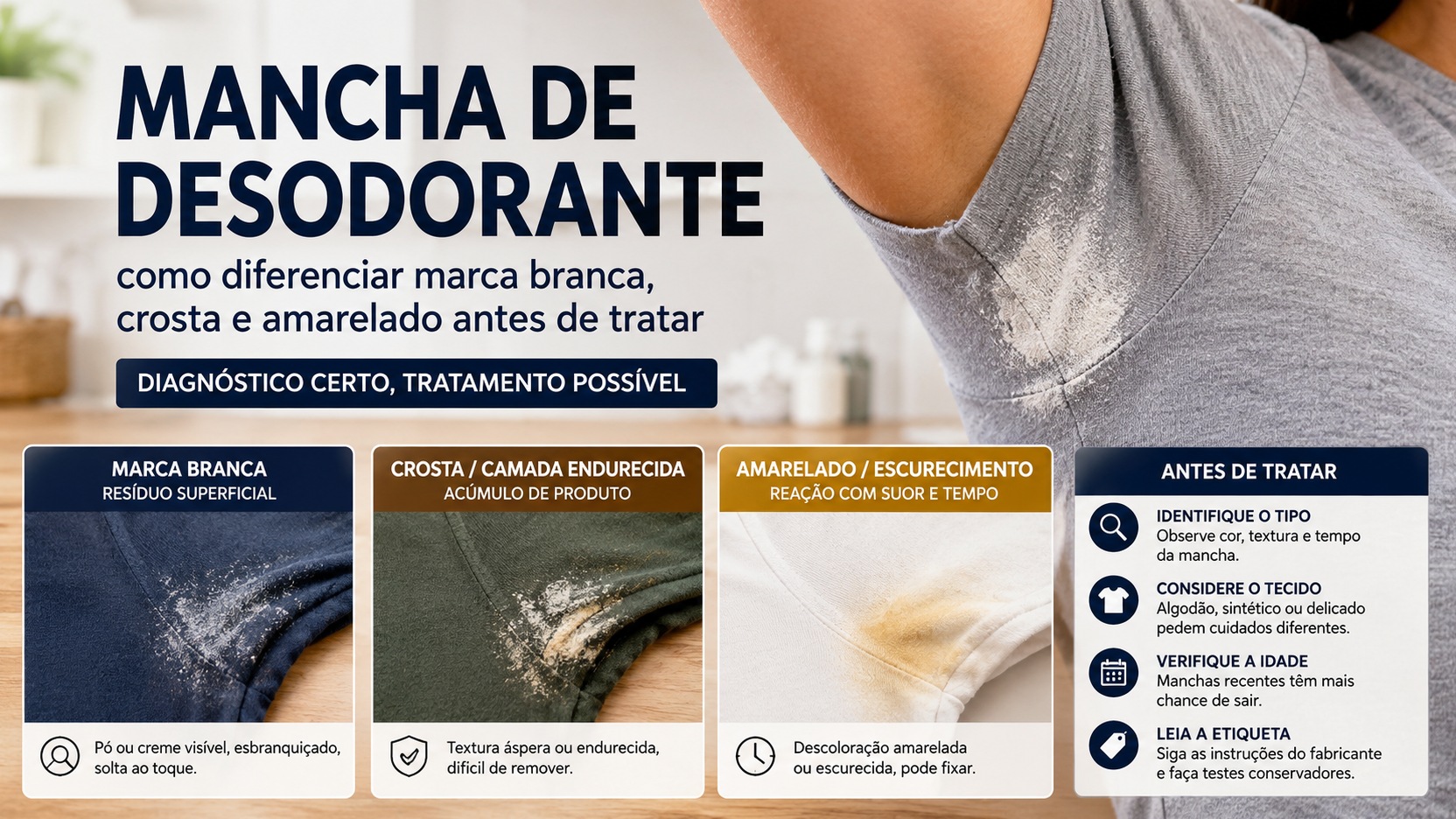
The mark in the armpit area should not be treated as if it were always the same stain. A white streak that is still on the surface of the fabric, a rough layer that has accumulated over washing and yellowing that has already altered the appearance of the fiber are different problems. Before choosing any recipe, the most useful diagnosis is to observe the texture, color, age of the brand, composition of the piece and the instructions on the label.
It also helps to separate deodorant from antiperspirant. In everyday use, the names often get mixed up, but antiperspirants reduce perspiration and can use different aluminum and aluminum-zirconium salts as active ingredients. In addition to the residue from the product itself, the armpit region receives sweat, oil, friction and repeated washing cycles. Therefore, what looks like a single "deodorant stain" may be surface deposits, hardened buildup, color change, or a combination of these effects.
First diagnosis: what you're really seeing
Shallow white mark
The superficial white mark usually looks like powder, dry cream or a whitish trace deposited on top of the fiber, especially on black and dark clothing. Gently run your finger or fold the fabric to see if any of the material comes loose. If the original color reappears without the fiber appearing rigid, the problem is more likely to be a recent transfer of the product than a permanent alteration of the fabric.
In this scenario, starting strong is unnecessary. Try to remove the excess dryly, without a hard brush or scraping. If there is still a mark, rinse the area and apply a small amount of mild liquid detergent compatible with washing the item. Then wash according to the label. The initial objective is to remove the material that is on the fabric, not to lighten the fiber.
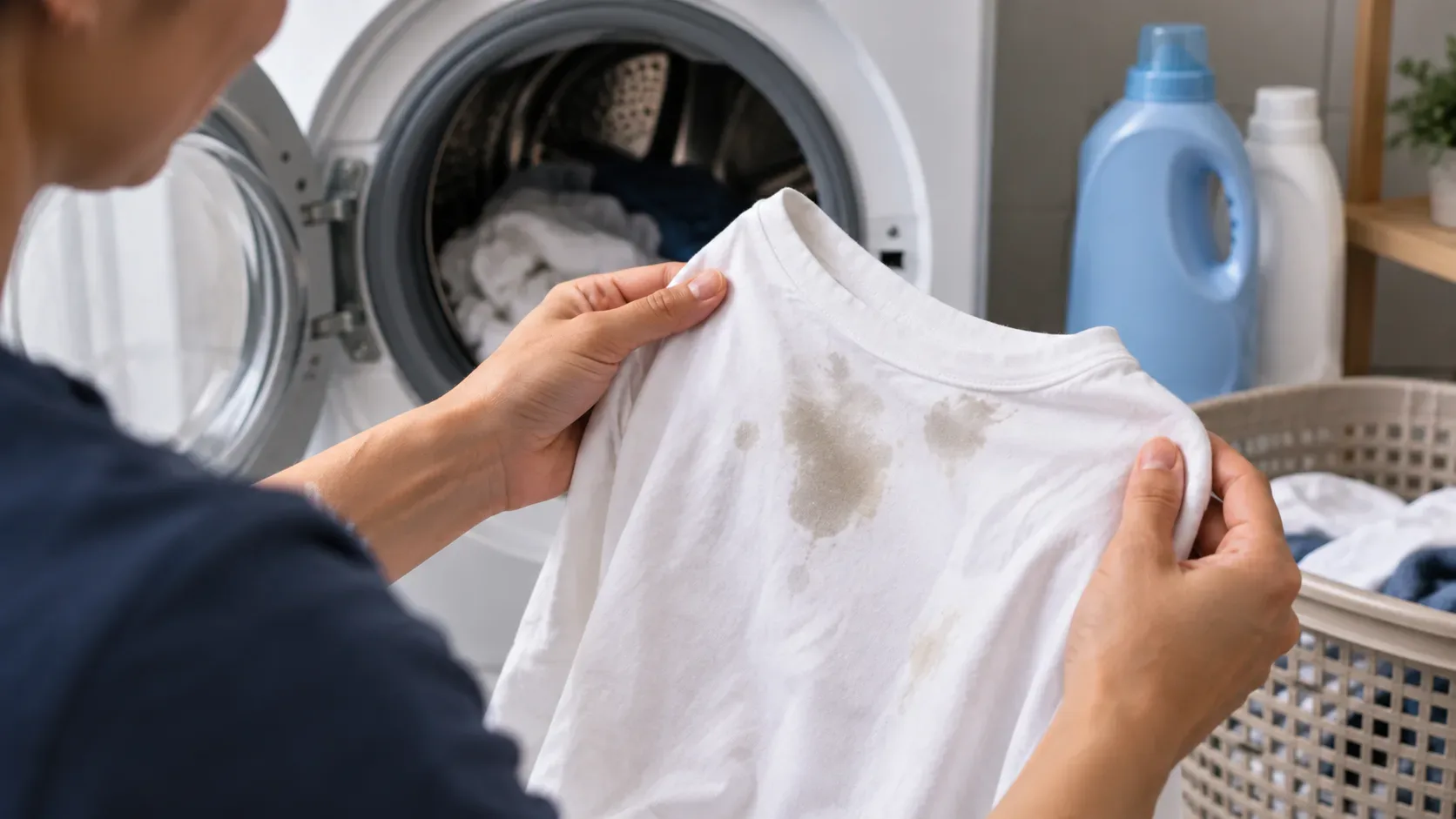
Scab or hardened layer
When the armpit area becomes rough, thick, rigid or film-like, it is no longer just dust on the surface. This aspect suggests accumulation of material between the fibers. On frequently used items, the layer may become more compact over time and resist regular washing.
The approach must be gradual. Moisten the area, work a mild liquid detergent into the area without rubbing aggressively, and rinse well. If the hardness continues, repeat the process in another cycle instead of trying to remove the crust with a fingernail, knife, stiff brush or abrasive. Forcing removal can wear out the mesh, open fibers and leave a difference in texture even when the residue comes off.
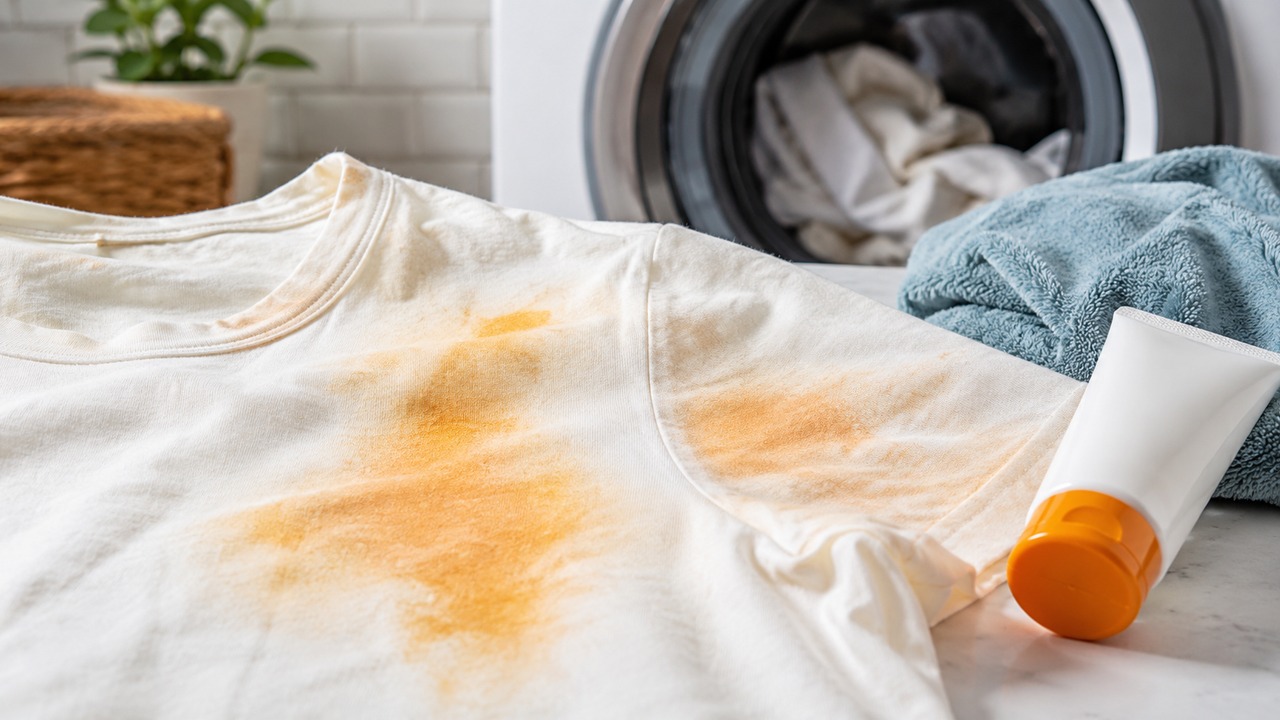
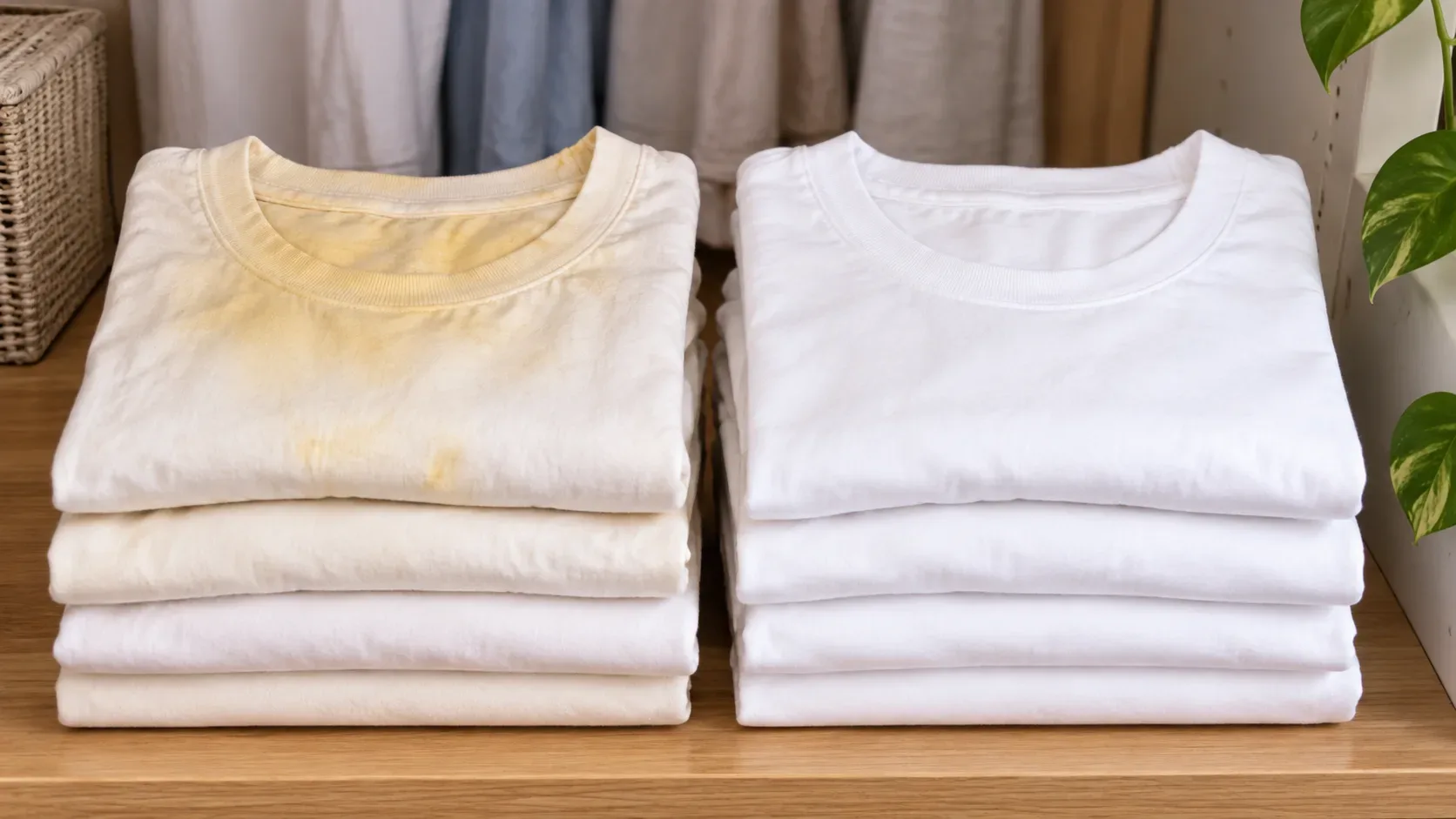
Yellowing or darkening
Yellowing on light pieces and localized darkening or fading on colored pieces deserve another reading. Here, the appearance may indicate that the color of the fabric has already been changed, and not just that there is product deposited on the surface. The University of Georgia notes that deodorants and antiperspirants with certain compounds can be acidic and alter some dyes. This means that not every yellowed or faded area will return to its original color with cleaning.
First carry out conservative washing compatible with the label. If the stain does not respond as a residue, treat the item as a case of discoloration or an old stain. Bleach, oxidants, acids or other stronger formulas should only be included in the decision when the label and composition allow it and after testing in a hidden area. On colored clothing, the question is not just "does it remove the stain?", but also "does it preserve the color?".
The age of the brand changes expectations
A recent mark may still be concentrated on the surface and respond well to simple treatment. An old brand has already gone through drying, friction, heat and several cycles of use and washing. The more the area is hardened, yellowed or has lost color, the less expected an instant solution should be.
Age also changes the risk of overtreatment. When a person repeats strong recipes in an already fragile area, it can lighten the dye, change the feel or wear down the fiber before completely removing the mark. On old stains, it is best to work in stages and evaluate the result between them.
White and colored are not the same decision
White clothes
Just because the item is white does not mean that any bleach is safe. First look at the composition and the bleach symbol on the label. White fabrics may contain polyester, spandex, special finishes or blends that react differently to chemicals. Inmetro's material on textile fibers, for example, warns that polyester can turn yellow with bleach.
If the item allows bleaching, still start with the mildest step and only proceed if the residue or discoloration persists. Don't use the color white as a shortcut to ignore the composition.
Black, dark or colored clothing
On dark clothes, the white residue usually attracts attention even before there is damage to the fiber. This is an advantage for diagnosis: if the mark comes out partially dry, there is no reason to start with bleaching agents. In medium and strong colors, any product should be tested in a barely visible area to check color fastness.
If the armpit area is already lighter, darker or a different tone from the rest of the part, stop treating the problem as simple dirt. Cleaning can remove residue, but not necessarily restore a dye that has already changed.
The fabric defines how far you can advance
Cotton and common blends
Cotton tends to withstand household handling better than delicate fibers, but labeling remains the rule. A "cotton" t-shirt may have elastane, a finish, print or dye that limits temperature, bleaching and drying. In the armpit area, avoid rubbing vigorously as repeated friction can leave the fabric white or rough.
In mixed parts, treat with the most sensitive component when in doubt. If the label indicates gentle washing, no bleach or low temperature, these restrictions also apply when trying to remove the stain.
Synthetics such as polyester, polyamide and acrylic
Synthetics require special attention to heat and chemicals. The Inmetro booklet describes polyester as sensitive to heat and registers a risk of yellowing with bleach; also points out chemical limitations for other synthetic fibers. Therefore, a polyester sports t-shirt should not automatically receive the same treatment as a white cotton t-shirt.
If there is crust on synthetic fabric, use successive detergent and rinse steps compatible with the label. Avoid trying to "melt" buildup with heat. The University of Georgia recommends not ironing or applying heat to material with a deodorant stain prior to removal.
Silk, wool, viscose and other delicate items
On delicate fabrics, seemingly simple household recipes can cause more damage than the stain itself. The Inmetro booklet highlights that silk and viscose have important sensitivities, including to acids such as acetic acid present in vinegar, and that wool requires special care with chemicals and washing.
If the label indicates professional cleaning, dry cleaning or a very gentle process, do not use the item as a testing ground. The safest way is to inform the dry cleaner where the brand is, how long it has been around and which products have already been used.
A conservative sequence to test without getting worse
Start with the label and composition
Read the symbols for washing, bleaching, drying, ironing and professional textile care first. Inmetro reinforces that these instructions exist precisely because different fibers accept different treatments. If the label prohibits bleaching, washing with water or a certain temperature, removing the stain does not nullify this restriction.
Observe the dry stain before applying any product
Compare the area to the rest of the clothing in good light. Check for dust, film, stiffness, color change, loss of shine or wear. Touch without rubbing. This simple observation helps separate deposited material from likely tissue alteration.
Do the first test with the mildest option
When the item is washable, remove surface excess, rinse and use mild liquid detergent. Use light movements and work a small area. On colored clothing, test the product on a hidden spot before treating the entire armpit. The University of Georgia's own stain removal guidance recommends pre-testing for color fastness.
Only move forward if the result justifies it
If the white has come out, stop. If the scab has softened, repeat the gentle process instead of immediately increasing the aggressiveness. If the fabric remains yellow or faded, recognize that the problem may be color and not just dirt. At this stage, any specific bleach or agent depends on the label, fiber and prior testing.
Evaluate before using heat
Do not iron the area and avoid intense drying while you are still checking the stain. Heat can make the problem more difficult to fix and can damage some fibers. Allow the item to dry in a manner compatible with the label and re-evaluate with the fabric dry before repeating the treatment.
Recipes with vinegar, bleach or peroxide are not universal
It is common to find a single mixture presented as a solution for every deodorant stain. The problem is that the same product may be acceptable in one part and inappropriate in another. Inmetro's booklet shows different sensibilities between wool, silk, cotton, viscose, polyamide, polyester and acrylic, while each garment's label defines concrete washing and bleaching limits.
Vinegar, for example, should not be treated as a neutral ingredient: silk and viscose appear in the Inmetro material as sensitive to acetic acid. Bleach is also not synonymous with safety on white clothes, especially when there is polyester. Peroxide and other oxidants can alter dyes. The most useful rule of thumb is to choose the agent after identifying the stain and fiber, not the other way around.
When to stop insisting
Stop home treatment if the area is losing color, becoming rougher, thinning, deforming or changing in shine. It's also time to stop when the label requires professional cleaning, when the piece has a high value, or when you can't identify the composition.
On old stains, a color difference may remain even after the residue has been removed. This is an important limit: removing deposits and recovering color are different objectives. If the fabric has already suffered chemical alteration, wear or fading, insisting on bleaching agents can enlarge the mark instead of erasing it.
Diagnosis in one sentence
If the mark is white and comes off when touched, first think about surface residue. If it's thick and stiff, treat it as buildup and work in gentle cycles. If the color of the tissue has changed, consider discoloration and reduce the expectation of complete recovery. In any of the three cases, the label, fiber composition, color of the piece and age of the stain should decide the next step before any recipe.