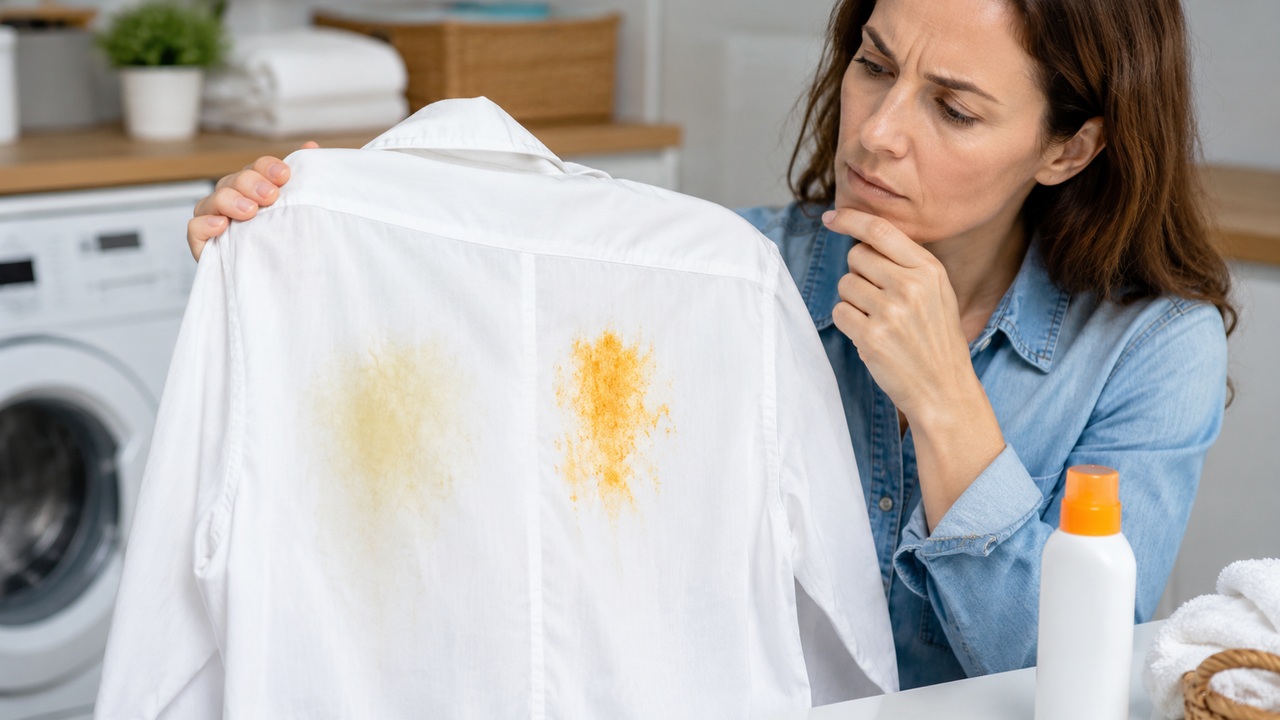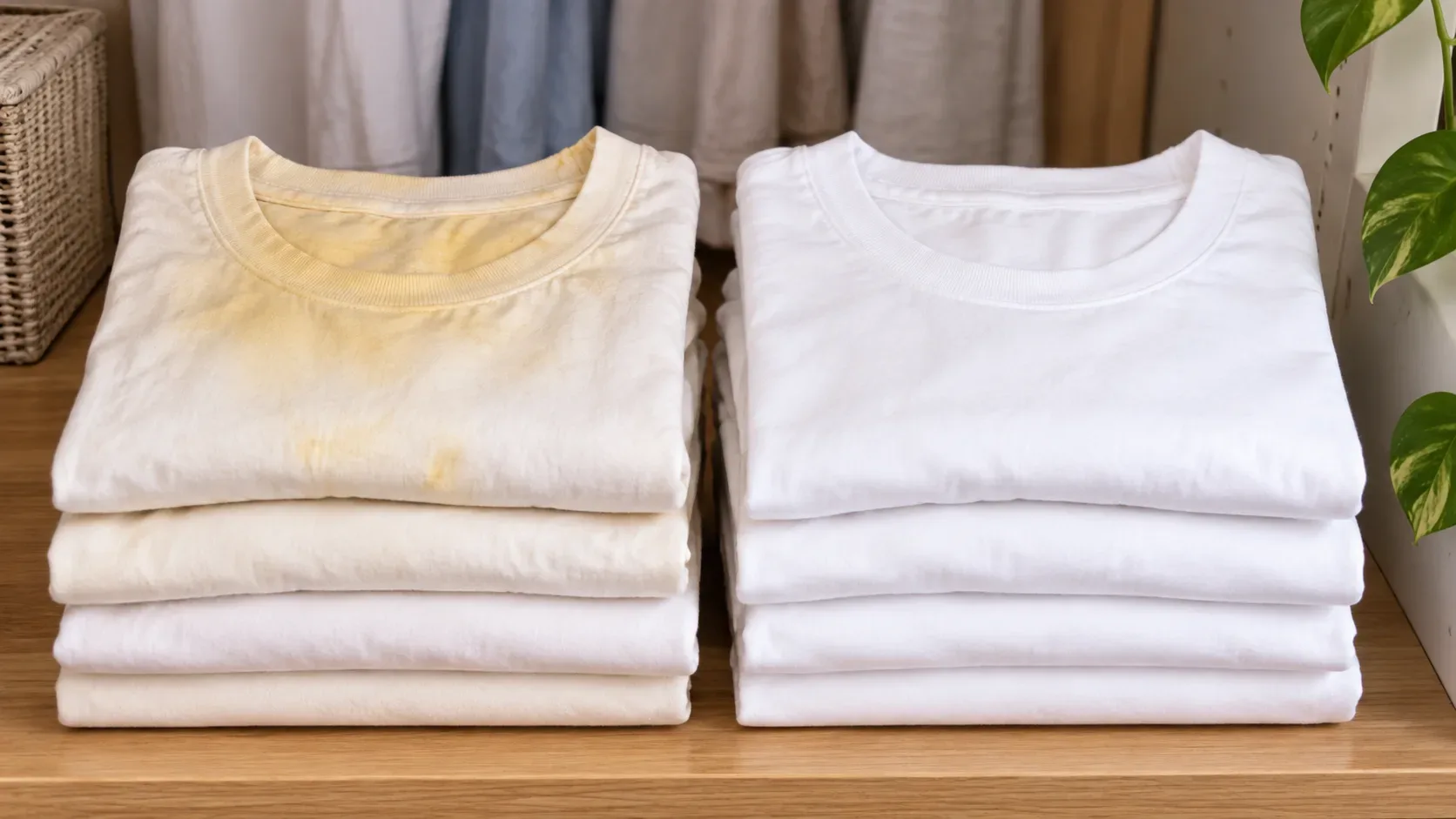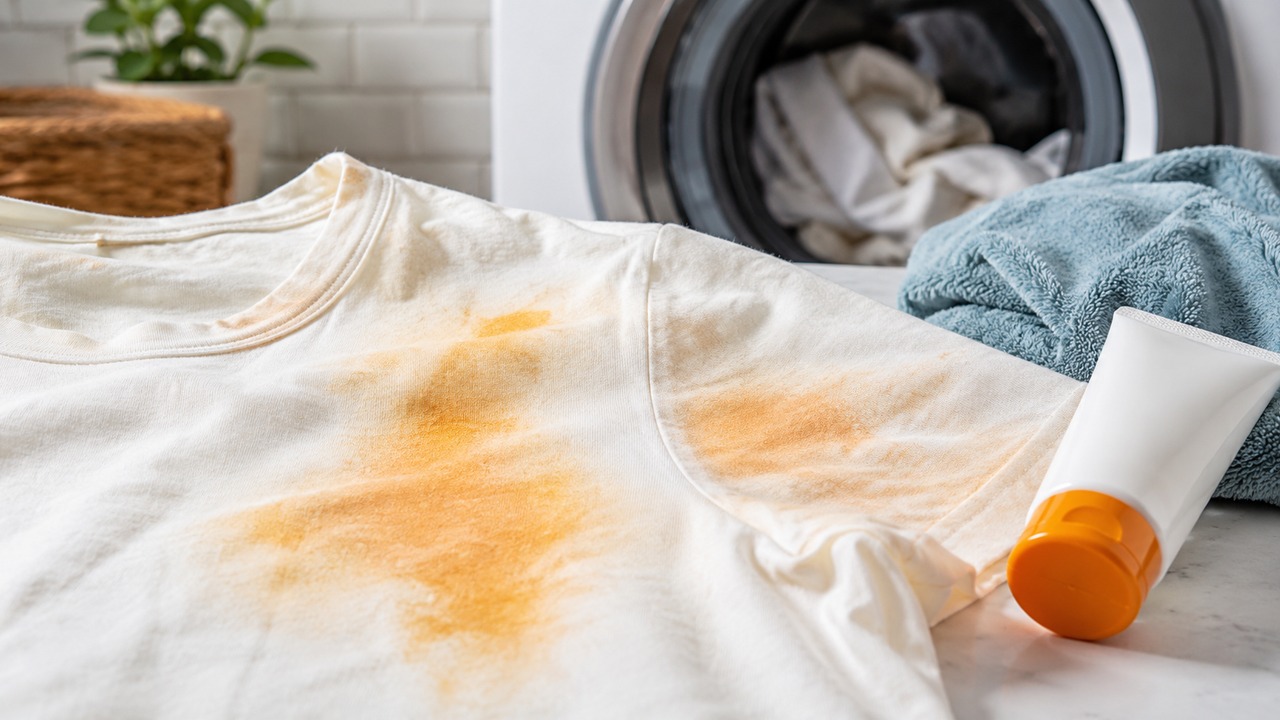
A light-colored T-shirt, a towel, or a piece of swimwear can come out of the washing machine with yellow or orange marks that were not nearly as visible before. When sunscreen has touched the fabric, the first reaction is often to treat everything as grease. But washing can change the appearance of the stain and, in some cases, turn an almost invisible residue into a yellow or orange mark linked to the interaction among UV filters, alkalinity, and iron.
The color alone does not prove the cause. Rust from the machine, iron in the water, dye transfer from another garment, and oily residue can also be part of the diagnosis. That is why the best treatment starts before the cleaning product: note when the stain appeared, where it is, which garments were affected, what the fabric care label says, and which ingredients are listed in the sunscreen.
The orange color changes the diagnosis
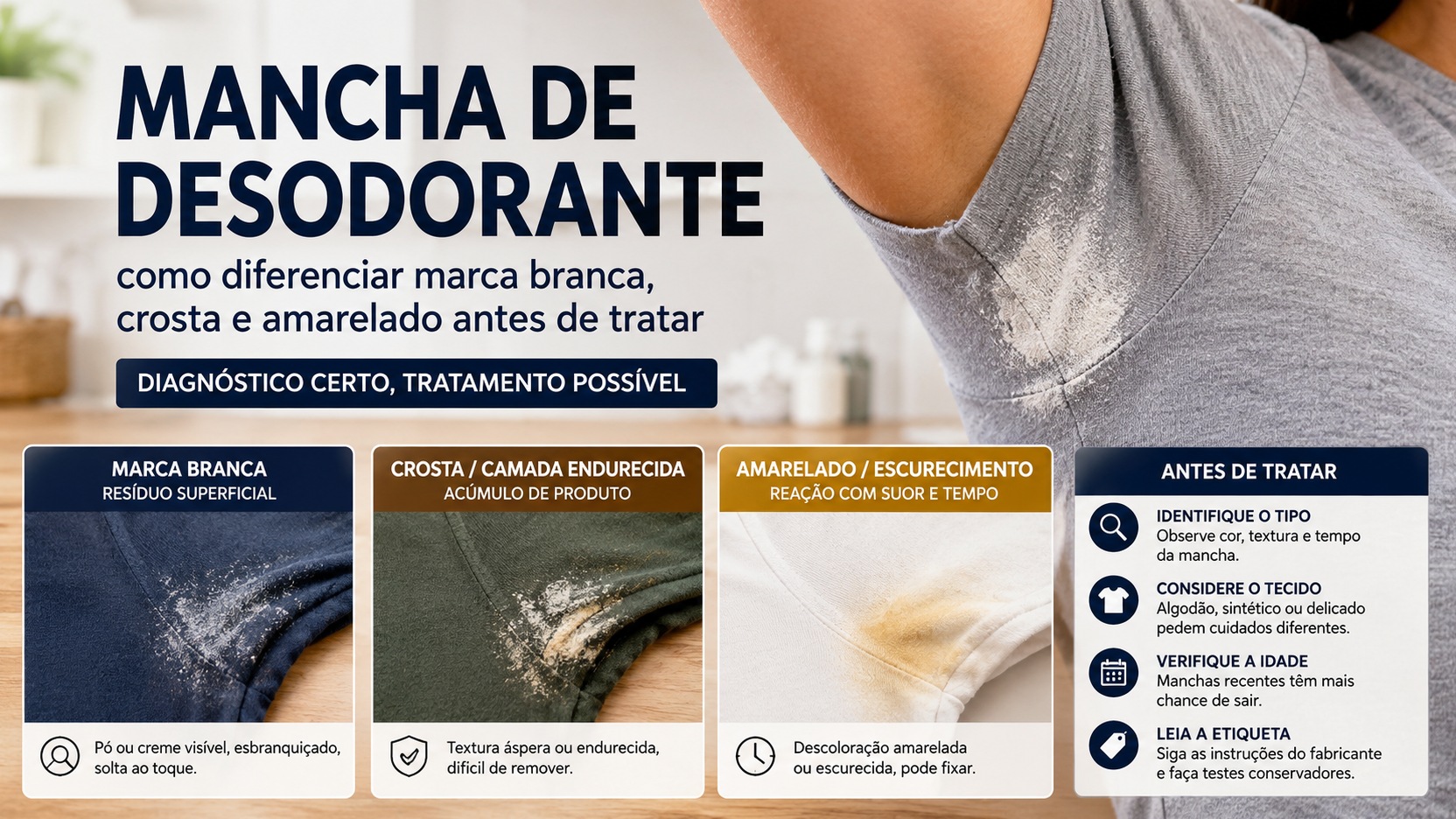
A sunscreen stain can begin as an oily, translucent, or yellowish residue. If it stays that way before and after washing, the problem looks more like ordinary greasy soil from the formula. A mark that becomes strongly yellow, rust-colored, or orange after the cycle deserves a different interpretation.
There is technical evidence that certain UV filters can form more strongly colored stains during washing. Ecolab patents on removing sunscreen stains from textiles describe how ingredients such as avobenzone and oxybenzone can cause yellowing under alkaline conditions and how the presence of iron can intensify the color until it becomes orange. In tests with fabric samples, higher iron levels in the water were associated with stronger discoloration on textiles soiled with sunscreens containing avobenzone.
This does not mean that every orange garment is showing an avobenzone reaction. The evidence comes from technical tests and laundry processes, not from a test that can identify the cause of every household stain. The practical point is different: if the orange color appeared after washing, automatically adding more bleach may be a poor choice.
Why sunscreen may show up only after washing
Sunscreen is a mixture of UV filters, oils, emulsifiers, film-forming agents, and other components. Some of that material can adhere to the fiber without producing a very noticeable stain while the garment is still dry or has just been worn.
During the wash cycle, water, detergent, pH, temperature, and any bleaching agents come into play. If there is dissolved iron in the water or rust particles, some sunscreen components can interact with the metal and produce a stronger color. Avobenzone is especially relevant because its chemical structure can form complexes with metals.
U.S. patent US 9,222,058 B2 describes tests on terry fabrics and links avobenzone to increased yellow staining in water containing iron. Another patent from the same line of research reports that when iron participates in the reaction with filters such as avobenzone and oxybenzone, the stain can become orange. The document itself also warns that alkaline conditions and chlorine can worsen or set the discoloration.
How to tell the difference before treating
Was the mark already oily before washing?
If you noticed a greasy or translucent area soon after wearing the garment, and the color did not shift toward rust or orange in the wash, it is more likely that an oily fraction of the formula is still present. In that situation, treatment generally follows the logic for a grease stain, always within what the care label allows.
If the garment looked normal and yellow or orange areas appeared only after washing, especially where the fabric touched skin covered with sunscreen, the possibility of a reaction during the wash cycle becomes more plausible.
Did the orange color appear where the fabric touched sunscreen?
Check the collar, shoulders, sleeves, sides of the torso, waist, face towels, and beach towels. A pattern that matches the areas where sunscreen was applied is a better clue than the color by itself.
It is also worth checking the cosmetic label. Anvisa requires INCI nomenclature on cosmetic labeling. Avobenzone may appear under the INCI name Butyl Methoxydibenzoylmethane. Finding that ingredient does not confirm the cause of the stain, but it makes the interaction described in the tests technically plausible.
Did several garments come out with random orange spots?
When different garments from the same load show small orange spots that do not match areas of sunscreen contact, investigate the water and the washing machine. Iron in the water or rust on metal parts of the machine can stain textiles independently of the cosmetic.
This pattern also helps prevent a common mistake: treating every garment as if sunscreen had touched it when the source is actually the washing system. If the problem repeats across different loads, inspect the drum, metal points, and water inlet and, if necessary, test the water for iron.
Does the color look as though it came from another garment?
Dye transfer often resembles the color of another item in the load and may appear across broad areas, folds, or sections that stayed in contact during the cycle. When a new or intensely colored garment was washed in the same load, that possibility should be considered before using a rust remover or an acidic treatment.
Read two labels before using any product
The garment care label
The care label sets the limit for treatment. Inmetro guidance on textile products shows that the symbols indicate washing temperature, whether bleaching is allowed, drying, ironing, and professional cleaning. A crossed-out triangle prohibits bleaching; a triangle with diagonal lines indicates that chlorine bleach must not be used; and a professional-cleaning instruction completely changes what is prudent to do at home.
If the garment is delicate, has unstable color, contains a blend of sensitive fibers, or calls for professional cleaning, do not experiment with a rust remover or a household acid. The treatment may remove the stain while also changing the color, fiber, or finish.
The cleaning product label
The second label to read is the one on the product you plan to apply. A remover intended for rust on floors, metal, or ceramic is not automatically suitable for fabric. If the package does not say the product can be used on clothing or on the fiber in question, do not improvise.
Products specifically made for rust on textiles often use acidic chemistry. That requires extra care. Never mix this kind of product with chlorine bleach or a hypochlorite-based bleach. Combining hypochlorite with acids can release chlorine gas, which is toxic. Use only one treatment at a time, follow the manufacturer instructions, and rinse thoroughly as directed on the label.
What to do in each situation
Oily residue without a rust-like appearance
When the mark is basically greasy, the goal is to remove the oily fraction before washing again. Use a detergent or pre-treatment product whose package allows use on clothing and that is compatible with the garment color and fiber. Test on a hidden area if there is any doubt, and wash at the highest temperature permitted by the care label, not the highest temperature the machine can provide.
After the cycle, check the garment before using a dryer or iron. If the stain is still present, air-drying makes it easier to evaluate and avoids adding heat to residue that still needs another treatment.
Yellow or orange stain that appeared after washing
If the pattern matches areas that touched sunscreen and the product contains avobenzone, treat the stain as potentially different from simple grease. Avoid chlorine bleach. Besides not being a universal solution for rust, hypochlorite creates conditions that can intensify iron-related stains and must not be combined with acidic treatments.
For a sturdy, washable garment, the safer option is a rust-stain remover explicitly labeled for textiles and permitted for the garment color and fiber. Follow the package dosage and contact time, test first on a hidden spot, and rinse thoroughly. If the product is not intended for clothing, do not use it.
If you have already applied chlorine bleach or another chlorinated product, do not add vinegar, citric acid, rust remover, or any other acidic product on top of it. Rinse the garment and the work area thoroughly and then follow only the instructions for one compatible product, without mixing treatments.
Rust spots on several garments
When the pattern appears on clothes that had no contact with sunscreen, treating the garment is only half of the problem. The cause may be in the washing machine or the water. Removing the stain without correcting the source tends to produce new occurrences.
In that case, inspect the machine for signs of rust and notice whether the water leaves yellowish deposits in sinks, toilets, or other places in the home. If iron in the water is suspected, a specific test helps distinguish a visual impression from a real water-supply or plumbing problem.
Delicate garment or professional-cleaning instruction
If the care label restricts washing with water, bleaching, or drying, stop home treatment attempts. Take the garment to a professional cleaner and explain that the stain appeared after washing or after contact with sunscreen, including which products have already been used. That information helps prevent another incompatible treatment from being applied on top of the first one.
Why vinegar and baking soda should not be the automatic answer
The combination appears in many internet recipes, but it does not solve the diagnosis. Baking soda is alkaline; vinegar is acidic. When mixed, they react with each other and lose much of the properties each would have on its own. More importantly, if chlorine bleach residue is present on the garment or in the container, adding an acid is unsafe.
It is also incorrect to conclude that any household acid will safely remove a metal-complex stain. Products formulated for rust on fabric have defined concentrations, instructions, and limits of use. A household ingredient applied without control can fade the color, alter the finish, or fail to remove the stain, making the situation harder to assess.
How to reduce the chance of the problem happening again
When the stain always appears with the same sunscreen and in the same areas, note which product was used and check its ingredients. Allowing sunscreen to settle on the skin according to the manufacturer instructions before getting dressed may reduce direct transfer to the fabric, although it does not eliminate the risk completely.
Avoid using chlorine bleach as an automatic response on garments that have had heavy contact with sunscreen, especially when yellowing or orange discoloration is already present. If the problem repeats across several garments and several products, investigating iron in the water and rust in the machine is more useful than repeatedly changing detergent.
For towels and light-colored clothing frequently used at the beach or pool, checking the mark before the first wash also helps. An oily area visible before washing can be pre-treated as grease within the care-label rules; a sudden shift to orange only after the cycle points to another mechanism and calls for more caution.
The main point
Clothes turning orange after washing are not synonymous with sunscreen, and a sunscreen stain is not always a simple oil stain. When the color appears or becomes stronger after washing, especially in areas that touched a sunscreen containing avobenzone, interaction with iron and wash-cycle chemistry is a technically consistent possibility.
Before treating it, distinguish the stain pattern, check the sunscreen ingredient list, see whether other garments were affected, and read the care label. If the mark looks like rust, avoid chlorine and do not make household mixtures. The right treatment is the one compatible with the fabric, the color, and the cleaning-product label, not the strongest product available.