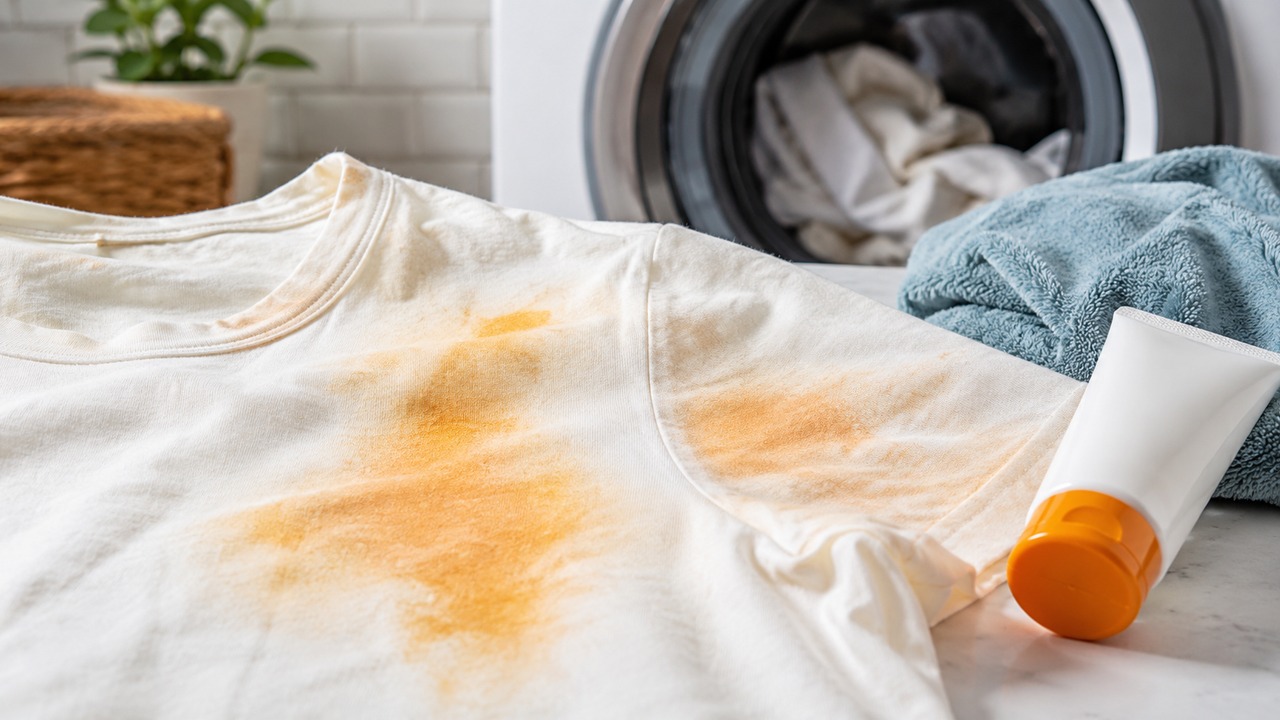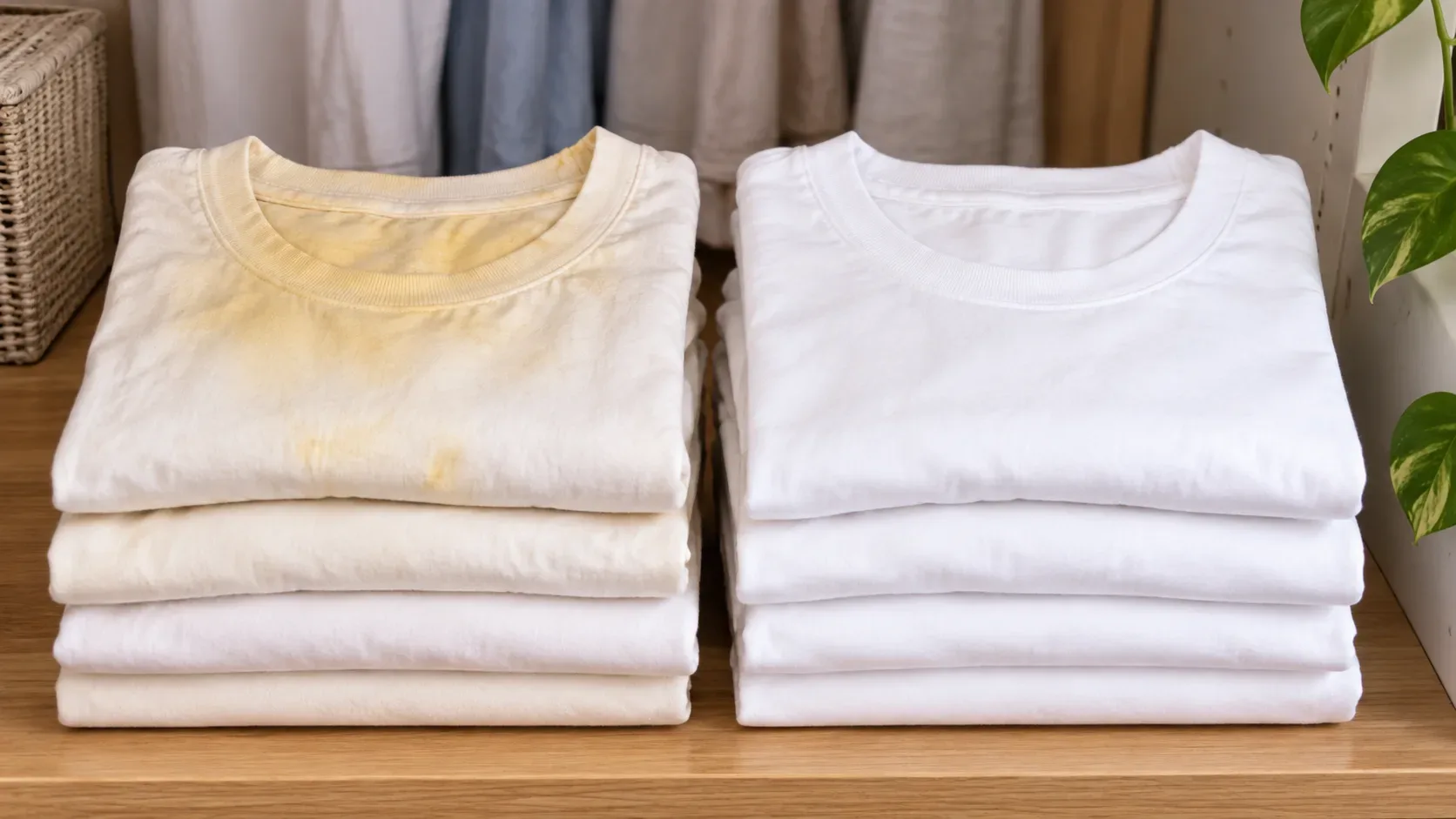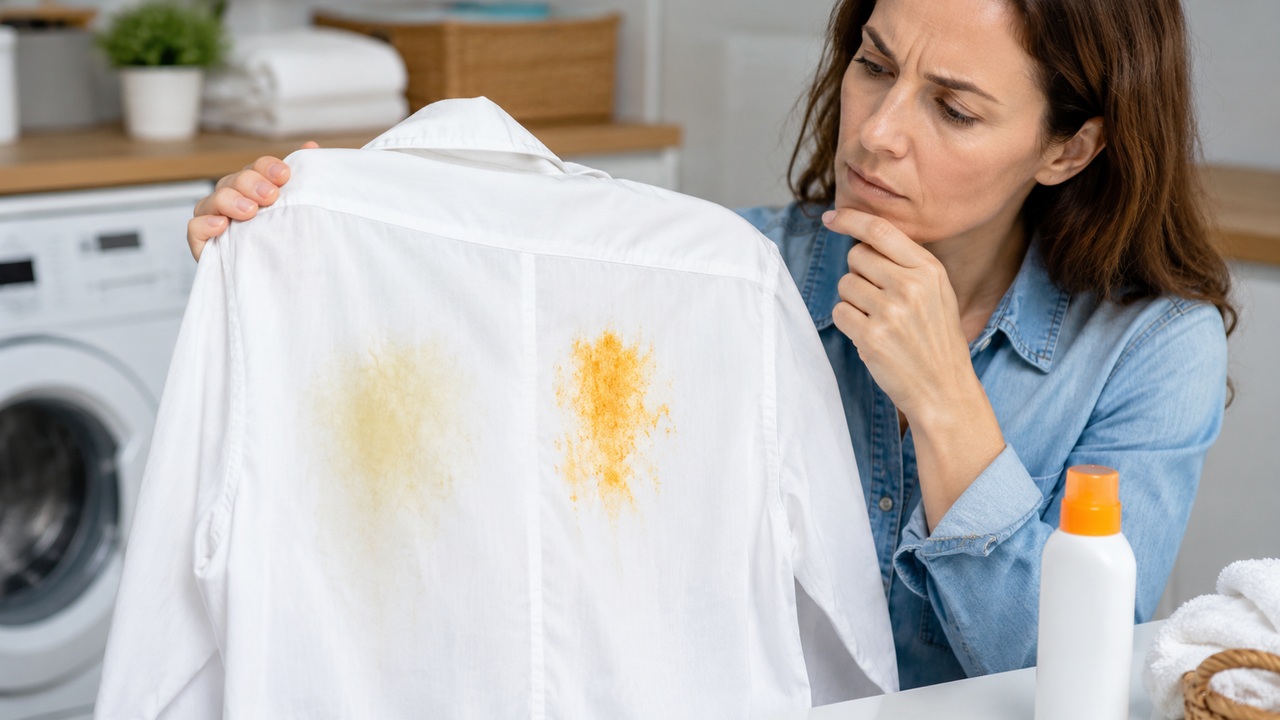
If white clothing came out of the washing machine with a yellow mark stronger than before, or with an orange tone you had not even noticed, do not automatically treat it as an ordinary grease stain. Sunscreen can leave oily residues, but some filters can also form yellow or orange stains when they come into contact with iron during washing. The difference matters because what helps in one case can make the other worse.
The first goal, therefore, is not to choose the strongest recipe. It is to observe when the stain appeared, what color it is, whether it feels greasy or leaves residue, and what is listed in the sunscreen formula. While there is any doubt, keep the garment out of the dryer and do not apply chlorine bleach to an orange or rust-like mark.
First, stop before the next attempt
Heat and unsuitable products can make a stain harder to remove. If the garment has just been washed and the mark is still visible, let it air-dry and examine the fabric in good light. Also check the care label before any new treatment, especially on garments with elastane, wool, silk, special finishes, or instructions for professional cleaning.
With orange marks, caution with household bleach and other hypochlorite-based bleaches is especially important. Products of this kind are oxidizers and work in an alkaline environment; on stains involving iron, that combination can intensify the color. Fabric rust removers, on the other hand, are often strong acids. Never mix the two categories of product, and do not apply an acidic remover directly to a garment that may still contain chlorine bleach residue.
How to tell oily residue from an iron reaction
Oily residue usually looks like a product stain
Sunscreen is an emulsion that can contain oils, emollients, waxes, and other components that adhere to fibers. When that is the main problem, the mark tends to be translucent, slightly yellowish, or darker
than the surrounding fabric. It may appear on the collar, cuff, shoulder, or any area that touched skin while product was still present.
Another clue is the timing: the mark was already there before washing, or looked like a greasy area and remained afterward. In that situation, the logic is similar to other oily stains: remove excess product, use an agent with surfactants to loosen the grease, and only then wash according to the care label.
Yellow or orange that appears after washing changes the suspicion
When clothing looked merely dirty or almost normal and comes out of the machine with an intense yellow, orange, or rust-colored mark, it is worth considering a chemical reaction. Avobenzone, a UVA filter present in many sunscreens, can react with iron in water and produce an orange color. In ingredient lists, avobenzone may also appear under the name Butyl Methoxydibenzoylmethane.
Technical laundry documentation describes that filters such as avobenzone can produce difficult yellow stains after alkaline washing and that the presence of iron can deepen the color to orange. The same material warns that chlorine and high pH can favor the visible setting of these stains. This helps explain why a white garment can look worse precisely after a wash intended to brighten it.
That does not mean every orange stain is caused by sunscreen. Iron in the water itself or rust spots in the washing machine can also stain clothes. If other items from the same load, with no likely contact with sunscreen, also developed orange spots, investigate the water and the machine before blaming only the cosmetic product.
White, beige, or sunscreen-colored residue may be physical transfer
There is also a third scenario. Mineral or tinted sunscreens can leave visible particles and pigments on the surface of the fabric. The stain may look whitish, beige, grayish, or match the shade of the product itself, without the typical appearance of rust.
In that case, start by treating it as product residue and grease, without assuming an iron reaction. Appearance alone cannot identify the formula with certainty, so the ingredient list and the moment when the mark appeared help narrow down the practical diagnosis.
What to do when the stain looks mainly oily
Remove any excess without spreading it. If the garment is washable, rinse the area with cold water, preferably from the reverse side, to help push the residue out of the fibers. Then apply liquid laundry detergent or, if the fabric allows it, a small amount of hand dishwashing liquid directly to the area. This type of product is rich in surfactants and often works well against grease.
There is no need to scrub hard. Work the product in gently and follow the contact time indicated on the label. If you use dishwashing liquid, rinse thoroughly before putting the garment in the washing machine to avoid excess foam. Then wash on the cycle and at the temperature allowed by the garment's care label.
When finished, let it air-dry and check the result before using the dryer. If the mark is still oily or yellowish, repeat the pretreatment instead of immediately increasing the aggressiveness of the product.
What to do when the mark turned orange or looks like rust
The first change is simple: do not use chlorine bleach to try to restore the white color. With iron stains, hypochlorite can worsen oxidation and make the color more visible. It is also not a good idea to stack
different household products in the hope that the mixture will be stronger.
First look for signs that support the hypothesis. Check whether the sunscreen contains avobenzone, observe whether the stain appeared or darkened after washing, and see whether there is a history of iron in the water, well water, rust stains on bathroom fixtures, or orange spots on other clothes. Also inspect the washing machine drum and metal areas if the problem appeared on garments that had no contact with sunscreen.
For washable, sturdy white fabric, a rust remover specifically labeled for use on clothing is a more targeted product category than a general-purpose stain remover. These products can be strong acids, so the manufacturer's directions are part of the treatment: test on an inconspicuous area when instructed, use the recommended protection, rinse thoroughly, and wash the garment according to its care label.
If the garment is delicate, contains sensitive elastic fibers, has a special finish, or is labeled for dry cleaning, the safer route is to show it to a professional cleaner and explain that the stain appeared or became worse after washing clothing exposed to sunscreen. That information helps prevent the professional from treating the mark only as grease or ordinary yellowing.
What if you have already used chlorine bleach?
Do not apply vinegar, lemon juice, rust remover, or another acidic product on top of a garment that has just been treated with chlorine bleach. Acids and hypochlorite must not be mixed because the combination can release dangerous gases.
If bleach has already been used and the garment is orange, stop the home experiments. Run a complete separate rinse or wash, according to the care label, to remove residue from the previous product. Only afterward consider another treatment compatible with the fabric and with the label of the chosen remover. If there is any doubt about what may still be present on the garment, seek professional help instead of combining products.
What not to do with a sunscreen stain
The fact that the garment is white is not permission to use the most aggressive product available. An oil stain, an iron reaction, and pigment residue are different problems. Using one recipe for all three increases the risk of setting the color, damaging fibers, fading a finish, or creating an incompatible cleaning mixture.
Also avoid drying the garment at high temperature while the mark is still visible. Heat can make later removal attempts more difficult and can also damage elastic fibers. Likewise, scrubbing hard can open up the fabric or spread pigment, especially in knits, swimwear, and delicate garments.
How to reduce the chance that the stain comes back
Let sunscreen settle on the skin before getting dressed, always following the product's own directions for use. On collars, cuffs, and white clothes that repeatedly come into contact with sunscreen, it is worth treating soil early instead of allowing several applications of product to build up before washing.
If the orange problem keeps recurring, check the sunscreen formula and look for avobenzone, including under the name Butyl Methoxydibenzoylmethane. If the same color appears on towels or clothes that did not come into contact with sunscreen, consider testing the water for iron and checking the washing machine. Addressing the source of the metal may be more effective than removing the same stain after every cycle.
The practical rule is simple: a greasy or yellow mark that was already on the fabric calls first for a degreasing approach; an orange mark that appears or worsens after washing calls for an investigation into iron and caution with chlorine; white, beige, or pigmented residue calls for treatment as product transfer. Identifying which of these paths best matches your case is what helps prevent a treatable stain from becoming a permanent problem.