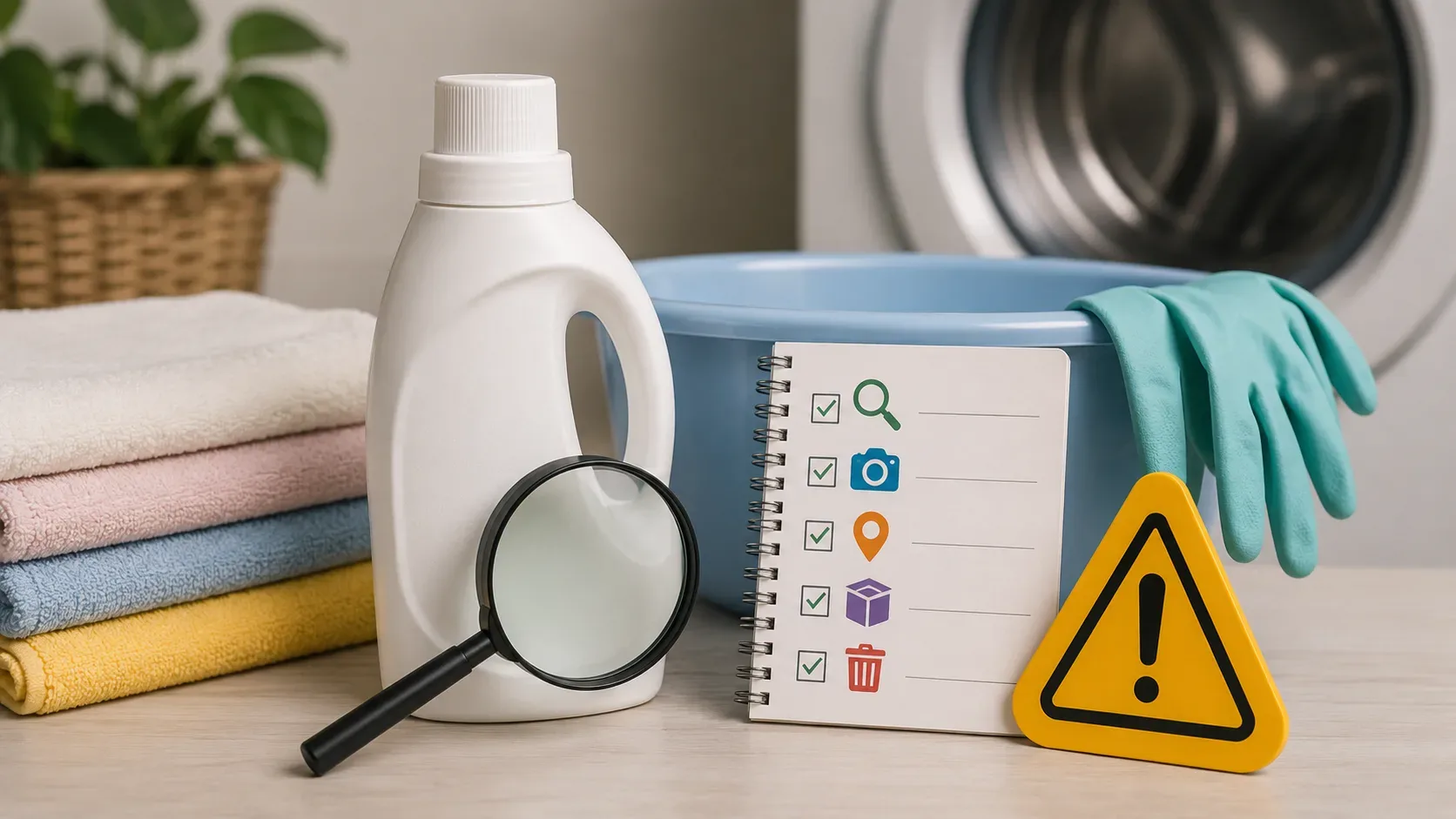
The warning about the Ypê washing machine recall does not mean that all of the brand's products are irregular. The most recent update located on official channels involves certain washing liquids, considering the product name, date of manufacture and batch identification.
In a statement published on June 22, 2026, the National Health Surveillance Agency informed that Ypê would voluntarily recall liquid laundry detergents related to the case and manufactured by March 31, 2026. The same publication recalls that the lots affected in the regulatory process have a final number 1.
The practical guideline is not to pour the contents down the drain, not transfer it to another container and, above all, not try to “neutralize” it with bleach, alcohol, vinegar, disinfectant or any other product. Separate the bottle, record the information and consult official channels.
What's in the Ypê washing machine collection
The list released by Anvisa brings together liquid versions of the Tixan Ypê and Ypê lines. The following names were presented — with the repetition of “Power Act” on the official consolidated page only once in this list:
- Tixan Ypê Liquid Clothes Washer Combats Bad Odor;
- Tixan Ypê Liquid Laundry Washer Takes Care of Clothes;
- Tixan Ypê Antibac liquid laundry detergent;
- Tixan Ypê Coconut and Vanilla liquid laundry detergent;
- Tixan Ypê Green liquid laundry detergent;
- Tixan Ypê Express liquid washing machine;
- Tixan Ypê Power Act liquid washing machine;
- Tixan Ypê Premium liquid laundry detergent;
- Tixan Ypê Maciez liquid laundry detergent;
- Tixan Ypê Primavera liquid laundry detergent.
The list deals with liquid laundry detergents. Powdered detergent, fabric softener, stain remover, bar soap and other categories should not be automatically included just because they carry the Ypê or Tixan brands.
The warning for dishwasher detergents and disinfectants should also not be generalized. On June 22, Anvisa reported that the Ypê detergents and disinfectants produced in 2026 evaluated in the case were released. Liquid laundry detergents manufactured on or after April 1, 2026 were also previously released after reinspection and taking corrective actions.
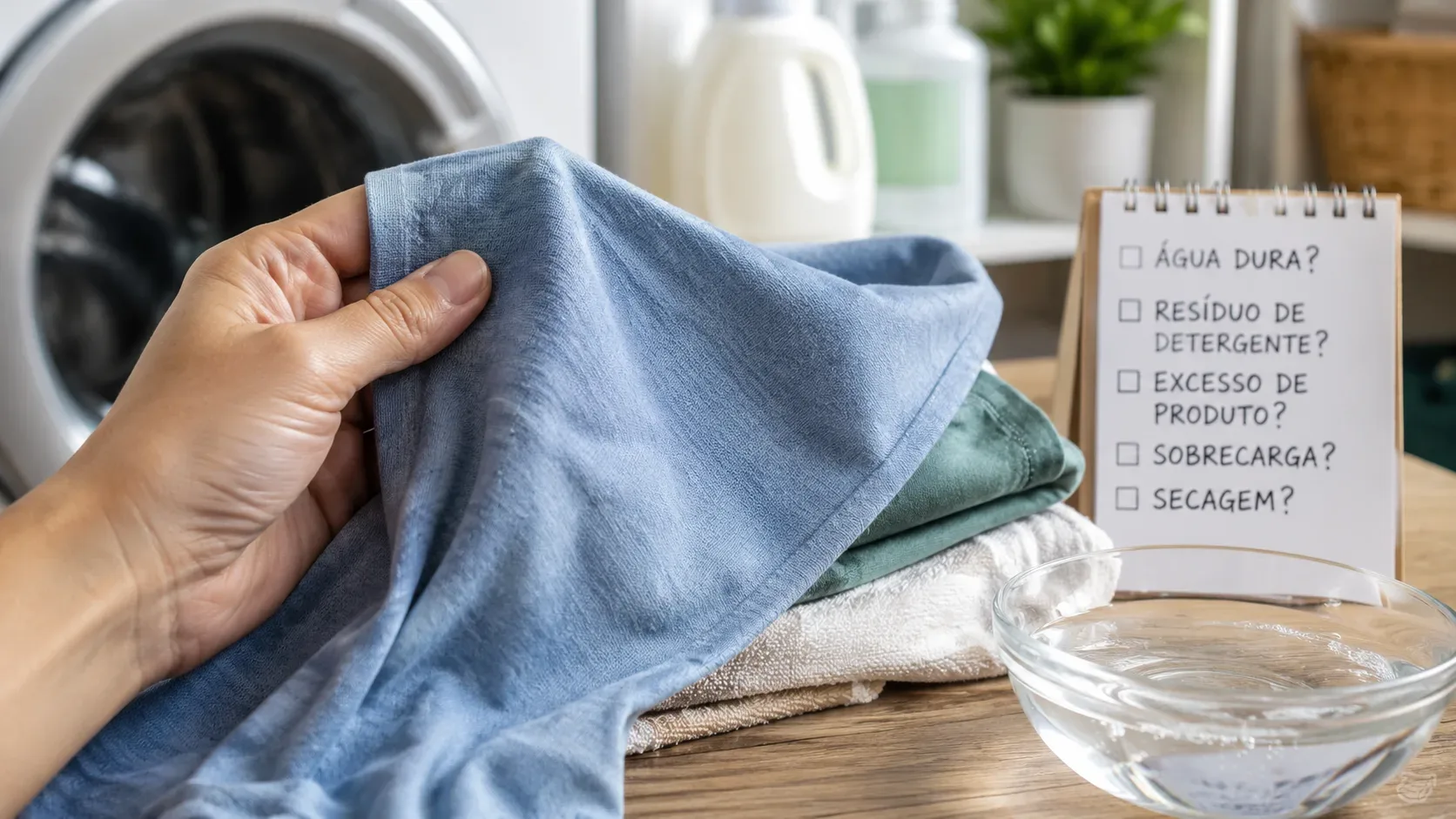
Checklist to find out if your product needs to be separated
Before discarding anything, check the four points below.
1. Confirm that it is a liquid laundry detergent
Read the name on the front and back of the packaging. This update's alert is not a generic call for laundry products.
The product must be a liquid laundry detergent corresponding to one of the versions listed by Anvisa. A package of fabric softener, washing powder or stain remover does not make this list just because it belongs to the same brand.
2. Locate the manufacturing date
Spin the bottle and carefully examine the packaging for the manufacturing date imprint. It may be separated from the graphic information on the label and have reduced contrast.
The cutoff date reported for collection is March 31, 2026. Liquid laundry detergents manufactured from April 1, 2026 were released for use and commercialization.
If the print is faded, don't guess from its appearance, expiration date or time of purchase. Take photos of the appointment and ask the company's customer service for confirmation.
3. Check the complete batch number
In Anvisa's regulatory communication, the case involves lots whose number ends in 1. The initial decision of May 7, 2026 reached batches with this end, of specific liquid products manufactured at the Amparo unit, in São Paulo.
Write down the entire number, not just the last digit. This reduces reading errors during service.
There is a difference in wording that deserves attention: the Anvisa update maintains the reference to batches ending in 1, while the Ypê page informs that it is available for exchange or reimbursement of washing liquids prior to April, without repeating this filter in the same sentence.
Therefore, adopt the following conservative rule:
- Liquid washing liquid from the list, manufactured until March 31st and batch finished in 1: stop use, separate and contact the company.
- Date before April, but illegible or unfinished batch 1: do not conclude on your own that the product is out of service; send the data to SAC and wait for confirmation.
- Product manufactured from April 1st: is released according to the official updates consulted, as long as there is no other specific warning later.
4. Check the exact version name
Don't just use the color of the liquid, the fragrance or the shape of the bottle as criteria. Compare the name written on the packaging with the official list.
Versions with similar names may belong to different categories or formulas. Photographing the front and back prevents the consumer from having to repeatedly handle the product during service.
What to do when the product falls under
When identifying a washing liquid potentially included in the recall, follow this sequence.
- Discontinue use.
- Keep the product in the original packaging.
- Close the lid tightly, without testing the contents by smell.
- Store the bottle in a dry, ventilated place and out of reach of children and animals.
- Do not place the product near food, medicine or personal hygiene items.
- Photograph the packaging and record the information.
- Open a protocol in the official Ypê statement or call SAC.
- Wait for exchange, refund or collection guidance before discarding.
Anvisa had already advised that the products involved remain sealed or tightly closed, in a dry and ventilated place. In another update, it expressly stated that the items should be stored in a safe place and not discarded while the case is being evaluated.
Ypê's customer service page, updated on June 22, offers a form for opening a protocol and provides a telephone number 0800 002 6071 for exchange or refund requests.
What photos to take before getting in touch
A simple registration can facilitate identification without requiring new handling of the bottle. Photograph:
- the front of the packaging, with the full name of the product;
- the back, with the manufacturer's information;
- the date of manufacture;
- the complete batch number;
- the condition of the lid and packaging;
- possible leakage or deformation, without opening the bottle;
- proof of purchase, if still available.
Also save the protocol number, the date of service and the guidance received. The official communication consulted does not state that proof of purchase is mandatory in all cases; therefore, don't stop looking for SAC just because you didn't find the invoice.
Why you should not mix or “neutralize” the product
Mixing cleaning products is not a safe way to spoil. Even products that can be used normally when separated can react when combined, releasing irritating substances or toxic gases.
Anvisa advises that sanitizing products be used according to the label and warns of the risks of homemade mixtures. The agency cites, for example, that bleach combined with ammonia can generate toxic gases and recommends never mixing chemicals.
In the case of a recalled bottle, do not do any of the following:
- do not mix with bleach, alcohol, vinegar, disinfectant or other soap;
- do not dilute to “reduce the strength” of the product;
- do not pour into the toilet, sink, tank or drain;
- do not transfer to a drink bottle or unlabeled container;
- do not use the contents to wash floors, yards, bathrooms or objects;
- do not puncture, burn or cut the packaging;
- do not leave the product open to “evaporate”.
In addition to the chemical risk, the transfer eliminates essential information for service, such as batch, manufacturing, composition and warnings. Anvisa recommends keeping sanitizers in their original packaging, following the label and avoiding any undue mixing.
What motivated Anvisa's action
The initial decision of May 7, 2026 occurred after a joint inspection identified non-compliances in quality assurance, production and quality control stages at the Química Amparo factory, manufacturer of Ypê.
According to Anvisa, the failures indicated a health risk and the possibility of microbiological contamination. This does not mean that every bottle or every product of the brand has proven contamination. The regulatory measure was adopted preventively in view of the flaws found and the set of batches defined by the agency.
Production was subsequently allowed to restart after reinspection and verification of key corrective actions. Products manufactured from April onwards were released, while previous items underwent evaluation and gradual release.
On June 22, dishwasher detergents and disinfectants produced in 2026 were released after satisfactory reports were presented. For liquid washing machines prior to April, the company maintained the recall, exchange or refund program.
What if there was contact, ingestion or discomfort?
In case of accidental contact or symptoms, follow the specific instructions on the label. Do not attempt to induce vomiting and do not apply another substance to the skin or eyes with the intention of neutralizing the product.
The Poison Hotline 0800 722 6001 offers free guidance and forwards the call to a Toxicological Information and Assistance Center. The service responds to incidents involving chemical and sanitizing products.
Urgent or emergency situations — such as difficulty breathing, loss of consciousness, seizure or intense suffering — justify calling Samu via number 192. The Ministry of Health includes poisoning and accidents with dangerous products among the situations handled by the service.
It is also possible to notify Anvisa of adverse events, such as irritations or poisonings related to sanitizing products, through the official notification channel indicated by the agency.
Quick checklist to save
Before taking any action, confirm:
-
Is it a liquid laundry detergent?
-
Does the name appear on the official list?
-
Was it manufactured by March 31, 2026?
-
Does the batch end in 1?
-
Is the date or lot readable?
-
Has use stopped?
-
Does the product remain in its original packaging?
-
Is the lid closed securely?
-
Is the bottle away from children and animals?
-
Were photos of the front, date and lot recorded?
-
Was the protocol opened on the official channel?
-
No chemicals were mixed into the contents?
Save this checklist and consult the Anvisa statement and the manufacturer's service page again before delivering, discarding or reusing the product. The regulatory status and operating procedure can be updated.
Read also: “Clothing tag symbols” and “The tag has been cut off”.
Sources consulted
- National Health Surveillance Agency — update on releases and voluntary recall, published on June 22, 2026.
- Ypê — communication to consumers and exchange or refund channel, dated June 22, 2026.
- National Health Surveillance Agency — initial suspension and recall decision, published on May 7, 2026.
- National Health Surveillance Agency — maintenance of storage restrictions and guidance, published on May 15, 2026.
- National Health Surveillance Agency — resumption of production and release of products manufactured from April onwards, published on May 29, 2026.
- National Health Surveillance Agency — guidance on safe use, mixing of sanitizers and reporting of adverse events.
- National Health Surveillance Agency — Poison Hotline and National Network of Toxicological Information and Assistance Centers.