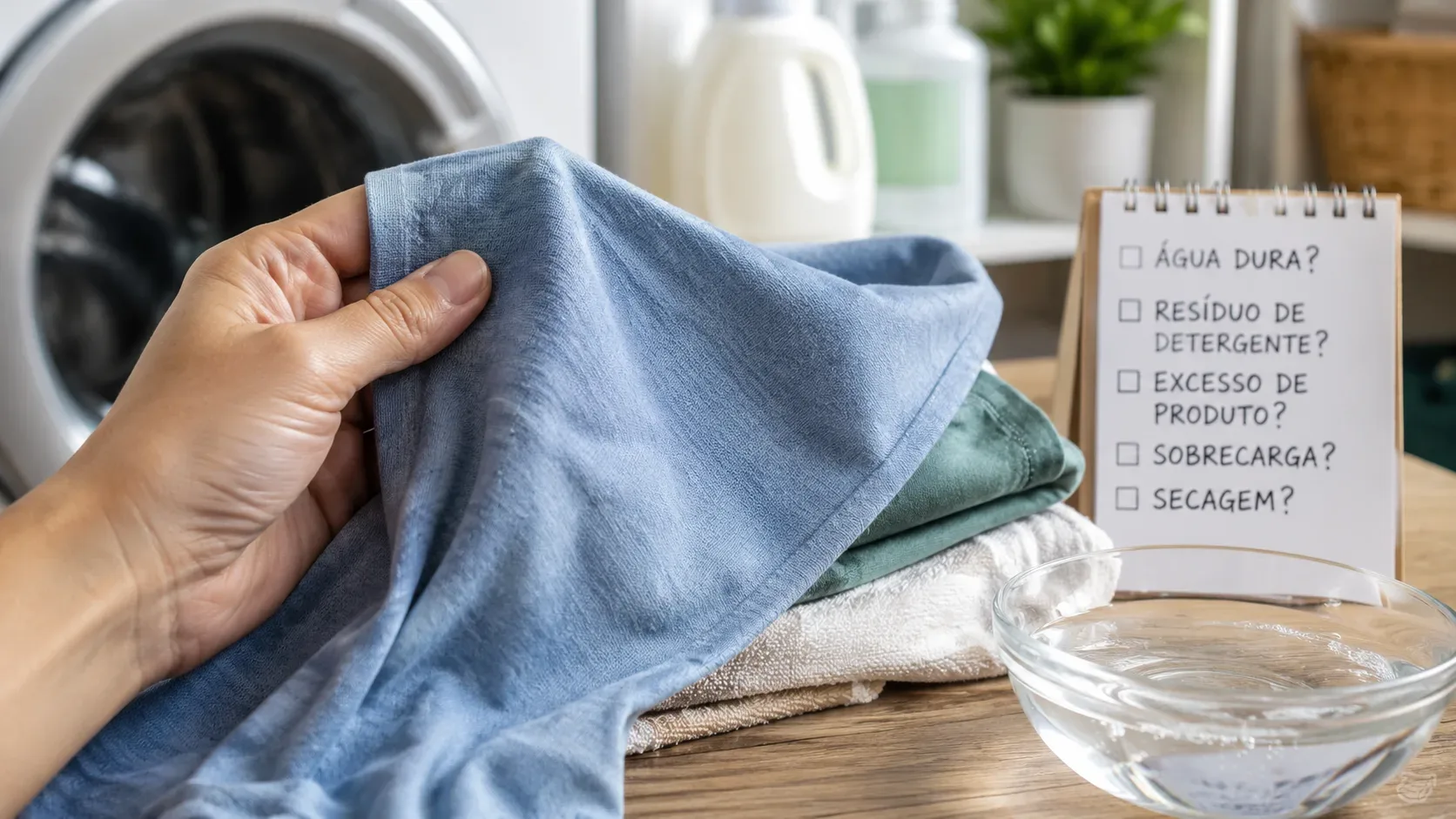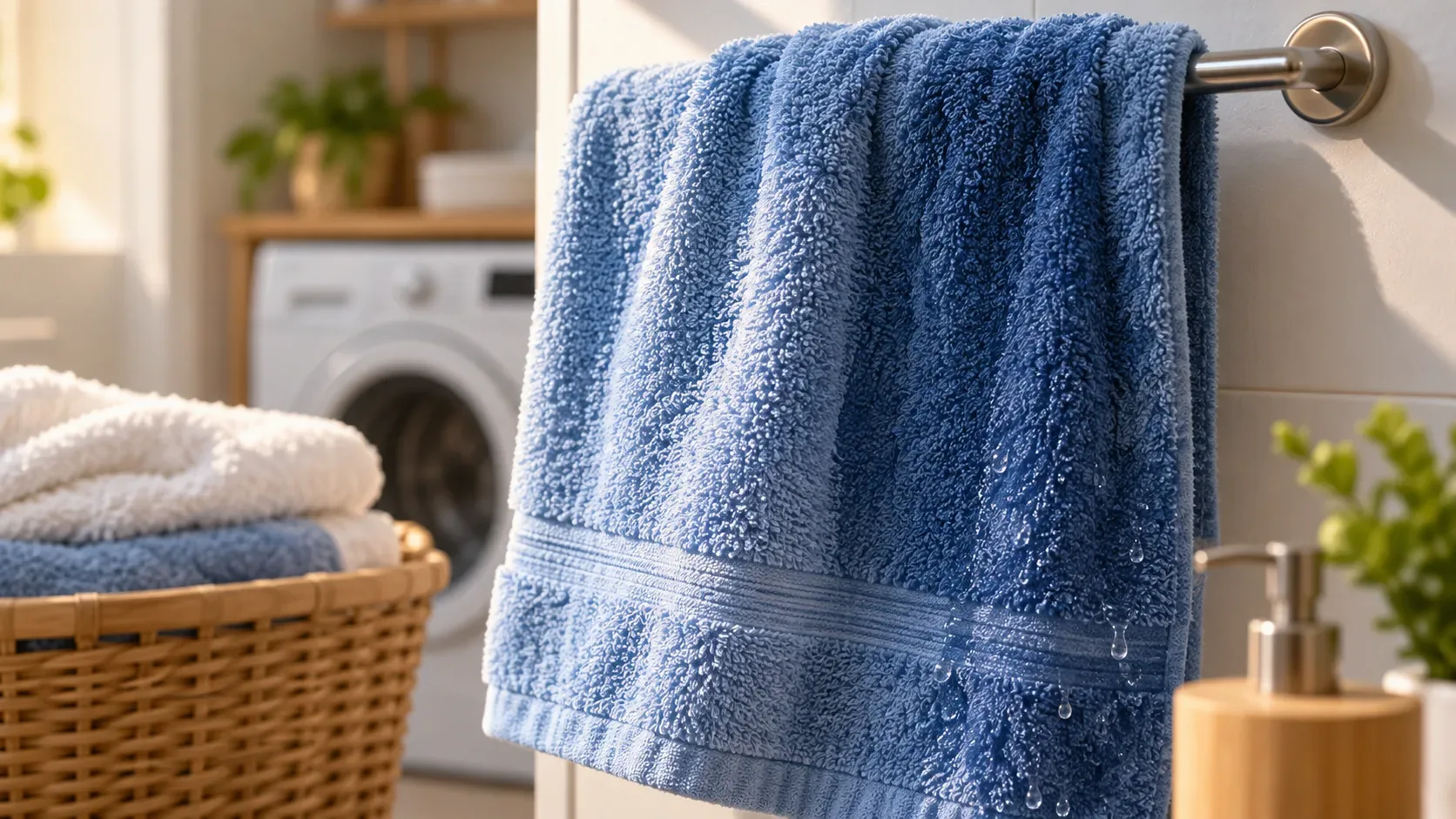
A towel that smells fine when dry but develops a bad odor as soon as it gets wet usually suggests that drying has masked — rather than eliminated — the source of the smell. The pattern is compatible with sweat, body oils, detergent or other residues trapped in the fibers, microorganisms that survived or regrew under damp conditions, or a towel that never dries fully between uses. Odor alone does not identify one specific cause.
Research on textile malodor shows that used towels can carry microbial communities associated with odor-producing volatile compounds and that malodor can reappear under humid drying conditions. The practical response is to diagnose the entire process: use, time before washing, washing, rinsing, drying, storage, and the condition of the washing machine.
What this odor pattern can reveal
The first point is not to confuse fragrance with cleanliness. The American Cleaning Institute (ACI) warns that a “sniff test” is not enough to decide whether a textile needs washing. For bath towels, it recommends allowing them to dry between uses and washing them after several normal uses. If a towel stays folded, bunched up, or in a poorly ventilated bathroom while damp, slow drying creates favorable conditions for odor to return.
| What you notice | Most likely cause | How to test it without guessing |
|---|---|---|
| Odor appears mainly after bathing and fades when the towel dries | Slow drying between uses | Hang the towel fully open in a better-ventilated place for several uses and compare |
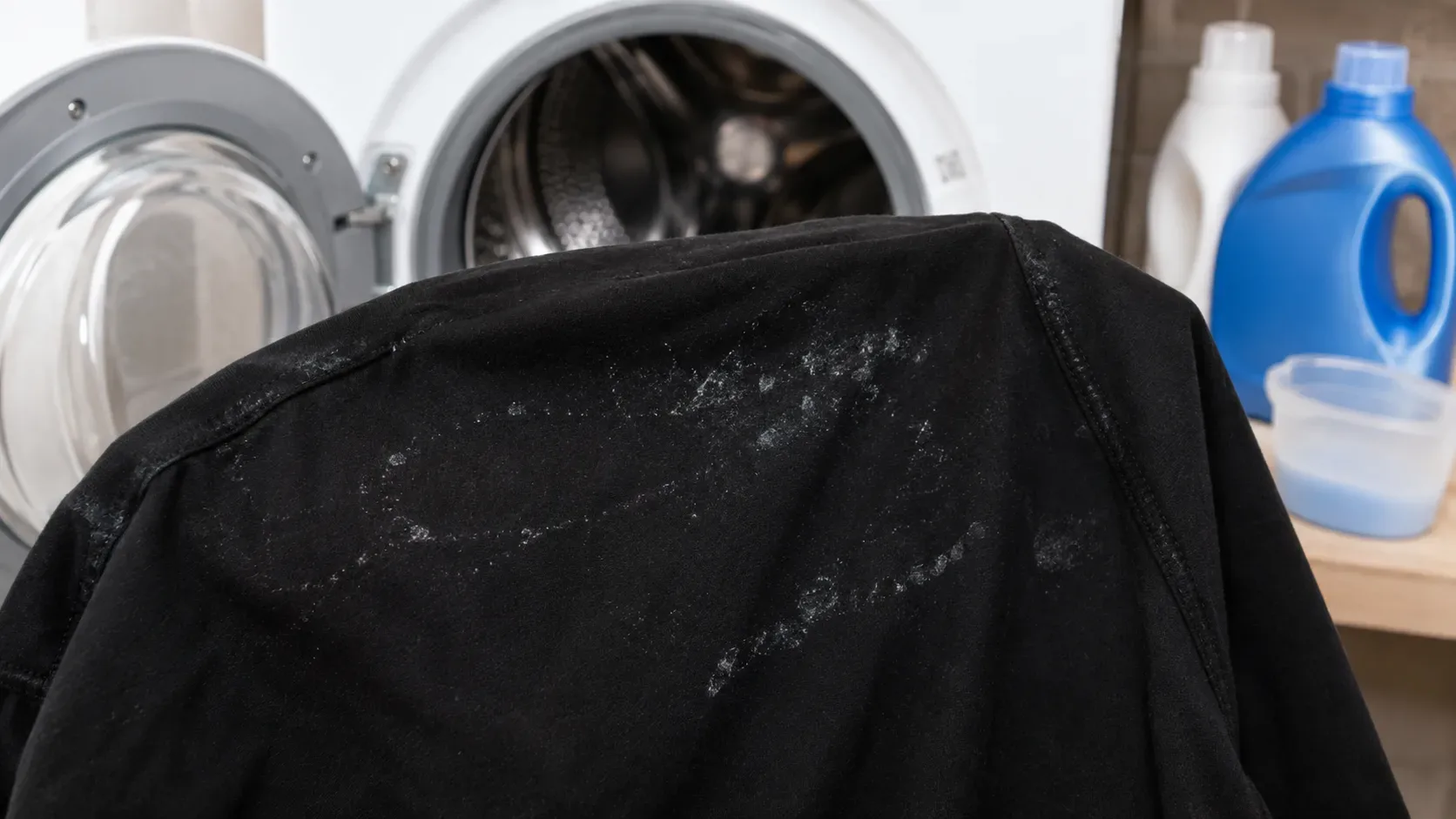
| Towel feels stiff, waxy, heavy, or coated | Buildup of detergent, softener, or minerals | Wash a smaller load with the correct dose, following product and care labels |
| Odor appears right after washing or affects several items in the same load | Washer condition, overloading, poor rinsing, or wet laundry left sitting | Check the drum, gasket, dispenser, and how long the load sits after the cycle |
| Only one older towel repeatedly has the problem | Residue buildup in that item or fabric wear | Compare it with a similar towel washed and dried under the same conditions |
| Several clean towels smell only after contact with the same tap water | A possible factor outside the towel | Wet a different clean cloth and see whether the same odor appears |
1. Start with drying between uses
Towels are thick, hold a large amount of water, and can feel dry on the surface while inner areas remain damp. The ACI recommends hanging towels to dry between uses. Avoid leaving them folded over narrow hooks, in hampers, on the bed, or in piles. The more surface area exposed to moving air, the better.
If the bathroom is poorly ventilated, try moving the towel to a more airy location after bathing. If the odor clearly improves without any change in washing, slow drying was probably an important part of the problem.
2. Review load size, detergent, and rinsing
Overfilling the washer reduces the space available for water and detergent to circulate. The ACI lists overloading as a cause of laundering problems and recommends smaller loads when residues occur. Towels also need room to move during the wash cycle.
Detergent dosing requires balance. Too much can leave residue on laundry and inside the machine; too little may fail to remove body oils and soil. Use the amount indicated on the product label for load size, soil level, washer type, and water hardness. Do not increase the dose simply because the odor is strong.
If you notice persistent suds, stiffness, or a coated feel, an extra rinse may help when the washer provides that option and the care label allows the chosen cycle. Correcting load size and detergent dosing should come before adding more products.
3. Do not leave a wet load sitting
A towel that finishes a wash cycle and then sits for hours inside the machine starts the drying stage at a disadvantage. Whirlpool advises transferring towels to drying promptly after the cycle and storing them only when fully dry because remaining moisture can contribute to musty odors.
The same principle applies before washing: soaking-wet towels piled in a closed hamper can develop odor before they ever reach the machine. If they will not be washed right away, let them lose some moisture in a ventilated area before putting them in the hamper.
4. Check whether the washer is putting odor back into the load
When several different items come out with the same smell, the towel may not be the source. Moisture and residue can accumulate in the drum, door gasket, dispenser, filter, or drainage areas depending on the model. Manufacturers highlight stagnant moisture and detergent or softener buildup as common causes of washer odor.
Clean the appliance exactly as the manufacturer instructs: use a washer-cleaning cycle when available, clean the dispenser and gasket as directed, and check the filter if the model provides user access. Between cycles, follow the manufacturer’s recommendation on leaving the door or lid ajar for ventilation.
5. Water temperature and cycle must follow the care label
There is no single correct temperature for every towel. The choice should follow the care label and washer instructions. The ACI recommends using the hottest water that is safe for the fabric when greater cleaning power is needed, while some colors and materials require lower temperatures.
If the towel can tolerate a more robust cycle, that may remove soil better than a delicate cycle. But “hotter” and “longer” are not automatically better: excessive heat and overdrying can accelerate fabric wear.
6. Fabric softener and other products: avoid excess and homemade mixtures
According to the ACI, fabric softeners can be used on many textiles when dosed correctly. The practical problem is excess of any product, which can contribute to buildup in the dispenser, washer, or fibers. If a towel feels coated, stiff, or hard to rinse, try one or two washes without fragrance boosters and with properly measured detergent, while following the care label.
If you use bleach or a laundry disinfectant, do so only when the product label, towel care label, and washer manual allow it. The CDC is explicit: never mix bleach with other cleaners or disinfectants. That includes improvised combinations with vinegar, ammonia, or other products.
7. A simple test to locate the source
- Wash the towel in a smaller load with detergent measured according to the label.
- Remove it as soon as the cycle ends.
- Dry it completely using a method allowed by the care label, and do not store it warm or damp.
- Once it is cool and dry, smell the towel without adding fragrance.
- Wet just one corner with clean water. If the odor returns quickly in that spot, the source is probably still in the fibers or is being reactivated by moisture.
- If the towel remains neutral, use it normally and observe how long it takes to dry between uses.
This test does not identify a specific bacterium and is not a laboratory analysis; it simply helps distinguish a persistent problem in the item from one that mainly develops during use and drying.
When to investigate hard water or replace the towel
If towels become progressively rough, gray, and residue-prone, while faucets or showerheads also develop mineral deposits, hard water may be contributing. The ACI explains that hard-water minerals can interfere with washing performance and leave deposits. In that situation, follow detergent guidance and information from the local water utility instead of increasing products at random.
A very old towel may continue to retain odor even after several properly performed wash cycles. If odor remains persistent, mold-like stains appear, fibers are degraded, or you must repeatedly rewash the item to get an acceptable result, replacing it may make more sense than adding higher doses or more products.
Practical summary
- Bad odor that returns when a towel gets wet points to a source that was not fully removed or to poorly managed moisture; it does not prove one single cause.
- Dry the towel fully open between uses and never store it damp.
- Avoid overloading and measure detergent for the product, load, and washer.
- Remove laundry promptly after the cycle and dry it completely.
- If several items develop the same odor, clean and inspect the washer according to its manual.
- Use water temperature, cycle, softener, bleach, or sanitizer only as allowed by labels and instructions.
- Never mix bleach with other cleaners or disinfectants.
Sources and references
- American Cleaning Institute — Do I need to wash this?
- American Cleaning Institute — Laundering Problems & Solutions
- American Cleaning Institute — Laundry Basics
- Study on used-towel microbiomes and malodor control
- Study on textile malodor, microbiome, and humid drying
- Whirlpool — How to Wash & Dry Towels
- Whirlpool — How to Remove Smells in a Front Load Washer
- CDC — Cleaning and Disinfecting with Bleach