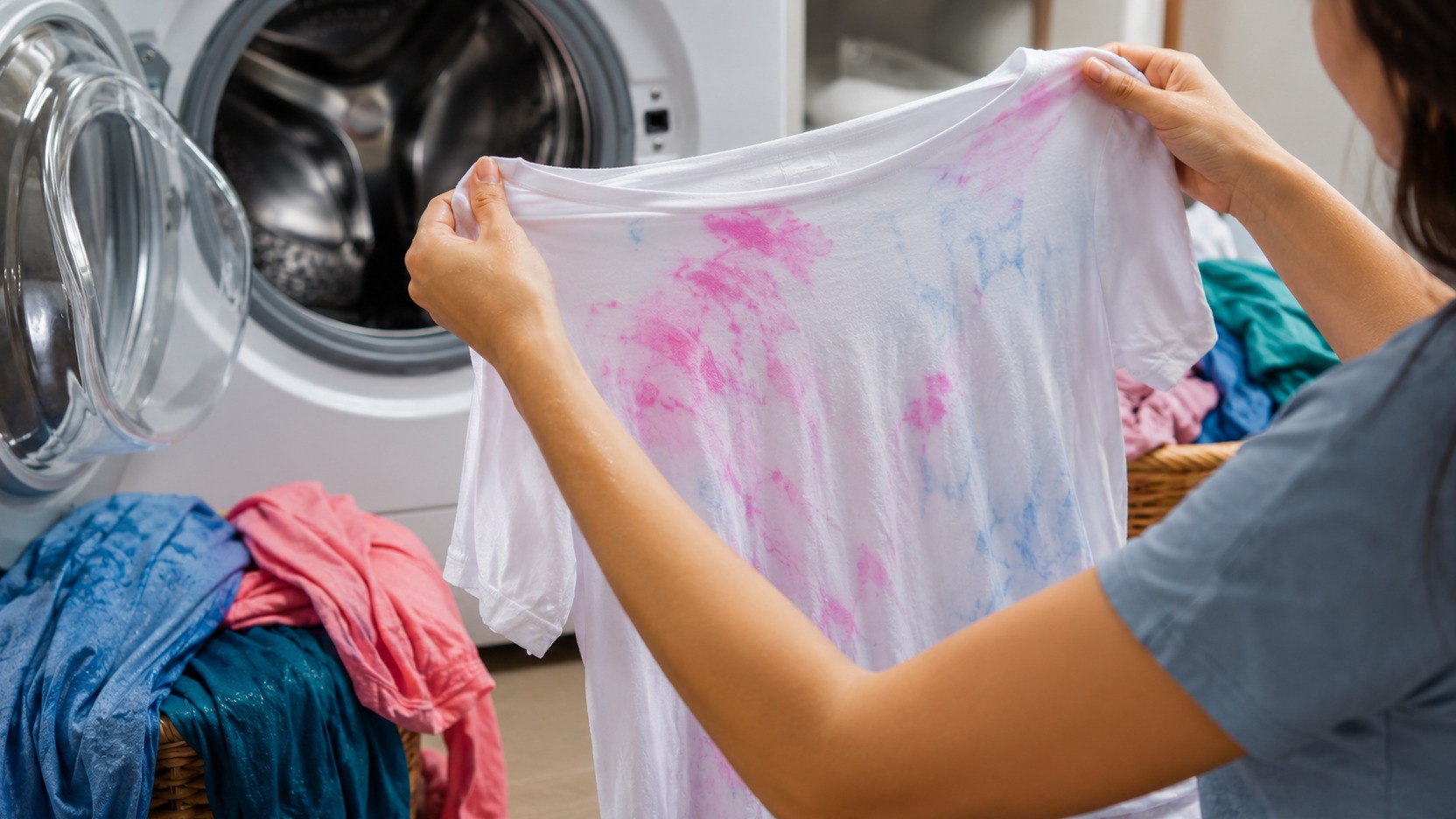
If an item came out of the machine with the color of another item of clothing, the first decision is simple: do not put it in the dryer and do not iron it. Color transfer tends to become more difficult to remove after receiving heat. Immediately separate the piece that released paint from the affected pieces and treat each one according to its label.
The most common mistake at this time is to try a strong recipe before finding out what the fabric can withstand. A white cotton t-shirt, a white elastane item, a colorful blouse and a silk dress can all require completely different responses. The color of the clothing helps guide, but does not replace the label or the composition of the fabric.
The first question: is the piece still wet or has it already dried?
If your clothes are still wet, you have the best time to take action. Remove the item that probably released paint, keep the damaged parts separate and wash again only with compatible items. Use laundry detergent and choose a cycle and temperature within what the label allows. Do not increase the temperature yourself to “force” removal.
After washing again, check the item while it is still damp. If the stain has lightened but is not gone, repeat the compatible treatment before drying. The goal is to not add heat while the color transfer is still visible.
If the piece has already dried, there may still be recovery, but removal tends to be more difficult. Avoid a second round of heat. Go back to reading the label, choose a compatible treatment and evaluate the result with the piece dry naturally. On delicate, expensive fabrics or fabrics with a special finish, insisting at home can cause more damage than the original stain.
Read the label before choosing any product
In Brazil, information on the conservation of textile products covers washing, bleaching, drying, ironing and professional cleaning. This sequence helps answer exactly what matters in this problem: can the item be washed again, can it be bleached, can it be dried and does it need professional cleaning?
The bleaching symbol is the triangle. In standardized textile care systems, the empty triangle allows for bleaching; the triangle with two diagonal lines allows only oxygen-based bleach, without chlorine; and the crossed out triangle prohibits targeting. If the label prohibits it, do not try to compensate by using a lower dose.
The label also defines washing and drying limits. A garment with professional cleaning instructions, for example, should not be treated like a regular t-shirt just because the stain appears simple.
White does not automatically mean “you can use chlorine”
Just white clothing is not enough to release chlorinated bleach. The composition and finishes matter. Spandex, wool, silk, leather and other sensitive materials can be damaged by treatments that work on tougher white cotton. Prints, embroidery, appliqués and colored parts also change the risk.
Therefore, the correct order is: first label and composition; then product. If the label allows chlorine bleaching, use only a product indicated for clothing and follow
exactly the dilution, contact time and rinsing described by the manufacturer. If the label only allows non-chlorine bleach, use only that category. If bleaching is prohibited, stick to detergent and treatments that are not classified as bleaches and are permitted for the fabric.
What to do with a hit white piece
When the white item is still wet and can be washed normally, start with the least aggressive option: wash again separately from the item that released paint, with a suitable detergent and within the limits of the label. On recent transfers, this can greatly reduce unwanted staining.
If the stain persists, refer to the bleach symbol. When chlorine is permitted by label and composition, a chlorinated laundry bleach may be a next step, but do not improvise concentration or soak time. Different products have different formulations and instructions.
When the label restricts treatment to non-chlorine bleach, choose an oxygen-based remover or bleach indicated for white clothes and follow the label. The fact that the item is white does not make it safe to exceed what the label allows.
If white clothing has elastane, delicate lace, appliqués, colored parts or sensitive fibers, treat it as a higher risk item. In these situations, stronger treatment may remove the transfer and at the same time yellow, weaken, fade or deform the garment.
What to do with a struck colored piece
In colored pieces, the priority is to remove the color that arrived without removing the color that already belonged to the fabric. This makes aggressive solutions especially risky.
Start with a new separate wash, using laundry detergent and following the label. If there is still a stain, check if the fabric accepts non-chlorine bleach and if the product chosen is suitable for colored items. Follow the dose and time on the label and, when the manufacturer recommends it, do a test on a barely visible area before treating the entire piece.
Avoid using chlorinated bleach on colored clothing as a generic attempt to “pull” the stain. Even when the transfer disappears, the original color may come out with it. Color removers also require caution for the same reason: they may not distinguish ink that has arrived from ink that should remain.
If the piece has a high value, intense color, delicate print or is already starting to lose its original color during treatment, stop. Continuity stops being a recovery and starts increasing the chance of permanent damage.
The fabric and construction change the risk
There is no single correct recipe for cotton, polyester, elastane, wool, silk and structured pieces. Even clothes with the same fiber can have different dyes and finishes. The label is the best starting point because it considers the item as a whole, not just the fiber name.
For resistant and washable items, a new wash and a compatible treatment are usually the first options. On delicate, structured pieces, with leather, suede, applications, sensitive embroidery or professional cleaning instructions, the limit for trying at home should be
be much smaller.
If the label says “dry clean only” or indicates a professional process that you can't replicate at home, don't turn color transfer into a fabric strength test. Take the item to the dry cleaner and explain that the problem occurred due to dye transfer in a recent wash and whether the item has already received heat or any product after that.
Identify and isolate clothing that has released paint
Recovering affected items without separating the source may cause the problem to occur again in the next wash.. New clothes, jeans, very dark items and intense colors can release excess dye, especially during the first few washes, but any item with low color fastness could be responsible.
If there is a clear suspicion, wash the item alone until you understand its behavior and follow the instructions on the label. Don't put it back in with light-colored clothes just because a single wash seemed normal.
A practical way to investigate is to observe which pieces looked faded, which had colors close to the stains that appeared and which were new or barely washed. This does not replace a manufacturer-directed color fastness test, but helps prevent the same item from being returned to the load before being identified.
What not to do to try to save your clothes
Do not use the dryer or iron while the color transfer is visible. Heat can make the stain more difficult to remove and reduces the scope for fixing the problem later.
Do not make product cocktails. Chlorinated bleach should not be mixed with other cleaners. Mixtures with ammonia or acidic products can release dangerous gases. If you need to change treatments, rinse or wash the item thoroughly between steps and follow the instructions on the labels involved.
Also, don't prolong the sauce indefinitely. More time does not necessarily mean more removal, and excessive exposure can affect the original color, fibers, elastics and finishes. The limit must be that indicated by the product and the label.
Avoid rubbing too hard a delicate item or an area whose original color is already changing. Friction, chemicals and heat are three different sources of damage; Bringing the three together in a rescue attempt increases the risk of turning a salvageable stain into permanent wear.
What if the clothes have already been through the dryer?
The first difference is adjusting expectations. Color transfer after heat may require more than one attempt and may not always come off completely. Still, it is not mandatory to consider the piece lost without testing a compatible treatment.
Go back to the label, identify whether the item is white or colored, check the bleach symbol and choose the least aggressive option capable of acting on that fabric. After the treatment, air dry and check the results before deciding whether it is worth repeating.
If the stain does not change after compatible attempts, or if the original color begins to fade, discontinue. Insisting on stronger products can produce a faded, weakened area or a difference in texture that will be more difficult to correct than the transfer itself.
When is it worth sending to a professional laundry
Forwarding makes sense when the label requires professional cleaning, when the item has delicate construction or high value, when there is silk, wool, leather, suede or sensitive details, when the original color begins to fade, or when you cannot reliably identify which treatment the label allows.
It is also a good choice after a well-conducted home attempt that did not improve the stain. Take the item without applying new recipes and report exactly what has already been used. This helps the professional evaluate which chemicals and processes are still possible.
How to reduce the chance of it happening again
Separating light clothes from dark clothes remains the simplest prevention. New items or those with very saturated colors deserve separate initial washes, especially when the label or manufacturer so advises.
Use the temperature indicated for the fabric and avoid choosing hotter water just out of habit. For colored loads, lower temperatures, when permitted by the label and appropriate to the detergent, tend to reduce the risk of color bleeding. The piece that has already shown that it is releasing paint should remain isolated until you are sure that it will not transfer again.
The safest sequence to decide
When one piece of clothing stains another, the order makes a difference. First, stop the process before heat. Then, separate the piece that released paint. Then, read the label of the affected item, confirm if it is washable and what type of bleaching is allowed. Only then choose detergent, non-chlorine bleach or another compatible remover.
If the clothing is delicate, requires professional cleaning, or begins to lose its own color, stop before trying a stronger solution. Recovering a color transfer is easier when every decision respects the fabric and when you avoid creating a second damage by trying to correct the first.