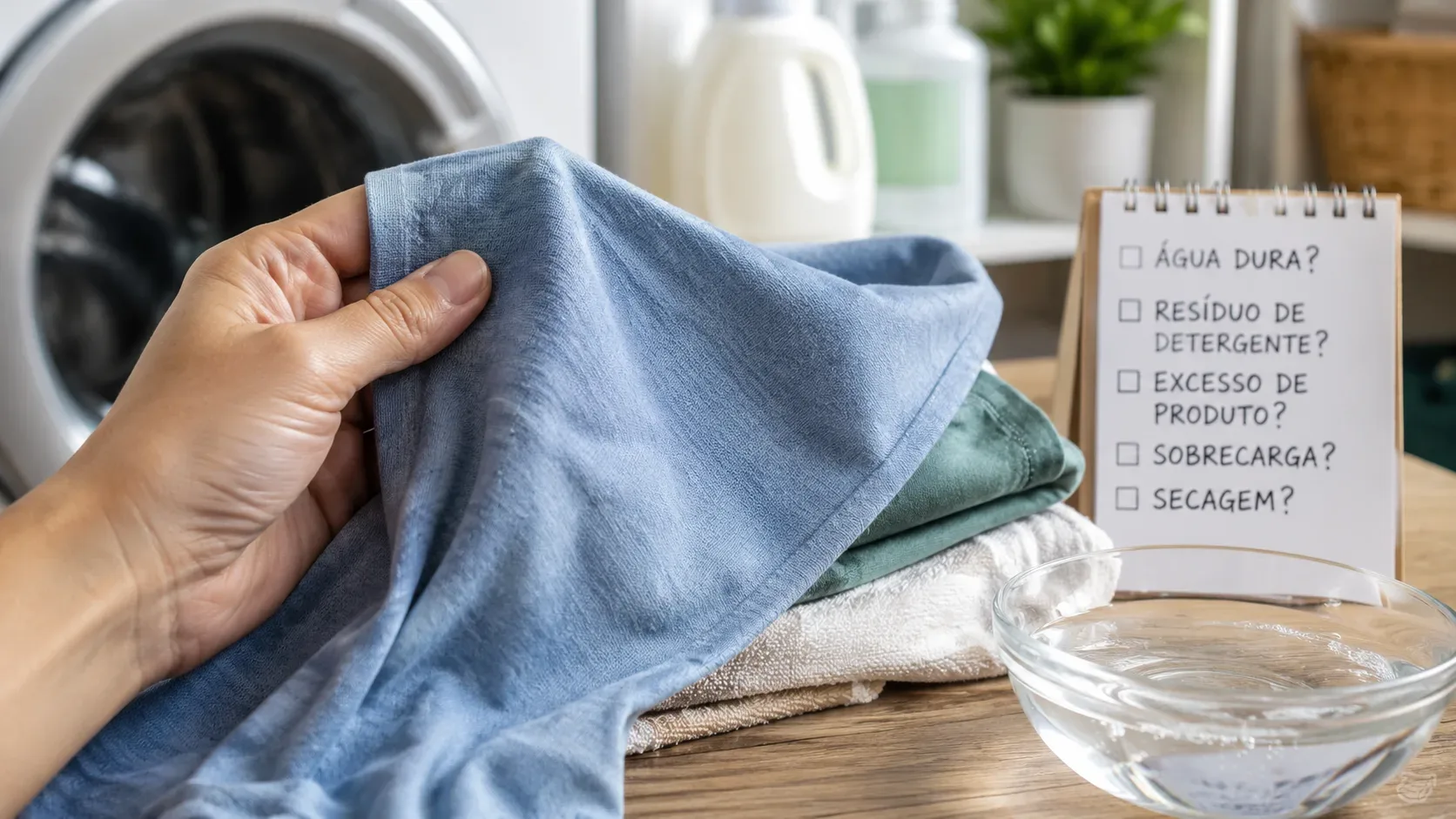
Clothes that come out of the wash stiff, rough or unusually “boardy” do not automatically mean you need fabric softener. The feel can come from hard-water minerals, detergent that was not fully rinsed away, an overloaded washer, or the drying method itself. The most useful first step is to notice when the stiffness appears and whether there are visible signs of residue before adding another product.
Quick diagnosis: start with the clues
| Clue | More likely cause | Simple test | First correction |
|---|---|---|---|
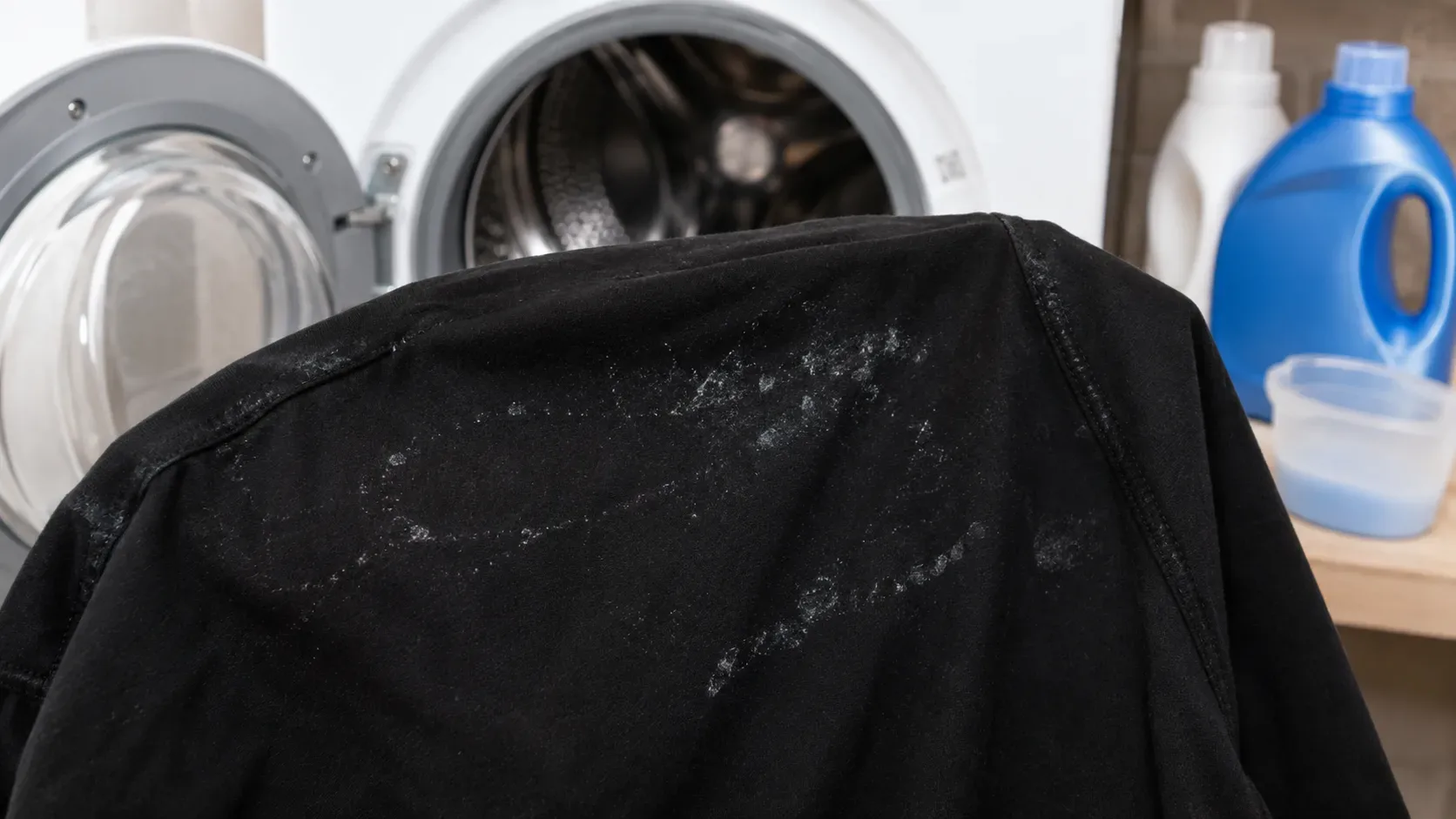
| White powder, clumps or pale streaks, especially on dark clothes | Detergent or mineral residue | Run an extra rinse without adding detergent | Review dosage, dissolution, safe water temperature and load size |
| Stiff laundry plus white scale around faucets or shower fixtures | Hard water | Check water hardness with your local water supplier or utility | Match detergent use to hardness and consider a hard-water solution |
| Roughness is worse in very full loads | Poor rinsing caused by overloading | Wash a smaller load while keeping other variables similar | Reduce load size and use the appropriate water level/cycle |
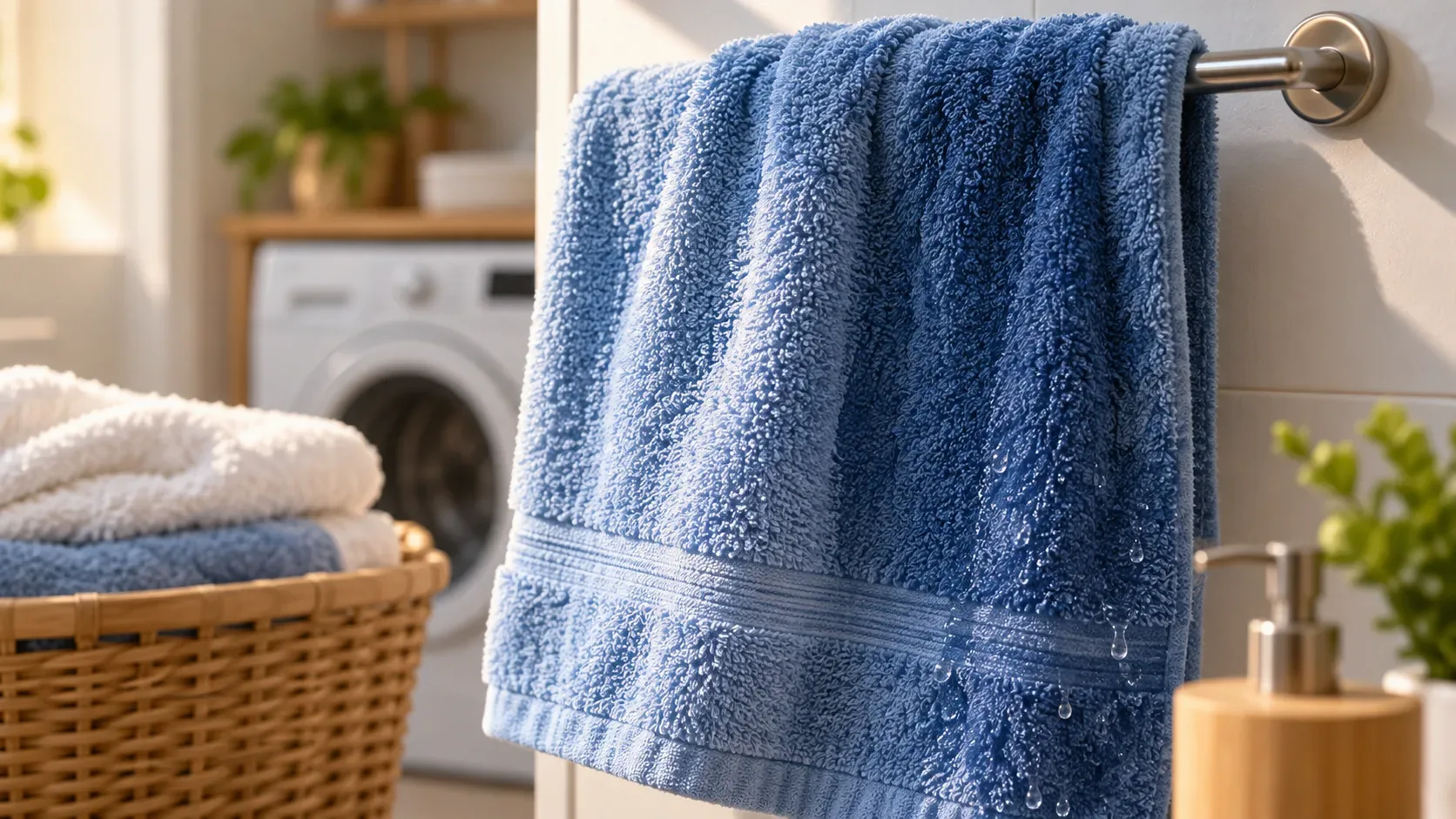
| Fabric feels normal when wet but stiff after drying | Drying is contributing to the feel | Compare two similar items dried differently, if care labels allow | Avoid overdrying and adjust time, heat and movement |
1. Hard water: look for minerals, not just “lack of softness”
Hard water contains higher levels of calcium and magnesium. The American Cleaning Institute (ACI) explains that these minerals can interfere with cleaning products and leave deposits; in laundry, a household clue is the combination of whitish buildup around faucets or drains and fabrics that feel stiff rather than fluffy. ACI also notes that some powder detergents can combine with hardness minerals and leave residue on fabric.
The better test is not to add more softener, but to verify water hardness. ACI recommends checking with the local water company or utility. If the water is genuinely hard, follow the detergent maker's guidance for that condition. Depending on the formulation, hard water may call for a dosage adjustment, a detergent better suited to the water, or a specific water-softening laundry aid.
A clue that strengthens the hard-water hypothesis: stiffness appears across many loads, is not limited to one garment, and the home has a history of mineral scale on dishes, faucets or shower surfaces. That does not prove the cause by itself, but it makes it more plausible.
2. Detergent residue: too much product, poor dissolution or weak rinsing
If clothes show white specks, powder or streaks, investigate residue first. ACI's laundering problems guide links visible residue to undissolved detergent and to the combination of powder detergent with hard-water minerals. Depending on the case, it recommends avoiding overloading, using the hottest water safe for the fabric, and considering liquid detergent when powder is leaving deposits.
More detergent does not automatically mean cleaner clothes. Whirlpool, in support guidance about detergent redepositing on clothing, notes that too much detergent can be difficult to rinse away and that overloading can also impair rinsing. Dosage should therefore reflect product concentration, load size, soil level, water hardness and washer type.
A useful test is to rinse an affected load again without adding detergent. If the hand feel improves and visible residue drops, that is practical evidence that product removal—not lack of softener—was a major part of the problem.
3. Overloading: laundry needs room to wash and rinse
A tightly packed load can create two problems at once: poorer cleaning and residue trapped in folds and fibers. ACI lists overloading among causes of poor cleaning and advises washing fewer items so the load can circulate. Whirlpool likewise connects overloading with inadequate rinsing and detergent redeposition.
For a clean test, do not change five variables at once. Repeat a similar wash with fewer items, while keeping detergent, cycle and temperature compatible with the care labels. If the texture improves, usable load capacity was part of the problem.
4. Drying: if stiffness appears only afterward, test this stage
Drying can substantially change the final hand feel. ACI advises against overdrying in several laundry-problem scenarios and, for some items, recommends removing clothes with a trace of moisture when the care label allows. This does not mean every rough garment is caused by the dryer or the clothesline; it means the moment the stiffness appears helps separate the wash stage from the drying stage.
Run a controlled comparison with two similar pieces: wash them together and then, if their care labels allow, dry them differently. If only one becomes rough, drying is contributing. Adjust time and heat, shake garments before hanging, and avoid leaving them drying far longer than needed. If the care label prohibits tumble drying, do not add heat merely to chase softness.
5. When the washer—not the wash formula—is the problem
If nearly every load develops residue even with the correct dose, a smaller load and adequate rinsing, check the machine itself. Buildup in the dispenser, detergent that is not appropriate for a high-efficiency washer, and overdue maintenance can all contribute to residue. Follow your own model's manual for cleaning the tub, dispenser and accessible filters; do not treat another brand's maintenance routine as universal.
Fabric softener: use it after you identify the cause
Fabric softener can change how fibers feel, but it does not remove the root cause when stiffness comes from minerals, retained detergent or insufficient rinsing. Adding it before correcting the source can simply mask the symptom while adding another product to the load. If you choose to use softener, follow the garment care label, washer manual and manufacturer dosage, and do not exceed the dispenser's maximum line.
A five-step decision tree
- Is there white residue or powder? Run an extra rinse without detergent. If it improves, review dosage, detergent type, dissolution and load size.
- Are there signs of hard water at home? Confirm hardness with the local water supplier and adjust the wash routine to the result.
- Was the washer packed too tightly? Repeat with fewer items. If the result improves, circulation/rinsing was the bottleneck.
- Is the fabric soft when wet but stiff after drying? Compare drying methods within the care label limits and reduce overdrying.
- Does the problem persist across almost everything? Check washer maintenance, the dispenser, detergent type and model-specific instructions.
What to avoid
- Adding extra detergent “just in case” without considering concentration, load size and water hardness.
- Packing the washer so tightly that an extra rinse is expected to compensate for poor circulation.
- Using fabric softener as a diagnostic tool: it can change feel, but it does not identify the source.
- Mixing home remedies or cleaning products without checking labels and compatibility.
- Ignoring garment care labels in order to raise wash temperature or use a dryer.
In short, stiff laundry is best treated as a diagnostic problem. Visible residue points first to detergent/rinsing; mineral clues point to hard water; worse results in large loads point to overloading; and stiffness that appears only after drying calls for a drying test. Correcting the cause is usually more effective than simply adding fabric softener.