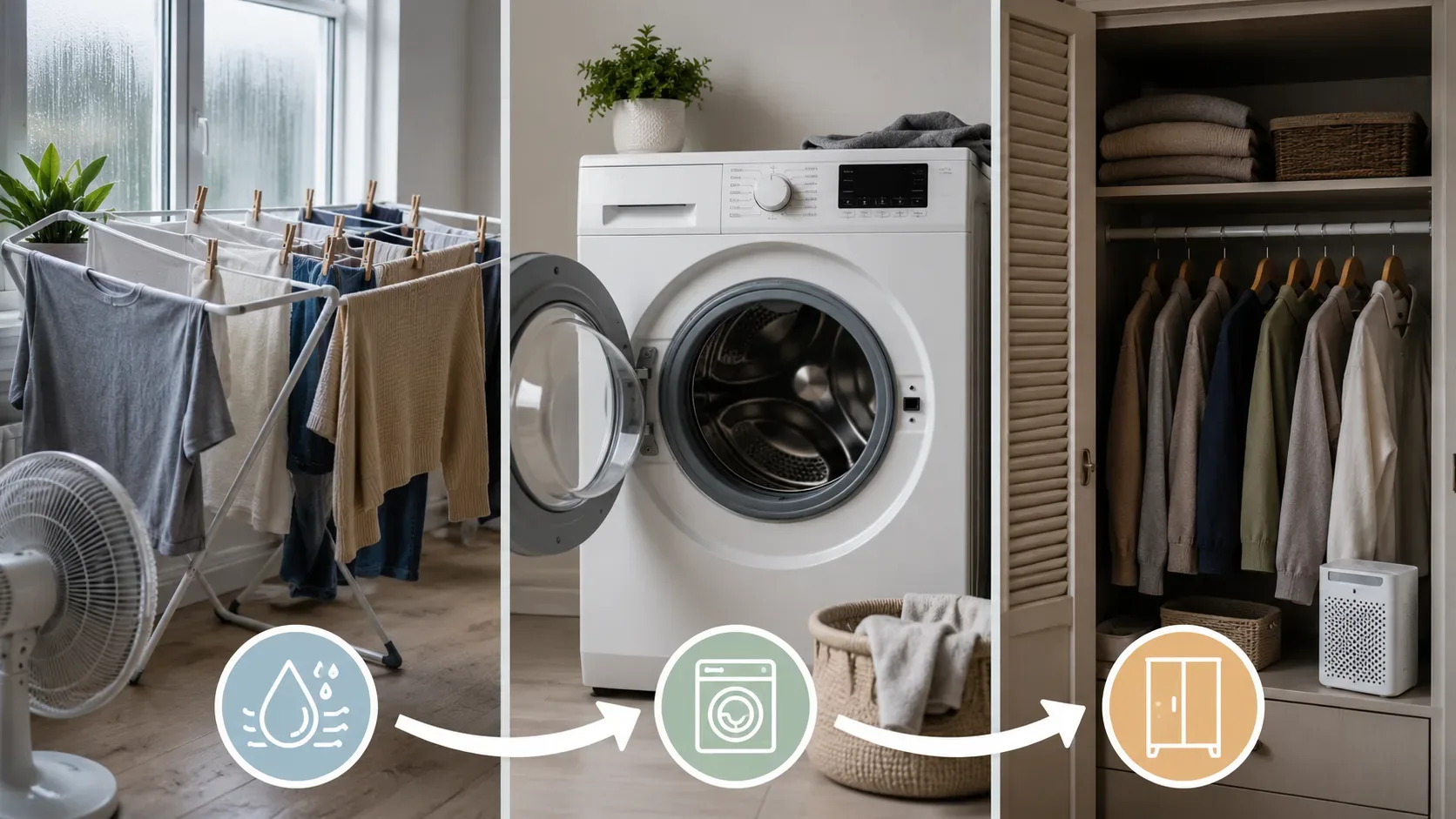
Clothes that smell musty in winter do not automatically require a stronger mixture. First you need to find out where the odor started: in the load that took a long time to dry, inside the washer or after the item was stored.
Perfume and fabric softener may alter the smell for some time, but they will not remove moisture trapped in the fabric, machine or closet. When the source is not corrected, the problem tends to reappear on the next load.
In cold weather, moisture in the air can condense more easily on cold surfaces. Drying clothes indoors also adds humidity to the environment, especially when the room remains closed. Therefore, public recommendations for cold periods combine wind protection with adequate ventilation and maintaining dry environments.
Start from the moment the smell appears
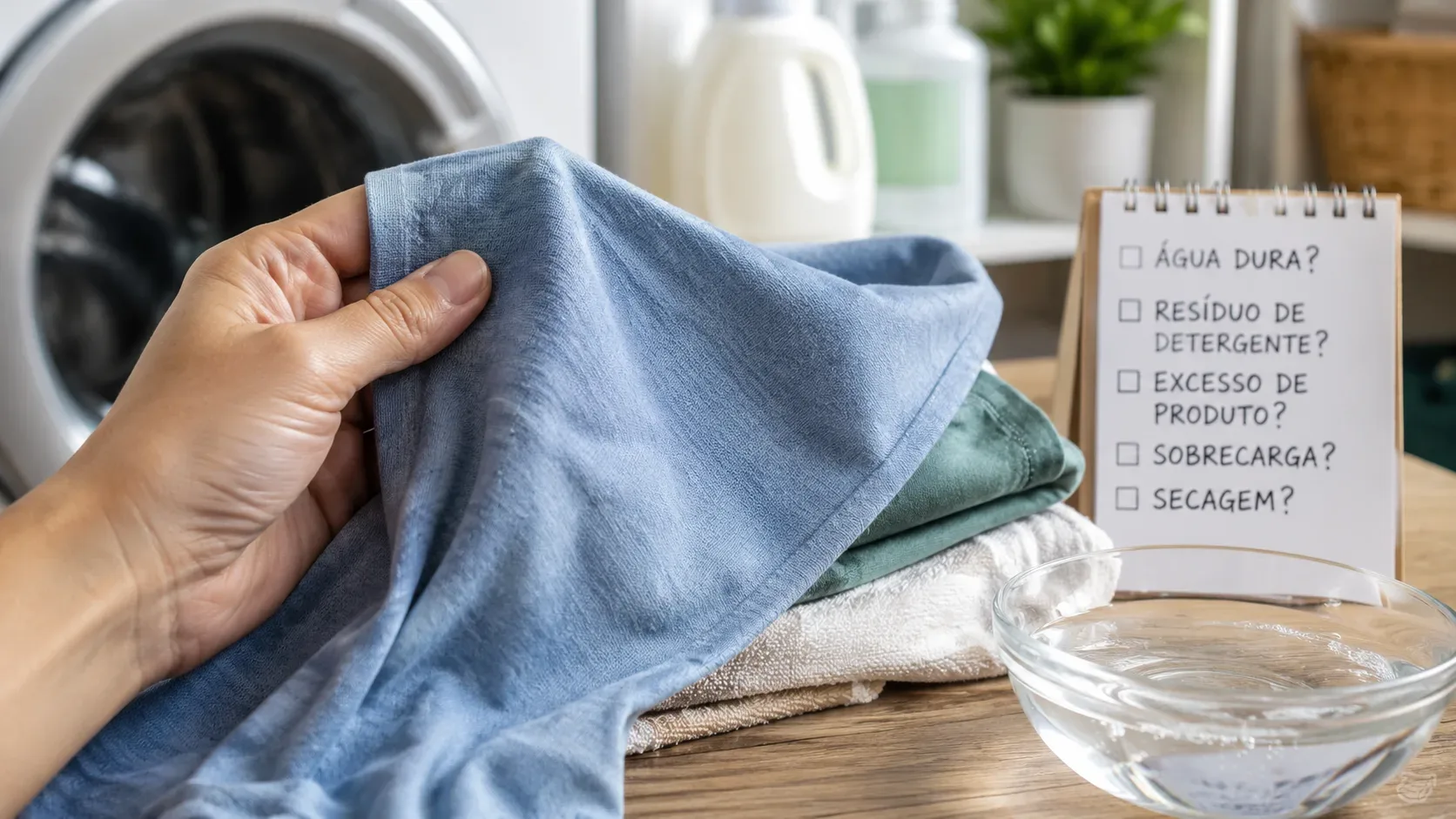
The so-called “musty smell” alone does not identify the source of the problem. More than one cause may exist at the same time, but noting when the odor appears helps you choose the first fix.
| When the odor appears | Most likely origin | First point to check |
|---|---|---|
| During drying or shortly after | Load drying slowly | Spacing, air circulation and parts that are still damp |
| As soon as the machine is opened | Washer | Drum, rubber, dispenser, filter and detergent dosage |
| Hours or days after saving | Closet or room | Moisture, condensation, excess parts and poor circulation |
This comparison is a practical test, not a laboratory identification. The CDC reports that mold can have a characteristic odor and grow on materials such as fabrics when it encounters moisture. The central preventative measure is to eliminate the source of moisture, not just cover up the smell.
Cause 1: the clothes took a long time to dry
Suspect drying when clothes come out of the washer with no obvious odor, but begin to smell after being left on the indoor line for several hours.
Signs to check
- Pieces leaning against each other or folded on the clothesline.
- Pockets, hoods, cuffs, elastics and thick seams still damp.
- Clothesline very full, no space for air to pass.
- Window closed, no exhaust or condensation on the windows.
- Clothing collected because the surface appeared dry, although internal parts were still damp.
- Basket or pile of damp laundry waiting for space on the clothesline.
Drying clothes indoors releases moisture into the room. The EPA recommends removing excess moisture by ventilation, exhaust, or dehumidification and notes that drying clothes indoors can contribute to condensation.
How to fix the load
- Do not store or fold the item with odor or residual moisture. Separating it prevents the smell from spreading to other clothes.
- Read the conservation label. Choose only the temperature, spin cycle and compatible with the fabric.
- If the odor persists, do the washing again without additional recipes. Use the detergent indicated for the machine and the amount specified on the label, considering the size and level of dirt of the load.
- Remove the clothes as soon as the cycle ends. Leaving them wet inside the drum prolongs contact with a closed, humid environment.
- Hang the pieces open and separate. Open pockets and zippers, release hoods, unfold hems and avoid overlapping thick fabrics.
- Create circulation with an outlet for moisture. A window, exhaust fan or dehumidifier can help. A fan improves air movement, but the room still needs to release or remove accumulated moisture.
- Check the thickest parts before collecting. Seams, waistbands, cuffs and pockets must be completely dry.
If the weather is rainy or the outside air is very humid, opening the house completely for long periods may not help. In this case, concentrate drying in a suitable room, maintain space between the pieces and use exhaust or dehumidification when available.
Cause 2: the odor is in the washer
The machine must enter the investigation when the empty drum already has an unpleasant smell or when different loads come out with the same odor before they are even extended.
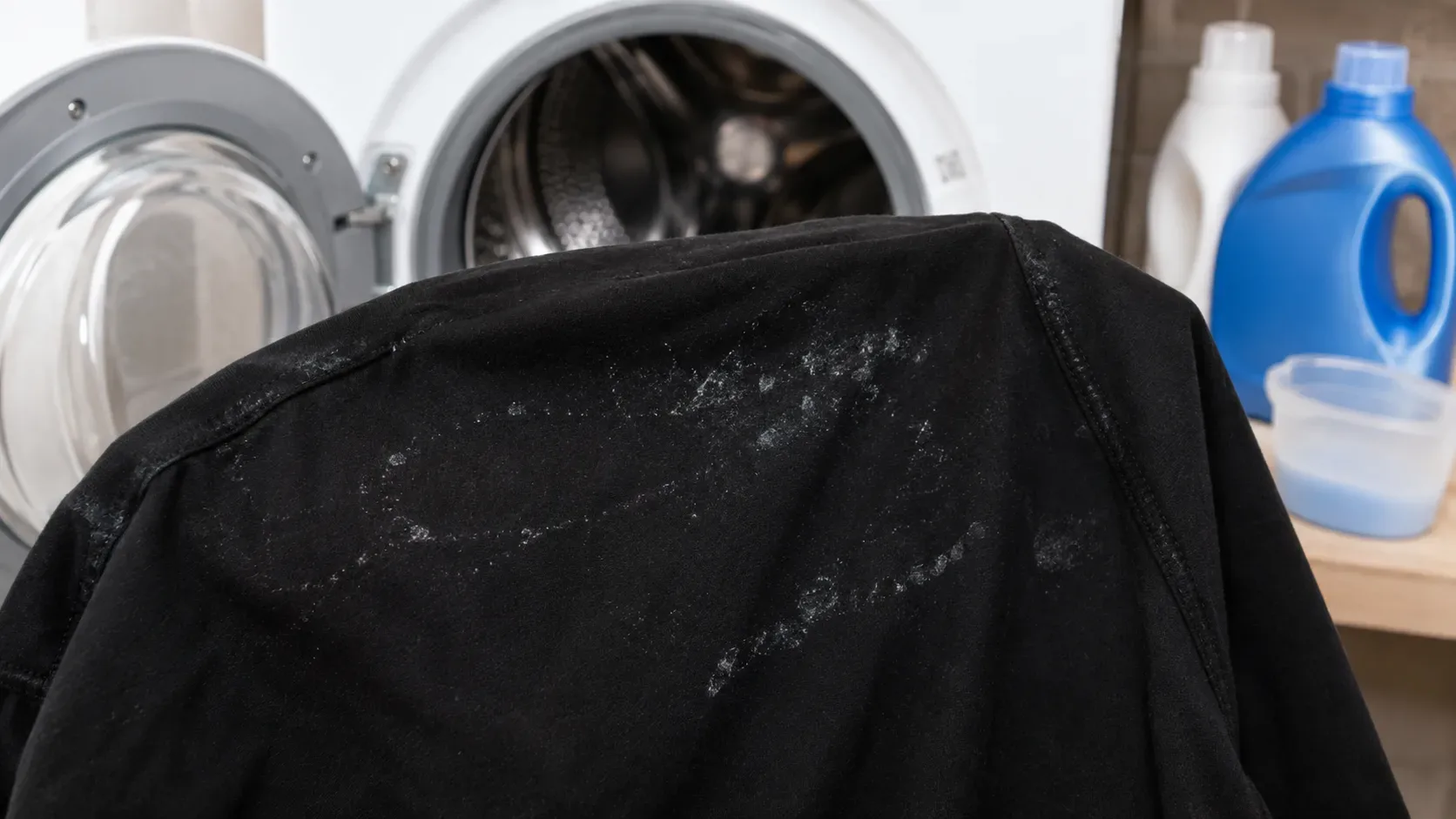
Detergent or fabric softener residue, trapped moisture, wet clothes left in the drum, and dirt on the dispenser or seal can contribute to bad smells. Manufacturers also recommend that cleaning and choosing detergent follow the manual for each model.
Signs to check
- Noticeable smell when opening the empty machine.
- Residues in the detergent or fabric softener dispenser.
- Dirt or moisture in the folds of the rubber, on the front machines.
- User accessible filter without maintenance for a long time.
- Frequent use of detergent above the recommended dose.
- Clothes remaining inside the machine after the end of the cycle.
How to fix the machine
- Empty the drum completely.
- Consult the manual before adding any product.
- Clean dispenser, rubber, lid and accessible areas according to the manufacturer's instructions.
- Check the filter only if it is intended for user maintenance.
- Run the washing machine's cleaning cycle, when the model offers this function.
- Use only a cleaner authorized by the manual, in the indicated dose and compartment.
- Rinse and dry the removable parts before replacing them.
- Allow drum and dispenser to ventilate between uses when the manual allows and the location is safe for children and animals.
- Check the amount and type of detergent before the next load.
After maintenance, test with a small load. If the clothes come out of the machine neutral, but pick up an odor on the line, check the drying process again. If the smell persists in the equipment even after cleaning as prescribed in the manual, it may be necessary to check the drainage, hoses or technical assistance.
Cause 3: clothes smell in the closet
Be suspicious of storage when the item is dry and odorless when stored, but smells musty after a few hours or days.
Cold cabinets, against damp walls, overcrowded or rarely opened can trap moisture and reduce circulation. The EPA recommends increasing airflow in closets and avoiding furniture that sits squarely against cold corners and walls when there is condensation.
Signs to check
- Smell stronger inside the closet than in the rest of the room.
- Background, corners or wall feeling damp.
- Condensation, stains or visible mold growth.
- Compressed pieces, with no space between hangers or batteries.
- Similar odor in clothes that were washed on different days.
- Paper, leather or fabric objects stored in the same location are also affected.
How to fix storage
- Temporarily remove clothing from the affected space.
- Do not return clean parts until moisture has been resolved.
- Look for leaks, infiltrations, condensation or direct contact with a cold wall.
- Leave space for air to circulate between clothes, shelves and the wall.
- Open doors and drawers periodically, as long as this does not spread a visible mold problem throughout the room.
- Only store completely dry clothes.
- Clean surfaces according to the material and label of the chosen product.
- Seek property maintenance when there is infiltration, a persistently damp wall or a large affected area.
Moist and moldy environments can cause respiratory symptoms or irritation in some people, especially those with asthma, allergies, lung disease or reduced immunity. In these situations, avoid direct exposure during cleaning and seek appropriate professional guidance.
Security framework: don't mix
Anvisa warns that safe products when used separately can form toxic substances when combined. The guideline is to purchase regulated sanitizers, strictly follow the label and avoid homemade mixtures.
- Do not combine bleach or other chlorine products with ammonia or any cleaner. The mixture can release toxic gases. The CDC also advises never to mix chlorine bleach with ammonia or other cleaning products.
- Do not collect products in bottles, buckets, dispensers or improvised compartments.
- Do not increase the dose to try to compensate for the odor. Excess can leave residue in the machine and on clothes.
- Do not use internet recipes in the washing machine without authorization from the manual. Acids, bleaches, disinfectants and other products can damage fabric, rubber, hoses or components.
- Do not try to neutralize an accidental mixture with another product. Move away from the area, seek fresh air and follow the instructions on the label.
In case of irritation, coughing, shortness of breath or suspected intoxication after using cleaning products, seek assistance and contact Disque-Intoxicação at 0800-722-6001, a service recommended by Anvisa.
When not to apply a universal home solution
Visible stains on the fabric, deterioration of fibers, persistent odor after washing again or delicate items require specific evaluation. Do not use the same recipe on wool, silk, leather, waterproof clothing, colored items and resistant fabrics without first checking the label.
Also, don't treat a leaky wall as if it were just a cleaning problem. Without correcting water ingress or condensation, odor and mold growth may return.
To reduce further damage after correcting the cause, also see the Clothing that lasts content: https://portal.dbio.link/blogs/roupa-que-dura.
Before the next load, do a simple check: confirm the ventilation of the drying area, check the condition and dosage of the washer and make sure the cabinet is dry and has space for circulation. Perfume does not dry; Locating where moisture has become trapped is what reduces recurrence.