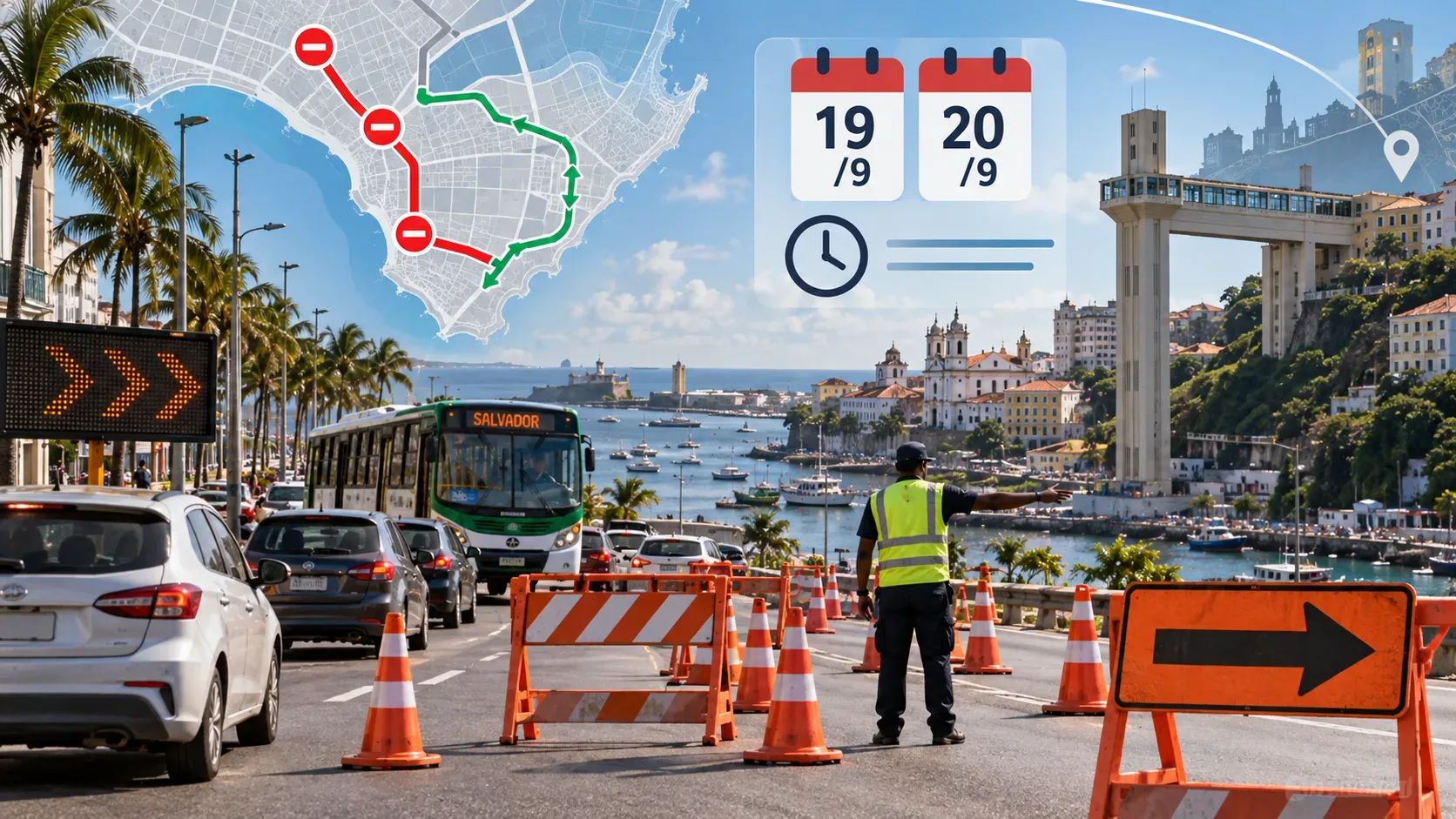
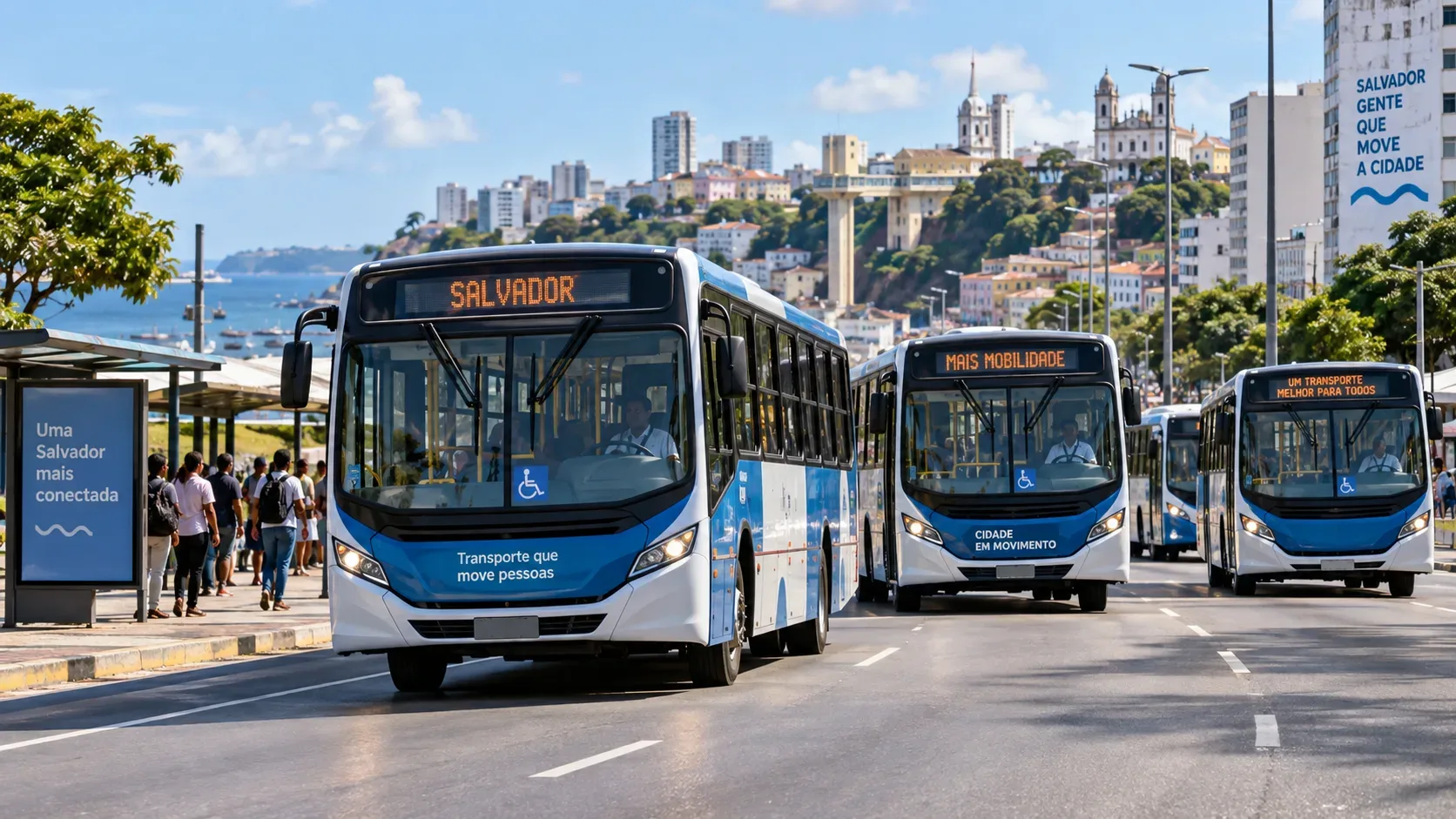
Salvador began a new phase of its public bus fleet renewal on September 19, 2026. The package announced for the city's regular bus system, known as STCO, includes about 700 new vehicles. The first batch contains 326 buses, while the remaining units are expected to be incorporated gradually over the coming months.
What has been delivered now
The 326 vehicles in the first batch were presented at Bahia's Administrative Center. All new buses announced for this phase have air conditioning and lower-emission engines, described by local reports as meeting the Euro 6 standard. Rear route displays are also returning, making it easier for passengers at stops to identify the bus number.
| Stage | Quantity | Date or deadline | Status |
|---|---|---|---|
| First batch presented | 326 buses | 09/19/2026 | Vehicles presented at the CAB |
| First buses entering service | 136 buses | 09/20/2026 | Initial operation by Plataforma and OTTrans |
| Remainder of the main package | 374 buses | By the end of December, according to the schedule reported by MundoBA | Phased incorporation |
When the buses start operating
Of the first batch, 136 vehicles are scheduled to begin operating on Sunday, September 20. Of these, 98 were assigned to Plataforma. The rest of this initial rollout will be operated by OTTrans. Neighborhoods cited for immediate service include Águas Claras, Pirajá, Paripe, Fazenda Coutos, Marechal Rondon, Parque São Cristóvão, Ribeira and Alto do Cabrito.
The information released so far does not provide a complete route-by-route calendar for all 326 vehicles. New buses should therefore appear progressively on individual routes as the operators place each unit into service.
What changes in Salvador's bus fleet
- More air-conditioned buses: the stated target is for about 80% of the fleet to be air-conditioned by the end of the main delivery schedule.
- Fewer older vehicles: with the municipal fleet reported at around 2,000 buses, 700 new units represent roughly 35% of the total.
- Lower-emission engines: the new buses use Euro 6 technology, associated with stricter pollutant limits.
- Rear route identification: route displays at the back of buses are returning, helping passengers check the route number when several vehicles are nearby or after a bus has passed the stop.
- Renewal in the complementary system: the municipal plan also includes air-conditioned vehicles for STEC, although that program follows its own timetable.
Which areas should see the new buses first
According to the package announcement, the renewal reaches more than 140 routes and about 180 neighborhoods. Routes serving the Lapa, Mussurunga, Pirajá, Acesso Norte and Águas Claras stations are also included. The initial distribution is concentrated in Plataforma and OTTrans operations, so some neighborhoods will see the new vehicles before others.
The December schedule and the 2027 caveat
MundoBA, citing information attributed to the municipal communications office, reports that the 700 STCO buses will be incorporated in phases through the end of December. Since 326 were presented in the first batch, this reading leaves 374 vehicles for the next stages of the main package.
There is, however, a difference in scope among reports published on September 19. Correio reported that part of the broader renewal process may extend into the first half of 2027. MundoBA itself separately notes that the STEC procurement and deliveries may reach the first quarter of 2027. The safest interpretation is therefore to distinguish the main STCO package, reported as being incorporated through December, from complementary or later modernization phases that may continue in 2027.
What passengers should notice in practice
The most immediate change is thermal comfort because the new vehicles are air-conditioned. City officials also link the renewal to greater operational reliability, fewer breakdowns and the possibility of expanding routes and service frequency. Those benefits depend on how each vehicle is assigned, so the impact may appear at different speeds across neighborhoods and routes.
For passengers, the key is to watch mobility service channels and information at stops and terminals to know when a specific route receives the new buses. The presentation of 326 vehicles does not mean all of them enter service on the same day.
How the purchase is funded and what was said about fares
The acquisition combines municipal funds, fleet-renewal obligations from operators and BNDES financing under the Novo PAC Mobilidade program. City officials said the delivery of the new buses will not be passed directly to passengers as a specific fare increase. Any future fare adjustments follow separate cost and inflation criteria and should not be confused with the vehicle delivery schedule.