Yes. Contran Resolution No. 1,020/2025 allows a privately owned car to be used both in practical driving lessons and in the driving test for a Brazilian driver's license (CNH), provided the applicable requirements for the applicant, instructor, vehicle and traffic-authority procedure are met. The dismissal of the case by Brazil's Supreme Federal Court (STF), announced on September 9, 2026, did not create this permission: it simply left the Contran rule in force because the Court did not reach the merits of the challenge.
What still applies when using a private car
The rule distinguishes between practical training and the driving test. In both cases, ownership of the vehicle is not the decisive factor.
| Situation | What Resolution 1,020 allows | Main conditions |
|---|---|---|
| Practical lesson | The vehicle may be provided by the instructor or by the applicant. The resolution also allows vehicles used occasionally for learning, regardless of ownership. | Learner's License, continuous supervision by an authorized driving instructor, roadworthiness and safety conditions, and the identification required for a vehicle used for learning. |
| Driving test | The vehicle may be provided by the traffic authority or by the applicant; a third party's vehicle is also allowed. | Roadworthiness and safety conditions, test rules and any operational procedures adopted by the competent traffic authority. |
Can the applicant bring their own car to lessons?
Yes. Article 39 of Contran Resolution No. 1,020/2025 states that the vehicle used in practical lessons may be provided by the driving instructor or by the applicant. Article 127 further states that vehicles intended for driver training and vehicles occasionally used for learning may be used regardless of ownership.
This does not mean that any car can be used without complying with the remaining rules. For practical lessons on public roads, the applicant must carry the Learner's License and be under the continuous supervision of an authorized driving instructor. The lesson must also follow the terms, times and locations established by the competent traffic authority.
The resolution does not require mechanical adaptations or modifications to the car for these activities. It does, however, set an identification requirement: for a vehicle occasionally used for learning, Article 128 requires a removable white stripe 20 centimeters wide, positioned halfway up the body, bearing the word “AUTOESCOLA” in black. Therefore, “no adaptation” should not be read as “no visual or operational requirement at all.”
What about the practical CNH driving test?
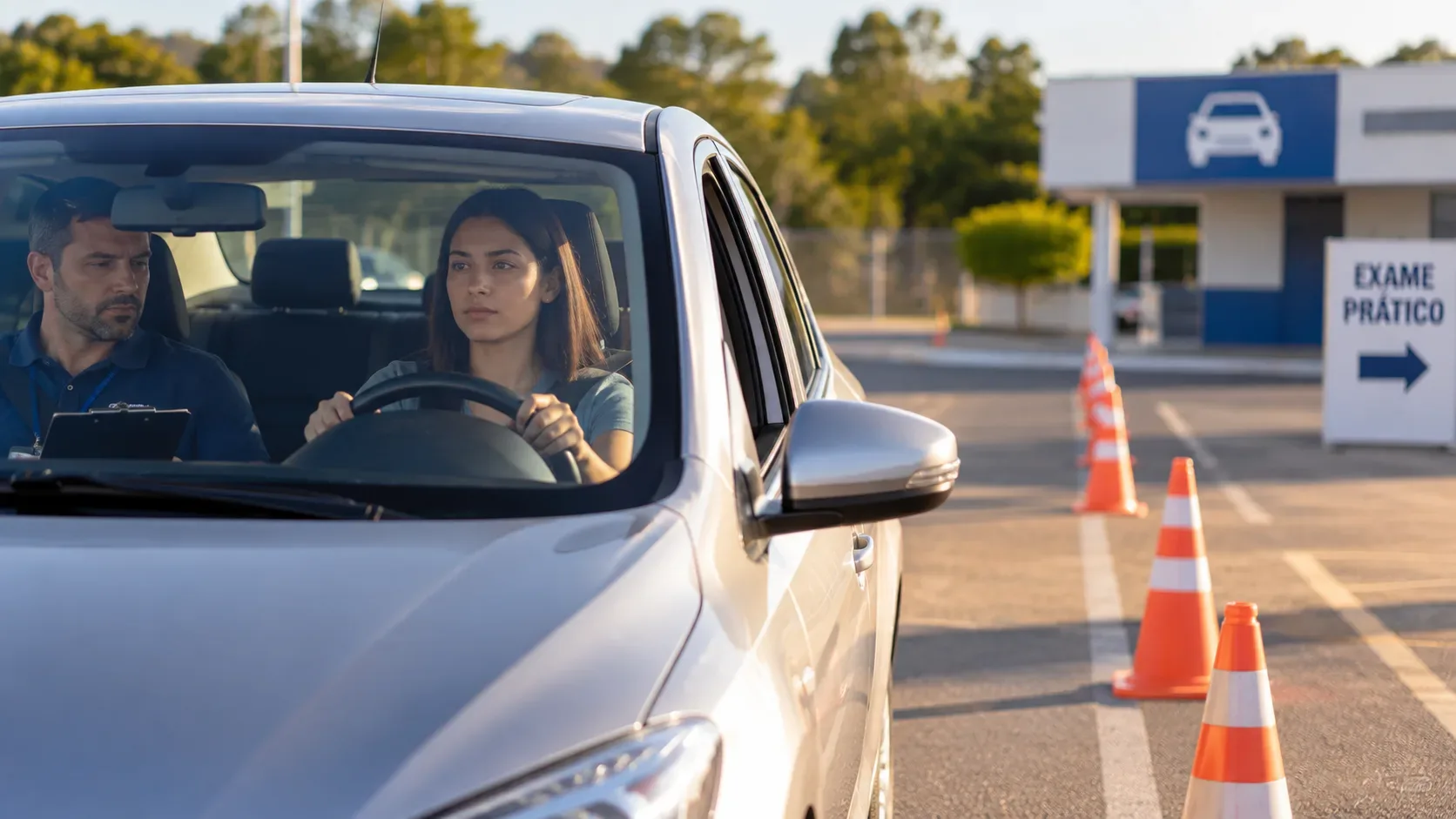
An applicant-provided vehicle may also be used. Article 44 says that vehicles used for the driving test may be provided by the traffic authority or by the applicant and, in either case, a vehicle owned by a third party is permitted.
The test vehicle must meet the roadworthiness and safety conditions required by the Brazilian Traffic Code and complementary Contran rules. If the authority uses electronic monitoring and the applicant brings the vehicle, the equipment needed for monitoring must be installed on the same day and at the test location, under the responsibility of the competent authority or an accredited company, at no cost to the applicant.
What the STF decided in September 2026
A case filed by the National Confederation of Transport and Logistics Workers challenged the portion of Resolution 1,020 that allows private vehicles, including vehicles without mechanical adaptations or modifications, in lessons and practical tests.
According to the Brazilian Ministry of Transport's statement of September 9, 2026, Justice Cármen Lúcia declined to hear the action. The stated reason was that the dispute would first require an examination of the relationship between the Contran resolution and infra-constitutional legislation. The STF therefore did not rule on the merits of the constitutional claim, and the case was closed.
The immediate practical effect is straightforward: Contran Resolution No. 1,020 remains in force, including the provisions allowing a private vehicle in lessons and in the driving test.
What the STF did not decide
- There was no merits ruling definitively declaring every challenged provision constitutional.
- The Court did not create a new permission to use a private car; that permission was already contained in Resolution 1,020.
- The decision does not remove requirements concerning safety, vehicle identification, the Learner's License, instructor supervision or test rules.
- The dismissal does not standardize every administrative procedure used by state traffic departments.
Can a state Detran have its own procedures?
Yes, within the authority allowed by the national regulation. Resolution 1,020 itself says practical lessons must take place under the terms, times and locations defined by the traffic authority. For the test, Article 42 provides for a route defined by the competent authority and allows states and the Federal District to continue applying their own routes and procedures until the Brazilian Driving Test Manual is published, provided the resolution is observed.
In practice, the right to use a private vehicle does not eliminate the need to check with the Detran handling the applicant's process. Operational requirements may include prior vehicle registration, document checks, inspection, a designated presentation location or a specific scheduling procedure, as long as they are compatible with the national rule. Because these details may vary, applicants should confirm them directly through the official Detran channel before a lesson or test.
Checklist before using a private car
- Confirm the stage of the process: before practical lessons, the applicant must have passed the theory tests and have a Learner's License issued.
- Use an authorized instructor: a lesson on public roads requires continuous supervision by an authorized driving instructor.
- Check the car: registration, roadworthiness, mandatory equipment and safety conditions must be in order.
- Use the required identification: a vehicle occasionally used for learning must comply with the removable stripe requirement in Article 128.
- Check with the Detran: find out whether registration, inspection, scheduling or another operational step is required before bringing the vehicle.
- For the test, check monitoring rules: if electronic monitoring is used, equipment installation must follow the authority's procedure and, when the applicant brings the vehicle, cannot create a charge for the applicant.
Bottom line
A private car may be used in practical lessons and in the CNH driving test under Contran Resolution No. 1,020/2025. The STF's dismissal of the case in September 2026 left that situation unchanged because the Court did not decide the merits of the challenge. The permission does not, however, eliminate national requirements or compatible operational procedures that the responsible Detran may impose. Before bringing the vehicle, check the current rules of the traffic authority in your state or the Federal District.