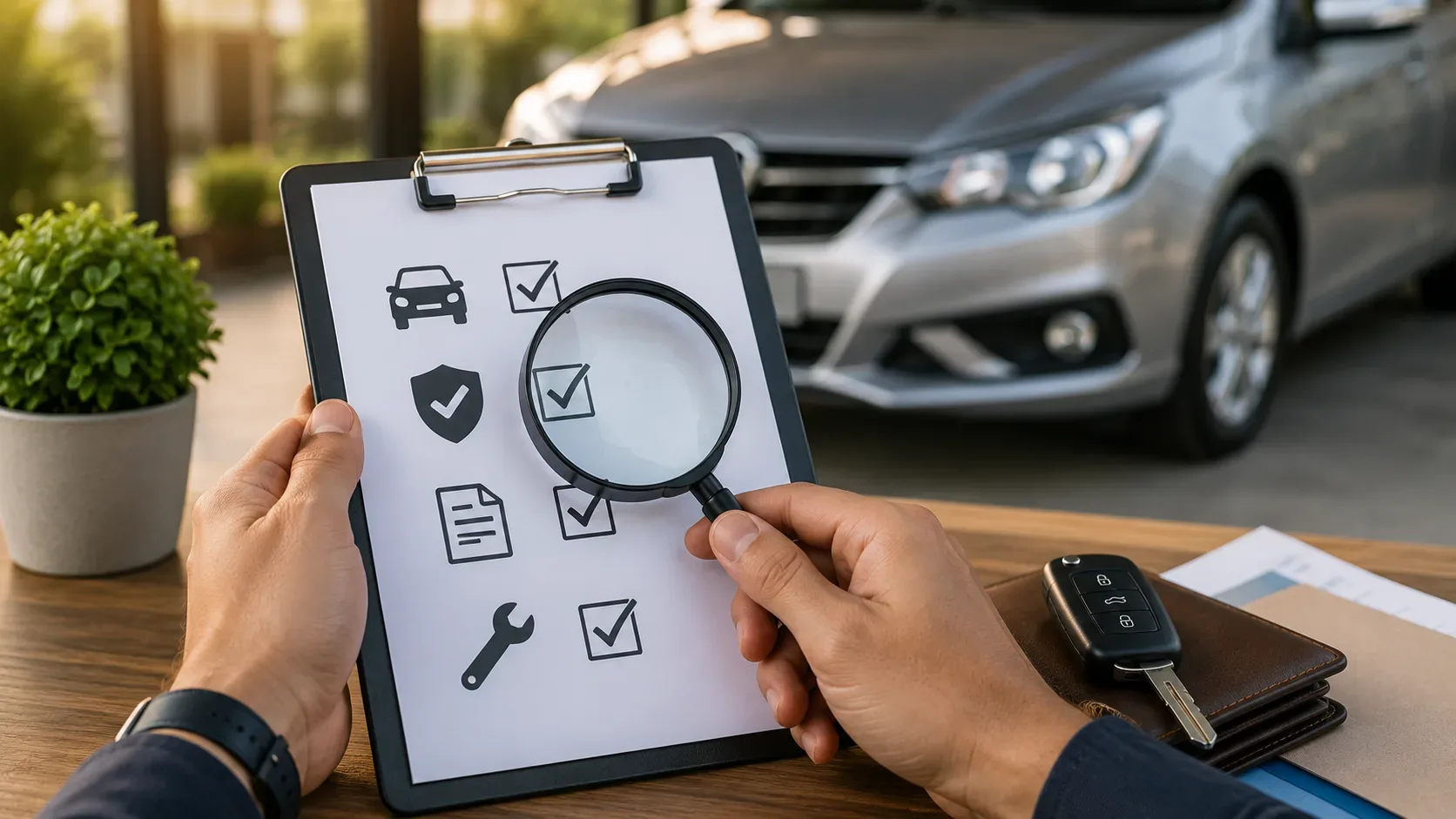
A used car can appear to be preserved, with recent documentation and normal operation and still have a pending recall. Therefore, verification must be carried out before paying the deposit, signing the contract or starting the transfer.
The safest way is to request the license plate, chassis number and CRLV-e from the seller, carry out the official consultation with the National Traffic Secretariat in person and keep the results. If there is a pending issue, do not just accept the verbal information that “the service has already been done”: ask for proof and check the system again after the update.
The Senatran consultation is free, requires access via a Gov.br account and searches recall data registered in the RENAVAM database. Although the agenda usually associates the procedure with the RENAVAM number, the current service page states chassis or vehicle license plate as necessary data for the search.
Why check the recall before purchasing
Recall is neither a periodic review nor an optional maintenance recommendation. It is a call made when the supplier identifies that a certain product or component may pose a risk to health or safety.
Article 10 of the Consumer Protection Code determines that, upon becoming aware of the danger of a product after placing it on the market, the supplier must immediately notify the authorities and consumers. In the case of vehicles, the procedure is also regulated by MJSP Ordinance No. 618/2019 and Interministerial Ordinance No. 3, of July 1, 2019.
For the buyer of a used car, the pending issue matters for three reasons:
- The defect may still pose a risk. The car can drive normally until the fault manifests itself.
- Licensing may be affected. Traffic legislation provides consequences for unfulfilled campaigns.
- The regularization may end up being left to the buyer. After the transfer, it will be the new owner who will need to schedule the service and monitor the registration in the system.
The repair provided for in a recall campaign must be carried out at no cost to the consumer. According to Senacon, as long as the risk that gave rise to the campaign persists, the consumer can demand repair or replacement of the defective part from the supplier.
How to consult a used vehicle recall at Senatran
1. Request details before paying any amount
Ask seller:
- vehicle license plate;
- full chassis number;
- CRLV-e updated;
- RENAVAM code, for document checking;
- possible service order or proof of recall already carried out;
- manual and maintenance records, when available.
Compare the plate and chassis presented with the CRLV-e and with the identification on the vehicle itself. The used vehicle buying guide published by Procon-SP and Detran-SP instructs the buyer to check whether the chassis and engine identification correspond to the documentation.
An unjustified refusal to provide plate, chassis or documentation before signing must be treated as a warning sign. Without this data, the interested party cannot adequately verify the good they are about to acquire.
2. Enter the official Senatran service
On the Senatran Services Portal:
- login with your Gov.br account;
- locate the block “Vehicles”;
- choose “Consult Pending Recall”;
- enter the requested data;
- proceed to see if there are pending records.
The official page informs that the result is presented immediately and that the service is free. For online consultation, the recommended documentation is the chassis or plate.
The Digital Traffic Card also allows you to view recalls of vehicles registered in the application. For a purchase that has not yet been completed, however, the Senatran portal tends to be the most practical alternative, as the car may not yet be linked to the interested party's account.
Access the official consultation before paying a deposit, signing the ATPV-e or taking possession of the vehicle.
3. Save the result with date
Save a screenshot or printout of the page containing:
- identification of the vehicle consulted;
- result displayed;
- search date;
- Campaign details, if any.
This record does not replace the current situation of the base, which can be modified later, but demonstrates that the verification was carried out before the transaction. Make a new inquiry closer to the signing, especially when there are a few days or weeks between the negotiation and the transfer.
How to interpret the query result
Result: No recall pending
This result indicates that, at that moment, the service did not find a pending campaign linked to the vehicle queried.
It does not necessarily mean that the car has never been recalled. The service is aimed at identifying pending issues, and a vehicle may have been recalled previously and already received repairs.
It is also not a general report on the condition of the car. The absence of a pending recall does not eliminate the need to:
- precautionary inspection;
- independent mechanical assessment;
- consultation of debts and restrictions;
- documentary history conference;
- examination of the condition of safety equipment.
For older vehicles, it is also worth checking with the manufacturer. The federal page informs that its database brings together recall data released by manufacturers since 2011. Previous campaigns or doubts regarding classification must be checked directly with the manufacturer, using the chassis number.
Result: recall pending
Do not complete the purchase without identifying:
- which component is involved;
- which risk motivated the campaign;
- if the chassis is effectively covered;
- where the service can be performed;
- if there is guidance to limit or suspend the use of the car;
- when the authorized dealer will be able to assist.
The safest solution is to ask the seller to make the repair before transfer. After service, demand the service order or receipt issued by the dealership and repeat the official consultation.
Detran-SP informs that regularization depends on free repairs at an authorized dealership. The dealership itself must register the service in the Senatran system, after which the pending issue is removed from the vehicle's registration. The agency does not establish an estimated deadline for completing this update; therefore, do not assume that the low will appear on the same day.
Procon-SP also recommends that the consumer demand and keep proof of the recall carried out and, in the event of sale, deliver this document to the new owner.
The seller says the recall has already been done, but the pending issue continues
Request the service order with:
- vehicle identification;
- chassis;
- campaign served;
- date of service;
- dealership identification.
Then, contact the dealership or the manufacturer's customer service. There may be an administrative update that has not yet been processed, but there may also be an error in the document, incomplete service or another pending campaign.
Do not treat the isolated receipt as sufficient when the system still indicates a pending issue. Wait for confirmation from the manufacturer or registration on the official database before finalizing the operation.
RENAVAM, board and chassis: what information really matters?
RENAVAM is the national registry in which the vehicle's administrative information is linked. Senatran itself defines the service as a consultation of vehicle recall data registered in this database.
In the current interface, however, the documentation required for the recall query is chassis or board. Therefore, the buyer's checklist must include the three data points, but with different functions:
- Plate: allows you to locate and check the advertised vehicle.
- Chassis: identifies the specific unit and determines whether it is part of a given campaign.
- RENAVAM: helps with checking documentation and other administrative queries.
A generic recall announcement by make, model and year is not enough to conclude that that car is included. Some campaigns only cover specific chassis ranges or lists.
In the same way, searching only for the model in the Senacon campaign database helps to understand the risks already communicated, but does not replace individual consultation of the vehicle at Senatran.
Senatran, Senacon, manufacturer and Detran: the role of each source
Senatran
It is the main individual query to check if there is a pending recall linked to the vehicle. The result uses data recorded in the national database.
Senacon
The National Consumer Secretariat maintains information and data on calling campaigns. Its database helps you locate warnings, products involved, reported risks and previous campaigns. It works as a complement to understanding the recall, but does not replace the chassis check at Senatran.
Manufacturer or importer
Confirms whether the chassis is covered, informs the risk, advises on the use of the vehicle and indicates the authorized service network.
DMV of the state where the vehicle is registered
Informs local administrative consequences, possible restrictions and licensing or transfer procedures.
This state consultation is important because federal legislation expressly addresses licensing, while transfer procedures may vary in each Detran's operation.
Could pending recall prevent licensing or transfer?
The Brazilian Traffic Code determines that campaigns carried out from October 1, 2019 and not completed within one year must be included in the Annual Licensing Certificate. After this inclusion, the vehicle can only be licensed upon proof of compliance with the recall.
The 2026 guide from Procon-SP and Detran-SP summarizes the practical consequence: when the owner does not respond to the call within a year, the annual licensing is blocked.
In São Paulo, the updated Detran-SP page expressly informs that the pending issue prevents both annual licensing and the transfer of ownership. This information is statewide; Buyers from other units of the Federation must confirm the procedure at Detran responsible for registering the car.
Therefore, a statement such as “recall never prevents transfer” should not be accepted without checking the registration status and the concrete administrative situation.
Checklist before completing the purchase
Identification and query
- I checked the CRLV-e presented by the seller.
- I compared the ad plate with the vehicle plate.
- I compared the chassis on the document with the existing identification on the car.
- I wrote down RENAVAM for other administrative queries.
- I personally consulted on the Senatran Portal.
- I saved the result with the search date.
- I also checked debts, restrictions and licensing status.
Questions to seller
Ask in writing:
Has the vehicle already been included in a recall campaign? Is there an active pending issue or proof of service? Do you authorize checking the board, chassis and documentation before paying the deposit?
Add:
- Which dealership was the service performed at?
- What was the date of service?
- Is there a work order identifying the chassis?
- Is there another campaign waiting to be scheduled?
- Who will take care of the regularization if the pending issue is confirmed?
When there is a pending recall
- I identified the campaign and the risk reported.
- I confirmed the inclusion of the chassis with the manufacturer.
- I requested that the seller perform the repair prior to purchase.
- I received the work order or receipt.
- I consulted Senatran again after the service.
- I confirmed with the state Detran whether there is a licensing or transfer block.
- I did not sign a generic statement assuming a pending issue that has not been clarified.
If the parties decide to proceed before settlement, the contract must accurately record the campaign, responsibility for scheduling, the deadline, and what will occur if settlement is not completed. As this is a security risk and possible administrative restriction, this alternative requires caution and legal review.
Does buying from a store or from an individual make a difference?
The 2026 guide from Procon-SP and Detran-SP clarifies that the Consumer Protection Code protects purchases made in commercial establishments. The occasional purchase directly from another individual, as a rule, does not constitute a consumer relationship and can be dealt with by the Civil Code.
This changes the possible ways to discuss omitted information, defect or breach of contract. However, it does not change the fact that the recall is linked to the vehicle and that campaign repairs must be requested from the responsible manufacturer or importer.
When purchasing at a store or dealership, ask for the recall status to be included in the proposal, order or invoice. When purchasing between individuals, record the seller's statements in the contract and attach the results of the consultation.
Is it worth buying a car with a pending recall?
The existence of a recall does not mean, in itself, that the model is a bad purchase. The pending issue, however, shows that a security fix has not yet been confirmed on the system.
Before taking over the vehicle, evaluate:
- the severity of the risk communicated;
- parts availability;
- the service period informed by the dealership;
- the possibility of transporting the car safely;
- existing administrative restrictions;
- the seller's willingness to regularize the situation.
The most prudent decision is to make the purchase conditional on the repair being carried out, the receipt being provided and a new consultation without any pending issues. If the seller refuses to provide the details or insists that the deal be completed without verification, look for another vehicle.