Brazilian Decree No. 13,108 of August 31, 2026 created specific consumer-protection rules for the sale of event tickets in Brazil. Published in the Federal Official Gazette on September 1, 2026, it has a phased effective date: some obligations took effect on the publication date, while others take effect twenty days later. Under the general rule for counting a vacatio legis period, that leads to September 21, 2026.
For people buying tickets online, the three most practical points are these: the platform will have to provide a no-fee ticket-holder transfer, it must maintain a clear channel for exercising the cooling-off right, and, when a virtual queue is used, it must display objective information about the wait. However, these rules differ in both effective date and scope. The official text is available in Decree No. 13,108/2026.
What is already in force and what takes effect on September 21
| Topic | Status on Sept. 11, 2026 | Practical rule |
|---|---|---|
| Virtual queue | In force since Sept. 1 | It must show the consumer's position in the queue, the estimated number of users ahead and the approximate time until access to the purchase stage. |
| Price and fee transparency | In force since Sept. 1 | Ticket price and ancillary fees must be clear and itemized throughout the purchase process; duplicate, similar or unsupported fees are treated as abusive. |
| Cancellation, postponement or material change to the event | In force since Sept. 1 | The consumer must be able, as applicable, to choose a new date, credit or a full refund, including ancillary fees. |
| Free transfer of ticket ownership | Takes effect Sept. 21 | The consumer may transfer the ticket to another person without paying a transfer fee, using the official platform or a system provided by it. |
| Ticket-specific cooling-off rule for electronic sales | Takes effect Sept. 21 | The decree reaffirms the right under Article 49 of the Consumer Defense Code and requires a specific, clear and easy-to-access channel without barriers that delay cancellation. |
| Temporary hold during pre-purchase | Takes effect Sept. 21 | Once a ticket is selected in the pre-purchase area, there must be enough time to enter the required information and complete the purchase, with the ticket price and fees held during that period. |
Virtual queues: what the platform must show
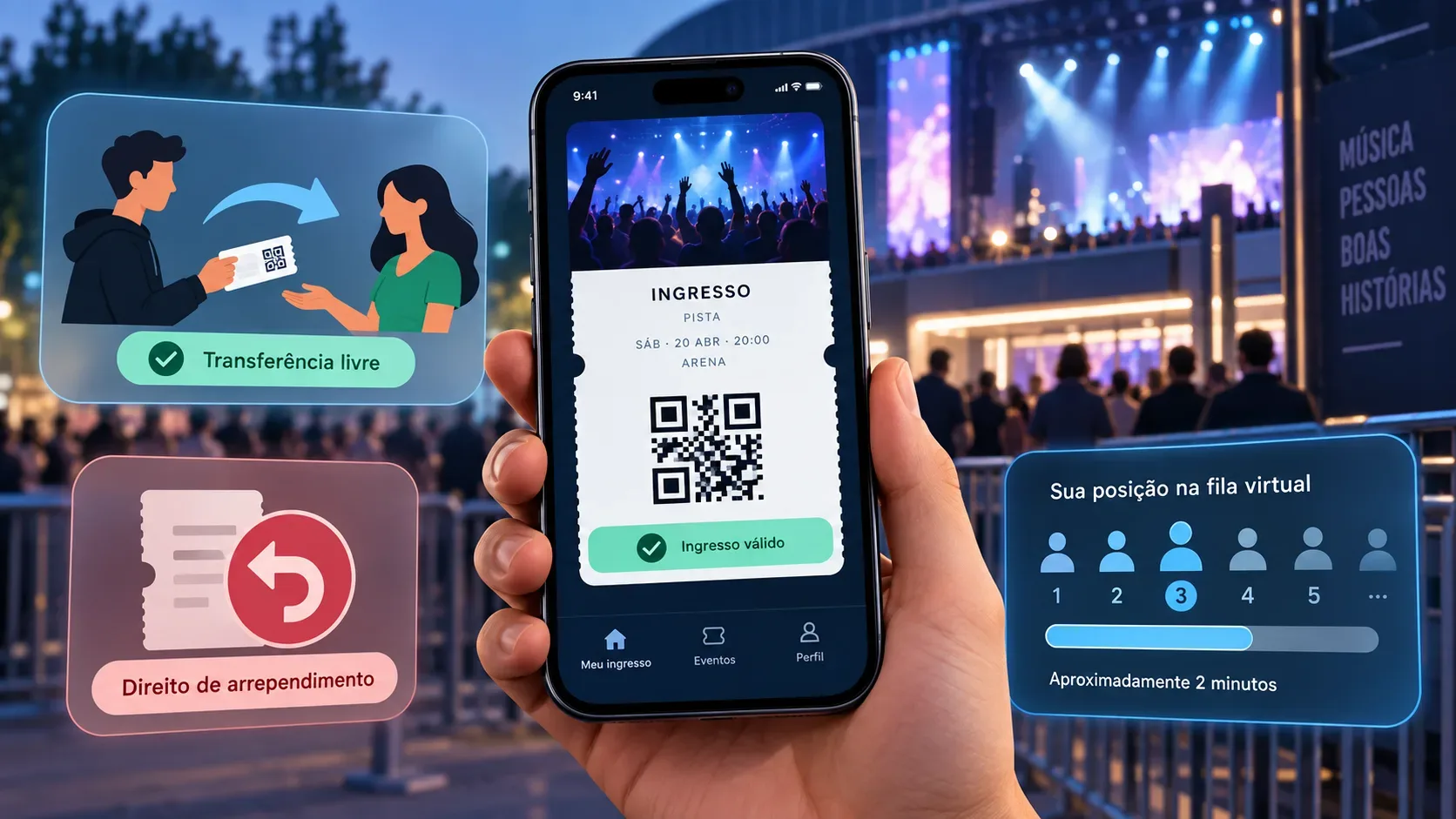
Article 14 directly addresses electronic ticket sales that use a virtual queue or another controlled-access system. In those cases, the primary ticket seller must clearly and prominently disclose three elements: the consumer's position in the queue, the estimated number of users ahead and the approximate time until access to the purchase stage.
This does not mean the platform must promise an exact time. The rule refers to an estimate and an approximate forecast. The practical benefit is to reduce opaque digital queues in which users have no idea whether hundreds or thousands of people are ahead or how long the wait may last.
It is important to distinguish the virtual queue from the temporary ticket hold. The queue organizes access to the purchase stage; the temporary hold, established by Article 13 and subject to the later effective date, begins when a ticket is selected in the pre-purchase area. During that hold, the ticket price and disclosed fees cannot change because of a new sales batch, dynamic pricing or a similar criterion, and the remaining time must be displayed in real time.
Free ticket transfers: what actually changes
Once Articles 17 and 18 take effect, consumers may transfer ticket ownership to another person without charge. The procedure must be provided by the primary ticket seller and carried out exclusively through the official sales platform or a system made available by it.
The no-fee rule applies to the ownership-transfer operation requested by the consumer: the decree prohibits charging any amount for that transfer. At the same time, the operation must remain traceable. The platform must record successive ticket holders, the date and time of each transfer, and use identity-authentication mechanisms appropriate to the event and the technology involved.
In practice, this tends to replace improvised methods such as sending a screenshot or static file when tickets are named or use dynamic authentication. For consumers, the safest approach is to use the official transfer function when it is available.
Transferring a ticket is not the same as unrestricted resale
The decree does not turn free transfers into an unrestricted authorization for speculative resale. A transfer changes the ticket holder in a secure and traceable way. Secondary-market intermediation or resale is governed by separate duties, including disclosure of the face value, notice when a ticket is offered above face value, information that the channel is not official and measures against abusive or automated resale patterns.
Article 19 also prohibits using the transfer mechanism to circumvent the decree's controls. The ability to pass a ticket to another person therefore does not eliminate security measures, anti-bot protections, traceability or legitimate policies consistent with the rule.
Cooling-off right: the decree did not create a new deadline
Article 16 matters because it can easily be misread. The cooling-off right already existed under Article 49 of Brazil's Consumer Defense Code. As a general rule, the Code gives consumers seven days from signing the contract or receiving the product or service, as applicable, when the transaction takes place outside the seller's business premises.
Decree No. 13,108 does not create a different deadline for event tickets. Instead, it expressly confirms the right for electronic ticket transactions and requires primary sellers and secondary intermediaries to provide a specific, clear and easily accessible channel. It also prohibits procedures designed to make cancellation harder or slower.
The sole paragraph of Article 49 of the Consumer Defense Code states that, when the cooling-off right is validly exercised, amounts paid during the reflection period must be returned. In a concrete dispute — for example, a purchase made very close to the event date or disagreement over the starting point of the deadline — the contractual circumstances and the application of the Code may need case-specific analysis.
Event cancellation is a different situation
A consumer's change of mind is not the same as cancellation of the event. If the event is canceled, postponed or materially changed, Articles 20 to 22 guarantee a full refund of the amounts paid, including ancillary fees, and prohibit penalties or withholding when the change is not caused by the consumer.
In those situations, there must be a clear and accessible channel through which the consumer can choose to use the ticket on the new date, receive credit for future use or obtain a full refund. The decree says the refund should preferably be made through the same payment method used for the purchase.
Total price, fees and add-on services
The decree also strengthens price transparency. Articles 6 and 7 treat ancillary fees as abusive when they duplicate other charges, are substantially similar to them or do not correspond to a service actually provided. The ticket price and all ancillary fees must be disclosed clearly, prominently and item by item from the initial advertisement through completion of the transaction.
Additional services cannot be added automatically without the consumer's prior and express consent. Companies must also keep documentation showing the criteria used to set ancillary fees and how those fees relate to operating costs or services actually offered, so authorities can review them if necessary.
What consumers should check before buying
- Sales channel: confirm whether the page is the official primary seller or a secondary intermediary. Intermediaries will have to make clear that they are not the official channel and warn when a ticket is offered above face value.
- Final price: compare the advertised amount with the total shown before payment and keep a record of fees that appear during the process.
- Virtual queue: if there is a queue, check whether the platform shows your position, the estimated number of users ahead and the approximate wait.
- Pre-purchase: once Article 13 takes effect, watch the hold timer and verify that ticket price and fees remain unchanged during the reserved period.
- Transfer: once the rule is in force, use the official transfer function and do not pay a fee merely to change the ticket holder.
- Cooling-off request: use the platform's dedicated channel and save a protocol number, email, screenshot or other evidence of the request.
Limits and exceptions under Decree 13,108
The decree does not cover every ticket sale. The most important exclusion appears in Article 1, paragraph 2: Decree No. 13,108 does not apply to the sale of tickets for sporting events, which is governed by Law No. 14,597/2023.
There are also adaptations for sellers that operate exclusively through physical box offices. Some of Article 4's technology-based duties — such as automated-purchase detection and certain traceability and authentication mechanisms — do not apply to primary sellers that sell tickets only through physical box offices.
Finally, Article 25 requires the decree to be applied in proportion to the nature, size, demand and purpose of each event. Events that are more exposed to speculation and abusive practices are expected to receive stronger layers of protection, subject to supplementary rules from the Ministry of Justice and Public Security.
Why some rules only take effect on September 21
Article 26 created a phased effective date. Provisions not expressly delayed took effect on the publication date. Articles 4 and 5, Article 13 and Articles 15 to 18, however, were given a twenty-day period after publication. Because the decree was published on September 1, the general rule for counting a vacatio legis period means it takes effect on the day after those twenty days are fully completed: September 21, 2026. The counting method is explained in the Brazilian Congress Legislative Drafting Glossary.
This distinction matters because, on September 11, 2026, Article 14's virtual-queue transparency requirement is already in force, while the specific duty to provide free ticket transfers and the channel required by Article 16 are still within the adaptation period.
What to do if a platform does not comply
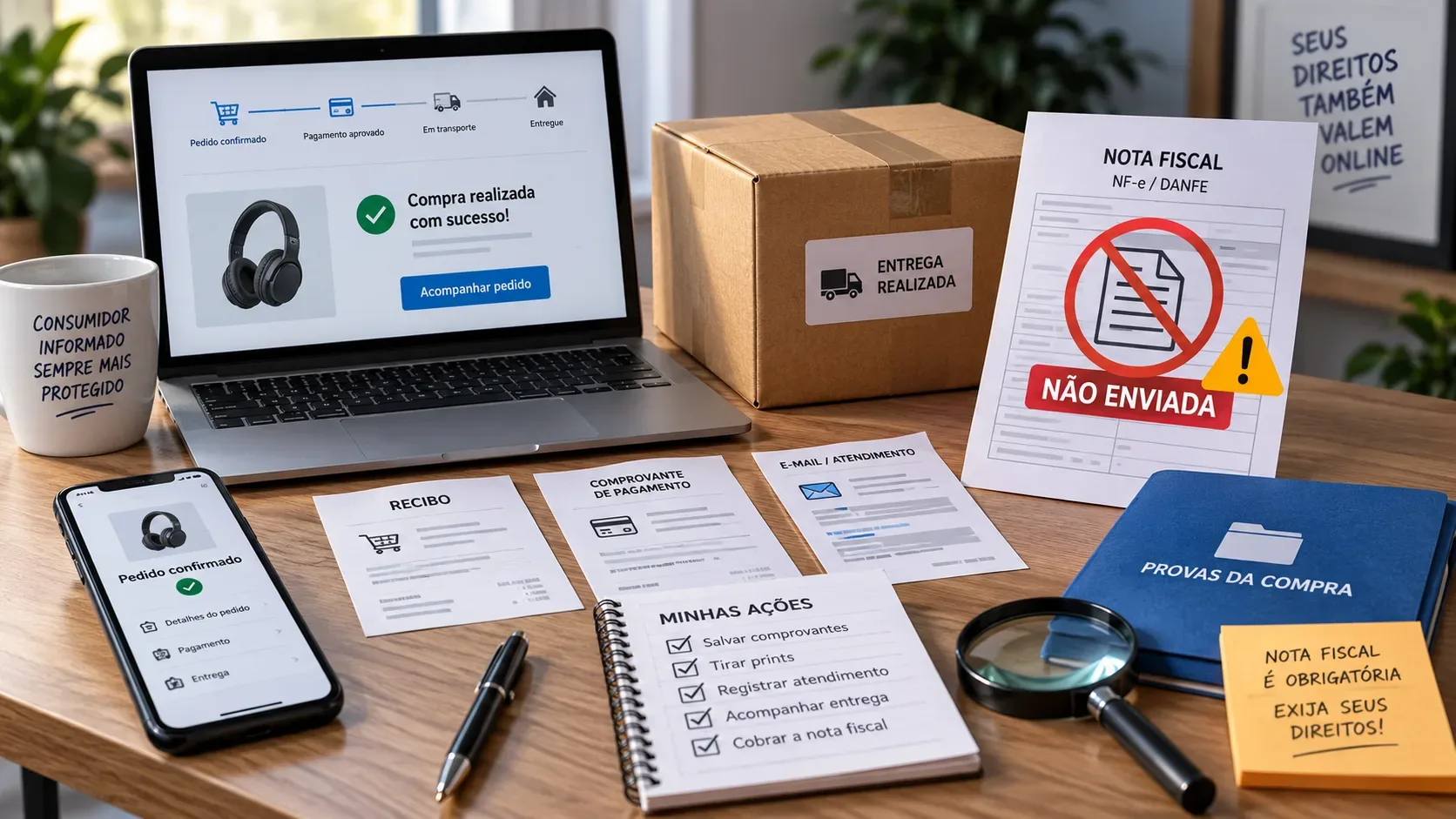
First, preserve evidence: screenshots of the queue, prices and fees shown at each step, error messages, attempted transfers, cancellation requests and customer-service protocol numbers. This helps establish what the consumer saw and when.
Next, contact the supplier and, if the issue is not resolved, use the available consumer-protection channels. Article 23 states that failure to comply with the decree may subject responsible parties to the Consumer Defense Code and its sanctions, without excluding other civil, administrative or criminal consequences that may apply.
Because this is a recent rule with phased effectiveness, a specific dispute may depend on the purchase date, the type of event, the sales channel and other facts. This guide summarizes the general rule and does not replace individualized legal analysis where there is an actual dispute.
In short
Decree No. 13,108 sets a more explicit standard for event-ticket sales in Brazil: virtual queues must be less opaque, prices and fees must be transparent, official ownership transfers must be free, and electronic purchases must have a simple channel for exercising the cooling-off right. The key point right now is timing: some protections have applied since September 1, 2026, while free transfers, the ticket-specific cooling-off rule and other obligations take effect on September 21.