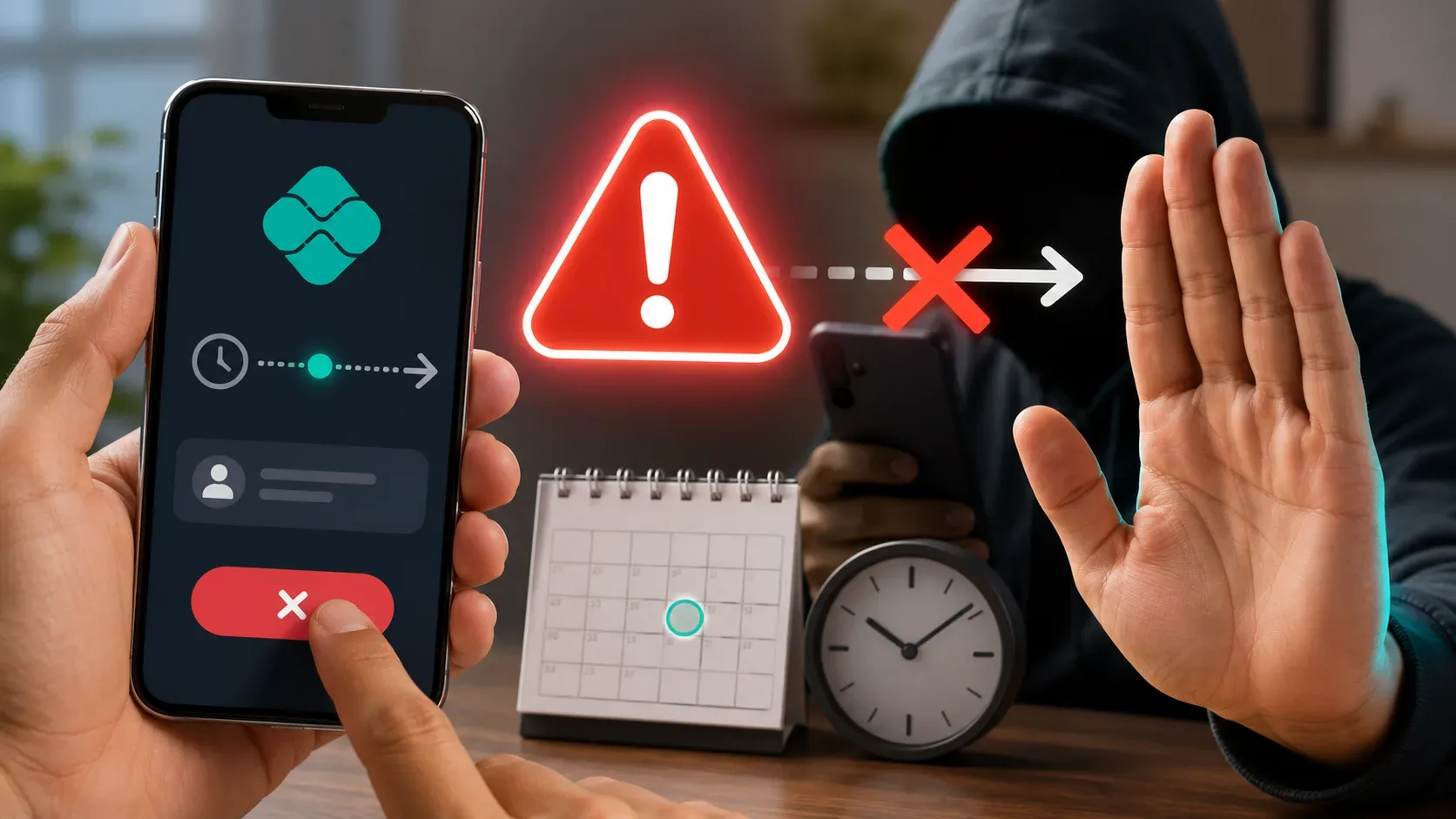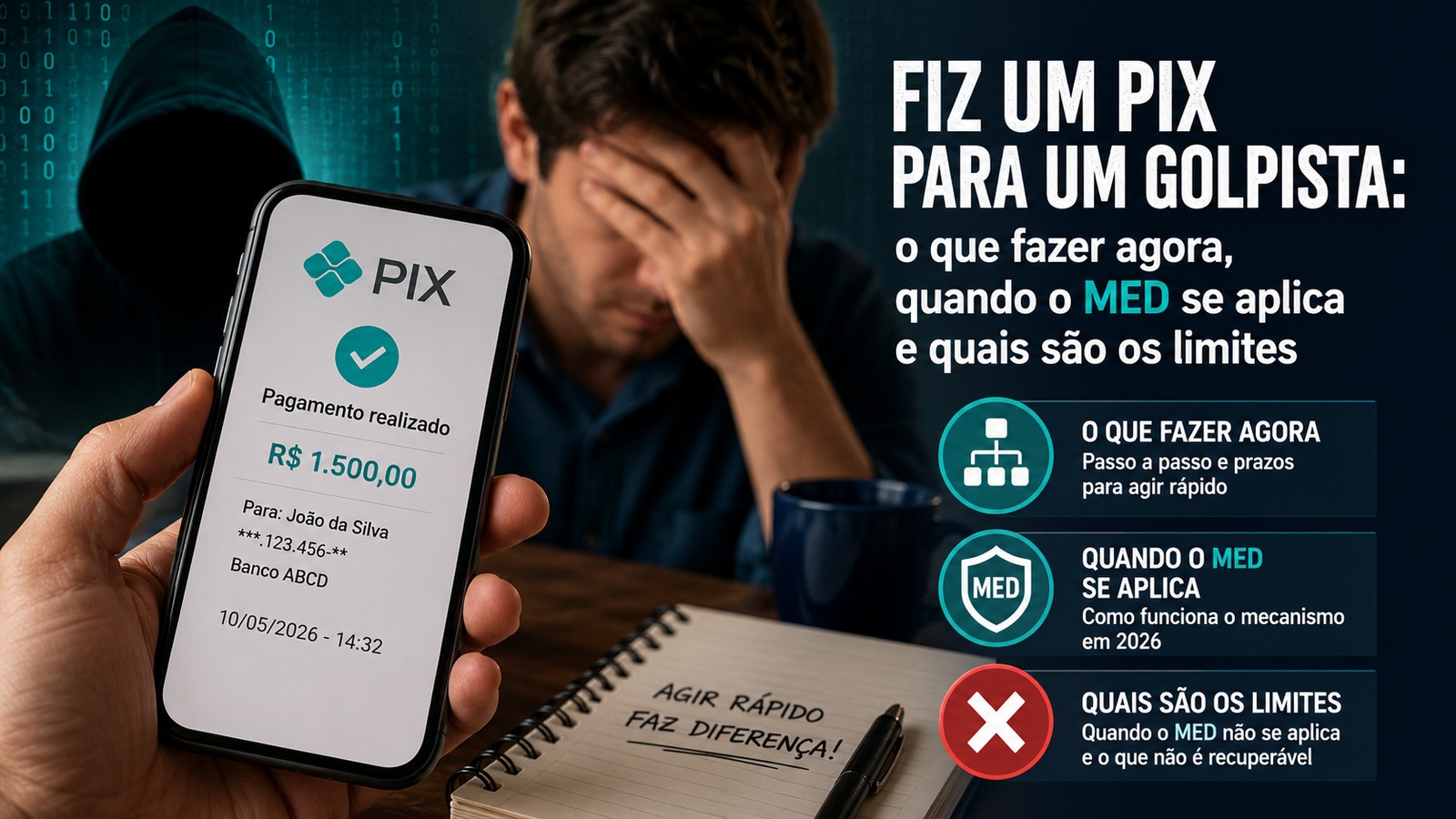
If you have just made a Pix because you fell for a scam, the most important action is to dispute the transaction immediately in your institution's app. If the case involves a scam, fraud, account hacking, fraudulently obtained authorization or coercion, it may enter the Special Return Mechanism, the MED. There is a period of up to 80 days to file a dispute, but it is not a promise of recovery and is not a reason to wait. The sooner the procedure begins, the greater the chance that there are still resources that can be blocked.
MED also does not work as a card chargeback. A Pix sent to the wrong person and a common commercial disagreement follow different paths. In 2026, the mechanism gained the ability to track the dispersion of money across several accounts, but the return continues to depend on the analysis of the case, confirmation of fraud and the existence of a balance in the accounts reached by the recovery flow.
First: identify which situation your Pix fits into
The word “coup” tends to bring together very different situations. Separating them is important because the correct procedure changes depending on what happened.
You were tricked, coerced or had your account compromised
MED is aimed at situations of fraud, scam or crime. The Operating Manual for the Directory of Transactional Account Identifiers, the DICT, uses categories that cover scams, account takeover, coercion, fraudulent access and authorization, and other types of fraud. This includes cases in which the victim themselves confirmed Pix because they were deceived by social engineering. Therefore, having entered the password or used biometrics does not automatically transform a scam into a legitimate payment outside the mechanism.
If the device has been stolen, account hacked or credentials compromised, the Pix dispute must be accompanied by account protection: use the institution's official channels to block suspicious access, change passwords and review authorized devices. These measures do not
replace the MED, but reduce the risk of new transactions.
You sent the Pix to the wrong person
A recipient error is not treated as fraud by MED. The operational manual itself cites the indication of an incorrect account or key by the payer as a situation that does not qualify for a refund due to the bank's operational failure, and the Central Bank's guidance on the dispute button also excludes shipping errors.
In this scenario, contact your institution and, when possible and safe, the recipient to request a refund using Pix's own function. If there is no voluntary return, the problem may require other means of collection or dispute resolution. Filing a fraud dispute for an error you recognize as yours does not convert the case to MED.
The payment was genuine, but there was a problem with the purchase
Not all frustration after a Pix is fraud. Delayed delivery, dissatisfaction with a product, difference in expectations or other contractual conflict that does not reveal fraud on the part of the seller is, as a rule, a commercial disagreement. MED was not created to undo any purchase paid for by Pix.
The border is in the facts. If the supposed sale was part of a deceptive scheme, such as a fake store set up to receive payments without the intention of delivering, there may be fraud and the institution should analyze the situation. If there was a real commercial relationship and the conflict arose later, the appropriate route tends to be customer service, negotiation, Procon, consumer.gov.br or, depending on the case, the judicial route. MED should not be treated as a chargeback guarantee.
What to do now, without wasting time
Dispute the transaction in the app
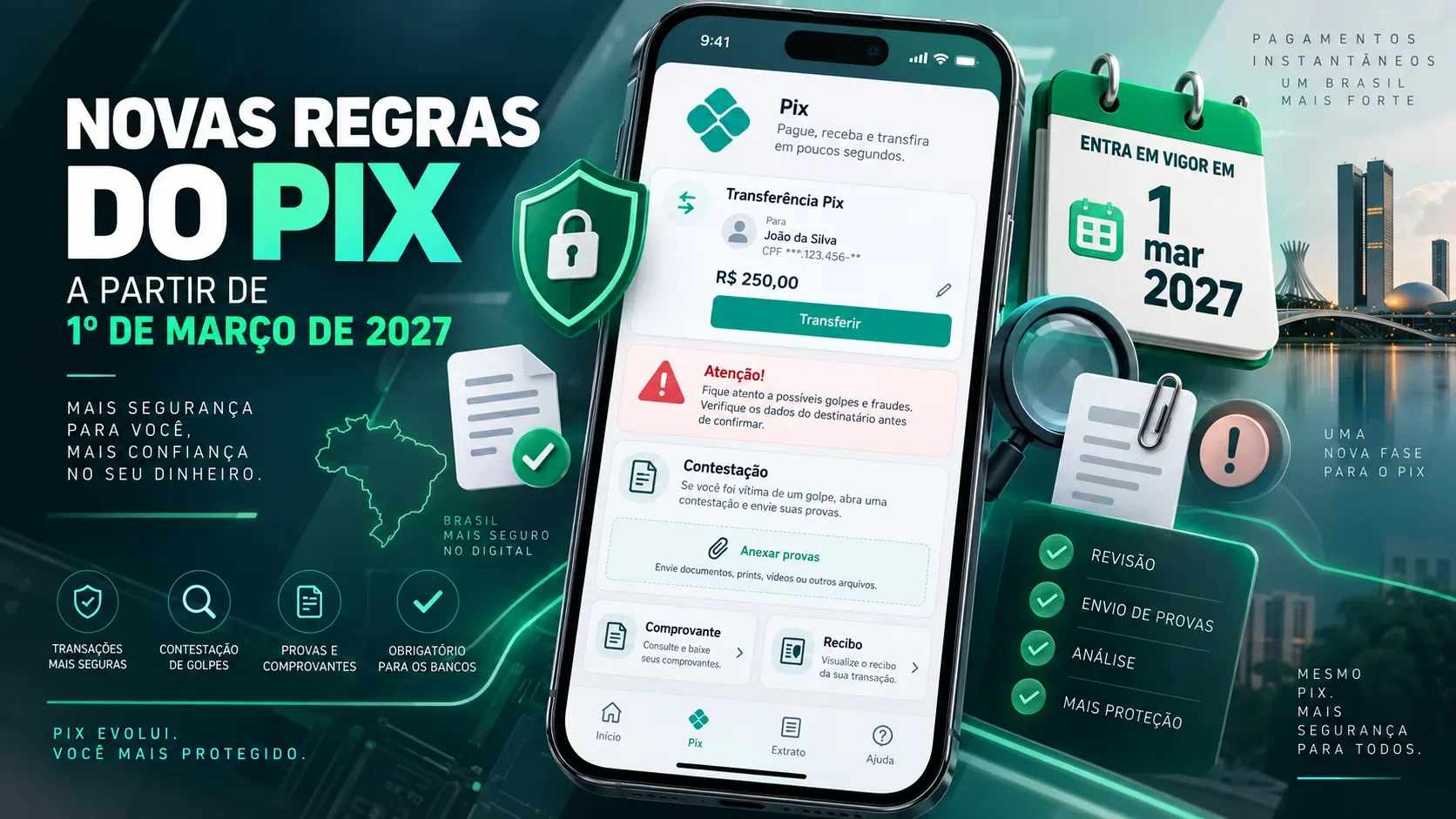
Since October 2025, Pix has had MED self-service, known as the dispute button. For individuals, the journey must be available in the Pix environment of the institution's application, allowing you to register and monitor a dispute related to a scam, fraud or crime.
Look for the transaction on the Pix statement and use the dispute option when it becomes available. Describe what happened objectively and faithfully. Don't wait a few hours to “see if the money comes back”: blocking depends on finding funds still available in the accounts involved.
If the application doesn't resolve the issue, contact the bank's official channels
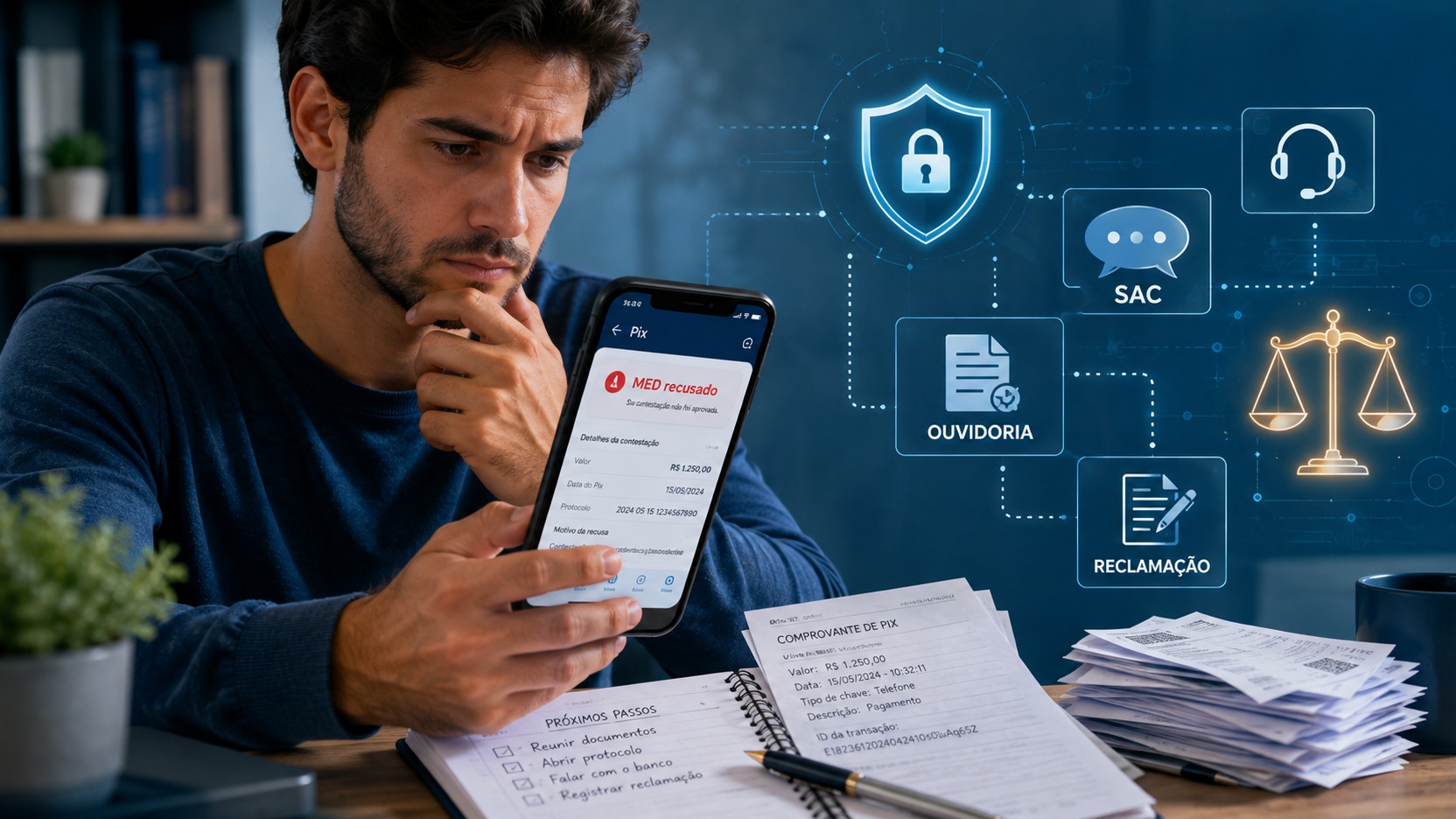
If you cannot find the function, have an error in the application or are unable to complete the request, use SAC or the institution's Ombudsman. Save the protocol number, date, time and channel used. The protocol is important to demonstrate when the problem was reported and to escalate a complaint if service does not follow the expected flow.
Avoid looking for phone numbers in sponsored ads or messages received after the scam. Enter through the official channels of the application, card, institutional website entered by you or documentation you already have. Scammers often exploit the victim's moment of urgency to carry out a second scam.
Record the police report in parallel
The police report formalizes the news of the crime and helps to document the case. Register it as soon as possible, including through the electronic police station when this service exists in your state. Preserve the registration number and documents sent.
Do not use the BO as a reason to postpone the bank dispute. The recovery procedure is time sensitive. First notify the institution and initiate the dispute; in parallel, gather and deliver documents that may be requested during the analysis.
Preserve evidence of the scam
Save the Pix receipt, conversations, emails, advertisements, pages, profiles, phone numbers, displayed data of the recipient, receipts, orders and any message used to induce payment. Make captures that show context, dates and identifiers, not just an isolated sentence.
These records help the bank, police and other bodies understand the dynamics of the case. They also prevent a deleted page, account or conversation from taking important information away.
How the MED works in 2026
The current flow is broader than the old idea of only looking at the account that received the first Pix. The Central Bank informs that, from 2026, the MED will allow the mapping of resources beyond the first receiving account, with the possibility of blocking and refunds from different accounts used in the fraud.
In the DICT, this process is called Value Recovery. It goes through stages of establishment, tracking, prioritization, blocking, analysis and return. The system builds a tracking graph: the disputed transaction is the first layer; transfers made by the first recipient form the second; Outflows from these accounts can form subsequent layers. Then, the mechanism prioritizes the paths considered most likely for the dispersion of money and sends notifications to the institutions involved.
When an institution receives a refund notification in the flow, it must immediately block the requested amount, limited to what is available in the account. This explains why acting fast remains relevant even with multi-account tracking: following the money path improves reach, but does not create balance where the resource no longer exists or cannot be recovered.
What do the 80 days of MED mean
80 days is the maximum period to contest a Pix transaction of the usual type in the Value Recovery flow. The Central Bank's frequently asked questions page also advises that the victim of fraud, scam or crime register the refund request with the institution within 80 days of the date of the Pix.
This number is often misinterpreted. It does not mean that the institution has 80 days to decide whether to act, nor that the victim should wait. It also does not mean that an account will be monitored for 80 or 90 days to capture money that appears in the future. It is a window to open the contestation. The practical chance of blocking tends to be better when the order is placed quickly.
How long the analysis can take
Under the current flow of the DICT, the payment service provider that has received an infraction notification has seven days to report the results of the analysis to the directory. If resources are available and recovery can progress, the recovering participant has up to 72 hours, after the analysis stage, to begin the return stage. If this step is not initiated within the expected period, the DICT may automatically complete the Value Recovery.
These deadlines should not be read as a promise that every case will be closed in a fixed number of days. A recovery may involve more than one account and more than one institution, in addition to analyzing the merits of the fraud and the availability of resources. What the user must monitor is the status of the dispute in the application and the service protocols.
What MED can return, and what it does not guarantee
The return can be total or partial. The DICT manual provides for a “partial acceptance” result when the amount actually returned is lower than requested, a situation that may occur due to a lack of sufficient resources in the recipient's account at the time of return. There is also the possibility of rejection when there is no possible return or when the order was opened improperly.
Therefore, saying that “MED returns the money” is oversimplifying. The mechanism organizes dispute, tracking, blocking, analysis and return when conditions are met. It increases recoverability, but is not insured against zero balance, transfer to destinations that cannot be reached by the flow, account closure, rejection of merit or other operational and legal impediments.
Monitoring rule changed in July 2026
Information still repeated on old pages has become outdated. Version 8.4 of the DICT Operational Manual, dated July 1, 2026, removed the need for the recipient's bank to continue monitoring the account after completing a fraud return request when the return was partial or was rejected due to lack of balance.
In practice, this reinforces two distinctions. The first is that the 80 days are the deadline for opening the dispute, not a monitoring period. The second is that the 2026 MED gained tracking across multiple accounts during the Securities Recovery process, but should not be described as an indefinite search for future deposits after the request has already ended.
This change is also a good reason to be wary of guides that still promise “90-day monitoring” as the current rule. In an operational topic that changes, the current version of the Central Bank manual is more important than an old explanation that remained indexed in the search.
When MED is not the right way
Pix sent by mistake is the most direct example. If you entered or chose the wrong key and knowingly confirmed the transfer, there is no fraud on the part of the recipient just because of the error. The bank can advise on attempted returns, but this does not transform the event into a Recovery of Values by scam.
The same goes for commercial disagreements that do not constitute fraud. The dispute button is not a resource to undo a purchase due to regret, common delay, divergence of expectations or contractual dispute. If there is evidence that the sale itself was a fraud,
describe these facts to the bank; If there is none, use the consumer solution channels or the corresponding legal route.
It is also important not to create a scam narrative to try to recover a legitimate Pix. MED involves analysis by institutions and markings in the Pix ecosystem. A dispute must state exactly what happened.
If the bank does not handle the dispute correctly
Maintain all protocols and use the institution's Ombudsman when initial assistance does not resolve the issue. You can also file a complaint through the Central Bank channels, remembering that the BC supervises institutions, but does not function as an individual court that automatically determines the return of your Pix.
Depending on the problem, Procon and consumer.gov.br may be useful for the consumer relationship. If there was a crime, the police record and investigation continue in parallel. In material losses, complex situations or negative situations that you consider undue, individual legal advice may be necessary to evaluate other measures and responsibilities.
The practical decision for those who have just fallen for the scam
If there was fraud, scam, coercion or account compromise, dispute Pix now through the app and contact the bank through official channels if necessary. Keep protocols, preserve evidence and record the police report in parallel. Don't wait for the 80-day period to end and don't count on automatic returns.
If it was just a Pix for the wrong key, look for the institution and try to get a refund from the recipient, without treating the case as fraud. If there is a real business dispute, check whether there are facts that point to a fraudulent scheme or whether the issue is contractual. This classification is what separates a case that can enter the MED from another that needs to follow a different route.
The rules described here consider the operation of the MED and DICT in force in August 2026, including version 8.4 of the DICT Operational Manual and multi-account tracking implemented in 2026.