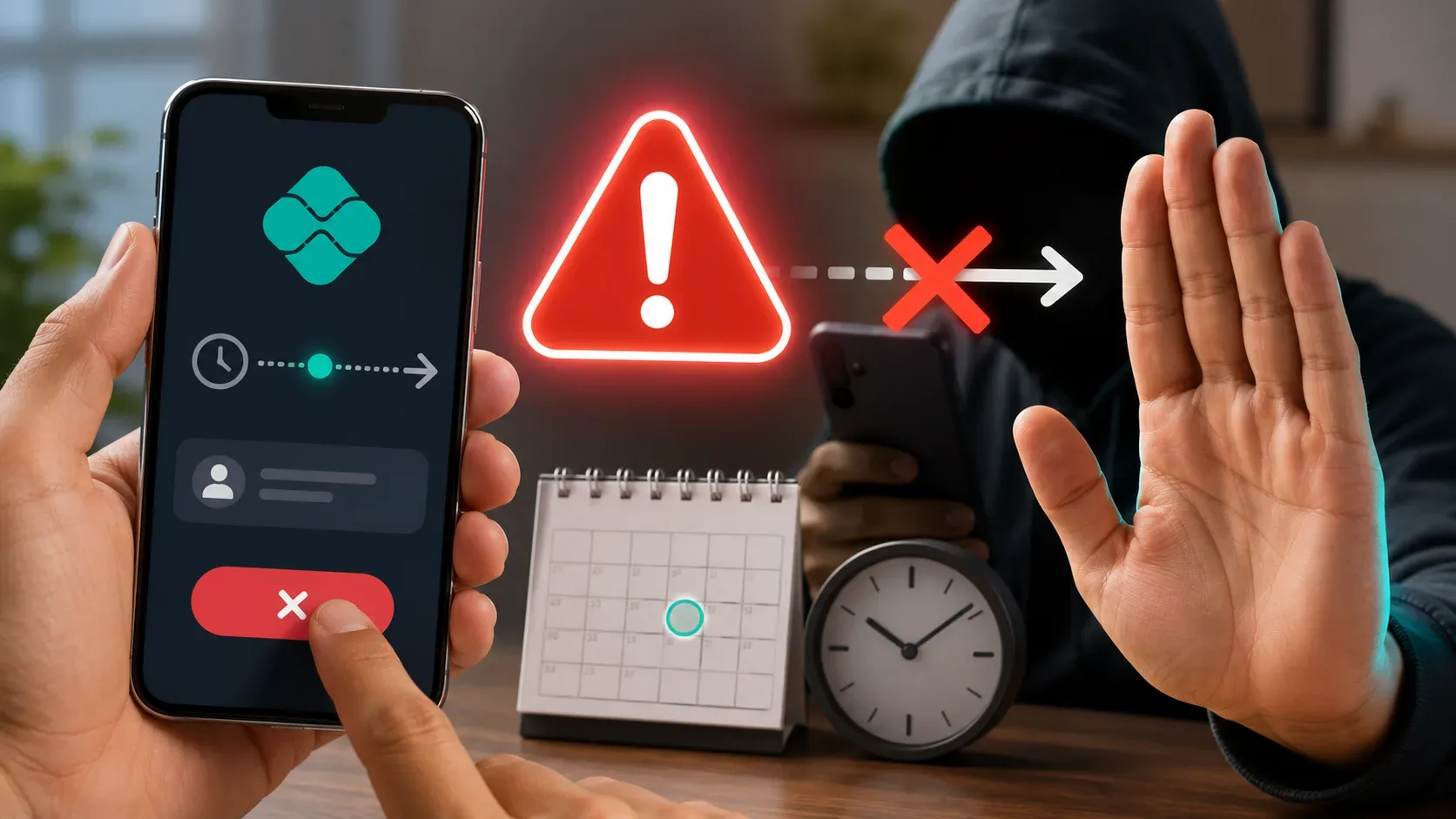
If you scheduled a Pix payment and realized it was a scam before the chosen date, the priority is to cancel the schedule before there is a completed transfer to dispute. Under Brazil's Central Bank rules, the payer's payment service provider must cancel a scheduled payment order when the customer requests cancellation by 11:59 p.m. on the day immediately before the settlement date. In practical terms, if the Pix is scheduled for Wednesday, the regulatory deadline is Tuesday at 11:59 p.m.
This distinction is crucial. While the Pix is still only scheduled, the money has not yet been transferred and the normal route is to cancel the schedule. If the order has already been executed and the case is actually fraud, a scam or a crime, the issue becomes recovering the money through the Pix Special Refund Mechanism (MED).
If the Pix is still scheduled for a future date
Open the app or online banking service of the institution where the Pix was scheduled and look for scheduled Pix payments, future payments or scheduled transactions. Menu names vary by bank, but the goal is the same: locate the specific transfer and request cancellation before the end of the day preceding execution.
- Cancel the schedule, not just your conversation with the suspected scammer. Blocking the person in a messaging app does not change a payment order that is already scheduled at your bank.
- Do it by 11:59 p.m. on the previous day. Within that deadline, Pix rules require the payer's institution to cancel the order when the customer requests it.
- Confirm the result with the bank. After requesting cancellation, check that the transaction now appears as canceled and keep the receipt or record.
- Review other scheduled payments. If the scam led you to set up more than one transfer, check the full list so no other order remains pending.
The Central Bank also warns that a scheduled Pix receipt does not mean the money has already been transferred: the funds only move on the scheduled date. This distinction helps both payers and recipients determine whether there is merely a schedule or an actually completed transaction.
What changes once the scheduled day arrives
The regulatory cancellation deadline ends at 11:59 p.m. on the previous day. Therefore, once the settlement date arrives, the standard cancellation window has already closed, even if the debit is not yet visible in your account statement.
In this situation, check the transaction status immediately and contact the institution if it still appears as pending or scheduled. Do not treat the temporary absence of a debit as proof that cancellation is still available: the rule requiring cancellation at the customer's request applies through the previous day.
If the status already shows completed, debited or sent, there is no longer a scheduled order to cancel. If it was a scam, the next step is to dispute the completed transaction.
If the Pix has already gone through and it was a scam
Once the money has been transferred, act as quickly as possible through your institution's official channel. The Central Bank instructs victims to report the scam and request the return of the funds. For cases that qualify as fraud, a scam or a crime, the institution records the report and triggers the Special Refund Mechanism (MED).
- Dispute the transaction in your bank's app. Institutions must make MED activation available through their apps. If you cannot find the option, contact the institution immediately through an official support channel.
- State clearly that the transaction involved fraud or a scam. The victim's bank records the case in the MED flow, and the recipient's institution blocks available funds linked to the case.
- Follow the case while it is reviewed. According to the Central Bank, the institutions assess the case within up to 7 calendar days. If fraud is confirmed, the refund is made within up to 96 hours after the assessment ends, in full or in part depending on the funds recovered.
- File a police report in parallel. The Central Bank recommends reporting the incident to the police when you are a scam victim.
A MED refund request can be filed within 80 days of the Pix transaction, but that deadline is not a reason to wait. The sooner you dispute the payment, the better the chance that funds are still available to be blocked and returned.
MED does not guarantee an automatic refund. The review must classify the case as fraud, a scam or a crime, and the amount recovered depends on funds that can be located and blocked.
When MED is not the right route
MED was designed for fraud cases and also covers operational failure under specific rules. It is not a mechanism for an ordinary commercial dispute, and it should not be used simply because you sent a Pix to the wrong person due to your own typing error or choice of key. In those situations, contact your institution and the recipient to try to arrange a return without calling it fraud when no scam occurred.
What to do based on the Pix status
| Status you see | What it means | Main action |
|---|---|---|
| Scheduled for a future date | The transfer has not been settled yet | Cancel the schedule by 11:59 p.m. on the previous day |
| The execution date has arrived, but it still appears pending | The standard regulatory cancellation deadline has already passed | Check the status and contact the bank immediately; do not rely on cancellation as a right within the deadline |
| Completed/debited and you were scammed | The money has already been transferred | Dispute it immediately and trigger MED; file a police report in parallel |
| Completed, but it was a wrong-key error without fraud | A transfer occurred, but it was not necessarily a scam | Contact the bank and recipient; MED is not the mechanism for the payer's own error |
What evidence to keep
Even if you cancel before execution, preserve the history. Keep the scheduled payment receipt, cancellation record, date and time, recipient details shown by the bank, and messages or ads used in the scam. If the Pix was executed, also save the transaction receipt and the dispute protocol. These records help document the sequence of events for the bank and, if needed, for the police or consumer-protection authorities.
The decisive question is whether settlement occurred
If you spot the scam before the scheduled date, the best-case scenario is to act while the payment is still only scheduled: cancel it by 11:59 p.m. on the previous day and confirm that the order was actually removed. If the scheduled date has already arrived, treat the case as urgent because the standard deadline has ended. If the money has already left your account, stop looking for a “cancel scheduled payment” button: dispute the transaction as fraud and activate MED immediately.