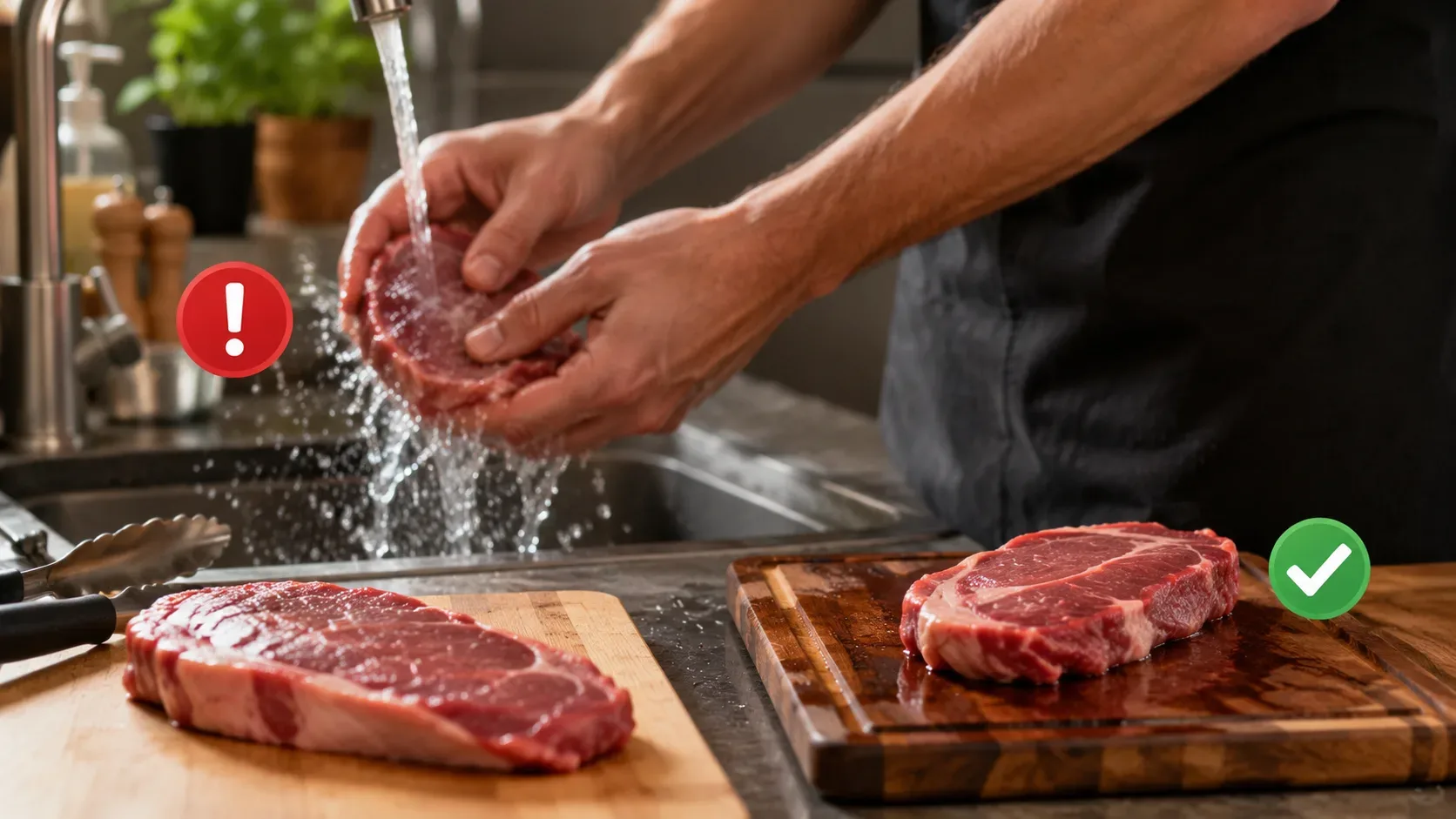
When barbecuing, two apparently harmless habits can transport microorganisms from raw meat to food that is ready to eat: washing the meat in the sink and continuing to use the same cutting board, knife or dish without cleaning it.
The safest guideline is simple: raw meat does not need to be washed before being cooked and everything that comes into contact with it must remain separate from ready-made foods or be properly sanitized before being used again. Anvisa advises that washing meat with water does not remove microorganisms and can spread them through water that runs or splashes.
Why washing meat can spread the problem
Putting meat under the tap can give the impression that the food is being cleaned. From a microbiological point of view, however, water does not fulfill this role.
According to Anvisa, splashes can carry bacteria onto countertops, sponges, dishes, other foods and other points close to the sink. The agency emphasizes that this applies to chicken, turkey, red meat and fish. Even soaking meat in a bowl, while it may lessen spatter, does not eliminate the possibility of spreading germs.
The correct logic is different: avoid spreading possible microorganisms during handling and apply adequate cooking to the food. Washing the piece before seasoning or roasting adds a step that can contaminate the kitchen without making the meat safer.
At a barbecue, this deserves attention because the sink and countertop are usually surrounded by other items: tomatoes for the vinaigrette, bread, cheese, farofa, plates, cutlery and containers that may not go through another cooking stage.
The same board can carry microorganisms from raw to ready
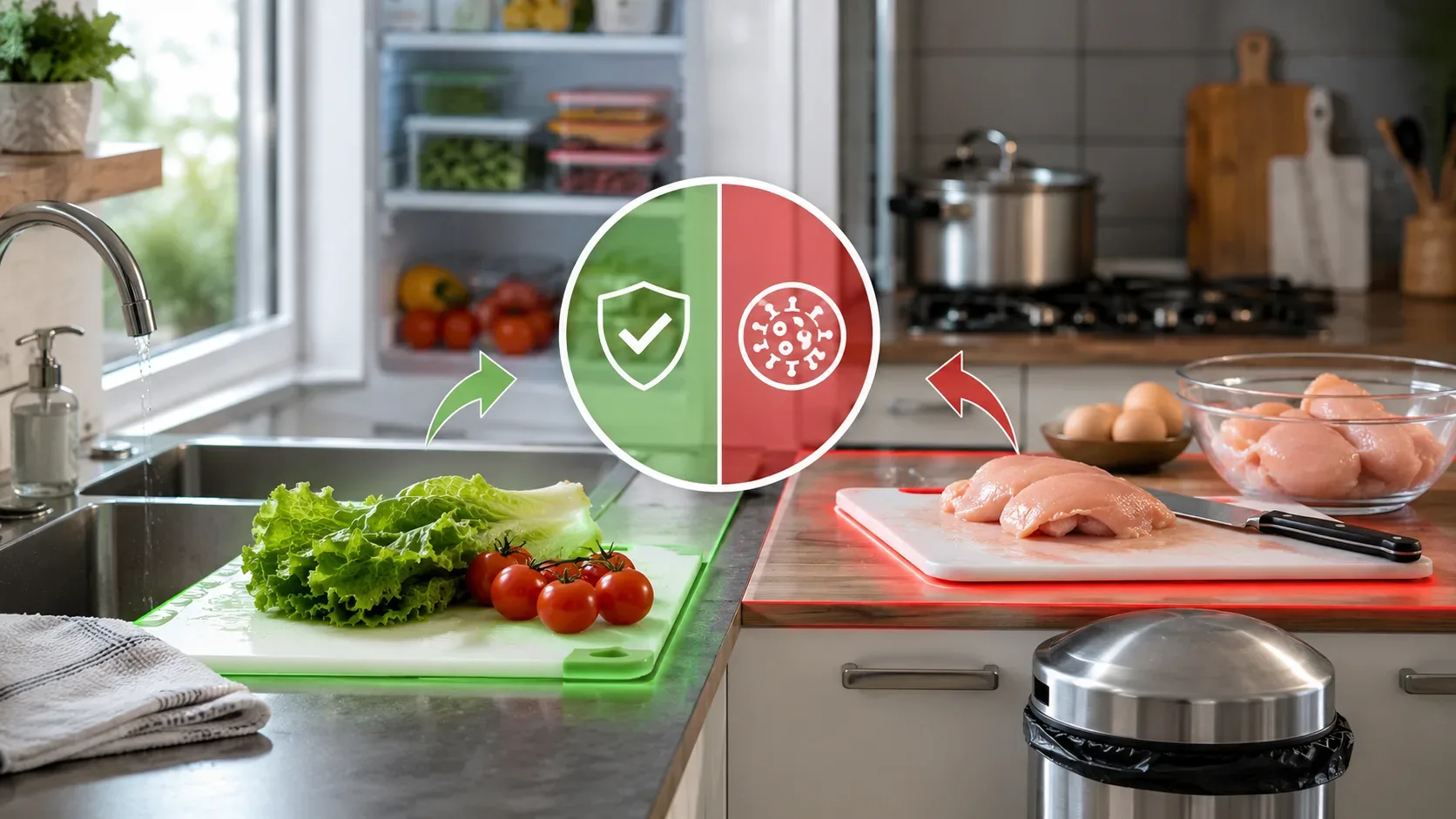
Cross contamination occurs when microorganisms pass from one food, surface, hand or utensil to another food.
The Ministry of Health specifically warns that bacteria present in raw beef, pork and poultry can contaminate knives, cutting boards and other utensils. Without adequate hygiene, these objects can later contaminate other foods.
This creates a common barbecue situation: the person cuts or seasons the raw meat on a cutting board, takes the pieces to the barbecue and, some time later, uses the same surface to slice the already roasted meat.
The problem isn't just that the board looks dirty. A surface that has been in contact with raw meat should be treated as part of the raw food flow until sanitized.
The same reasoning applies to the knife, tongs, plate or platter. The FDA, the United States health authority, recommends keeping raw meat separate from other foods, using separate cutting boards when possible, and never placing cooked food in a container that has received raw meat without washing it.
There is still an important difference: fire can reduce the microbiological risk of the meat being cooked, but it does not resolve contamination that has already been transferred to bread, a salad, a vinaigrette or other food that will be consumed without further cooking.
How to organize a barbecue without mixing raw meat and ready-made food
It is not necessary to transform the kitchen into a professional environment. What helps is creating a flow in which raw food does not make its way back to utensils and surfaces reserved for what is already ready.
- Organize the area before opening the meat. Separate the containers that will receive raw meat and those that will be used for roast meat, bread, salads and side dishes.
- Take the meat from the packaging to preparation without washing it. Avoiding it in the sink reduces the unnecessary opportunity to spread microorganisms through spills.
- Reserve a cutting board and utensils for raw meat whenever possible. After use, wash cutting board, knife and other utensils before using them on cooked or ready-to-eat foods. Anvisa recommends cleaning household items with soap and water.
- Use a clean platter for the meat that comes off the barbecue. Do not return the roasted food to the plate or container that carried the raw cuts without first sanitizing it.
- Wash your hands when switching from raw to ready. Touching raw meat and then immediately picking up bread, salad, cutlery or a clean plate recreates the same contamination path that was tried to avoid with separate cutting boards. Health authorities also recommend sanitizing hands and surfaces during preparation.
The advantage of this arrangement is that safety does not depend on trying to remember which side of the cutting board was used or which dish previously received the meat. The flow itself separates what is still raw from what can already be served.
What if there is only one board?
Having two boards makes it a lot easier, but the lack of a second doesn't mean you have to mix up the steps.
In this case, a practical solution is to first prepare the foods that will be consumed without cooking, such as the vinaigrette ingredients, remove them from the work area and only then move on to the raw meat. Before changing the type of food, the board must be washed well. After working with raw meat, it needs to be sanitized again before receiving any ready-made food. This sequence is also recommended by the FDA when two boards are not available.
Using different sides of the same board, in itself, does not replace hygiene. Edges, hands, knife and bench remain part of the manipulation.
The simplest precaution is to block the way back
At a Father's Day barbecue, the central point is not to add complicated procedures, but to prevent what touched the raw meat from finding ready-made food again without a cleaning step.
The meat goes from the packaging to its preparation area and then to the fire. The roast meat goes on a clean board or platter. Breads, salads, farofa and other side dishes are outside the raw meat circuit.
And the sink doesn't need to be part of the meat's path. The fewer opportunities there are to transport microorganisms between food, hands, utensils and surfaces, the lower the risk of cross-contamination during grilling.