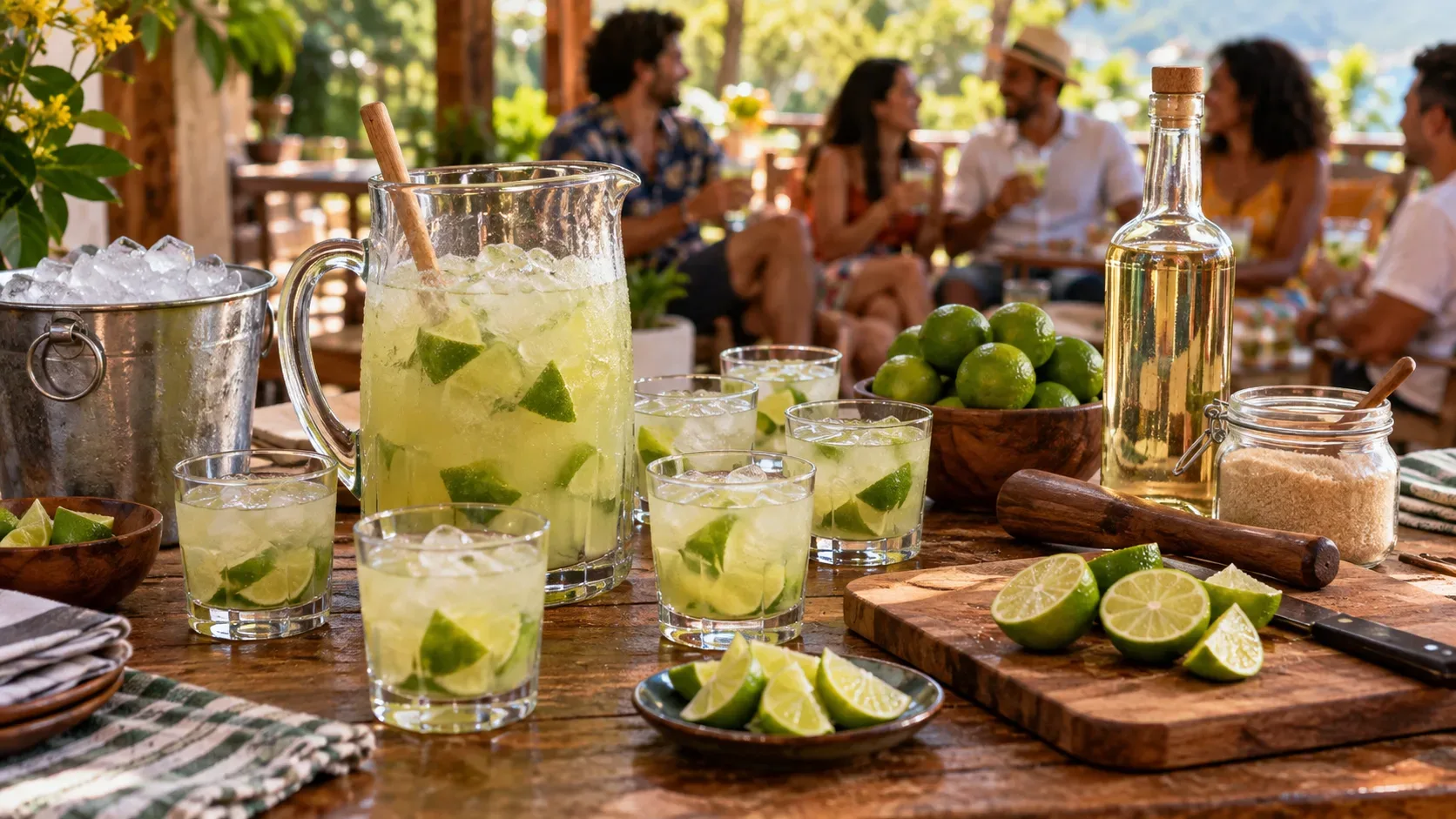
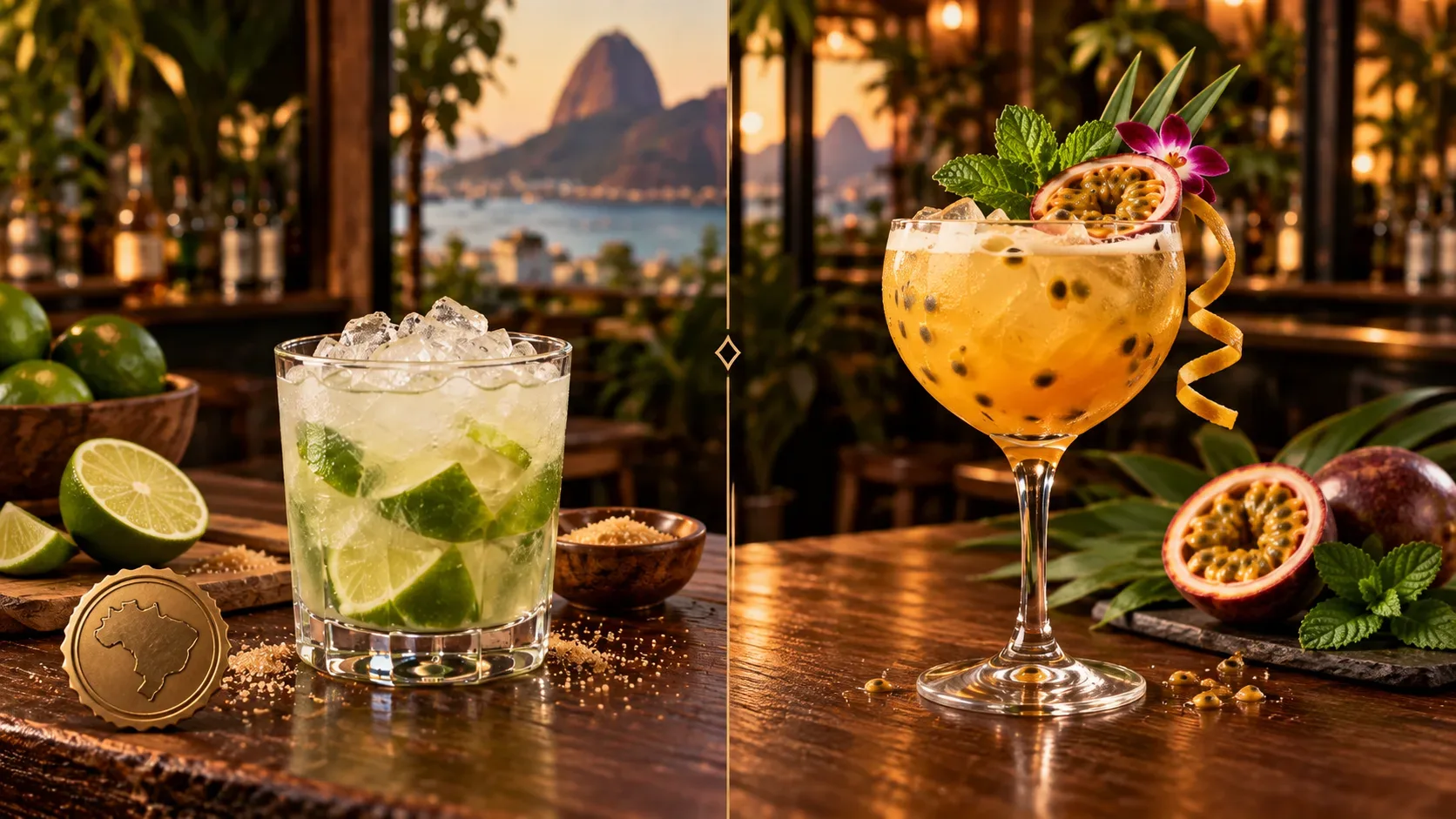
A caipirinha is not simply “any cachaça drink with fruit.” Under Brazil’s current federal framework, the word has a specific regulatory identity: Decree No. 12,709/2025 defines the industrialized caipirinha as a typical Brazilian beverage with 15% to 36% alcohol by volume at 20 °C, made with cachaça, lime and sugar. The same decree defines a mixed alcoholic beverage or alcoholic cocktail far more broadly, as a mixture of an alcoholic beverage with other beverages or permitted ingredients.
This creates two conversations that are often mixed together. One is the legal identity of industrialized products, relevant to registration, composition and sales denomination. The other is the drink prepared at a bar, where culinary freedom is greater and, in several food-service situations, product registration with Brazil’s Ministry of Agriculture and Livestock (Mapa) is waived. The practical boundary, therefore, is not “creativity forbidden versus recipe allowed”; it is knowing when a recipe still reproduces the core of a caipirinha and when it should be described transparently as a variation or another cocktail.
What Brazilian law calls a caipirinha today
The starting point is Decree No. 12,709 of October 31, 2025, which revoked the former Decree No. 6,871/2009 and, for most provisions, took effect upon publication on November 3, 2025. Article 74 states that caipirinha is a typical beverage of the Federative Republic of Brazil, industrialized, with 15% to 36% alcohol by volume at 20 °C, made with cachaça, lime and sugar.
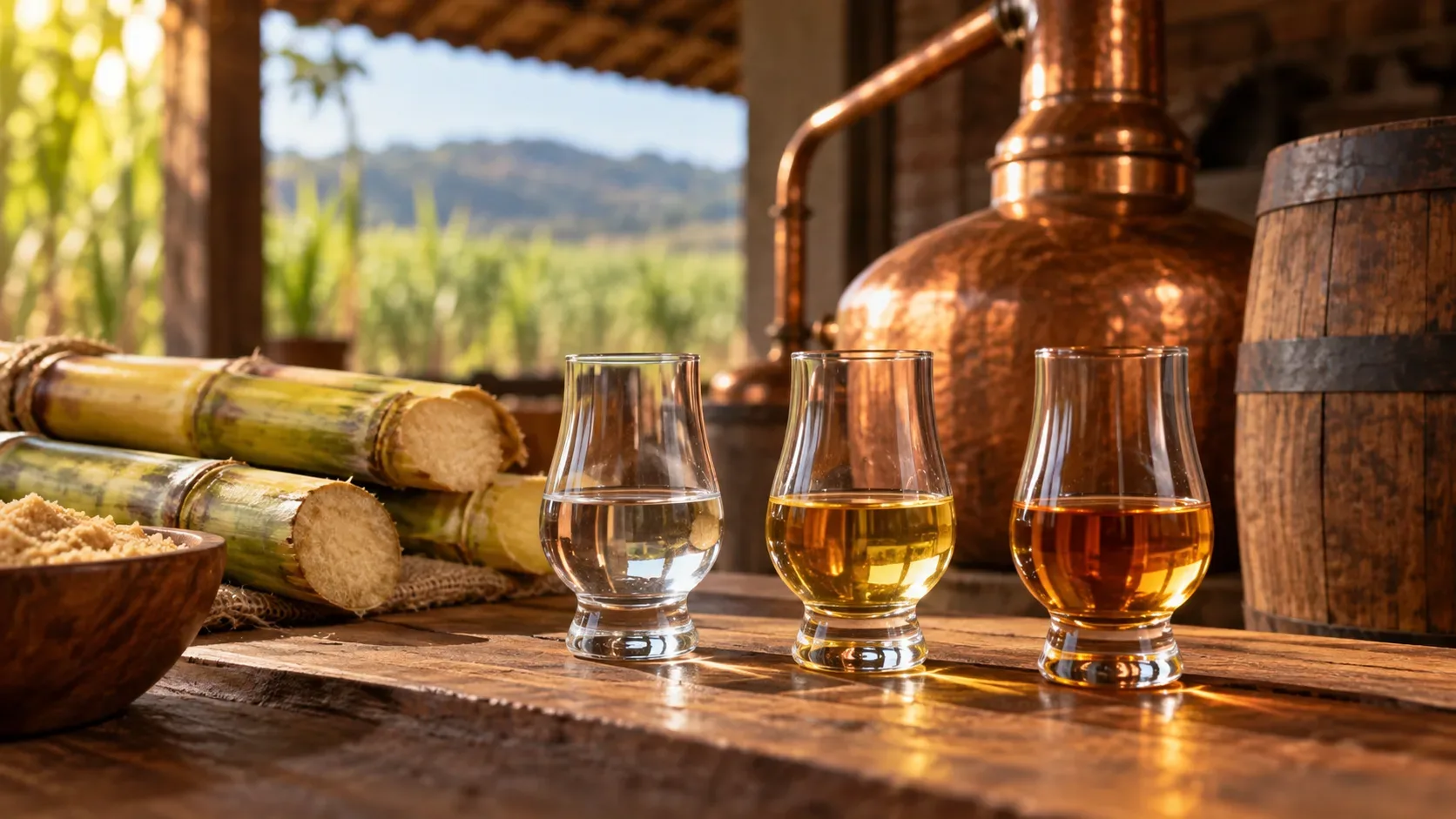
The same decree defines cachaça in Article 54 as the typical and exclusive denomination of sugarcane spirit produced in Brazil, with 38% to 48% alcohol by volume at 20 °C and its characteristic sensory profile. In other words, replacing the base with vodka, rum or sake is not a legally irrelevant substitution: cachaça is part of the caipirinha’s legal identity.
Mapa continues to list caipirinha and alcoholic cocktail among beverages governed by specific regulatory standards and still references MAPA Normative Instruction No. 35/2010 as a complement to the identity and quality standards for mixed alcoholic beverages. That technical rule further details industrialized caipirinha, including parameters for sugar, lime, water used for alcohol standardization and other production requirements. For most readers, the central point is simpler: the identity core remains cachaça + lime + sugar, subject to the technical limits applicable to an industrialized product.
A cachaça cocktail is a much broader category
Article 73 of Decree No. 12,709/2025 defines “mixed alcoholic beverage,” “alcoholic cocktail” or “cocktail” as a beverage containing 0.5% to 54% alcohol by volume at 20 °C, made by mixing an alcoholic beverage with another alcoholic beverage, a non-alcoholic beverage, an animal-origin ingredient or another authorized ingredient, separately or together.
In practice, this means a product can be completely legitimate and interesting as a cachaça drink without being a caipirinha. A cachaça drink with passion fruit, liqueur, syrup, vermouth, tea, coffee or another complementary base may belong to the cocktail universe. The exact regulatory classification of an industrialized product depends on the full formula, alcoholic strength and registration, so it is not accurate to claim that every variation automatically “becomes a cocktail” without examining the composition.
Why the industrial rule is not a straitjacket for bars
There is a decisive difference between an industrialized product placed on the market and a beverage prepared for immediate consumption in food service. In guidance updated in 2026, Mapa states that products prepared by bars, restaurants, snack bars and other food-service establishments may be exempt from product registration when they are produced, packaged and sold directly to the final consumer at the same location, with an indication that they should be consumed within one day after preparation.
This does not mean that an establishment can call any mixture “caipirinha” without care. A registration waiver does not turn a vodka-and-strawberry drink into a caipirinha under the federal definition, nor does it remove the duty to inform consumers. Article 31 of Brazil’s Consumer Protection Code requires offers and presentations of products and services to provide correct, clear and precise information, including composition.
For a bar, the clearest editorial and commercial approach is straightforward: use “caipirinha” for a recipe that preserves the cachaça, lime and sugar core; when there are material changes, state clearly that it is a caipirinha variation or a cachaça cocktail, and identify the ingredients that change the experience.
Still a caipirinha, a variation, or another cocktail?
| Recipe change | At the bar | Regulatory reading for an industrialized product |
|---|---|---|
| Cachaça, lime and sugar; only the ice style, lime cut or muddling technique changes | Still a caipirinha in the classic culinary sense. | The identity core remains the same; alcoholic strength and technical standard requirements still apply. |
| Switching between refined and crystal sugar or adjusting the amount of sugar | Still a caipirinha, as long as the recipe core is preserved. | MAPA Normative Instruction No. 35/2010 details the permitted sugars and limits for the industrialized version. |
| Using brown sugar, demerara, honey or another sweetener as a signature element | It becomes a bar variation; the menu should make the difference clear. | Automatic classification as industrialized caipirinha should not be assumed; the formula must be checked against the technical standard. |
| Keeping cachaça, lime and sugar but adding passion fruit, berries, herbs, syrup or another prominent ingredient | “Caipirinha variation” can be a useful culinary description if the addition is disclosed. | A relevant additional ingredient may move the product away from the standardized caipirinha identity and require another classification. |
| Replacing lime with passion fruit, strawberry, pineapple or another fruit | It is better described as a cachaça cocktail or given its own name. | It does not meet the “cachaça, lime and sugar” composition in Article 74. |
| Replacing cachaça with vodka, sake, rum or another spirit | It is not a caipirinha under the legal definition, even if the market uses derivative names such as “caipiroska.” | The alcoholic ingredient that defines caipirinha is absent. Classification then depends on the new formula. |
| Adding another alcoholic beverage, such as liqueur or vermouth, in a meaningful proportion | It is an original cocktail or a clearly identified variation. | It may fall under mixed alcoholic beverage/alcoholic cocktail, depending on composition and alcoholic strength. |
What a “legal definition” actually protects
The purpose of a legal definition is to keep a traditional denomination meaningful in standardized products. If an industrialized beverage may be sold as “caipirinha,” the consumer has an objective expectation: cachaça, lime and sugar, plus the technical parameters of the standard. That predictability supports inspection, registration and comparison between products.
Cocktail bars operate with a different logic: technique, balance and creativity. The law does not prevent a bartender from inventing a cachaça drink with other ingredients. The care point is the name and the information given. The farther the recipe moves from the cachaça–lime–sugar trio, the more useful it is to stop presenting it as a “standard caipirinha” and describe it for what it is: a reinterpretation, a variation or a cachaça cocktail.
Three quick tests for reading a menu
- What is the alcoholic base? If it is not cachaça, it no longer matches the federal definition of caipirinha.
- Is the citrus lime? If lime has been replaced by another fruit, the composition falls outside the industrialized legal standard.
- Are there ingredients that change the drink’s identity? Liqueur, another alcoholic beverage, syrup, additional fruit or strong aromatics may turn it into a culinary variation or require a different classification when industrialized.
These tests do not replace regulatory analysis of a commercial product, but they help consumers distinguish tradition, menu naming and legal category.
In short
Caipirinha is a name with a legal definition in Brazil, but the current rule expressly refers to the industrialized beverage. In that context, cachaça, lime and sugar are the required core, with 15% to 36% alcohol by volume and complementary technical requirements. Alcoholic cocktail is a much broader category.
At a bar, creative freedom is greater and many drinks prepared for immediate consumption are exempt from Mapa product registration. Transparency still matters: a recipe that replaces cachaça, removes lime or adds ingredients that clearly change the profile should not be presented as though it were the same thing as the standardized caipirinha. The best menu preserves tradition when it is in the glass and owns the creativity when the recipe chooses to depart from it.
Official sources
- Decree No. 12,709/2025 — Planalto: current definitions of cachaça, alcoholic cocktail and caipirinha.
- Mapa — Standardized products and regulatory references: current references for caipirinha, cocktails and complementary standards.
- Mapa — Wine and Beverage Legislation: official listing of MAPA Normative Instruction No. 35/2010 and amendments.
- Mapa — Beverage product registration: registration-waiver situations for food-service establishments.
- Brazilian Consumer Protection Code: duty to provide correct, clear and precise information in offers.