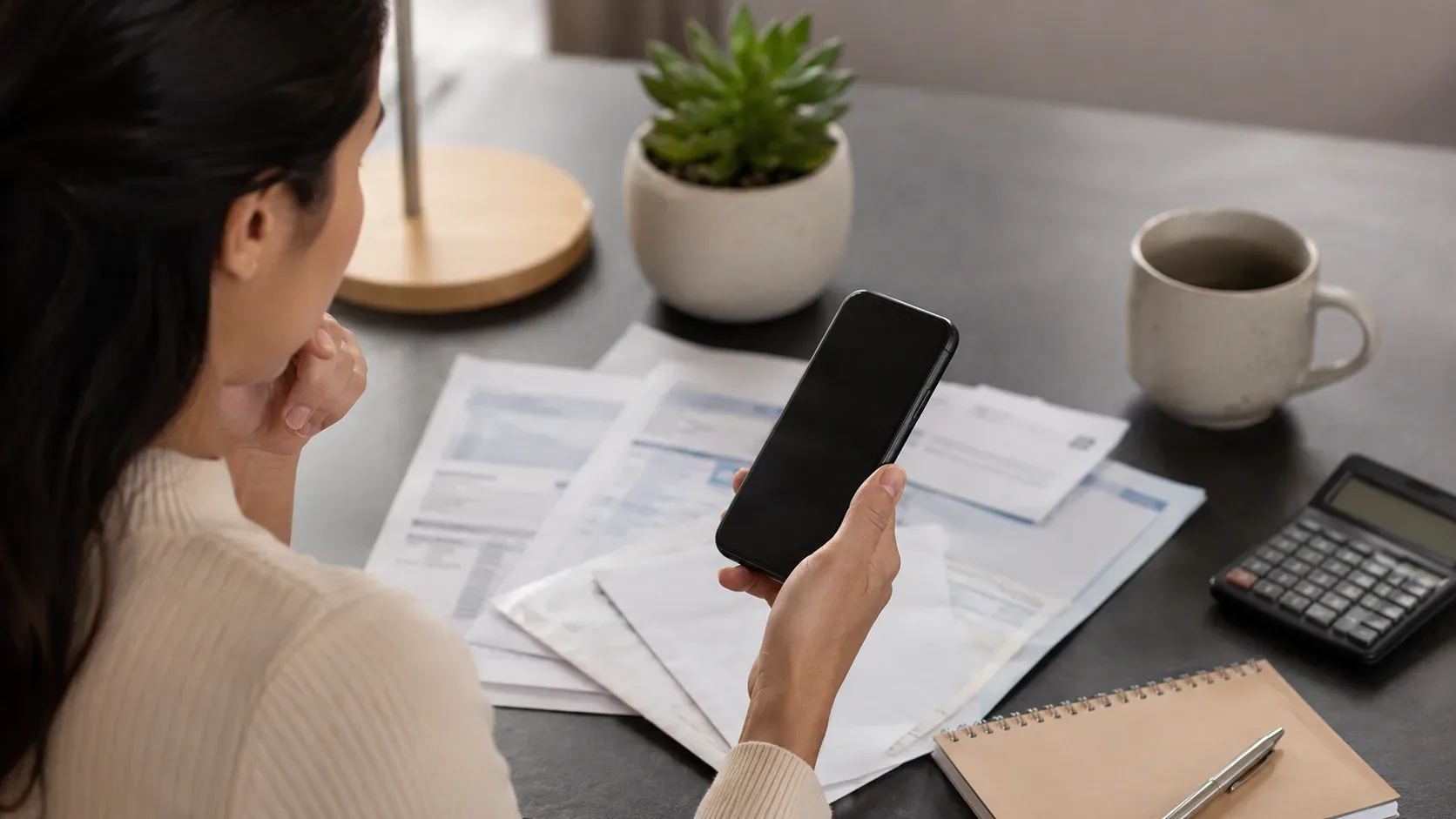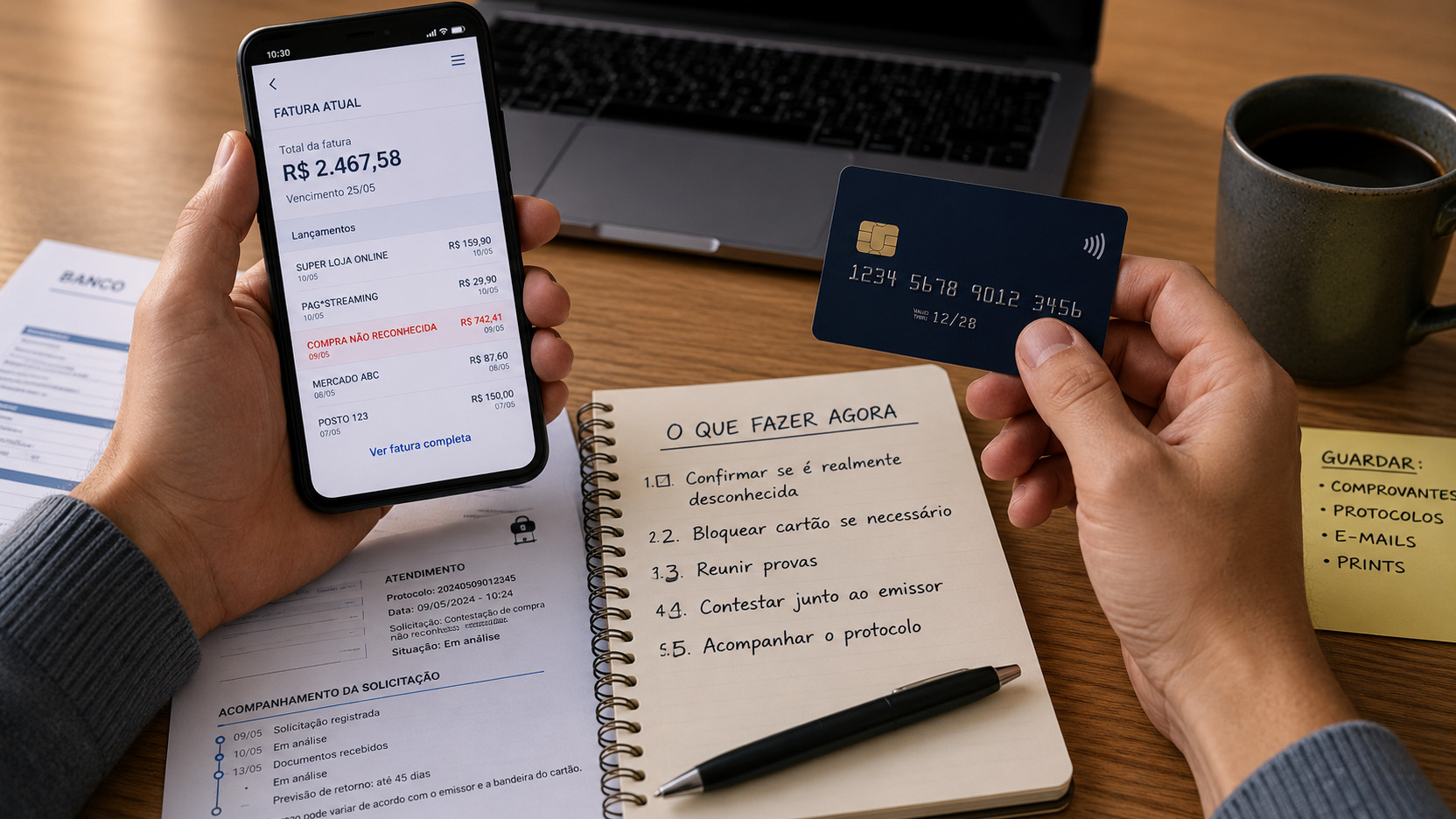
A purchase that you don't recognize on your invoice could simply be a different merchant name, a forgotten legitimate charge, or a transaction that wasn't actually authorized. The path changes in each case. Therefore, the best reaction combines two things: quickly confirm what the charge is and, if there is a sign of fraud, contact the issuer without delay to avoid new transactions.
The Central Bank advises that, in the event of an unrecognized purchase, the customer must immediately contact the bank or issuer to report the case and dispute the transaction. This contact must be made through the institution's official channels. If the suspicion of fraud arose via a call, message or email, do not use the telephone or the link received to resolve the problem; open the official app or look for the number published by the issuer itself.
Strange name or unknown purchase?
Before marking a transaction as fraud, compare the date, value, currency, location and possible installments with purchases that you, an authorized additional person or someone in your family have made. On some cards, the name displayed on the invoice is the company name, the name of a payment intermediary or an abbreviation that does not match the brand seen in the store. Inter, for example, warns in its help center that the name on the invoice may be different from the establishment and recommends checking the value and date before disputing.
It's also worth checking subscriptions, free periods that turned into charges, automatic renewals, applications, digital services and old orders that were only processed later. If the operation is still just pending, it may be a temporary authorization; in this case, consult the issuer about how that entry is handled before assuming that there has already been a definitive charge.
If you recognize the purchase but disagree with the result
When you made the purchase, but the product did not arrive, came differently, the service was not provided or there was another commercial problem, the case is not the same as a purchase made without your authorization. Many issuers treat this as a commercial disagreement and may require a prior attempt at a solution with the establishment, in addition to specific documents. Choosing the correct reason in the objection reduces the risk of the process being analyzed using inappropriate criteria.
If you recognize neither the purchase nor the context
If the value, date, establishment and history do not make sense to you, treat it as possible misuse. Don't wait for the invoice to close to act. Check for other unknown transactions, including small amounts, and use the blocking feature available in the app when recommended by the issuer. In some banks, a dispute due to an unrecognized purchase already causes the card to be blocked and a new copy to be issued; in others, the flow may be different.
Immediate actions to contain the problem
Card blocking and dispute are related steps, but they are not the same thing. Blocking or replacing the card helps prevent new attempts with the same data, while disputing opens the process on the already launched transaction. If the application allows it, register the dispute by posting the invoice itself and save the protocol. If it doesn't allow it, use the issuer's chat, center or other official channel.
If there is evidence of improper access to the bank account or the application, and not just the card data, also review the access credentials through the institution's official mechanisms. Do not provide a password, authentication code, token, full card number or security code to someone who has contacted you saying they need to cancel their purchase. The Central Bank warns that criminals use the story of the suspicious purchase to trick the victim into handing over data or installing remote access applications.
The Central Bank also recommends filing a police report in parallel when the person has been a victim of fraud. The bulletin does not replace the dispute at the bank and should not be treated as a universal requirement for all issuers, but it can be useful for documenting what happened and can be requested or considered in later stages, as appropriate.
What to keep as evidence
Start by saving a capture of the transaction with as much detail as the application shows: name displayed, value, date, time if applicable, launch status and any additional data. Also keep the invoice on which the purchase appeared, confirmation or alert messages, order emails, proof of legitimate purchases close in time and any information that helps demonstrate why that operation does not correspond to your behavior or a recognized purchase.
If you spoke to the establishment to clarify a business name, keep the response. If you opened a dispute, record the protocol number, date, channel used, reason selected and documents sent. If the card has been blocked or replaced, please keep the confirmation. If there is a reversal or provisional credit, save the invoice on which it appeared and the entry description. This history makes a difference if the analysis lasts more than one invoice cycle or if there is a later relaunch.
The required documentation varies. Itaú informs that it can request documents during the analysis, and other issuers have their own requirements. Therefore, it is not efficient to assemble a huge generic dossier before opening the case. The best thing is to preserve the evidence that already exists from the beginning and respond quickly if the institution requests a supplement.
Deadlines vary between issuers
The dispute and analysis deadlines depend on the issuer, the reason given and the stage of the process. Furthermore, the deadline for opening a dispute is not the same thing as the deadline for the bank to complete the analysis. This difference explains why seemingly contradictory numbers can all be correct within different rules.
On the official pages consulted in August 2026, Inter informs you that you have up to 45 days from the date of purchase to dispute a credit transaction not recognized by the application. Itaú informs a period of 90 days from the date of purchase for this type of dispute. Banco do Brasil, when explaining the unrecognized purchase analysis phase, informs that it normally takes around 60 days from the opening of the incident or validation of the documents. They are different clocks and should not be turned into a universal rule.
The practical consequence is simple: open the case as soon as you confirm that the transaction is unknown and, in the same service, ask what is the deadline applicable to your product, when the countdown starts, what can suspend or restart the analysis and through which channel you will receive updates. If the information is not in the application, ask for it to be recorded in the protocol or in a written message.
How to track credit, refund and relaunch
Opening the dispute does not necessarily mean that the value disappears definitively at that moment. Some issuers may issue a provisional credit while they investigate. Itaú, for example, informs that in some cases it makes this provisional reversal and that the value can be relaunched if the brand or establishment concludes that the purchase was due. Therefore, do not treat a temporary credit as closing the case until you receive the final decision.
When monitoring the invoice, look for three separate pieces of information: the status of the dispute, the treatment given to the amount in that cycle and the final decision. If there is a credit, check that it exactly compensates for the transaction in question. If the purchase is made in installments, check how the issuer handled future installments. If a relaunch appears, compare the date, description and value with the analysis closing communication.
Is the disputed amount included in the payment?
This is one of the parts where ready-made rules should be avoided the most. The procedure may vary depending on the issuer and what happened to the invoice after the dispute was opened. Itaú, for example, informs that, while the purchase is being analyzed, the amount must be paid normally and that non-payment may generate charges. In other flows, there may be provisional credit that changes the balance actually due.
Therefore, do not reduce your invoice payment on your own just because you opened a dispute. Before deciding the amount to pay, check the updated invoice and confirm with the issuer, preferably in writing in the application, chat or protocol, how the questioned amount should be treated in that cycle. If the institution issues a new invoice, credit or formal guidance, keep this evidence. This confirmation avoids turning into a dispute.
late purchase, interest, unwanted installments or other credit problem.
If the appeal is denied
A negative should not be treated just as a final status without explanation. Ask for justification and confirm the basis: did the institution understand that the purchase was authenticated, identified a link with a known establishment, received documentation from the merchant or considered that the correct reason would be a commercial disagreement? Knowing the reason is essential to decide whether there is new information that could change the analysis.
If there is a factual error, a document that was not considered or incorrect framing, present the dispute objectively in the channel indicated by the issuer and maintain the previous protocols. If common assistance does not resolve the issue, contact the institution's ombudsman. The Central Bank's complaints service can also be used against supervised institutions, but the BC itself clarifies that it does not decide the individual contractual conflict; the complaint helps supervision and is responded to by the institution. To attempt a consumer solution, there are also Consumidor.gov.br, when the company participates in the platform, and Procons.
How to close the case without creating another problem
The most common mistake is to treat every strange charge as the same thing. First, find out if the problem is just the identification of the establishment, a purchase you made that went wrong or a truly unauthorized transaction. Then, contain the risk using the issuer's official channels and preserve records. Finally, follow the process until the final decision, without assuming that the deadline, provisional refund or invoice payment rule are the same on all cards.
If the amount is relevant to your budget, if there are several transactions, if the institution denies the case despite consistent evidence or if there is a risk of the invoice being late, it is worth seeking individual guidance from a professional or consumer protection agency before making an irreversible financial decision.