If a Facta Seguradora policy appears linked to your CPF, the first question is not whether the Susep precautionary measure “canceled” the insurance. On September 9, 2026, the regulator imposed a precautionary measure that prevents Facta Seguradora from entering into new insurance contracts, including through other channels or intermediaries, while stating that contracts regularly entered into before the measure remain valid. The insurer is still required to serve policyholders, adjust and pay claims, and process requested cancellations.
The same decision introduced consumer-protection measures connected to findings from a supervisory inspection, including issues involving proof of consumer consent. Susep ordered communication to the policyholder base so that unrecognized contracts can be disputed and provided for double reimbursement in certain situations. Because the measure is preventive and may be reassessed, it is not the same as a final finding of liability against the company. Check the official Susep publication about Facta for any updates.
What changed for people who already have or find a Facta policy
In practice, the suspension needs to be separated into two situations. If you already had a regular contract before September 9, 2026, the policy does not disappear because of the precautionary measure. For new sales, Susep stated that Facta Seguradora may not enter into new insurance contracts while the measure remains in force.
| Situation | What to do |
|---|---|
| You recognize the purchase | Treat the policy as an existing contract: check its term and coverage and use the insurer’s channels for service, a claim, or cancellation. |
| You do not remember the insurer, but recognize a related product | Review the policy and product documents. There may be co-insurance or insurance purchased together with another service, such as a card or financing. |
| You do not recognize the purchase and did not authorize the insurance | Ask the insurer for an explanation and proof of the purchase, keep reference numbers, and, if the issue is not resolved, file a complaint on Consumidor.gov.br. If the lack of consent is confirmed, Susep guidance also provides for a report to the regulator. |
| You recognize the contract but have a claim or cancellation problem | Do not confuse an operational dispute with “insurance I never purchased.” File the request through the appropriate channel and preserve documents and reference numbers. |
How to check policies linked to your CPF
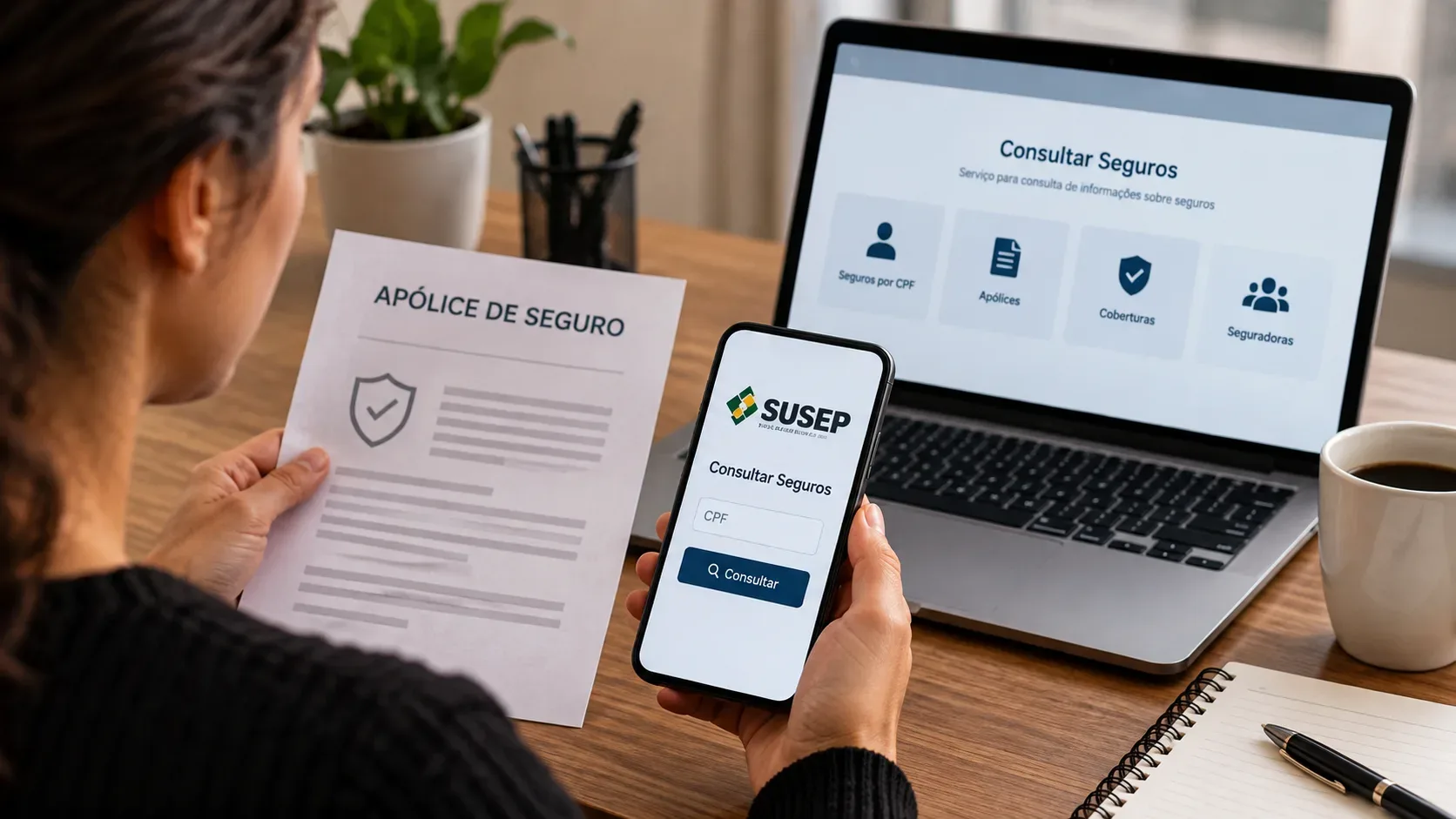
The official route is the Consultar Seguros service, supplied by Susep’s Operations Registration System. Access is personal and requires a CPF and a Silver- or Gold-level GOV.BR account. After authentication, the system displays basic information on insurance policies in which you are listed as the insured person.
- Open the official “Consultar Seguros” page on GOV.BR and choose the option to start the service.
- Sign in with your own Silver- or Gold-level GOV.BR account.
- Review the records linked to your CPF and look for the insurer’s name, coverage period, and other information shown.
- If Facta Seguradora appears, save or note the information needed to compare it with contracts, bank statements, pay slips, proposals, or certificates you may have.
- If anything differs, contact the insurer before concluding that the insurance was purchased improperly.
No search result does not prove that no insurance exists
The system has limitations that need to be considered. The official page says that it only shows insurance for which the user is listed as the insured person, not beneficiary information. Some operations are also not yet available in the search, including health plans and health insurance, open private pension products, capitalization products, insurance outside its coverage period, and operations from companies participating in the regulatory Sandbox.
Susep also warns that insurance purchased less than seven business days earlier may not appear. Therefore, if you are looking for a recent contract or a product outside the scope of the system, the absence of a result should be treated as a limitation of the search, not definitive proof that no policy exists.
What to check before disputing a policy
Finding an insurer you do not immediately recognize does not automatically mean fraud or a purchase without consent. Susep itself lists possibilities that deserve verification: there may be co-insurance, in which more than one insurer shares the same risk, or insurance purchased together with another product or service.
- Compare the insurer name in the system with the name on the policy, certificate, or proposal.
- Review credit, card, financing, or other contracts with which insurance may have been offered.
- Check bank statements and pay slips for a premium, debit, or deduction linked to the insurance.
- Ask the insurer for copies of the purchase documents and, where applicable, the record of consent or acceptance it relies on to support the contract.
- Keep screenshots of the search, dates, policy or certificate numbers, and all service reference numbers.
This step helps distinguish three different problems: a contract you recognize but want to cancel; an unresolved claim or service issue; and a contract you say you never authorized. The complaint route and useful evidence are not identical in all three situations.
How to dispute insurance you do not recognize
Susep’s official guidance for unrecognized charges or insurance starts with contacting the responsible insurer. Ask it to explain the origin of the purchase and present the elements it relies on as proof of consent. Record the service reference number and avoid making the dispute only by phone without keeping evidence of the interaction.
If the insurer does not resolve the issue, Susep recommends filing a complaint on Consumidor.gov.br. In the insurance-search FAQ, the regulator points to the issue category “Apólice com dados divergentes no sistema de registros da Susep” for situations in which the consumer believes the insurance was purchased without consent. Susep’s complaints page states that the complained-against company’s ombudsman has up to 10 days to review and respond on Consumidor.gov.br.
When a purchase without consent is confirmed, Susep also advises filing a report with the regulator so that administrative measures may be considered. An individual consumer complaint and a regulatory report serve different purposes: the former seeks to address the consumer’s problem, while the latter communicates a possible regulatory violation.
When the precautionary measure mentions double reimbursement
The September 9 decision does not mean that every Facta policyholder will automatically receive double reimbursement. Susep said the measure applies to certain policies issued in breach of applicable rules, including situations involving minors, and also to cases in which the insurer fails to present valid proof of the consumer’s consent to the purchase.
If you do not recognize the insurance, submit the dispute in a documented form and request a specific answer about the origin of the purchase, proof of consent, and amounts charged. The existence of charges, number of installments, and period of deductions should be demonstrable through statements, pay slips, or receipts. Because the precautionary measure may be reassessed and each case depends on the contract records, follow the official publication and the insurer’s formal response before treating reimbursement as an amount already acknowledged.
If the policy is legitimate, claims and cancellations still continue
For contracts regularly entered into before the precautionary measure, the insurer’s obligations were not suspended. Susep expressly stated that Facta remains responsible for serving policyholders, adjusting and paying claims, and processing cancellations when requested.
This means that a policyholder who recognizes the contract should not interpret the suspension of new operations as a reason to abandon an indemnity claim or assume that the policy ceased to be valid. Likewise, someone who wants to cancel a recognized contract should request cancellation through the proper channels and keep the reference number instead of characterizing the purchase as unrecognized.
What evidence is worth keeping
For a well-documented dispute, organize records chronologically. This makes review easier for the insurer, Consumidor.gov.br, and, if necessary, Susep.
- a screenshot or record of the official search showing the policy information;
- the policy, certificate, proposal, or contract you received;
- bank statements, bills, or pay slips showing charges or deductions;
- SAC, customer-service, and ombudsman reference numbers, with date and a summary of the request;
- responses received by email, app, letter, or another official channel;
- an explicit request for proof of consent when the purchase is disputed.
Avoid sending sensitive personal documents to contacts found only on social networks, ads, or unsolicited messages. To handle the dispute, use the company’s official channels and the public services indicated by Susep.
Practical sequence of official channels
- Consultar Seguros: confirm whether there is a record linked to your CPF and note the available data in the official service.
- Insurer: request explanations, purchase documents, cancellation, or claim handling according to the actual problem.
- Consumidor.gov.br: if there is no adequate solution, file a complaint. Susep directs individualized complaints against supervised companies to this platform.
- Susep: if a purchase without consent is confirmed, follow the guidance for a report to the regulator. For questions about the service or a complaint about Susep’s own actions, the Fala.BR channels are also available.
The key point is not to confuse the precautionary measure with automatic cancellation of the entire portfolio. First identify the policy and the nature of the problem; then choose the appropriate channel and preserve the evidence. For cases involving significant amounts, recurring deductions, or a dispute over consent, human review of the documents is recommended.