
Ser vs estar in Spanish: how to choose by meaning instead of “permanent vs temporary”
Learn when to use ser or estar in Spanish by sentence function, state, location, and meaning shifts with adjectives.
Read articleSpanish vocabulary, regional differences, false friends, expressions and grammar explained for Portuguese speakers.
Learn when to use ser or estar in Spanish by sentence function, state, location, and meaning shifts with adjectives.
Read article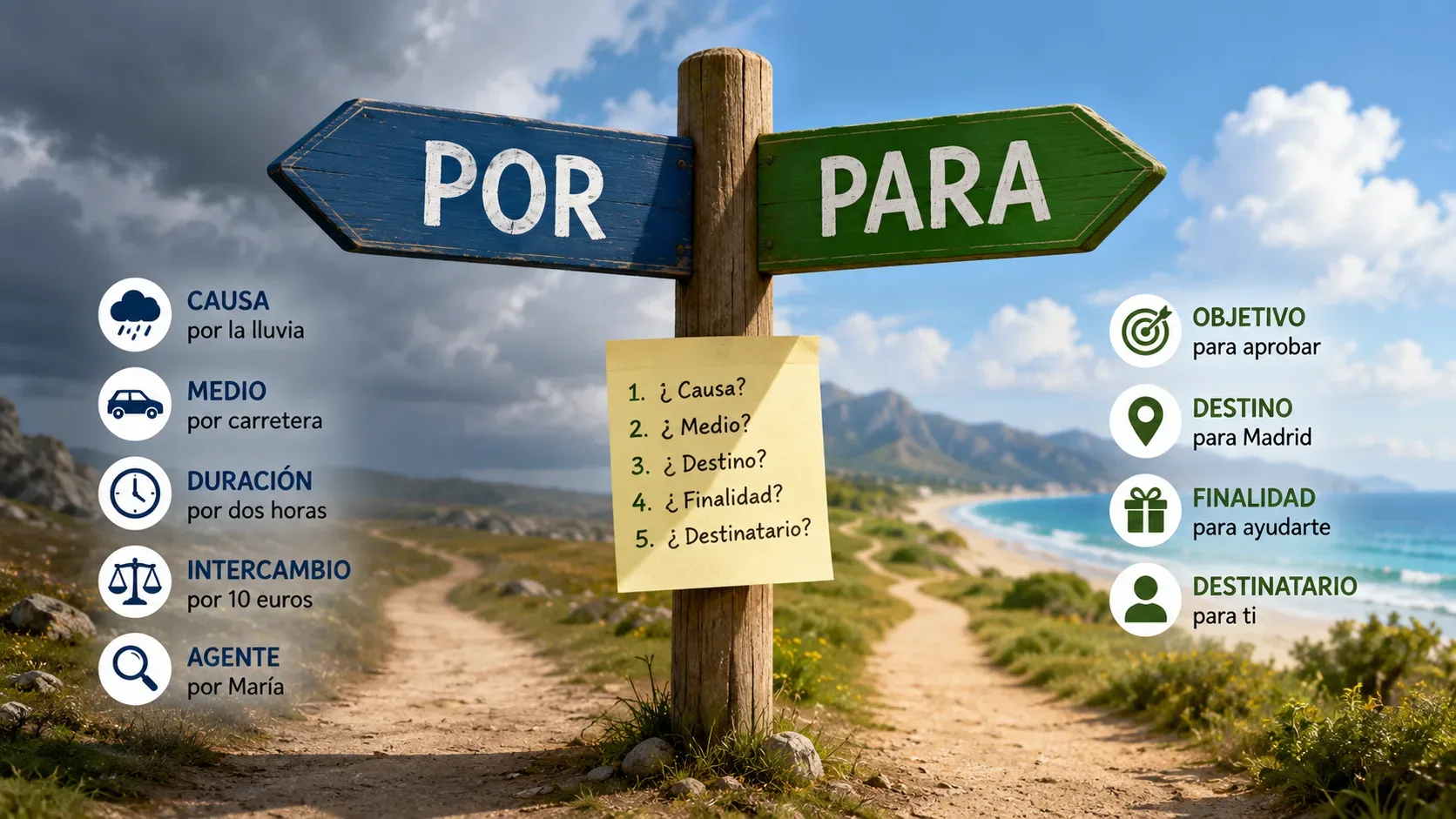
Use cause, means, destination, recipient, and purpose to choose between por and para in Spanish, with pairs that show how the meaning changes.
Read article
Portuguese “assistir” changes translation with the situation. Learn when Spanish uses ver, mirar, asistir a and presenciar.
Read article
“Vocês” can become ustedes, vosotros, or vosotras. The choice depends on the variety of Spanish, the degree of formality, and the agreement required by the sentence.
Read article
Learn to distinguish definition, identification, and choice when using qué and cuál, understand the case before a noun, and avoid a rule that breaks down between Spain and the Amer...
Read article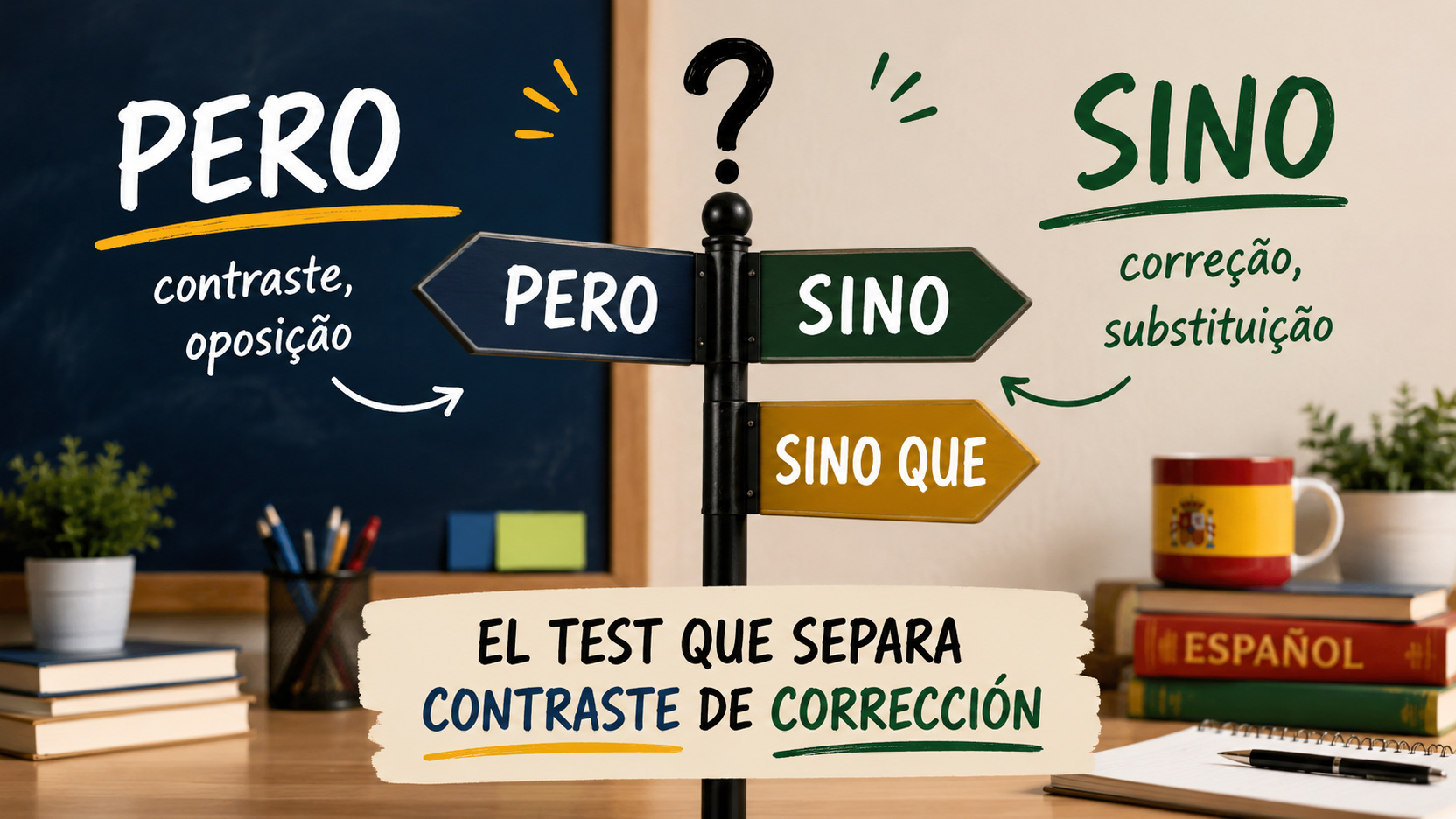
Learn to choose between pero, sino, and sino que by meaning: contrast, correction, or replacement. See why a negative clause can still require pero and test practical examples.
Read article
In Spanish, “he comido” and “comí” are not separated just by “hoje” and “yesterday”. Understand the value of each form, regional differences and the trap for Brazilians.
Read article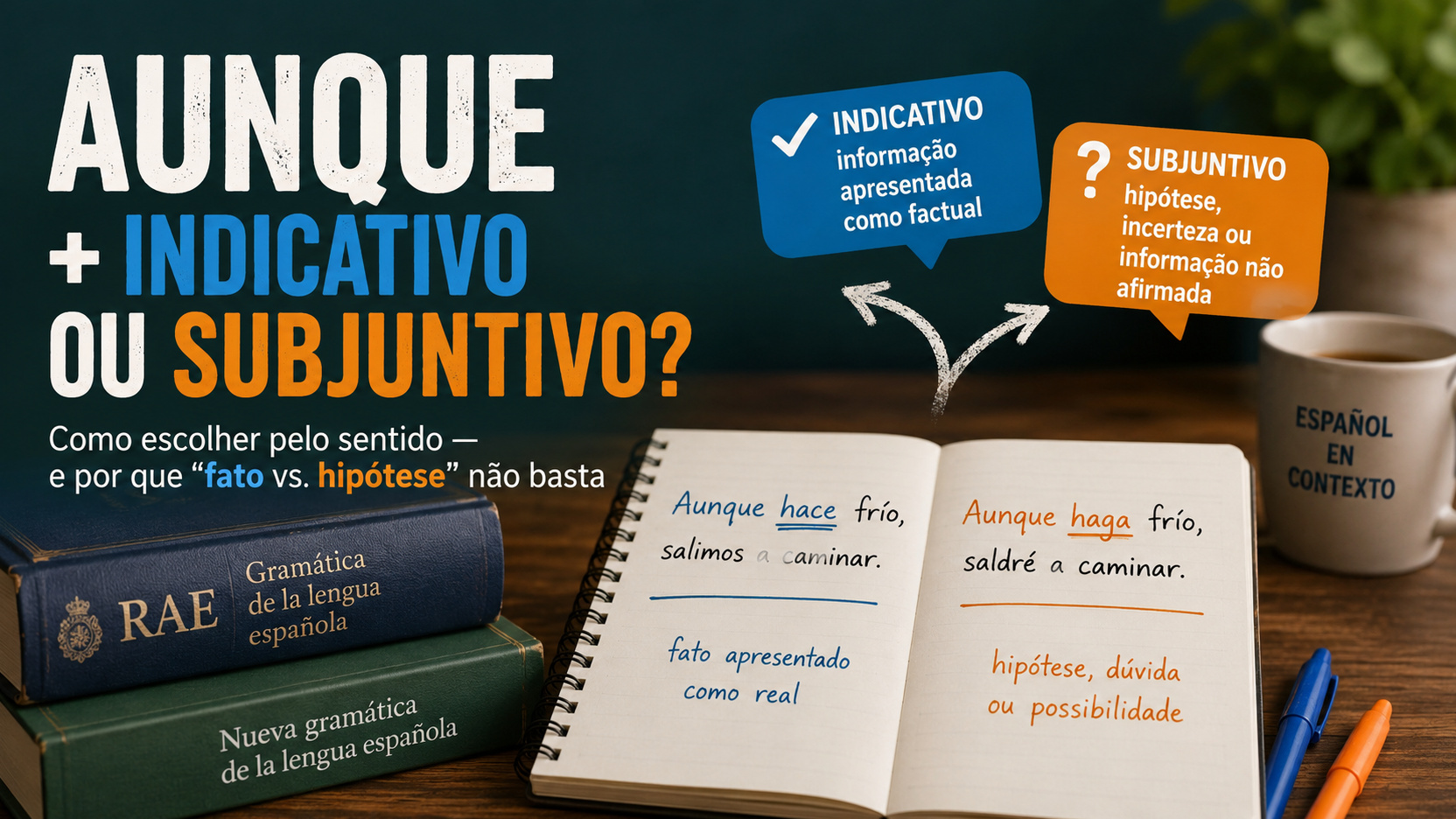
After aunque, the subjunctive is not just a hypothesis. Understand how hypothesis, statement and shared information change the choice of mode.
Read article