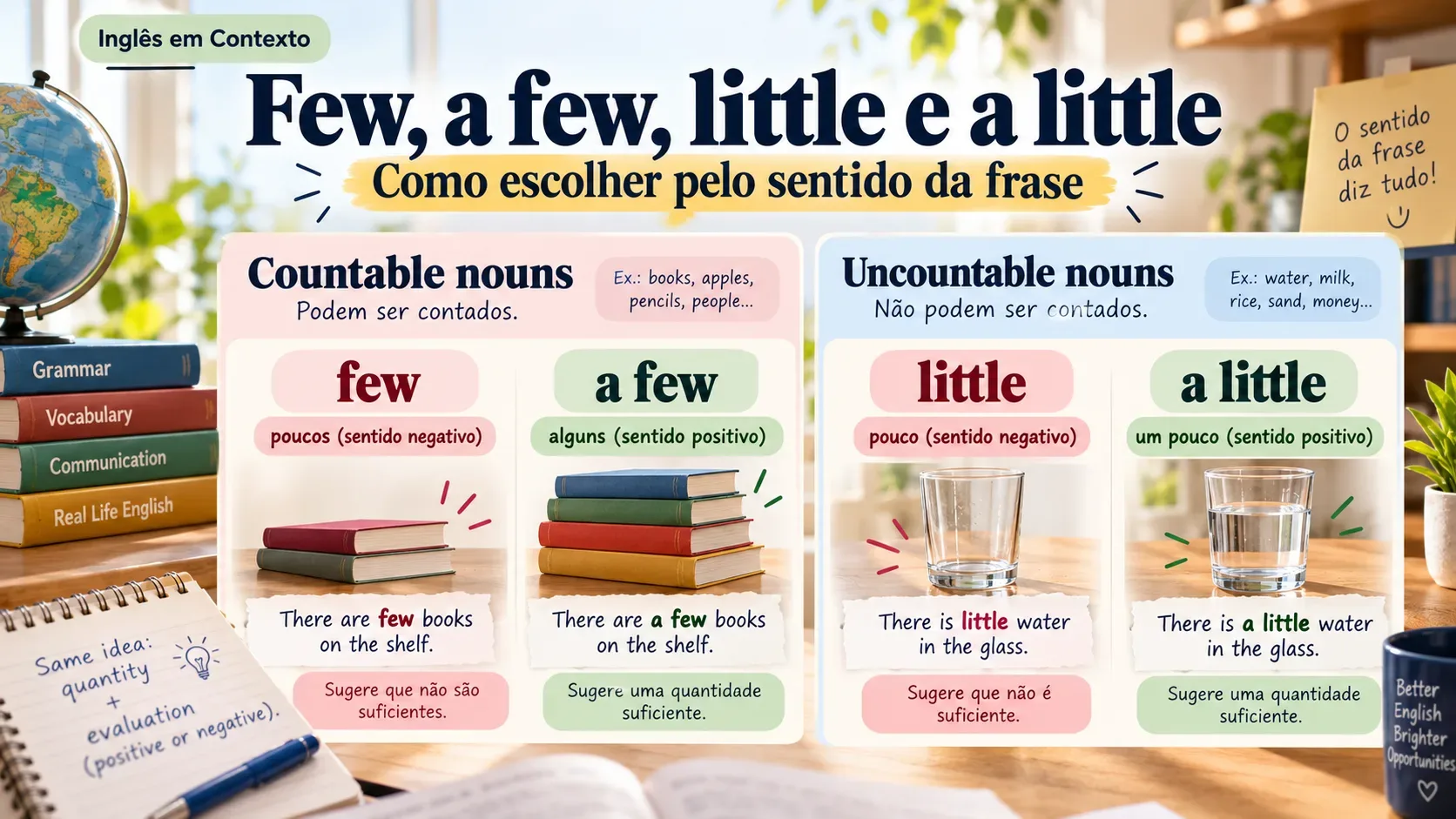
Few, a few, little and a little: how meaning changes your choice
Learn how to choose few, a few, little and a little by noun type and the speaker's view of quantity, with a comparison table, paired examples and explained exercises.
Read articleQuestions about English, Spanish, and Portuguese explained through usage: meaning, differences, translation, pronunciation, expressions, and grammar in context.
Learn how to choose few, a few, little and a little by noun type and the speaker's view of quantity, with a comparison table, paired examples and explained exercises.
Read article
Learn when to use used to, be used to, and get used to with routine examples, common mistakes, and a quick method to distinguish past habits, familiarity, and adaptation.
Read article
Since points to when a period started; for tells how long it lasts. Learn how this logic works in the present perfect and in other verb tenses.
Read article
Learn the difference between eventually, finally, and in the end, with examples, sentence position, and the Portuguese false cognate “eventualmente”.
Read article
Learn to distinguish make and do through the contrast between activity and outcome, using collocations as confirmation instead of memorizing endless lists.
Read article
Learn when to use ser or estar in Spanish by sentence function, state, location, and meaning shifts with adjectives.
Read article
Use a simple meaning test to choose between Portuguese “a fim” and “afim” in conversation, essays, and professional writing.
Read article
Learn when used to and would can describe past habits, why would normally does not work for past states, and how to avoid confusion with be/get used to.
Read article
Learn when to use actually and currently, apply a two-step substitution test, and avoid changing the meaning when translating Portuguese “atualmente.”
Read article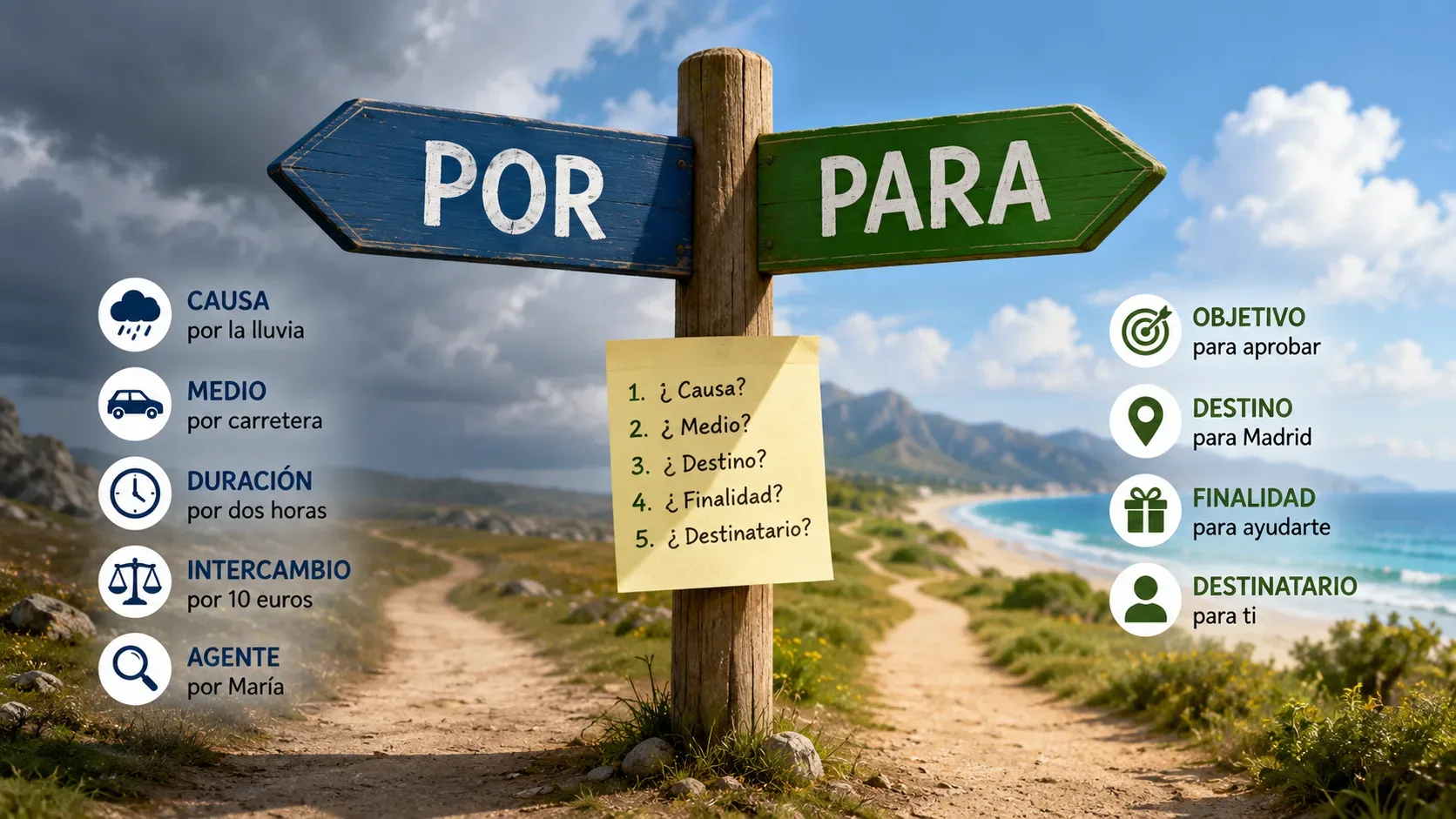
Use cause, means, destination, recipient, and purpose to choose between por and para in Spanish, with pairs that show how the meaning changes.
Read article
Portuguese “assistir” changes translation with the situation. Learn when Spanish uses ver, mirar, asistir a and presenciar.
Read article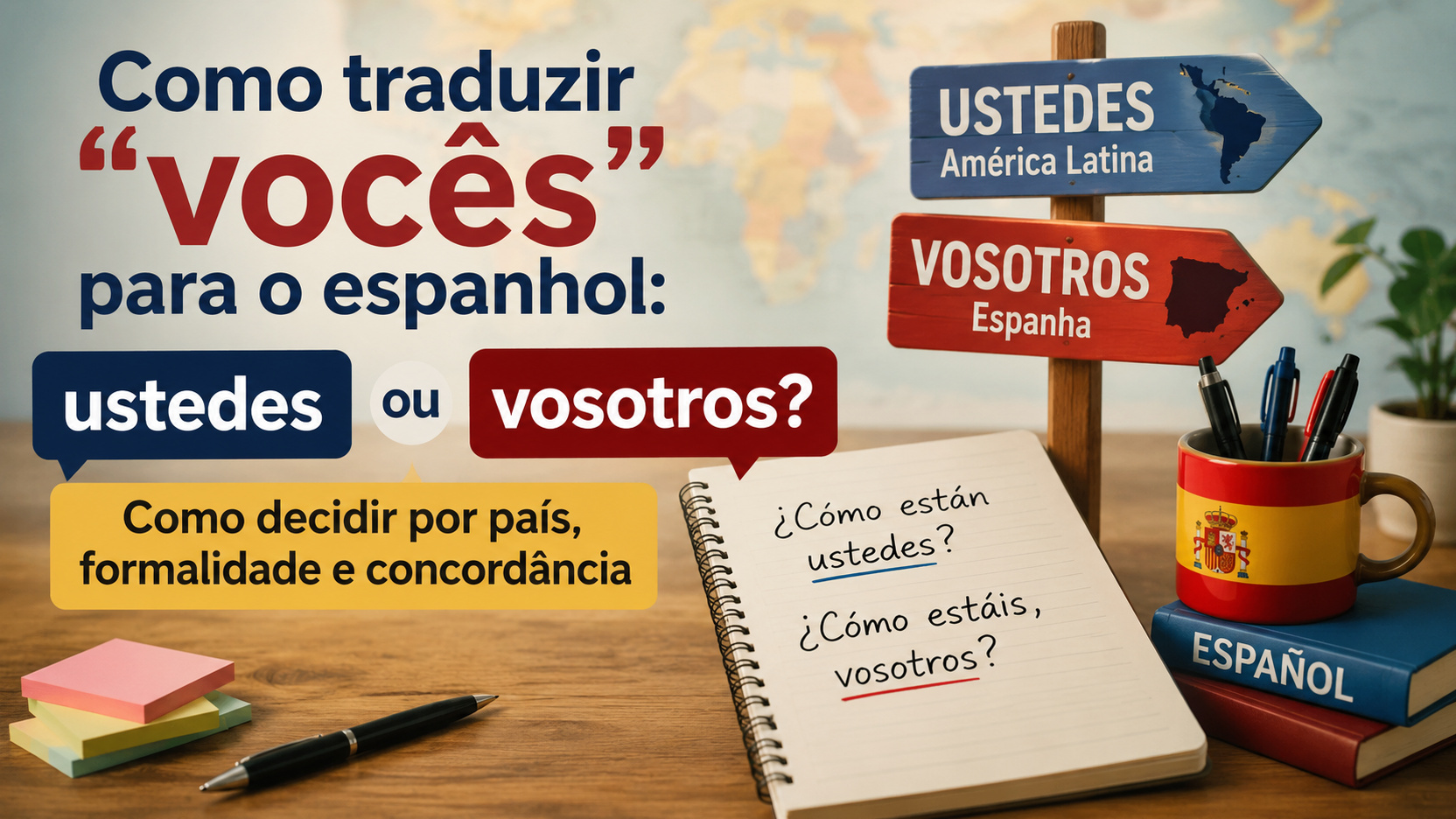
“Vocês” can become ustedes, vosotros, or vosotras. The choice depends on the variety of Spanish, the degree of formality, and the agreement required by the sentence.
Read article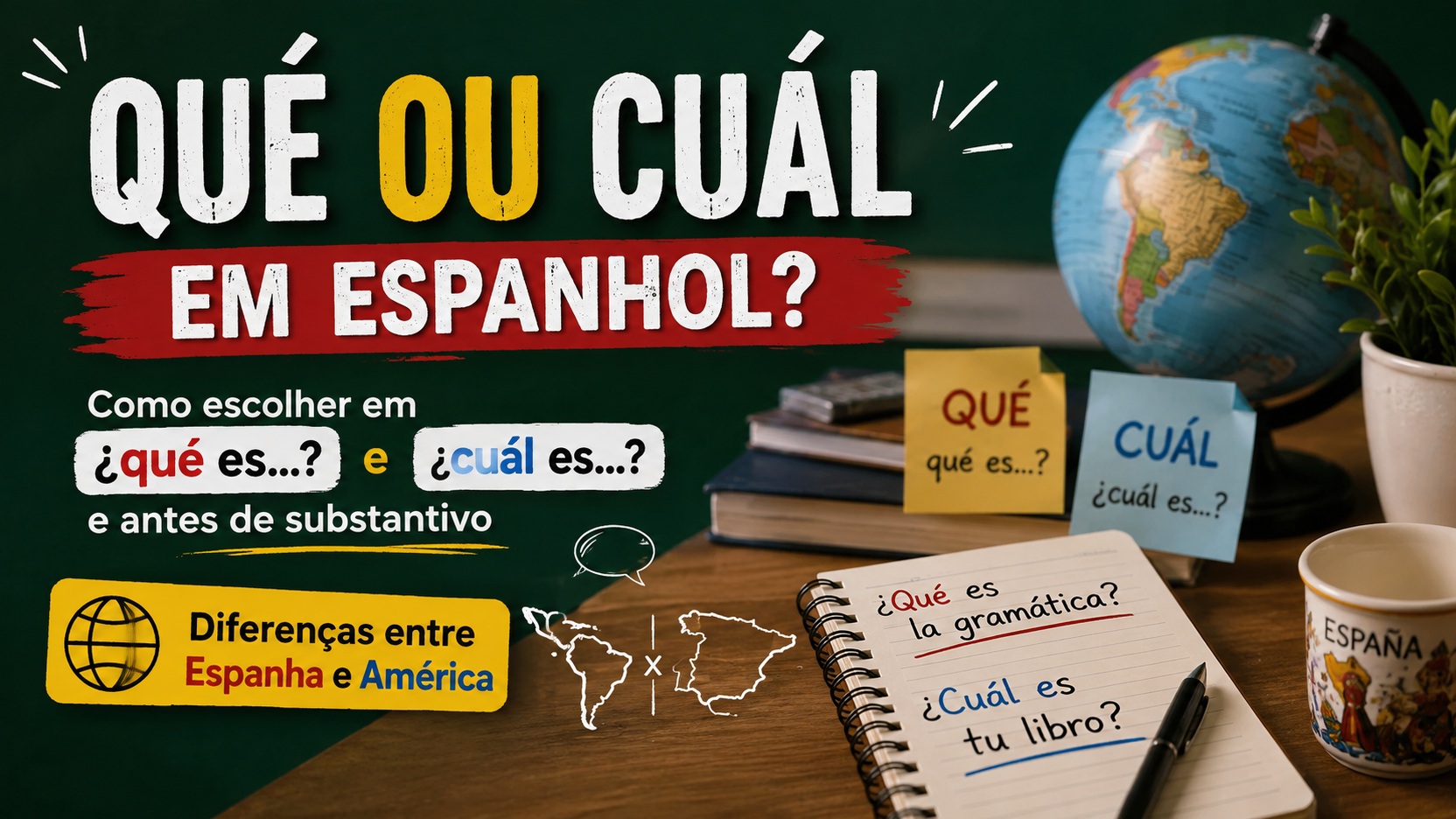
Learn to distinguish definition, identification, and choice when using qué and cuál, understand the case before a noun, and avoid a rule that breaks down between Spain and the Amer...
Read article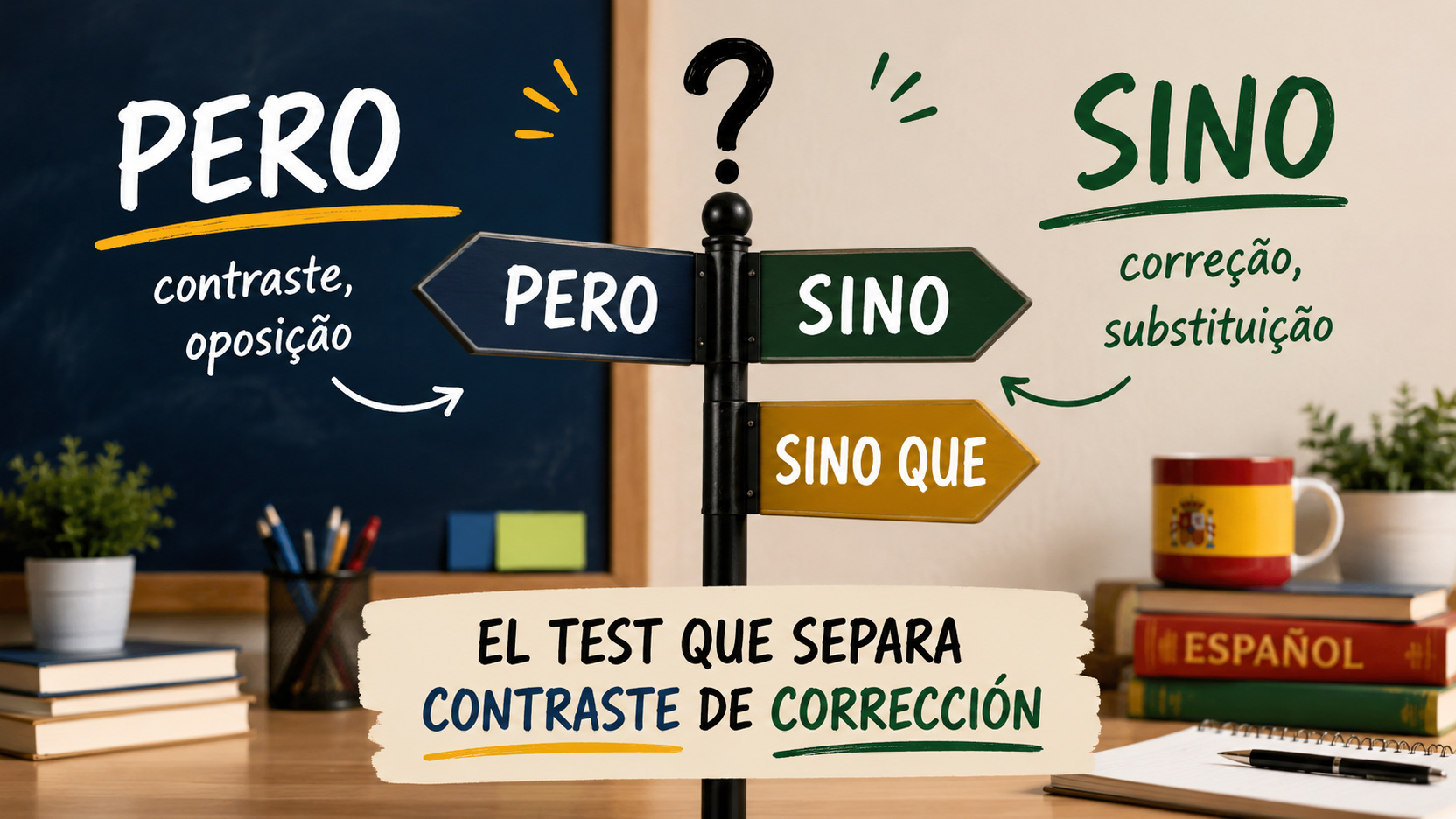
Learn to choose between pero, sino, and sino que by meaning: contrast, correction, or replacement. See why a negative clause can still require pero and test practical examples.
Read article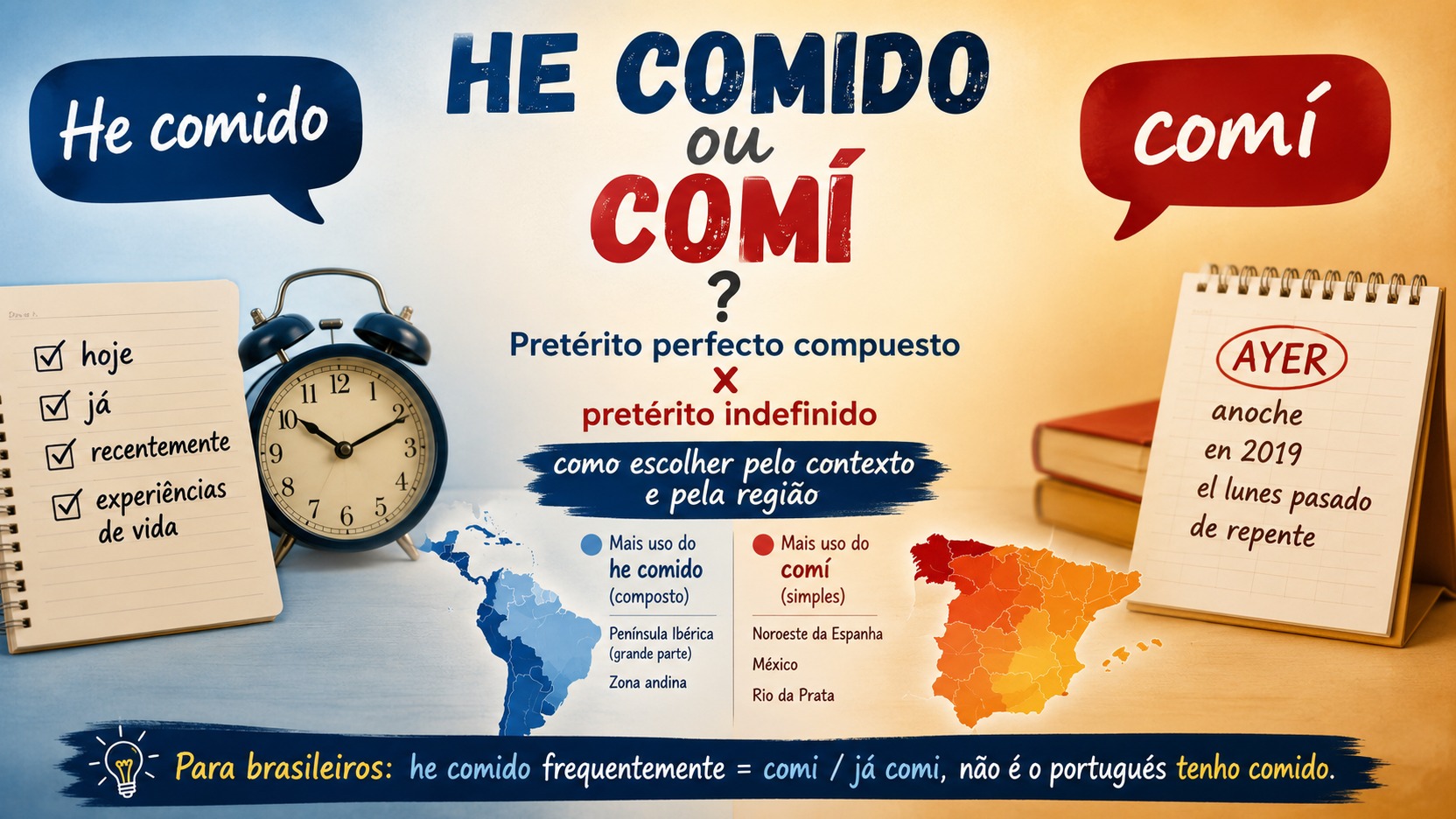
In Spanish, “he comido” and “comí” are not separated just by “hoje” and “yesterday”. Understand the value of each form, regional differences and the trap for Brazilians.
Read article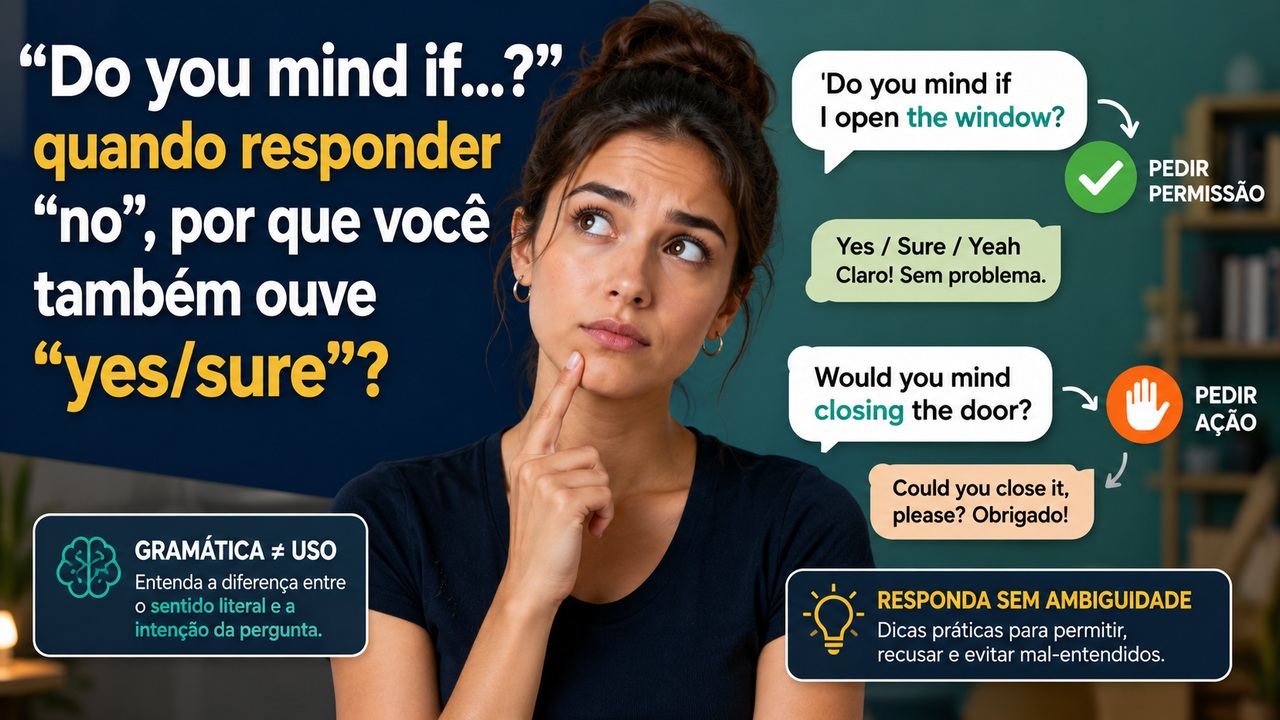
The literal answer to "Do you mind if...?" can reverse the expected direction. Understand grammar, intent, and clear responses to allow or decline.
Read article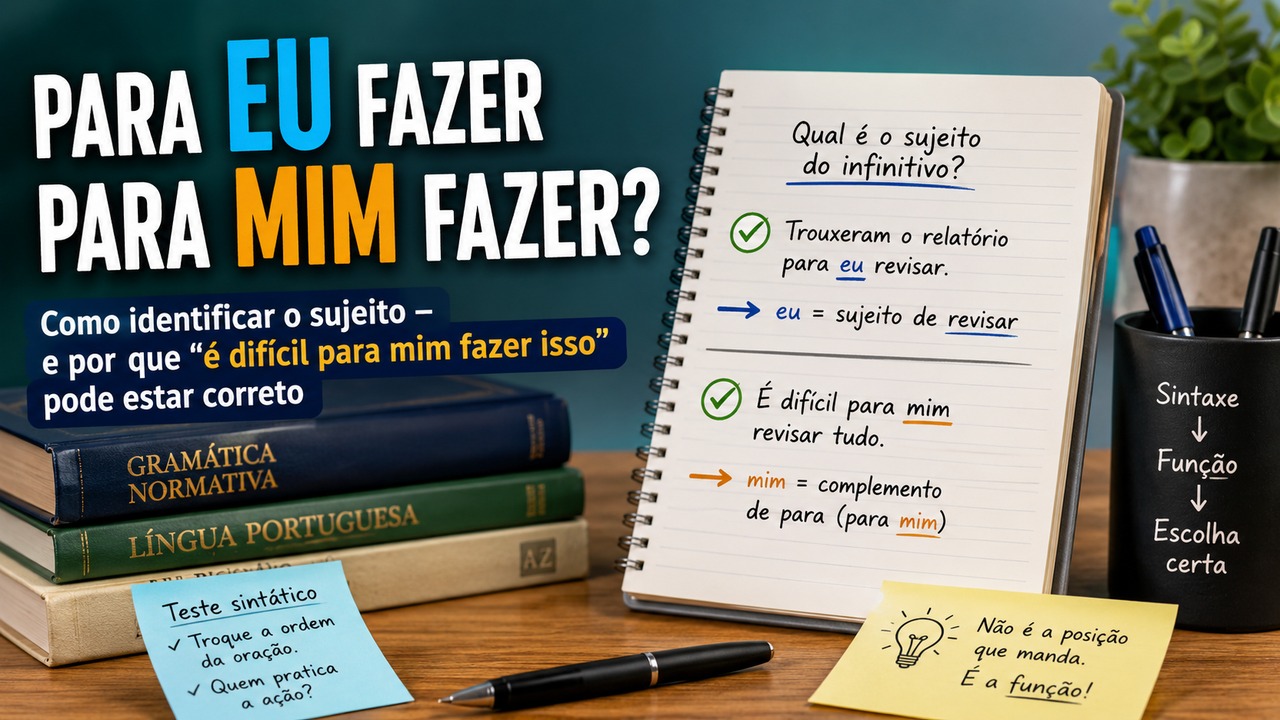
The choice between I and me near the infinitive depends on the syntactic function. Here's how to identify the guy and why “it's hard for me to do this” might be correct.
Read article
Already, yet and still are not mechanical exchanges: in questions and negatives, they signal expectation, surprise, continuity and even impatience.
Read article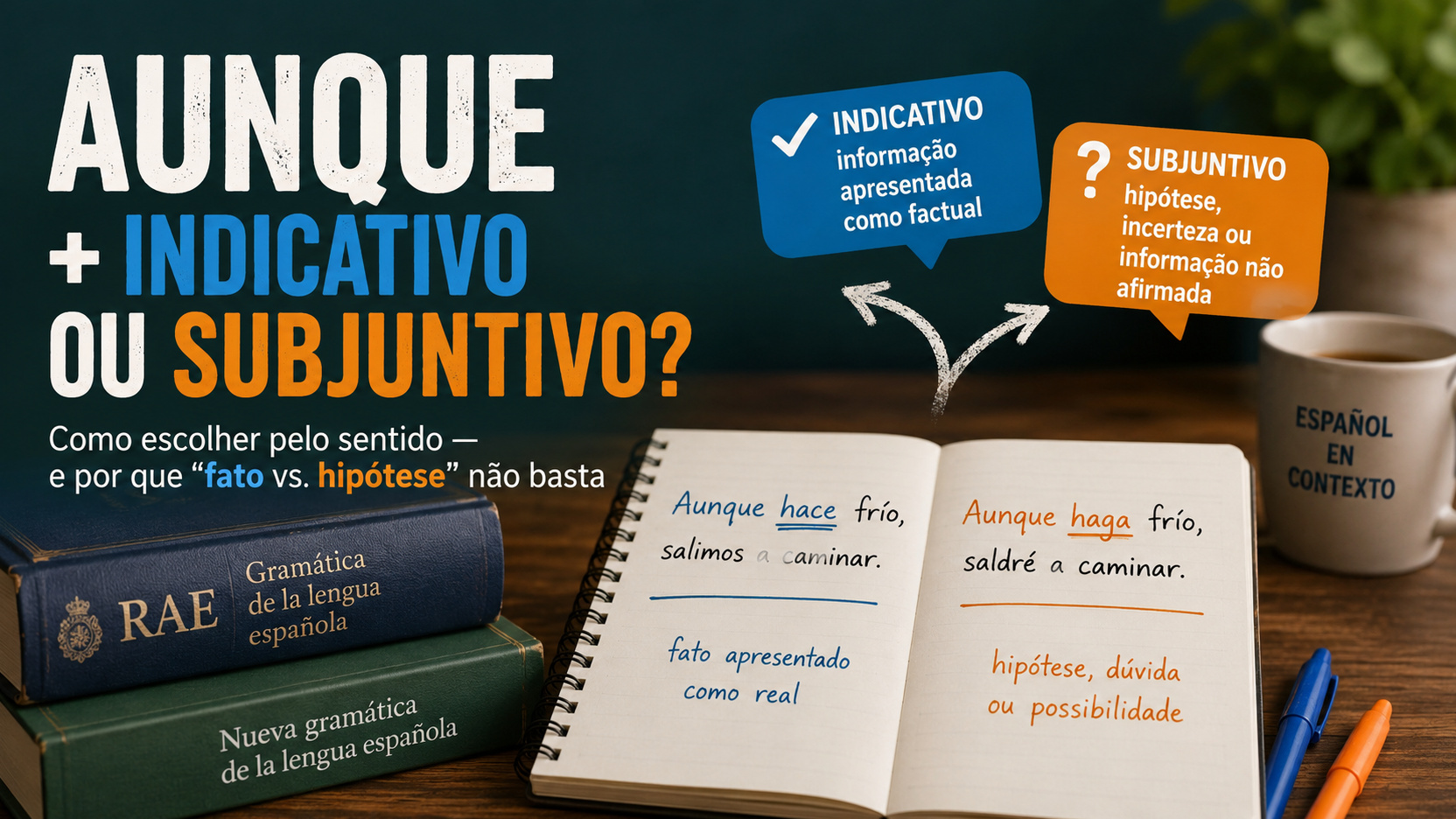
After aunque, the subjunctive is not just a hypothesis. Understand how hypothesis, statement and shared information change the choice of mode.
Read articleNo articles match this search.