Independent blog

Word in Context

Questions about English, Spanish, and Portuguese explained through usage: meaning, differences, translation, pronunciation, expressions, and grammar in context.

Explore articles

Main featured article

The most important content to start with.

Featured articles

Other selected strategic content.

Estudante em mesa de estudos pensando em cenas de rotina passada, estudo atual e adaptação a uma nova rotina.
English in Context26/09/20263 min read

Used to, be used to, and get used to: differences with routine examples

Learn when to use used to, be used to, and get used to with routine examples, common mistakes, and a quick method to distinguish past habits, familiarity, and adaptation.

Read article

Mesa de estudos dividida entre calendário e relógio, à esquerda, e ampulheta com livros de inglês, à direita, representando ponto de início e duração.
English in Context13/09/20264 min read

Since vs. for in English: how to choose between a starting point and a duration

Since points to when a period started; for tells how long it lasts. Learn how this logic works in the present perfect and in other verb tenses.

Read article
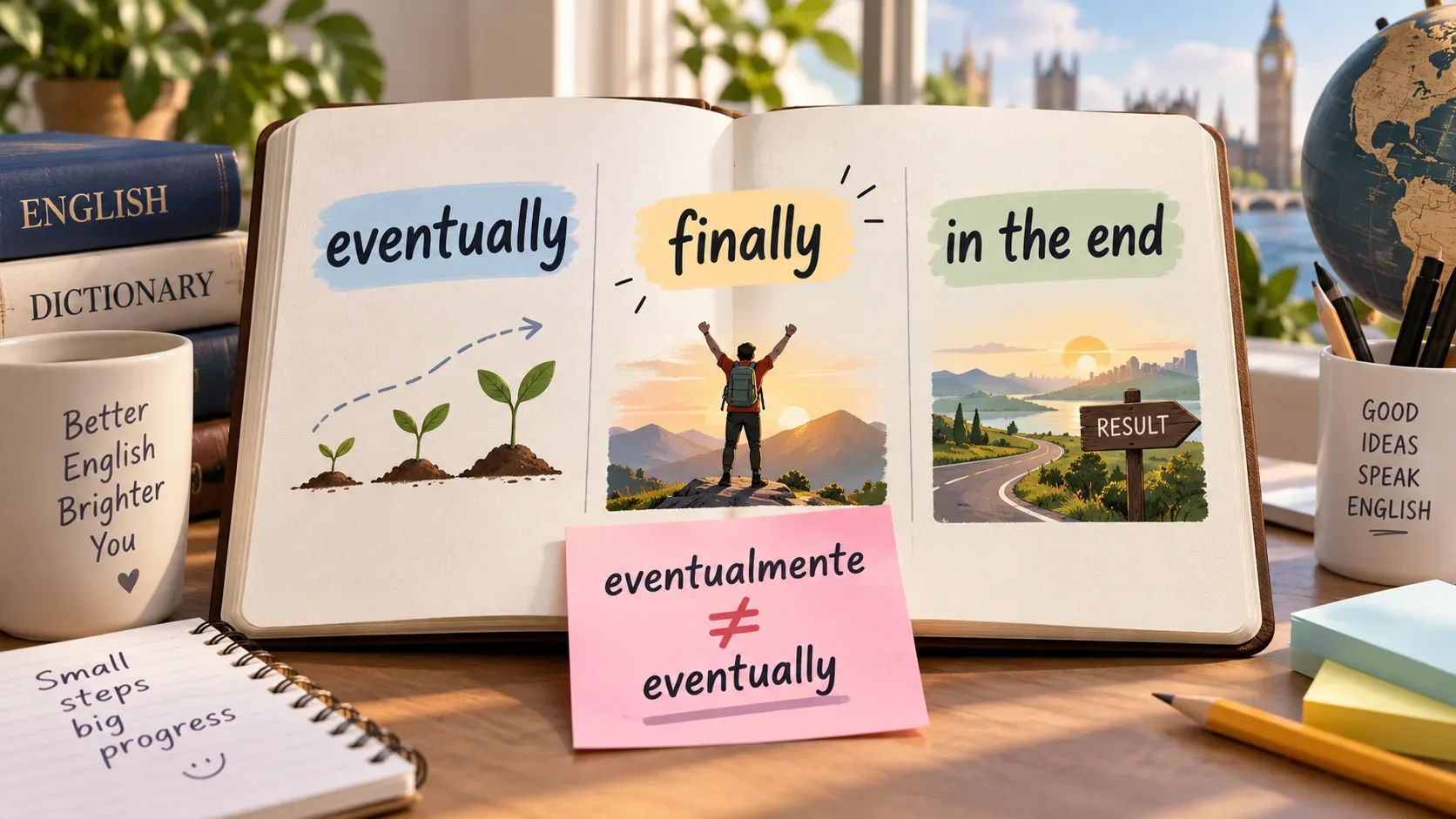
Caderno aberto em uma mesa de estudos com as expressões eventually, finally e in the end destacadas, ilustrações de processo e resultado e um lembrete de que “eventualmente” não é igual a eventually.
English in Context12/09/20267 min read

Eventually, finally, and in the end: when to use each one — and why Portuguese “eventualmente” does not mean eventually

Learn the difference between eventually, finally, and in the end, with examples, sentence position, and the Portuguese false cognate “eventualmente”.

Read article

Categories

Browse the blog main topics.

Latest articles

Recent posts and new content.

View all
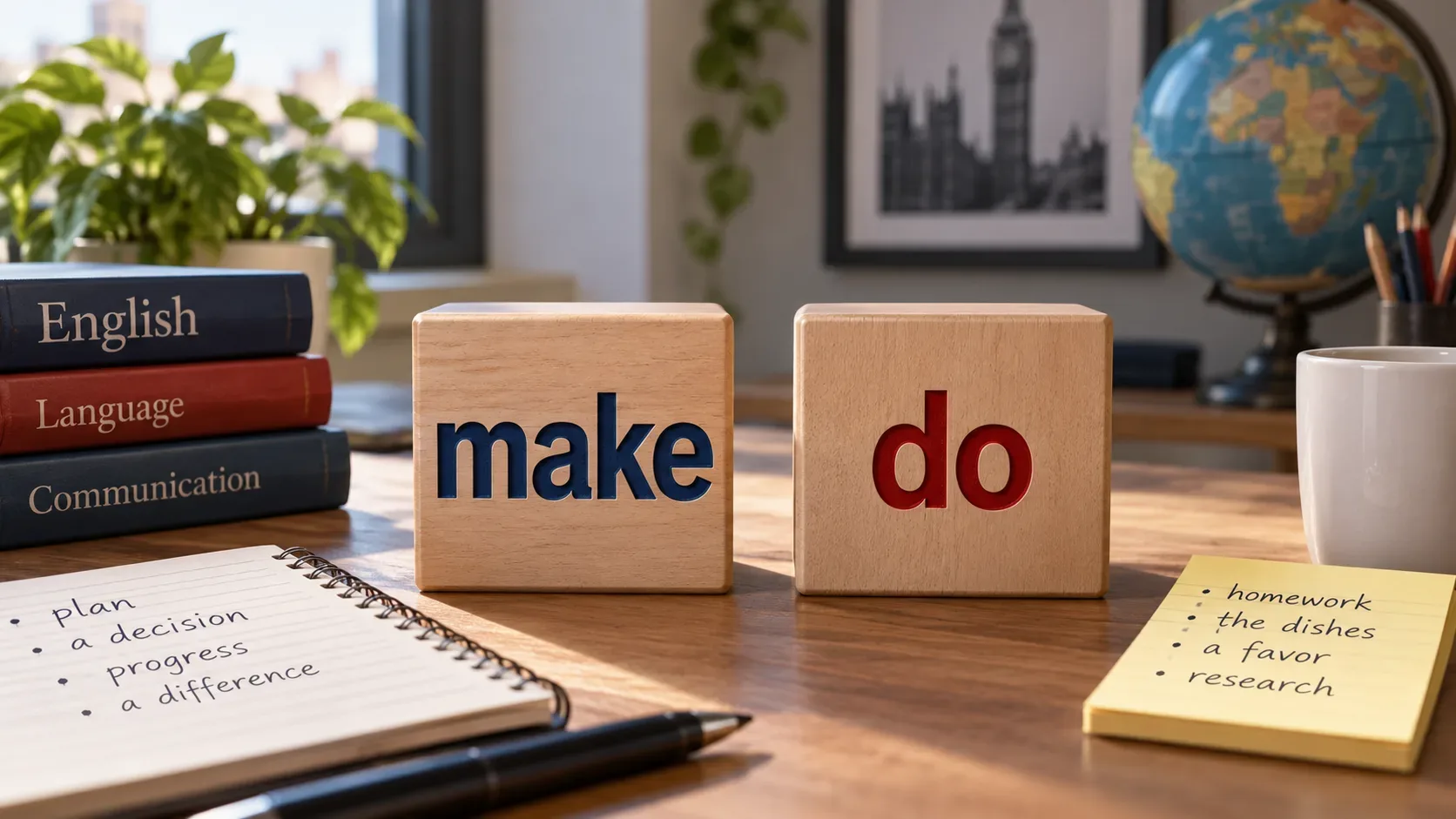
Blocos de madeira com as palavras “make” e “do” sobre uma mesa de estudos, cercados por livros, caderno, anotações e um globo ao fundo.
English in Context06/09/20265 min read

Make vs. do: how to choose by action type without memorizing endless lists

Learn to distinguish make and do through the contrast between activity and outcome, using collocations as confirmation instead of memorizing endless lists.

Read article

Mesma mulher em duas cenas urbanas na Espanha, estudando pensativa à esquerda e sorrindo ao sol à direita, com ícones que sugerem característica e estado.
Spanish in Context06/09/20266 min read

Ser vs estar in Spanish: how to choose by meaning instead of “permanent vs temporary”

Learn when to use ser or estar in Spanish by sentence function, state, location, and meaning shifts with adjectives.

Read article

Mulher em uma mesa de estudos compara dois caminhos visuais: papéis separados sob um alvo e peças de quebra-cabeça conectadas sob um coração.
Portuguese in Use06/09/20265 min read

A fim or afim in Portuguese: a substitution test for real sentences

Use a simple meaning test to choose between Portuguese “a fim” and “afim” in conversation, essays, and professional writing.

Read article

Estudante em uma mesa de estudos recorda cenas da infância, com hábitos repetidos em várias vinhetas e uma lembrança estática à janela.
English in Context06/09/20266 min read

Used to vs would: how to talk about past habits without getting stative verbs wrong

Learn when used to and would can describe past habits, why would normally does not work for past states, and how to avoid confusion with be/get used to.

Read article

Estudante em uma mesa de estudos observa dois balões de pensamento com as palavras “actually” e “currently”, ao lado de livros e notebook.
English in Context05/09/20266 min read

Actually vs currently: how to avoid the Portuguese false friend “atualmente”

Learn when to use actually and currently, apply a two-step substitution test, and avoid changing the meaning when translating Portuguese “atualmente.”

Read article
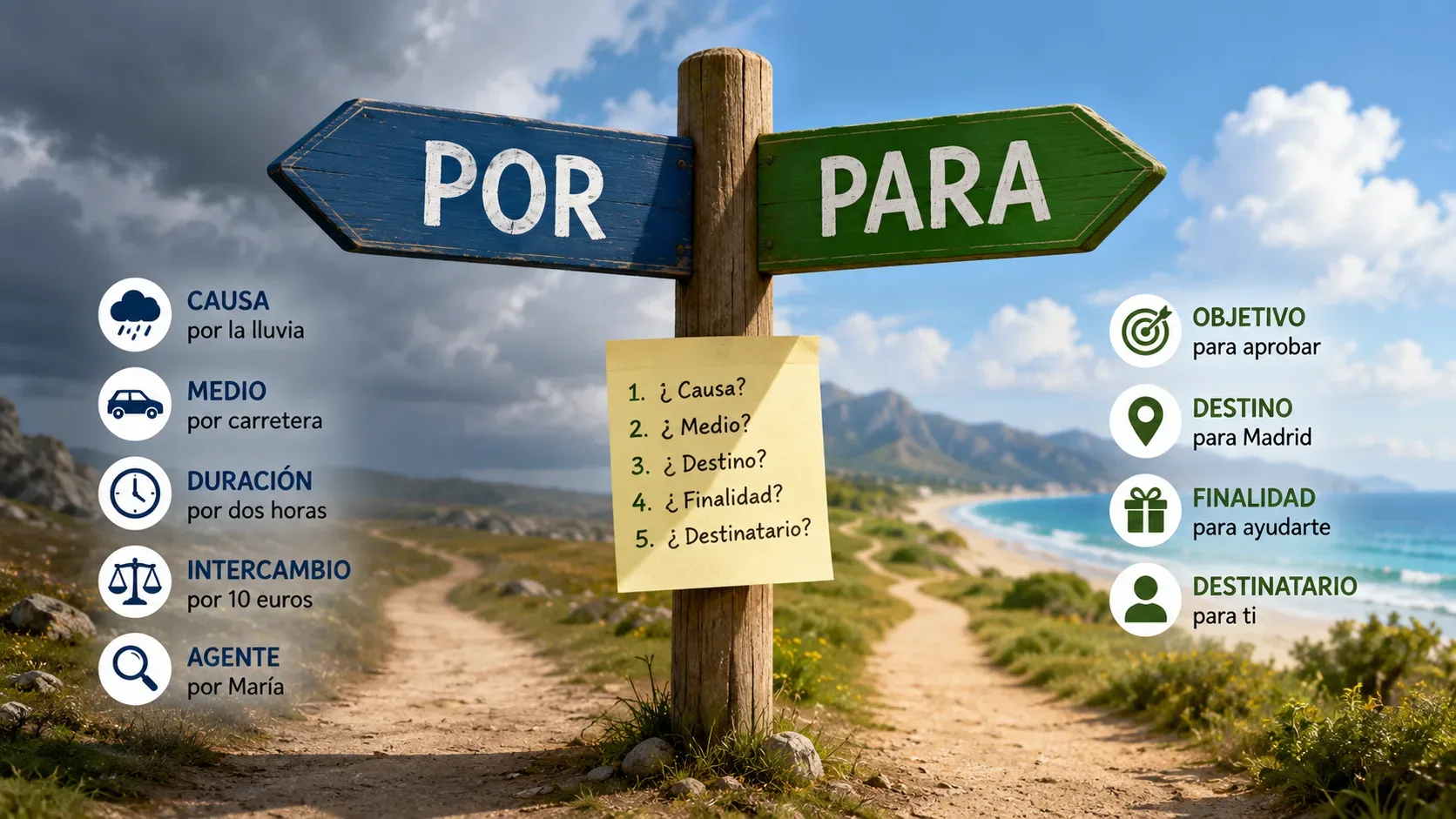
Placa de madeira em uma bifurcação com setas POR e PARA, checklist central e exemplos visuais de causa, meio, objetivo e destino.
Spanish in Context02/09/20267 min read

Por or para in Spanish? A 5-question test that beats memorized lists

Use cause, means, destination, recipient, and purpose to choose between por and para in Spanish, with pairs that show how the meaning changes.

Read article
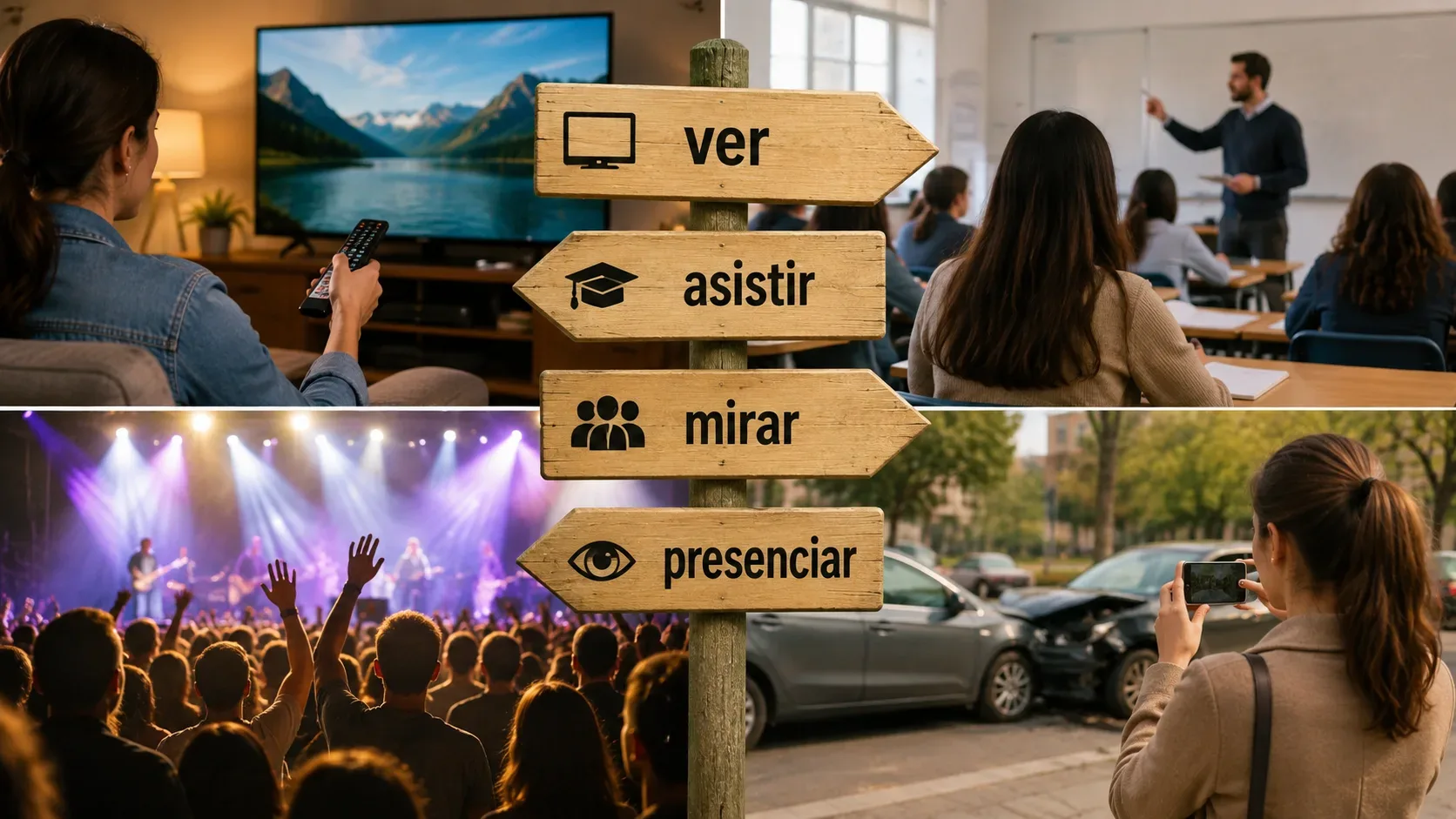
Composição em quatro cenas com televisão, sala de aula, show e acidente, ao centro placas de madeira com os verbos ver, asistir, mirar e presenciar.
Spanish in Context01/09/20266 min read

How do you translate Portuguese “assistir” into Spanish? Ver, mirar, asistir and presenciar

Portuguese “assistir” changes translation with the situation. Learn when Spanish uses ver, mirar, asistir a and presenciar.

Read article
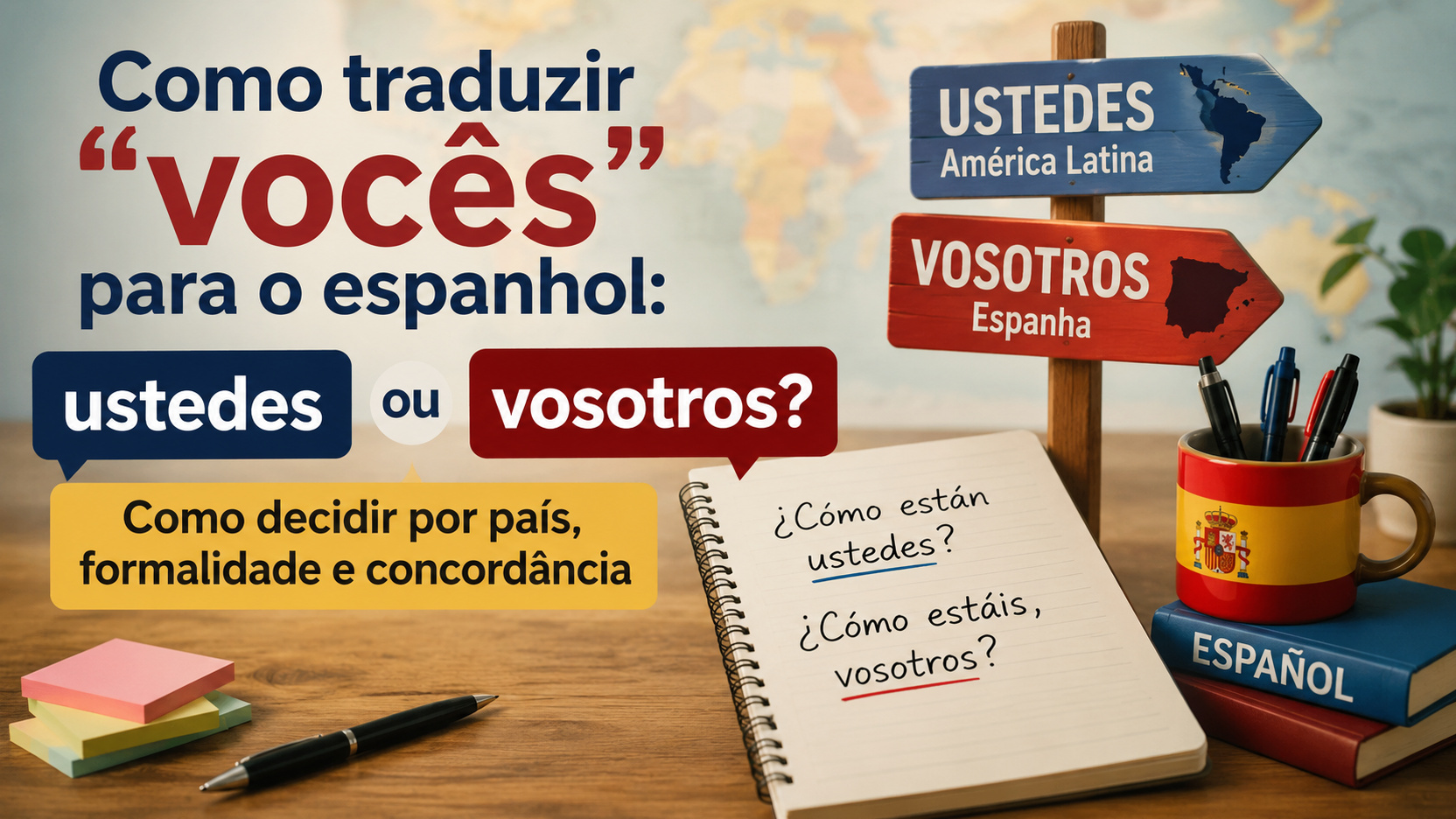
Capa didática com as palavras ustedes e vosotros em placas apontando para América Latina e Espanha, ao lado de caderno e materiais de estudo de espanhol.
Spanish in Context30/08/20269 min read

How to translate “vocês” into Spanish: ustedes or vosotros? How to decide by country, formality, and agreement

“Vocês” can become ustedes, vosotros, or vosotras. The choice depends on the variety of Spanish, the degree of formality, and the agreement required by the sentence.

Read article
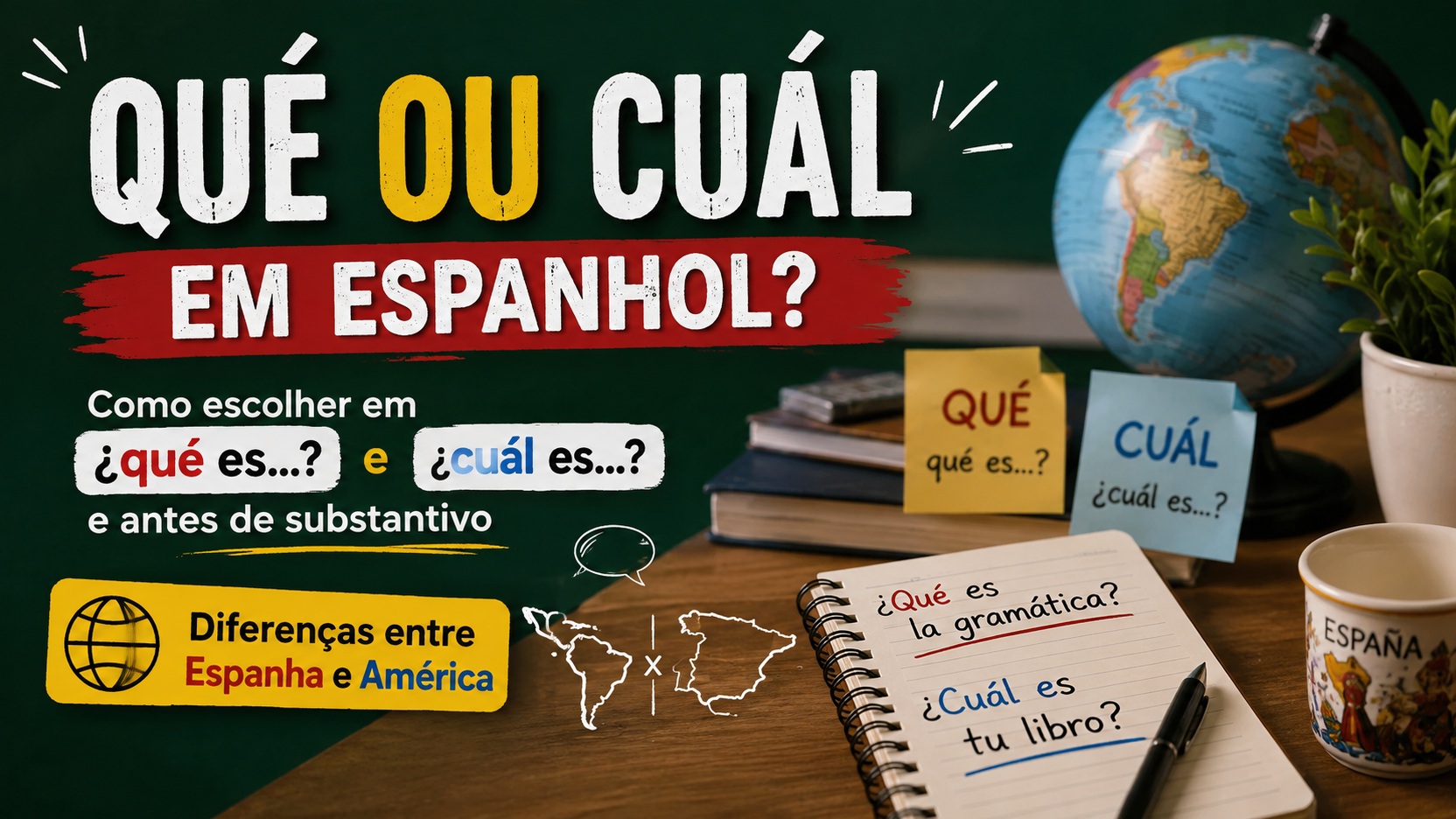
Capa educativa com quadro verde escrito “Qué ou cuál em espanhol?”, globo, livros e caderno com os exemplos “¿Qué es la gramática?” e “¿Cuál es tu libro?”, destacando Espanha e América.
Spanish in Context30/08/20269 min read

Qué or cuál in Spanish? How to choose in ¿qué es...?, ¿cuál es...? and before a noun

Learn to distinguish definition, identification, and choice when using qué and cuál, understand the case before a noun, and avoid a rule that breaks down between Spain and the Amer...

Read article

English in Context

English translations, differences, expressions, pronunciation and grammar explained based on real usage situations.
View all
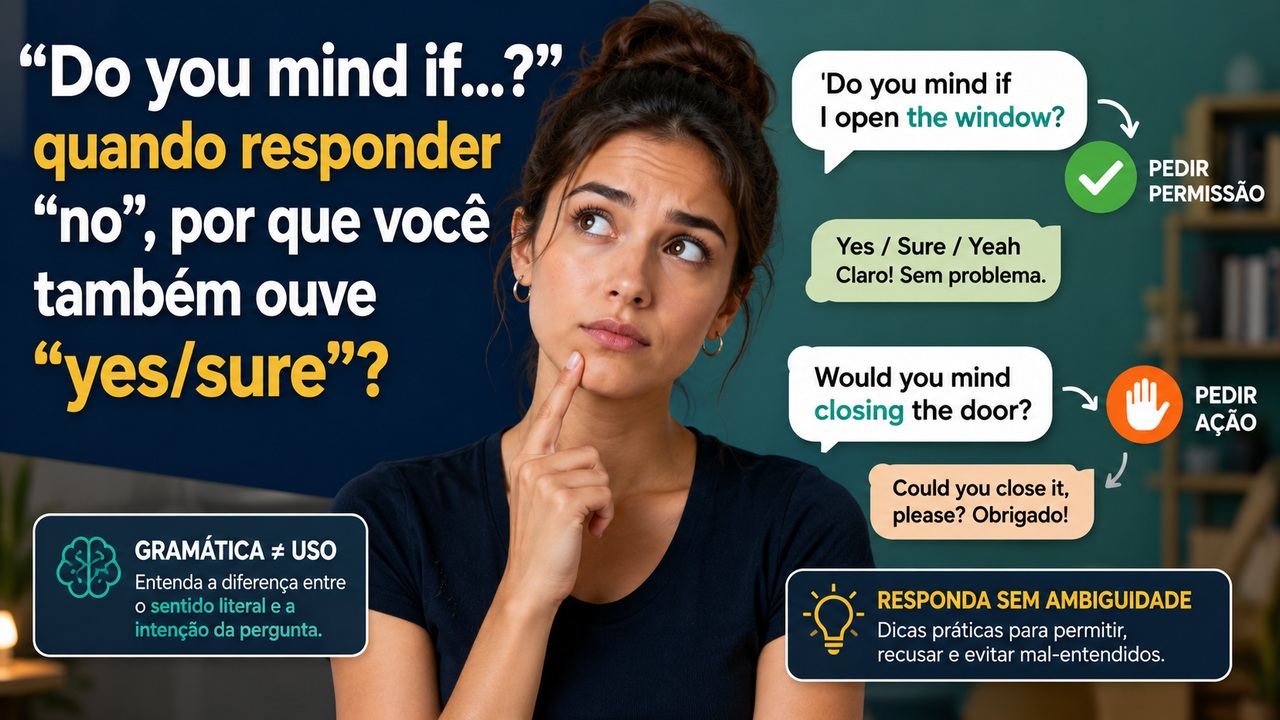
Mulher pensativa diante de um infográfico sobre "Do you mind if...?", com exemplos de pedido de permissão, pedido de ação e respostas sem ambiguidade.
English in Context20/08/20268 min read

"Do you mind if...?": when to answer "no", why you also hear "yes/sure" and how to avoid ambiguity

The literal answer to "Do you mind if...?" can reverse the expected direction. Understand grammar, intent, and clear responses to allow or decline.

Read article
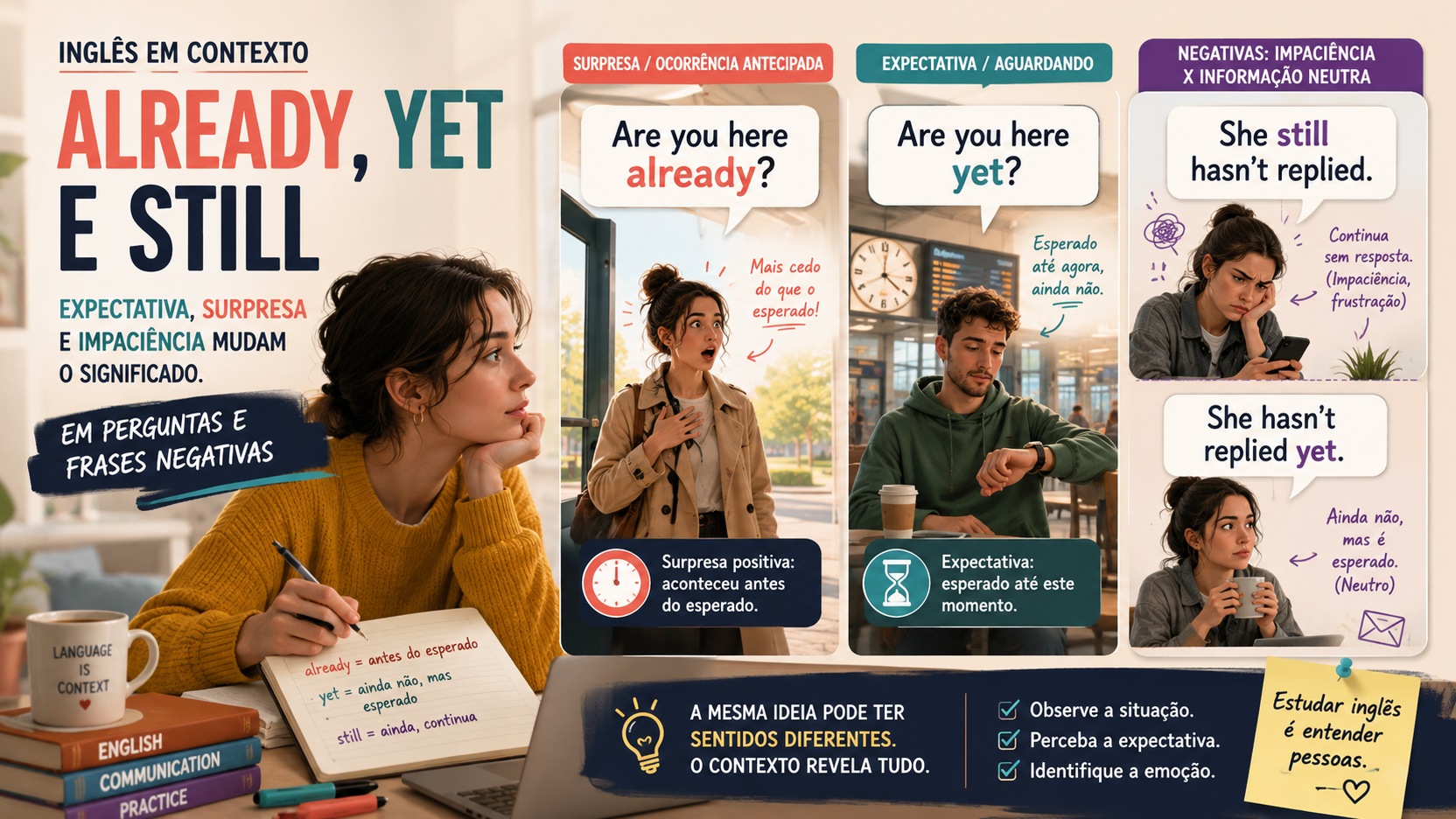
Infográfico com estudante e exemplos Are you here already?, Are you here yet?, She still hasn't replied e She hasn't replied yet, contrastando surpresa, expectativa e impaciência.
English in Context17/08/202612 min read

Already or yet in questions; still or yet in negatives: how expectation, surprise and impatience change the meaning

Already, yet and still are not mechanical exchanges: in questions and negatives, they signal expectation, surprise, continuity and even impatience.

Read article
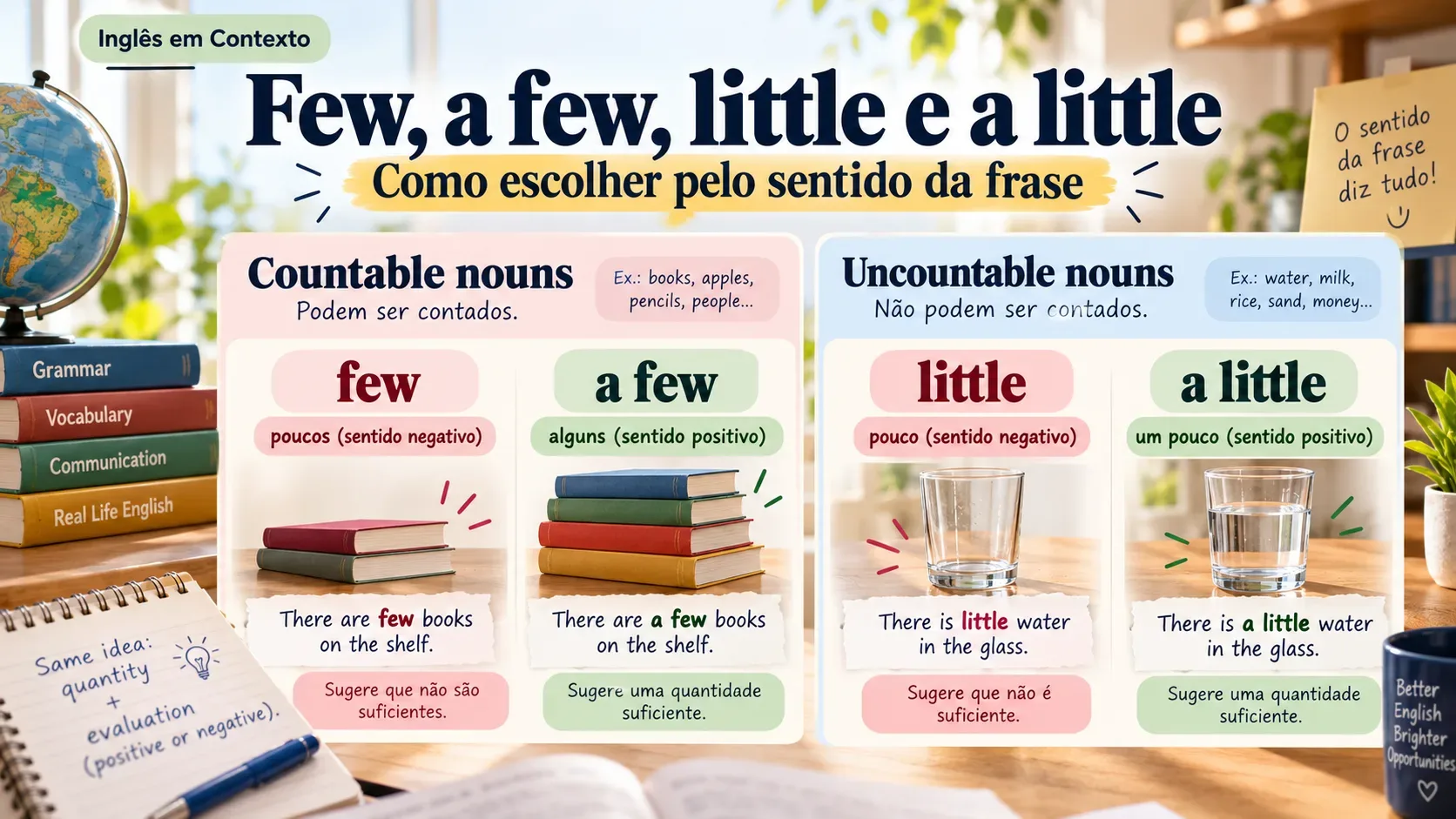
Capa didática com o título sobre few, a few, little e a little, quadros de livros para contáveis e de copos de água para incontáveis sobre uma mesa de estudos.
English in Context27/09/20265 min read

Few, a few, little and a little: how meaning changes your choice

Learn how to choose few, a few, little and a little by noun type and the speaker's view of quantity, with a comparison table, paired examples and explained exercises.

Read article
Estudante em mesa de estudos pensando em cenas de rotina passada, estudo atual e adaptação a uma nova rotina.
English in Context26/09/20263 min read

Used to, be used to, and get used to: differences with routine examples

Learn when to use used to, be used to, and get used to with routine examples, common mistakes, and a quick method to distinguish past habits, familiarity, and adaptation.

Read article

Spanish in Context

Spanish vocabulary, regional differences, false friends, expressions and grammar explained for Portuguese speakers.
View all
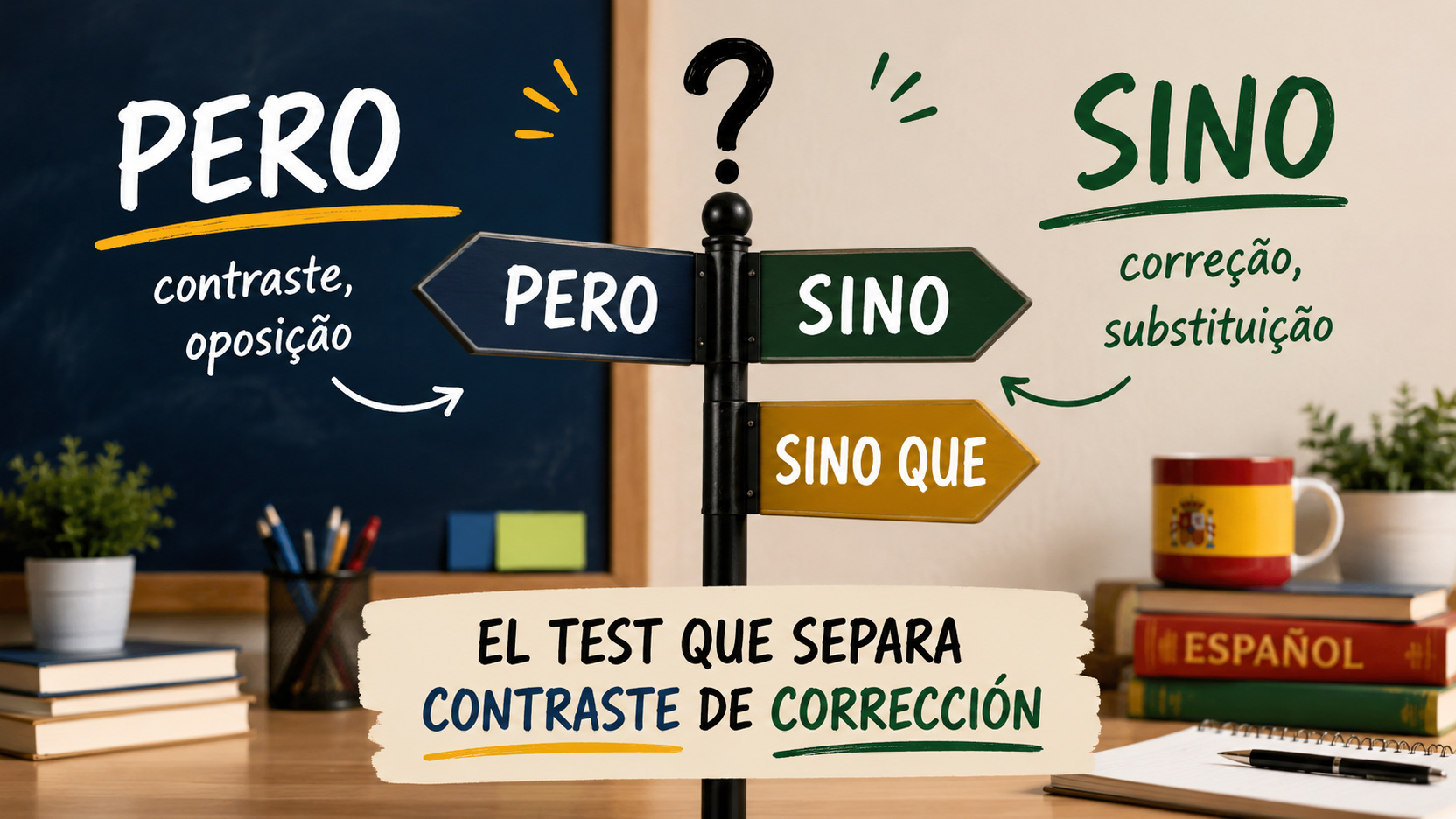
Ilustração horizontal de estudo de espanhol com placas apontando para PERO, SINO e SINO QUE, quadro dividido entre contraste e correção, livros, caderno e uma caneca com a bandeira da Espanha.
Spanish in Context26/08/20268 min read

Pero or sino in Spanish? The test that separates contrast from correction and when to use sino que

Learn to choose between pero, sino, and sino que by meaning: contrast, correction, or replacement. See why a negative clause can still require pero and test practical examples.

Read article
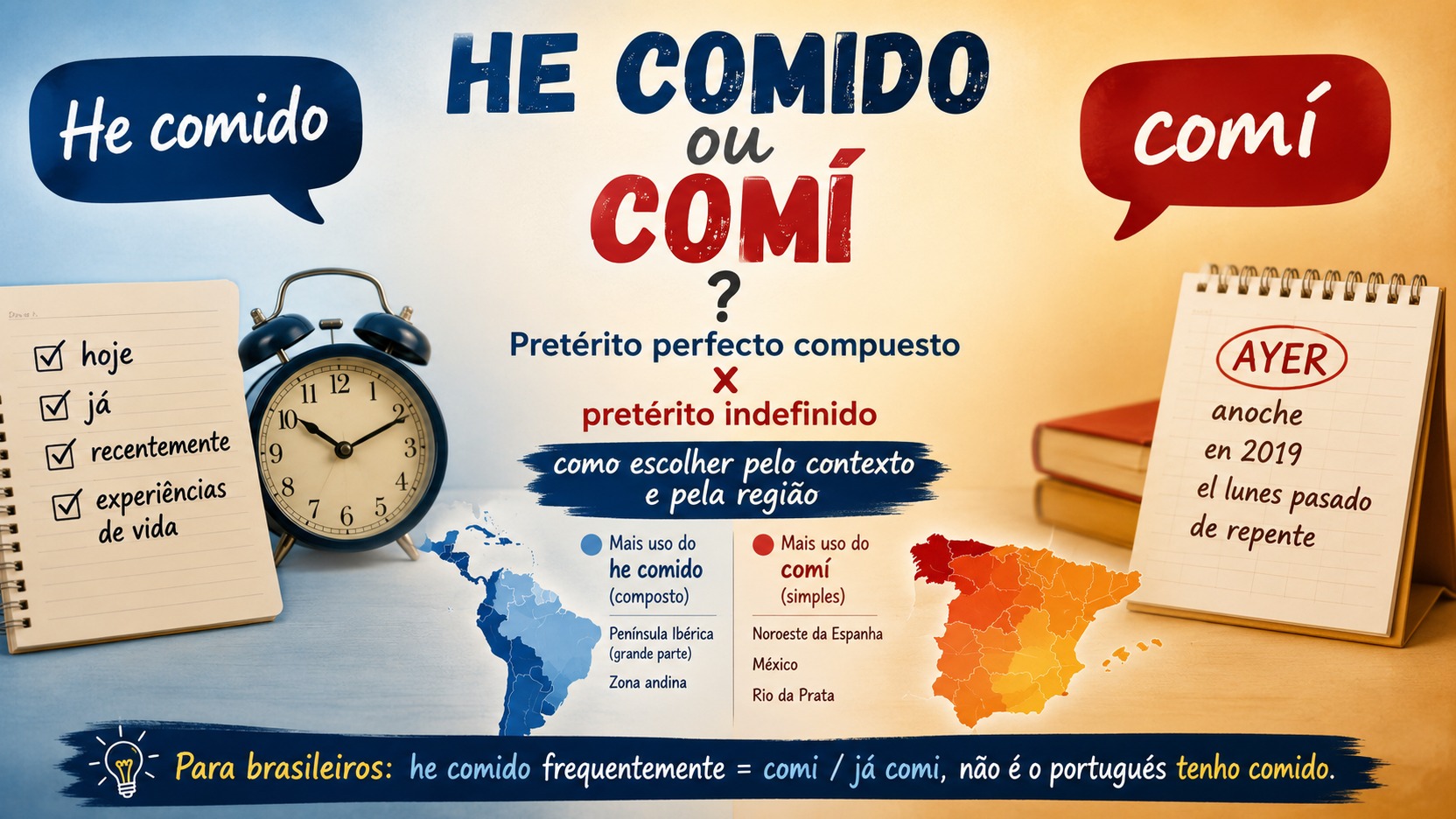
Infográfico em azul e laranja comparando “He comido” e “comí”, com balões de fala, relógio, calendários e mapas que representam diferenças de contexto e uso regional.
Spanish in Context22/08/202611 min read

“He eaten” or “I ate”? How to choose between pretérito perfecto compuesto and indefinite by context and region

In Spanish, “he comido” and “comí” are not separated just by “hoje” and “yesterday”. Understand the value of each form, regional differences and the trap for Brazilians.

Read article
Mesma mulher em duas cenas urbanas na Espanha, estudando pensativa à esquerda e sorrindo ao sol à direita, com ícones que sugerem característica e estado.
Spanish in Context06/09/20266 min read

Ser vs estar in Spanish: how to choose by meaning instead of “permanent vs temporary”

Learn when to use ser or estar in Spanish by sentence function, state, location, and meaning shifts with adjectives.

Read article
Placa de madeira em uma bifurcação com setas POR e PARA, checklist central e exemplos visuais de causa, meio, objetivo e destino.
Spanish in Context02/09/20267 min read

Por or para in Spanish? A 5-question test that beats memorized lists

Use cause, means, destination, recipient, and purpose to choose between por and para in Spanish, with pairs that show how the meaning changes.

Read article

Portuguese in Use

Portuguese spelling, grammar, meaning and usage choices explained with examples and context.
View all
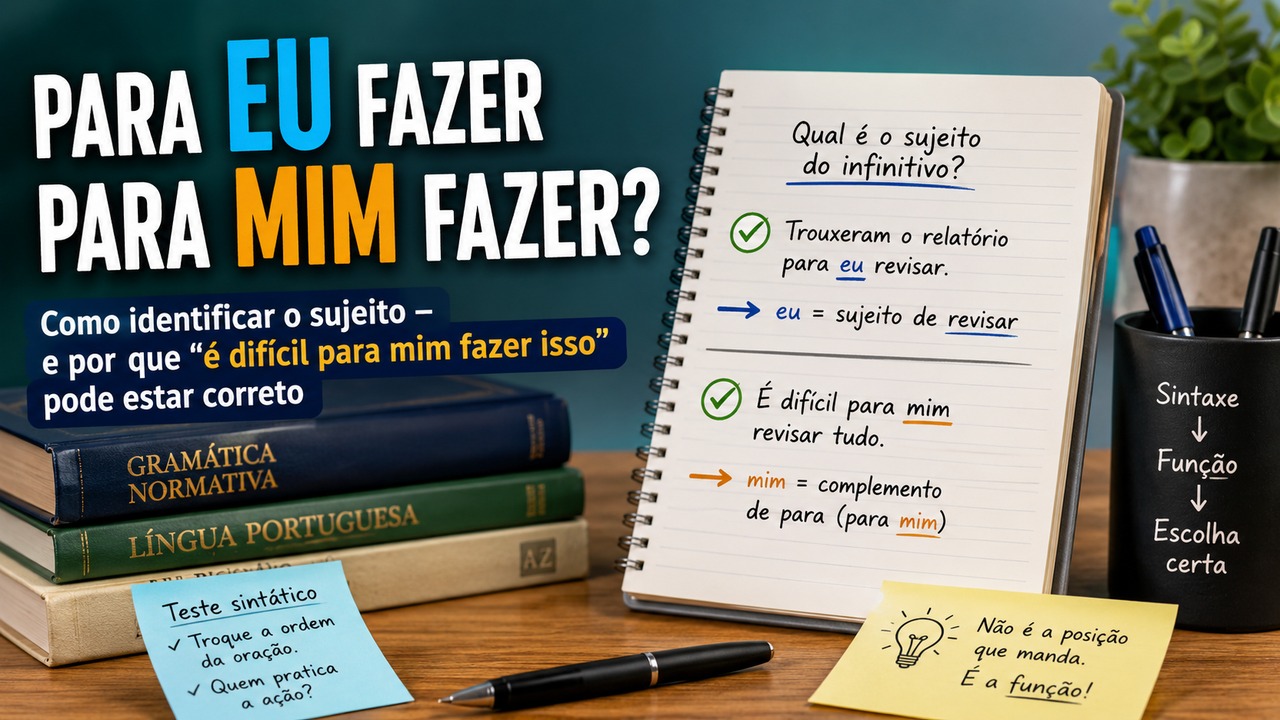
Capa educativa com as expressões “para eu fazer” e “para mim fazer?”, caderno com exemplos sintáticos e livros de gramática sobre uma mesa.
Portuguese in Use18/08/20267 min read

“For me to do” or “for me to do”? How to identify the subject and not depend on memorized rules

The choice between I and me near the infinitive depends on the syntactic function. Here's how to identify the guy and why “it's hard for me to do this” might be correct.

Read article
Mulher em uma mesa de estudos compara dois caminhos visuais: papéis separados sob um alvo e peças de quebra-cabeça conectadas sob um coração.
Portuguese in Use06/09/20265 min read

A fim or afim in Portuguese: a substitution test for real sentences

Use a simple meaning test to choose between Portuguese “a fim” and “afim” in conversation, essays, and professional writing.

Read article

About Word in Context

Word in Context is a blog for anyone who arrives with a specific question about Portuguese, English, or Spanish. We explain what words and expressions mean, when they are used, how to distinguish similar terms, and which register or regional variations need to be considered. The goal is not to replace dictionaries, translators, or courses, but to help readers turn an isolated answer into an understanding of real usage.

Responsible: Núcleo de Linguagem