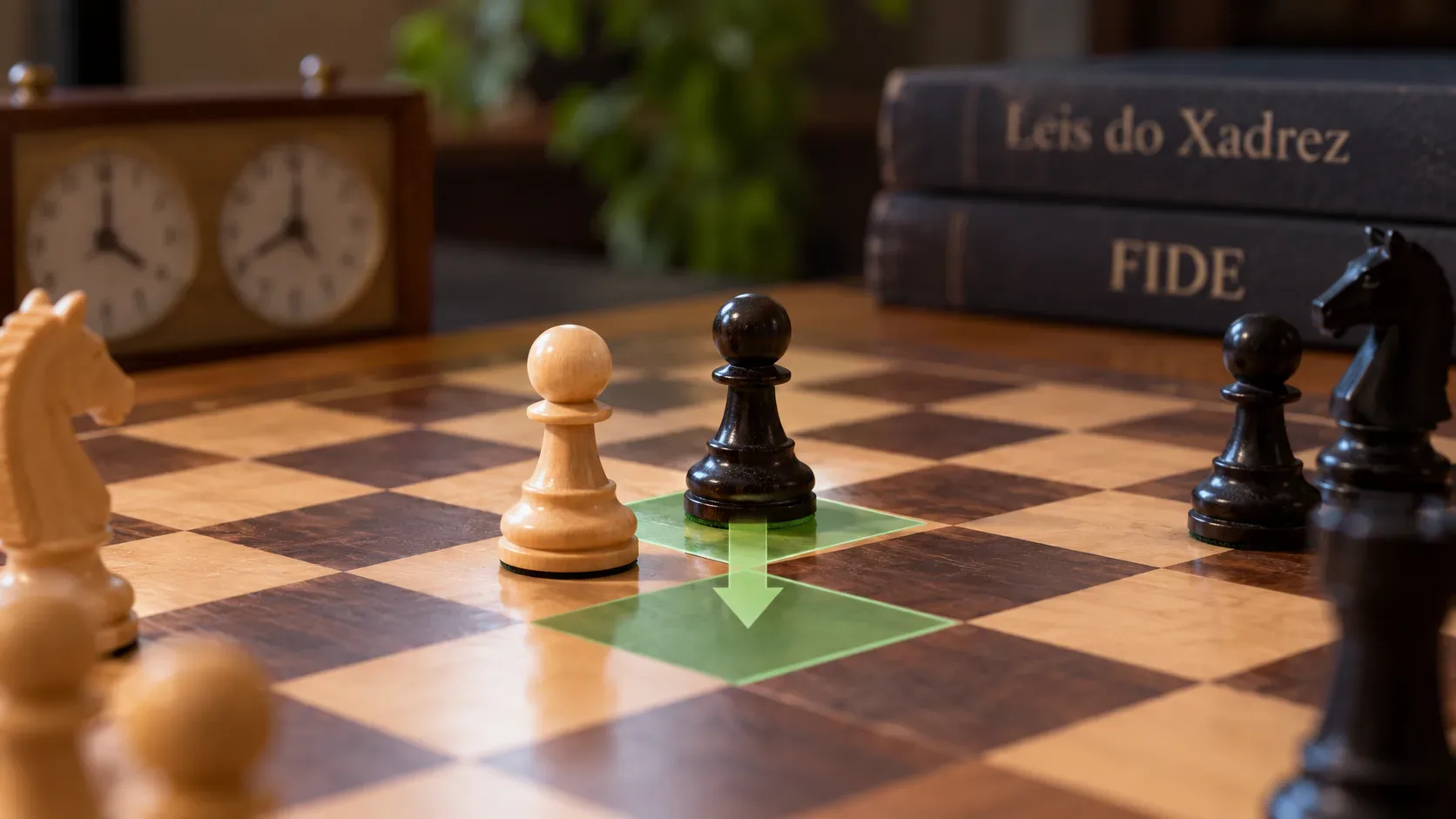
En passant in chess: when the capture is legal and when the right expires
Learn the conditions for en passant, its one-move time limit, legal and illegal examples, and a short quiz to reinforce the rule.
Read articleChess explained beyond the best move: rules, openings, tactics, strategy, endgames, and great games to understand what happens on the board.
Learn the conditions for en passant, its one-move time limit, legal and illegal examples, and a short quiz to reinforce the rule.
Read article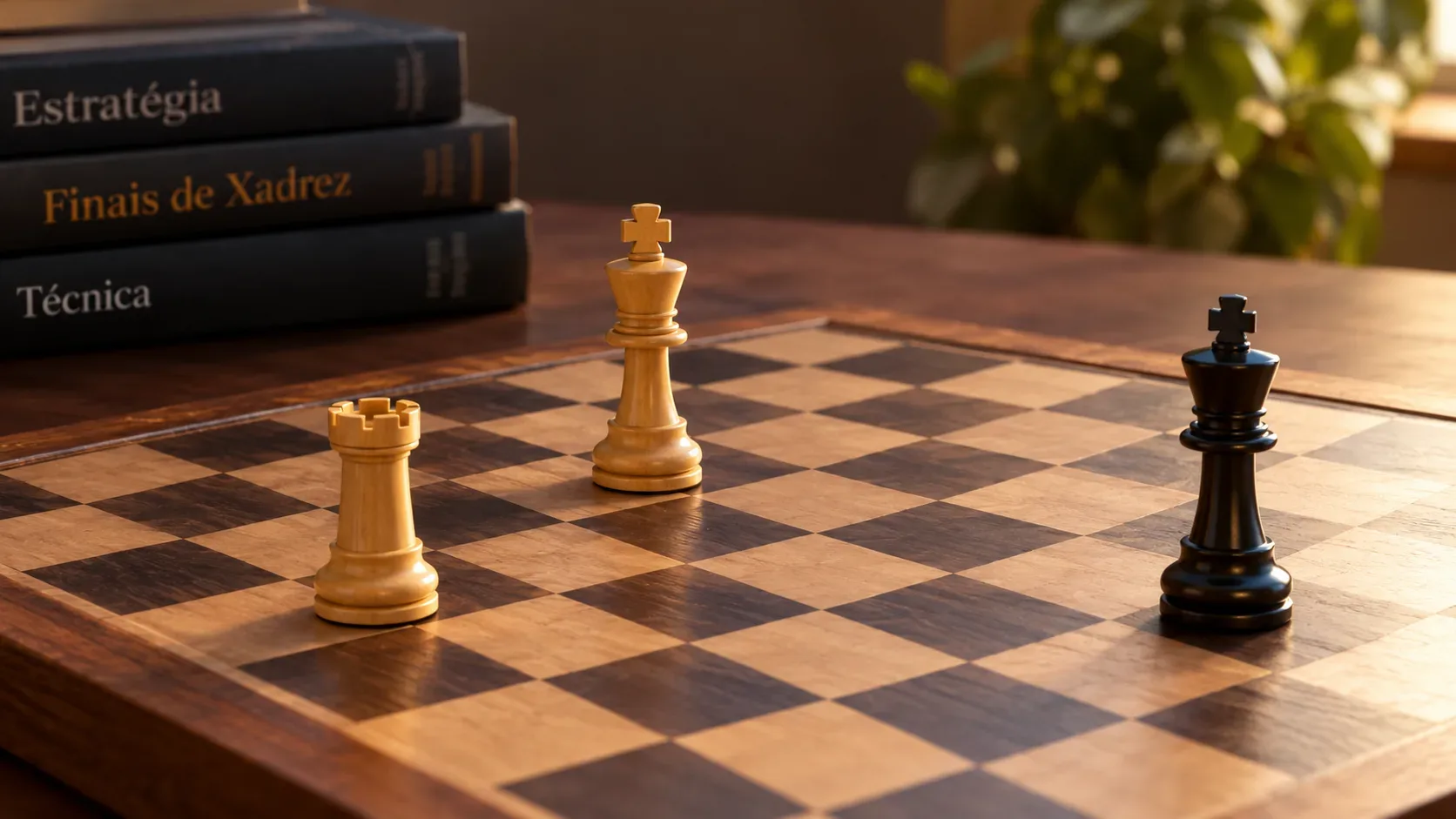
Learn how to restrict the king, bring your king closer, use waiting moves, and finish the rook mate without allowing stalemate.
Read article
See Brazil’s delegation, the 11-round Samarkand schedule and where to follow pairings, games and standings.
Read article
Check dates, time controls, rounds, fees, registration deadline and a practical checklist for choosing Rapid, Blitz or the combo in Fortaleza.
Read article
Learn why players with the same score can finish in different places and how three common chess tie-break criteria are calculated.
Read article
Learn how to decide king-and-pawn-versus-king endings with opposition, key squares and the practical rook-pawn exception.
Read article
A norm can cease to be accepted if the tournament or result breaks the rules. See how FIDE separates technical validity, conduct and already confirmed titles.
Read article
Learn when FIDE rules forbid castling, the difference between losing castling rights and being temporarily blocked, and why an attacked rook does not by itself make castling illega...
Read article
Learn why there is no fixed opponent table, how match points, score groups and floaters build each round, and what is specific to the Olympiad.
Read article
FIDE will elect its President and Deputy President on September 26 in Samarkand. See who can vote, the three valid tickets and the rules for a first or second ballot.
Read article
See the September 10–17 schedule in Brasília time and understand why the event for players with disabilities is separate from the 46th Chess Olympiad.
Read article
FIDE and World Chess announced an application to create the .chess top-level domain. It cannot be registered yet because the proposal still has to pass ICANN evaluation, possible c...
Read article
FIDE regulations approved in August set Game 1 for November 24 and the event for Nov. 22–Dec. 13; see the full schedule and why some pages still show Nov. 25–Dec. 15.
Read article
Learn why the standings use match points, how the four boards create the match score, and when TB1, TB2 and TB3 are applied.
Read article
Understand the real path to CM, FM, IM and GM: which titles come through rating, which require norms, and how FIDE direct titles work in 2026.
Read article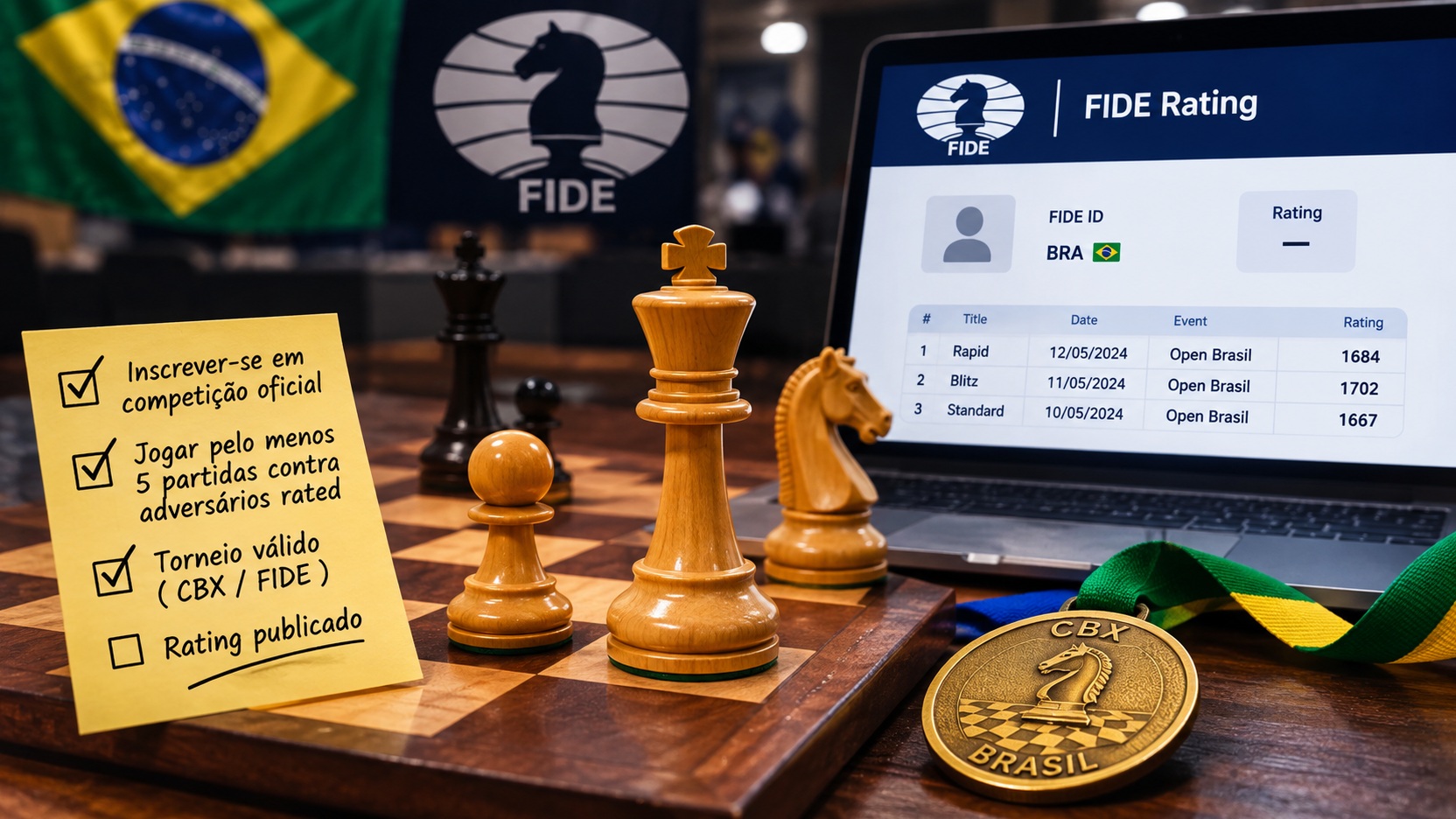
To appear on the FIDE rating list, playing five rounds is not enough: the event must be FIDE-rated, the games must be against rated opponents, and the initial calculation must reac...
Read article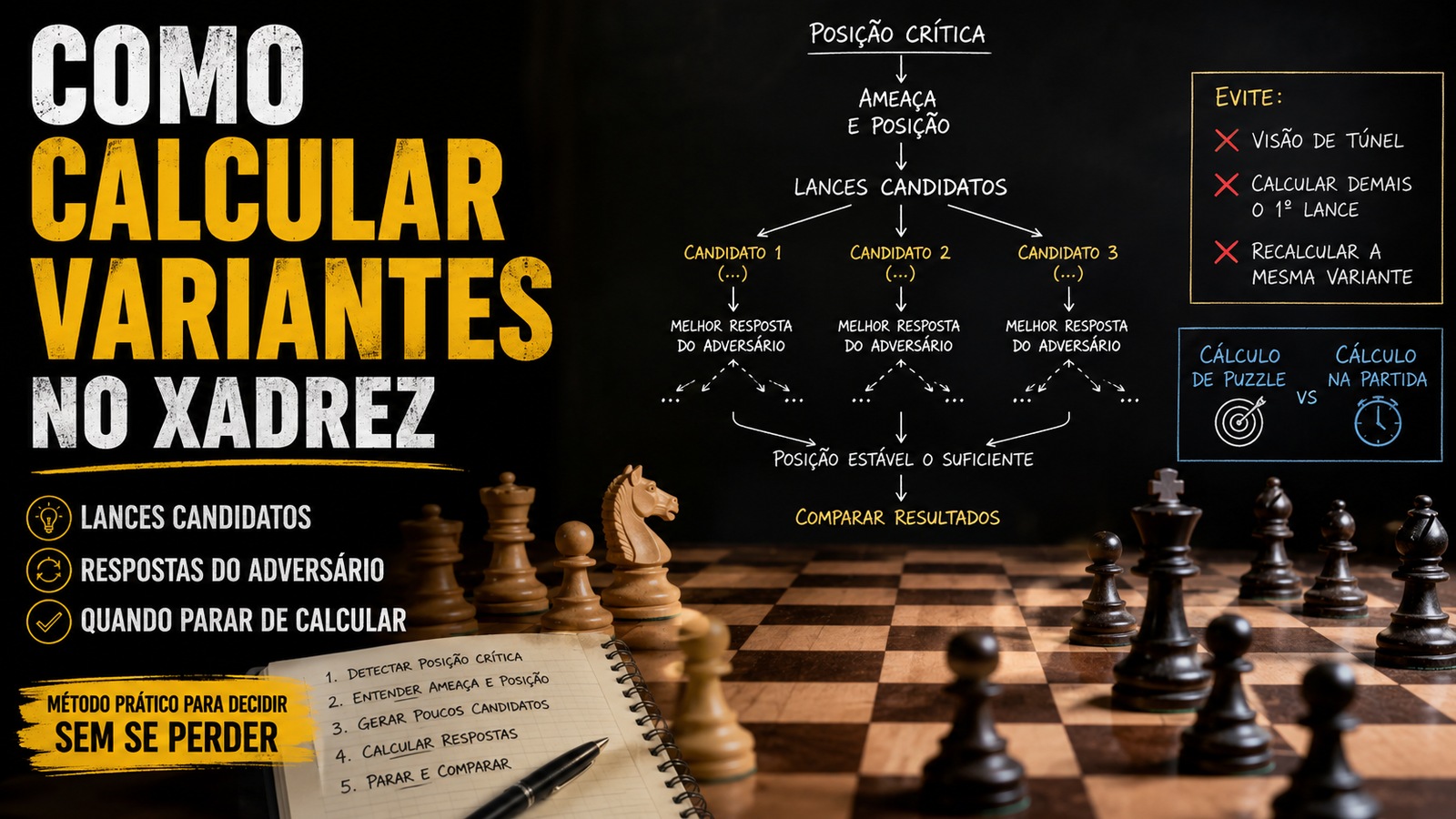
Practical technique for organizing the calculation in chess: recognizing critical positions, selecting candidates, testing the best rival response and closing variants when it is a...
Read article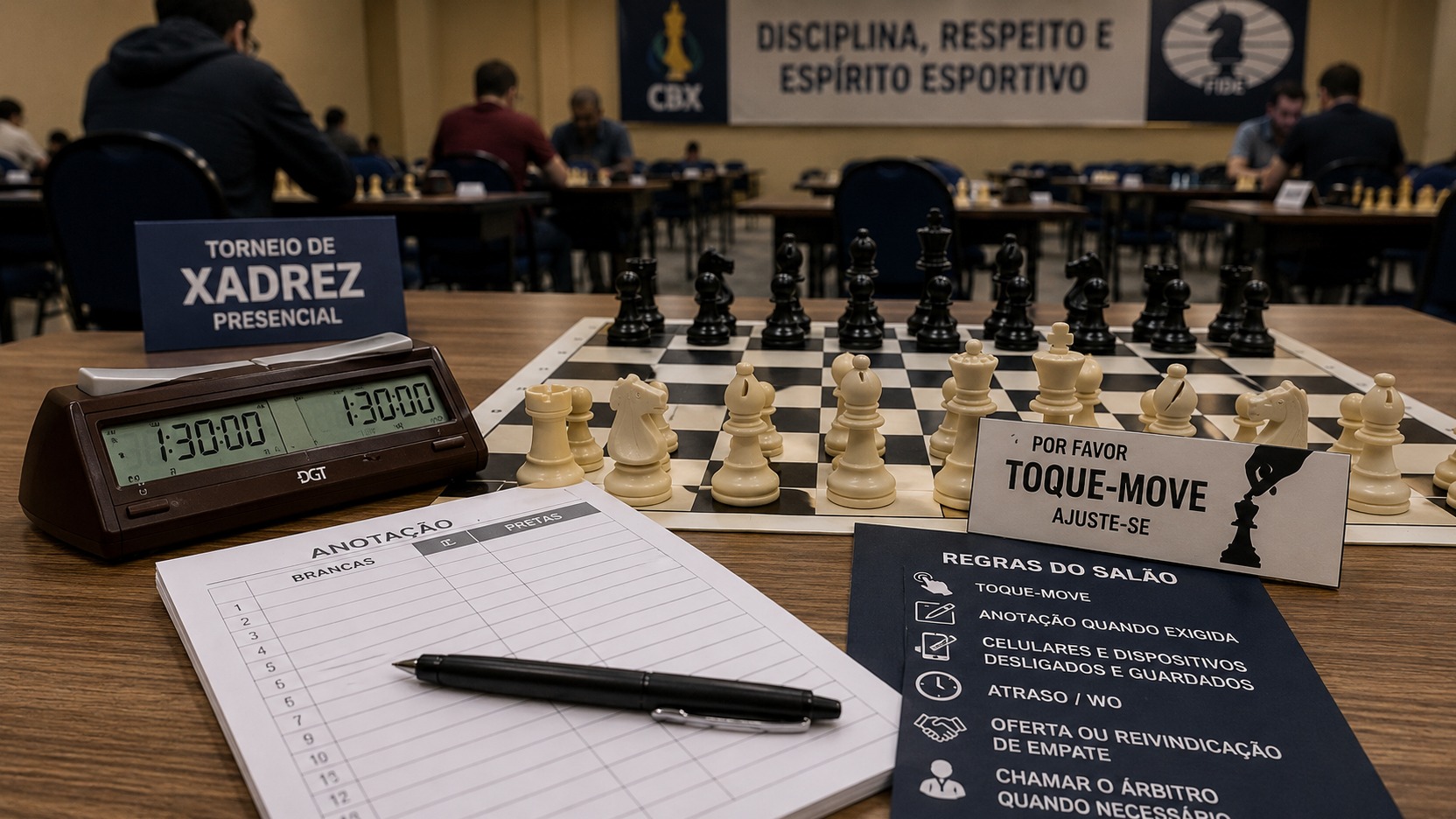
Going from online to in-person chess requires less of a “minimum level” and more mastery of procedures: rules, clocks, notation, touch-move, electronics and arbitration.
Read article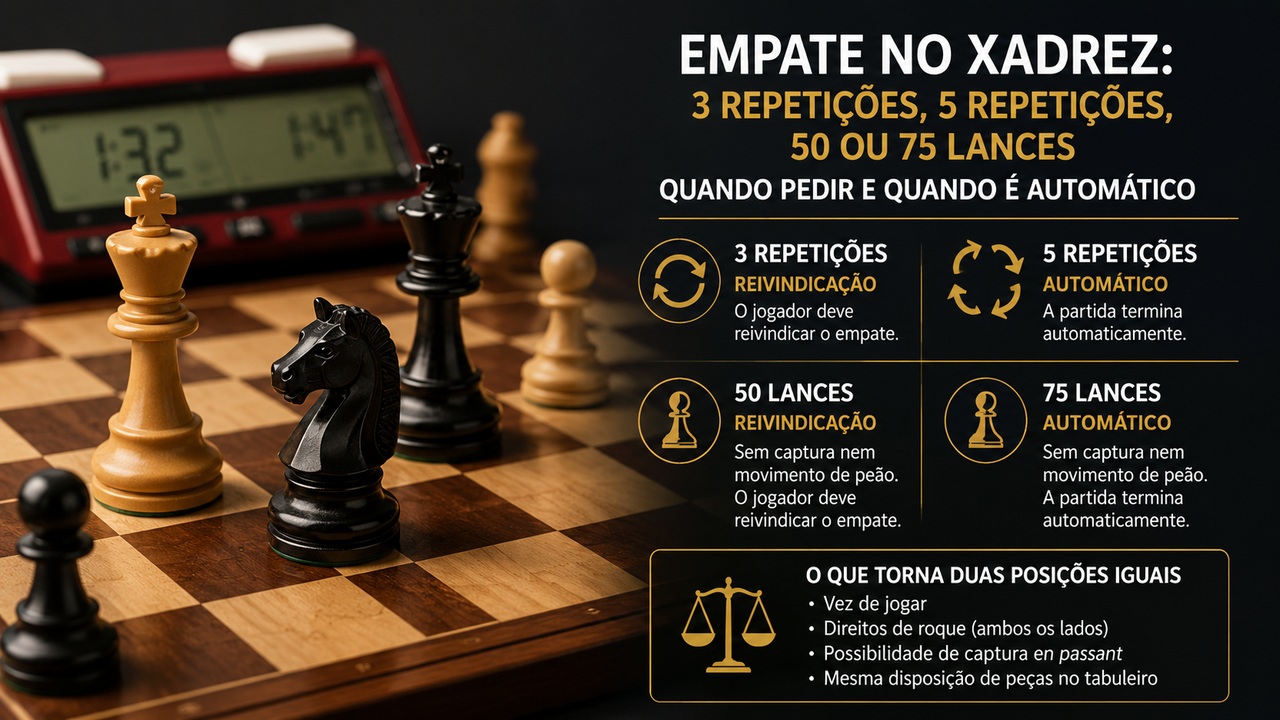
Understand when a draw requires a claim and when it ends the game alone, in addition to what counts as a repeated position and what changes in online chess.
Read article
Ratings from FIDE, Chess.com and Lichess measure performance in different pools and rhythms. Understand why there is no fixed conversion and how to compare your level more accurate...
Read article
Chess.com, Lichess and FIDE measure performance across different populations, paces and systems. Understand why the numbers are not equivalent and how to compare them with more con...
Read articleNo articles match this search.